What to Wear on a Desert Safari in Abu Dhabi
A complete, honest dress guide from a DCT-licensed operator that runs its own camp in the Al Khatim desert — what actually works on the dunes, what tourists get wrong, and what the culture expects.
Ask Us on WhatsAppDesert Safari Abu Dhabi Month by Month
Every month has its own temperatures, sunset times and character. Pick yours — or compare against the best time to visit.
The Short Answer
Wear loose, light-coloured, breathable clothing that covers your shoulders and knees, and closed shoes you do not mind filling with sand. Bring a light jacket or shawl for after sunset in any month between October and April. Nothing tight, nothing white you care about, nothing black, and no flip-flops.
- Fabric: cotton, linen, or technical moisture-wicking. Avoid denim and polyester.
- Colour: beige, sand, olive, dusty pink, sky blue. Black absorbs heat; pure white shows every grain of sand.
- Coverage: shoulders and knees covered is the respectful default in the UAE, and it also protects you from the sun.
- Shoes: trainers or closed canvas shoes. Sandals are fine at camp, useless on a dune.
- Evening layer: the desert drops 10–15°C after sunset. A hoodie, denim jacket or pashmina is enough.
Why What You Wear Actually Changes Your Day
People treat the outfit question as a style problem. In the desert it is a comfort problem first. Over roughly 5,000 guests at our Al Khatim camp, the same four mistakes come up again and again, and every one of them is a clothing decision made in a hotel room hours earlier.
Someone arrives in new white trainers and spends the evening trying to keep them clean instead of sandboarding. Someone wears skinny jeans and cannot sit cross-legged at the low majlis tables. Someone wears a strappy summer dress in January and shivers through the entire fire show. Someone wears flip-flops and loses one halfway up a dune in the dark.
None of these ruin a safari. All of them make it smaller than it should have been. The good news is that dressing correctly for the Abu Dhabi desert is genuinely simple once you understand the two forces at work: sand gets everywhere, and the temperature swing between afternoon and night is bigger than almost anywhere you have been.
The two rules everything else follows from
Rule one — dress for two climates in one evening. An evening safari picks you up at around 3:00 PM in full daylight heat and drops you back after 10:00 PM in genuine night chill. In December and January the difference between the 3:30 PM dune drive and the 9:00 PM fire show can be fifteen degrees. You are not choosing one outfit; you are choosing a base layer plus something to put on top.
Rule two — sand is not dust, it is fine powder. Al Khatim sand is fine enough to pass through loose weaves and settle into every seam. It will get into your shoes, your hair and your camera bag no matter what you do. Your job is not to keep it out — it is to wear things where sand does not matter, and to leave the pieces you would be upset about back at the hotel.
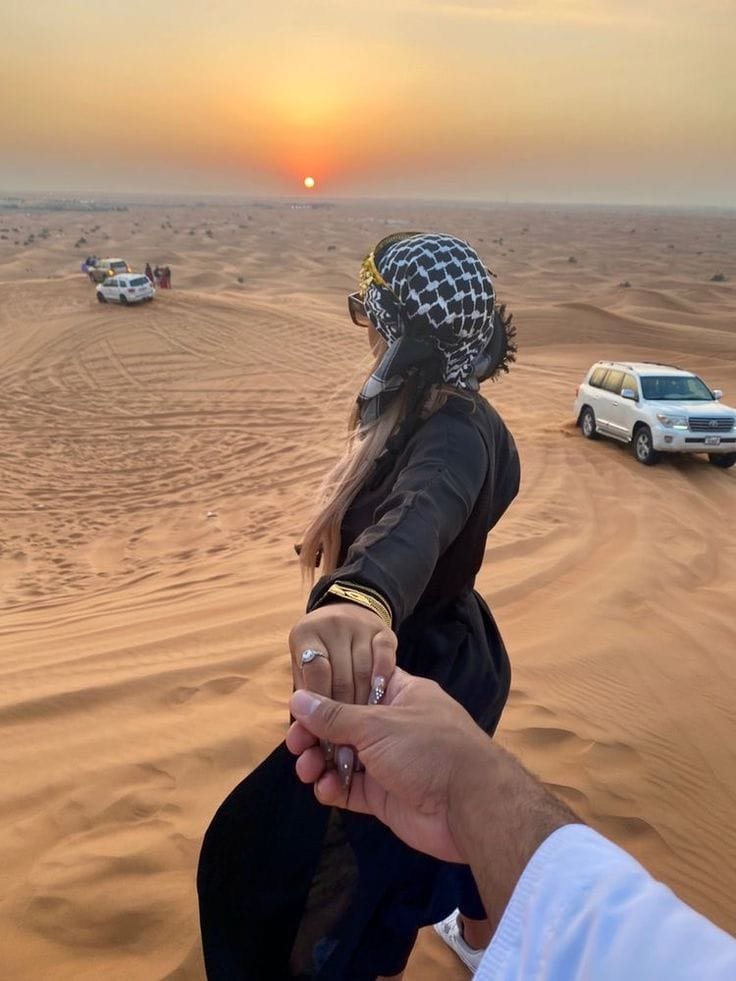
The Abu Dhabi Desert Safari Dress Code, Explained Honestly
There is no enforced dress code on a desert safari. Nobody will turn you away at the camp gate and there is no written rule you can break. What exists instead is a cultural expectation and a practical standard, and they happen to point in the same direction.
The UAE is a Muslim country with a relaxed attitude toward visitors, particularly in tourist settings. Abu Dhabi is noticeably more traditional than Dubai. At a desert camp you will be sharing space with Emirati staff, families from the Gulf, and guests from every part of the world. The respectful default is shoulders covered and knees covered. That is the entire cultural rule.
What that means in practice
| Item | At the desert camp | Why |
|---|---|---|
| T-shirt, polo, loose shirt | Perfectly fine | Covers shoulders, breathes well |
| Long trousers, chinos, linen pants | Ideal | Sun protection and comfortable on a camel |
| Maxi dress or midi dress | Ideal | Cool, modest, photographs beautifully |
| Knee-length shorts | Acceptable | Common on safaris; fine at camp |
| Very short shorts, mini skirts | Tolerated, not advised | Awkward on camels and at low majlis seating |
| Strappy vest, crop top, bikini top | Avoid | Reads as beachwear; the desert is not a beach |
| Sheer or see-through fabric | Avoid | Uncomfortable culturally and useless against sun |
| Swimwear | No | There is nowhere to swim |
Ramadan and religious holidays
During Ramadan the mood across Abu Dhabi is more reserved and modest dress matters more, both in the city and on the way to the desert. Safaris still run and the camp still serves food after sunset, but out of respect avoid eating, drinking or smoking in public during daylight hours on the drive out, and keep clothing conservative. If your safari falls in Ramadan we will tell you what changes when you book.
What to Wear Month by Month in Abu Dhabi
Most guides split the year into “summer” and “winter”. That is too blunt for a desert where a January evening and an October evening ask for completely different things. Below is the practical version, based on typical Abu Dhabi conditions and what our guests actually end up wearing.
| Month | Afternoon feel | After sunset | What to wear |
|---|---|---|---|
| October | Hot, 33–36°C | Mild, 24–26°C | Light cotton, shorts fine, thin long-sleeve for the drive back |
| November | Warm, 29–32°C | Cool, 20–22°C | T-shirt plus trousers; carry a hoodie or shawl |
| December | Pleasant, 25–28°C | Chilly, 15–18°C | Long sleeves, trousers, a proper jacket. This surprises people |
| January | Pleasant, 23–26°C | Cold, 13–16°C | Coldest month. Jacket, socks, closed shoes, even a beanie |
| February | Pleasant, 25–28°C | Chilly, 15–18°C | Same as December. Layer up for the fire show |
| March | Warm, 29–32°C | Mild, 19–22°C | Light layers; jacket only for the evening |
| April | Hot, 34–37°C | Mild, 23–26°C | Loose cotton, sun protection essential, thin layer at night |
| May–September | Very hot, 40°C+ | Warm, 30°C+ | Loosest, lightest, palest clothing you own. No layer needed. Morning safaris strongly preferred |
The single most common mistake is a December or January booking made from a hot-country mindset. Guests arrive in shorts and a vest because “it is the desert”, then spend the evening wrapped in a borrowed blanket at the camp. If you are travelling between late November and early March, bring a real jacket. Not a cardigan — a jacket.
Summer specifics: May to September
Summer safaris are absolutely doable, and prices are often better, but clothing choices become genuinely functional rather than stylistic. Cover more skin rather than less. A long, loose linen shirt keeps you cooler than a t-shirt because it blocks direct sun while allowing airflow — this is why Gulf dress evolved the way it did. Add a wide scarf or shemagh for your neck, and drink far more water than feels necessary.
In these months we recommend the morning desert safari, which starts in the cool first hours of daylight and has you back in the city before the worst of the heat.
Winter specifics: December to February
This is peak season and the best time to be on the dunes, but the night chill is real. The layer that works best is something wind-resistant, because the desert breeze after dark is what actually makes you cold, not the air temperature. A denim jacket, a light puffer, or a fleece all work. Add socks — sitting on cool sand in bare ankles for three hours is the detail nobody plans for.
Footwear: The Thing Almost Everyone Gets Wrong
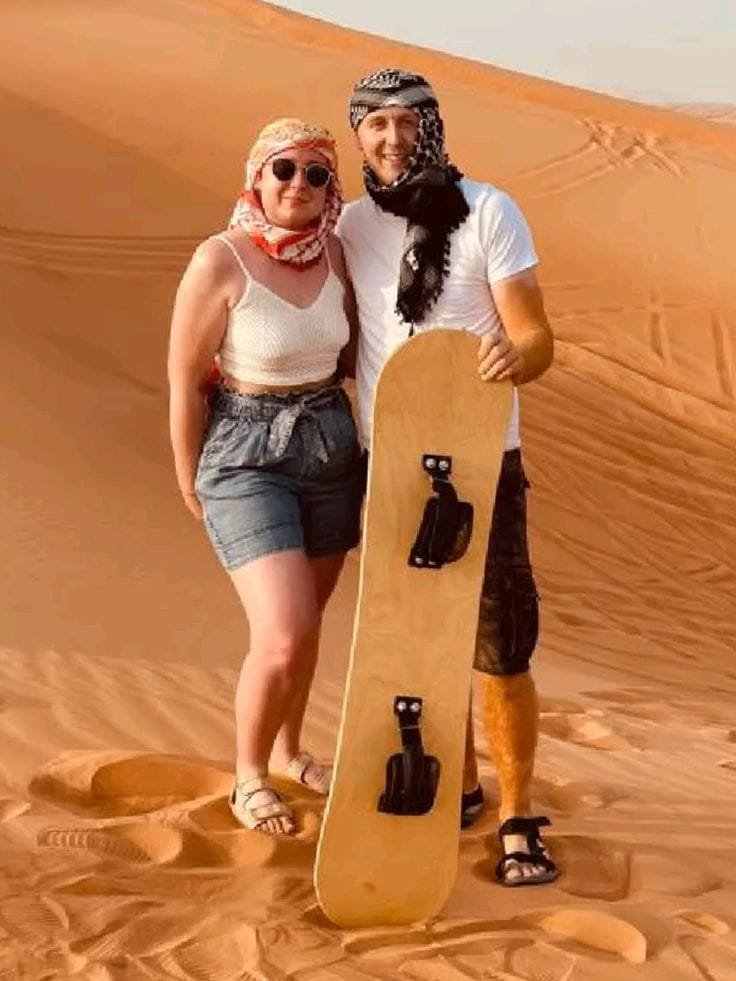
If you only take one thing from this page, take this: wear closed shoes you do not care about, and bring sandals as a second option. Footwear affects more of your evening than any other clothing choice, because it determines whether you climb the dune for the sunset photograph or stand at the bottom watching other people do it.
Trainers / running shoes — best overall
Grip on the dune face, protection from hot sand, and they stay on your feet during sandboarding. Sand will get inside. That is fine — tip them out and carry on. Pick an older pair, not the white ones you just bought.
Canvas shoes, slip-ons — good
Light, easy to empty, easy to wash. Slightly less grip on steep sand but perfectly workable for everything except serious dune climbing.
Sandals with a back strap — camp only
Genuinely comfortable at the camp, at dinner and around the fire. Not suitable for dune climbing or quad biking. Ideal as your second pair.
Flip-flops — the classic mistake
They fill with sand within ten steps, slip on any incline and are frequently lost in the dark. If they are all you have, at least bring socks and closed shoes for the activity portion.
Heels, wedges, dress shoes — no
They sink. There is no scenario on a dune where a heel works, including the photographs, because you cannot stand still on soft sand in one.
Hiking boots — overkill but fine
Perfectly functional, just warmer and heavier than you need. Only worth it if they are already what you travel in.
Socks matter more than you think
Two reasons. First, socks stop sand abrading your ankles during sandboarding and dune climbing. Second, on winter evenings your feet are the first part of you to get cold, because you are sitting on sand that has been losing heat since sunset. Bring a spare pair in your bag — putting on dry, sand-free socks before the drive home is a small thing that feels enormous.
Should you go barefoot?
At the camp in the evening, yes — plenty of guests do, and sand between the toes is part of the experience. During the day in summer, absolutely not. Surface sand in Abu Dhabi can exceed 60°C in July and will burn the soles of your feet in seconds. Test with a hand before letting children run barefoot at any time of year.
What to Wear: Women
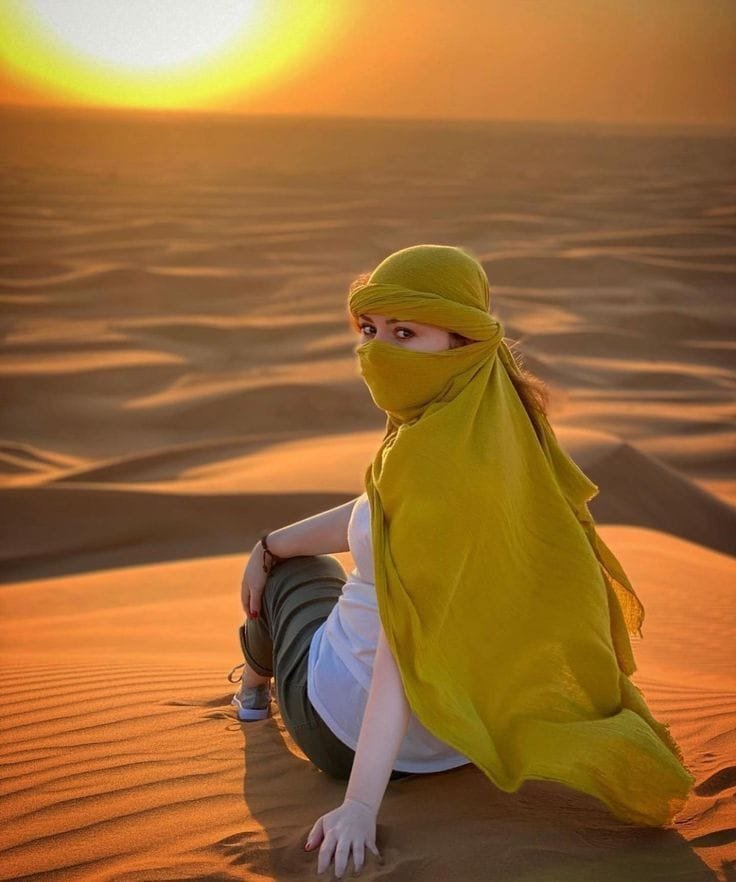
The outfit that works best for women on an Abu Dhabi desert safari is loose, long and light. That is not a modesty compromise — it is the same thing that keeps you cool, protects you from sun, lets you sit comfortably on floor cushions and moves beautifully in wind for photographs.
Best options
- Maxi or midi dress in cotton or viscose. The single best choice. Cool, respectful, and stunning in golden-hour photos.
- Loose linen trousers or palazzo pants with a light top. The most practical option if you plan to do quad biking or a lot of dune climbing.
- Leggings with a long tunic or oversized shirt. Ideal for camel riding, where you need to straddle a saddle comfortably.
- Wide-leg jumpsuit. Works well, just consider the practicalities of the washroom at a desert camp.
What to avoid, and why
- Skinny jeans — hot, restrictive when climbing, and difficult to sit cross-legged in for a three-hour dinner.
- Very short skirts — the practical problem outweighs the cultural one: you cannot ride a camel or climb a dune comfortably.
- Strappy or backless tops — sunburn on the shoulders is a real risk, and it reads as beachwear in a family camp setting.
- Delicate or expensive fabrics — silk and fine knits do not survive sand well.
- Loose jewellery and dangling earrings — they get lost in the sand, permanently.
The scarf: the most useful thing you can bring
One large lightweight scarf or pashmina does five jobs. It shades your head at sunset, wraps your face if the breeze picks up sand, covers your shoulders if you want more coverage, becomes a layer when the temperature drops, and doubles as something to sit on. If you bring one accessory, bring this.
Hair and makeup, honestly
Tie long hair back before dune bashing — the windows are often open and hair plus fine sand is an unpleasant combination to untangle later. Heavy makeup does not survive heat and dry desert air well; most guests are happiest with a light base, SPF and a lip balm. Bring hair ties even if you do not normally use them.
Solo female travellers
Abu Dhabi is one of the safest places in the world for solo female travel, and desert safaris are no exception — camps are family environments with staff present throughout. Dressing modestly is not a safety requirement here; it simply means you attract no attention at all, which is what most solo travellers want. See our solo female desert safari guide for the full picture.
What to Wear: Men
Men have it easier, and most get it right by accident. The formula is a t-shirt or light shirt, breathable trousers or knee-length shorts, and trainers.
- Best top: a cotton t-shirt or a loose linen shirt. A long-sleeved linen shirt is genuinely cooler in direct sun than a t-shirt.
- Best bottom: chinos, cargo trousers or lightweight joggers. Knee-length shorts are fine and common.
- Avoid: denim (heavy, hot, slow to shake sand out), anything black in summer, and vests or tank tops, which are the one item that looks out of place in an Abu Dhabi camp.
- Quad biking or buggy: long trousers, always. Bare legs plus a hot engine and flying sand is a bad combination.
What to Wear: Children, Babies & Older Guests
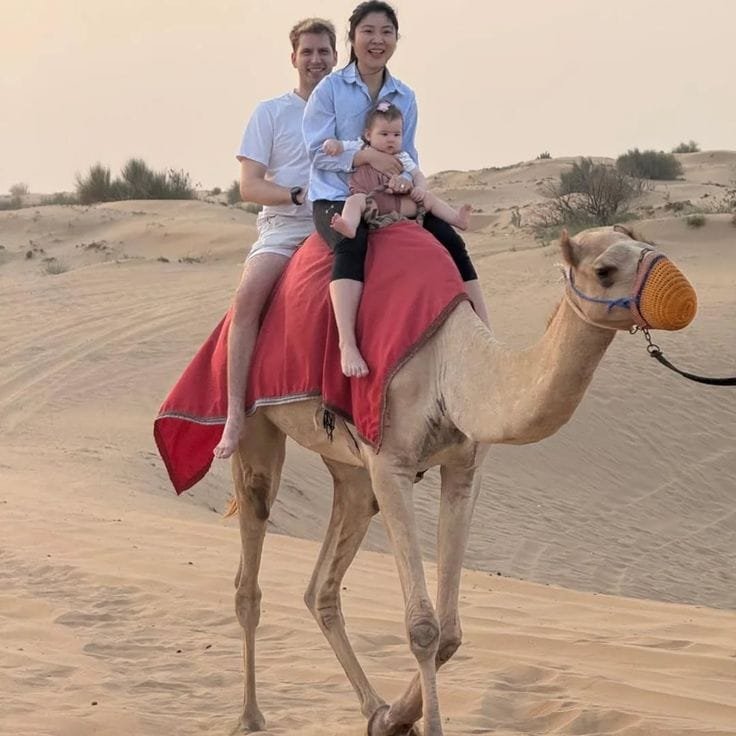
Children aged 3–12
- Closed shoes, no exceptions. Children run on sand that adults walk on, and in summer that sand is hot enough to burn.
- A complete change of clothes in the car or day bag. Sandboarding means sand inside everything, and a child in sandy clothes for a three-hour dinner is an unhappy child.
- A warm top from November to March. Children lose heat faster than adults and will feel the evening chill an hour before you do.
- A hat with a chin strap. Ordinary caps end up in the dunes.
- Avoid new or favourite clothes. Sand and BBQ sauce are not kind to them.
Babies and toddlers
Light long sleeves and long trousers rather than sun cream on every surface — babies under six months should not wear chemical sunscreen, so fabric is your sun protection. Bring a muslin or light blanket for the evening, a sun-shading hat, and more wipes than you think you need. If you are travelling with a baby, we recommend the private car safari so you control the pace and the dune-bashing intensity.
Older guests and anyone with mobility concerns
Prioritise stable, closed, supportive footwear over anything else — soft sand is uneven and unpredictable underfoot. A warm layer becomes more important with age, and a walking stick is genuinely awkward on sand, so let us know in advance and we will position the vehicle closer to the seating area at camp.
Dressing for Each Activity
| Activity | What to wear | What to avoid |
|---|---|---|
| Dune bashing | Anything comfortable; tie hair back; secure sunglasses | Loose hats, dangling jewellery, a full stomach |
| Camel riding | Trousers or leggings; closed shoes | Short skirts, dresses without shorts underneath |
| Sandboarding | Old clothes, closed shoes, socks | White clothing, anything you love |
| Quad biking / buggy | Long trousers, closed shoes, tied-back hair | Shorts, sandals, scarves that can catch |
| Camp dinner & shows | Add your evening layer; sandals fine | Being underdressed for the temperature drop |
| Sunset photography | Solid warm colours; flowing fabric | Busy patterns, logos, pure black |
| Overnight camping | Full change of clothes, hoodie, socks, something to sleep in | Only one outfit for 18 hours |
What to Wear for Photographs on the Dunes
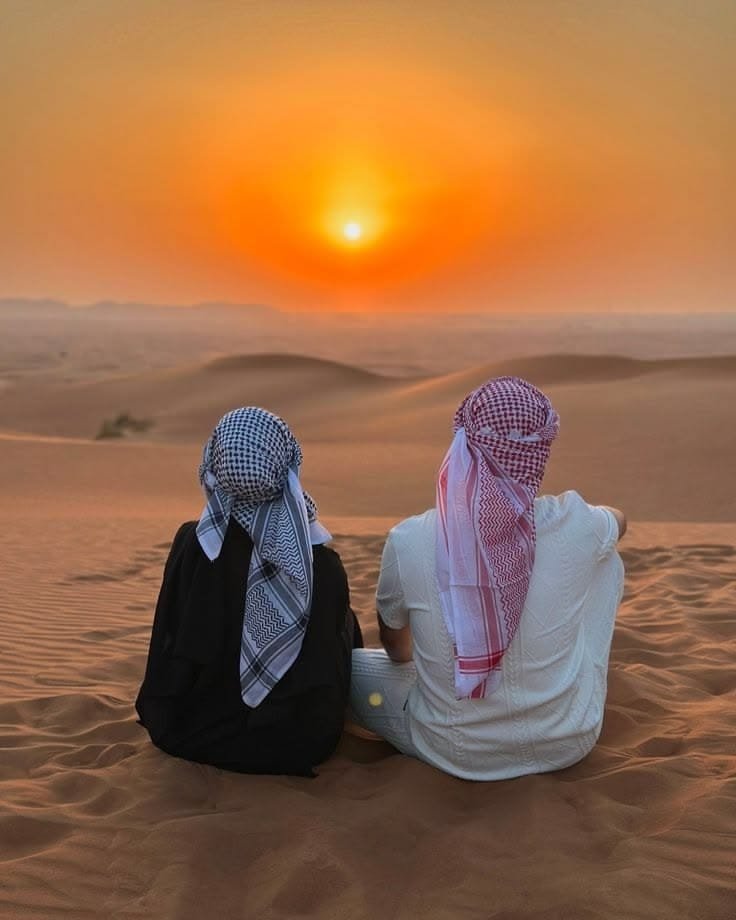
The Al Khatim dunes at golden hour do most of the work for you. But there is a reason some guests go home with photographs they frame and others go home with snapshots, and a surprising amount of it is fabric choice.
Colours that work against sand
- Best: burnt orange, rust, deep red, mustard, olive, cream, dusty rose, sky blue. Warm tones glow in low sun; cool tones contrast against it.
- Good: white — genuinely beautiful in photos, if you accept it will be ruined by the end.
- Avoid: beige identical to the sand (you disappear), pure black (loses all detail in the shadow side), busy prints and large logos.
Fabric that moves
The single trick professional photographers use in the desert is fabric that catches wind. A long skirt, a flowing dress, a wide scarf, an open shirt — anything that moves creates the shape that makes a desert photograph feel alive. A fitted t-shirt and jeans will always look flat by comparison, regardless of how good the light is.
Couples and families
Coordinate, do not match. Pick two or three tones from the same family — cream, rust and olive, for instance — and let everyone wear one. Matching outfits look staged; a shared palette looks intentional.
Practical photo notes
- Photograph before the sandboarding, not after.
- Barefoot on the dune crest photographs better than trainers — carry your shoes up and put them back on for the walk down.
- The best photography spots at our camp face west, so the light is behind you between roughly 5:30 and 6:30 PM in winter.
- Bring a lens cloth. Fine sand on a phone lens is the most common reason a shot comes out hazy.
What to Bring in Your Bag
Clothing is half the answer. This is the rest of it, kept to the things that genuinely change your evening.
Essential
- Sunglasses (UV, ideally with a strap)
- Sunscreen SPF 30–50
- Large scarf or shemagh
- Light jacket, Oct–Apr
- Spare socks
- Phone power bank
- Lip balm
Worth bringing
- Full change of clothes
- Wet wipes and tissues
- Small crossbody bag, hands free
- Hair ties
- Plastic bag for sandy shoes
- Lens cloth
- Personal medication
Leave at the hotel
- Large handbags and backpacks
- Valuable jewellery
- Laptops and tablets
- Anything you cannot afford to lose in sand
- Alcohol — not permitted at the camp
Provided free at our camp
- Unlimited water and soft drinks
- Arabic coffee and tea
- Traditional costume for photos
- Henna for ladies
- Sandboards
- Separate washrooms
For the full version, see our Abu Dhabi desert safari packing list.
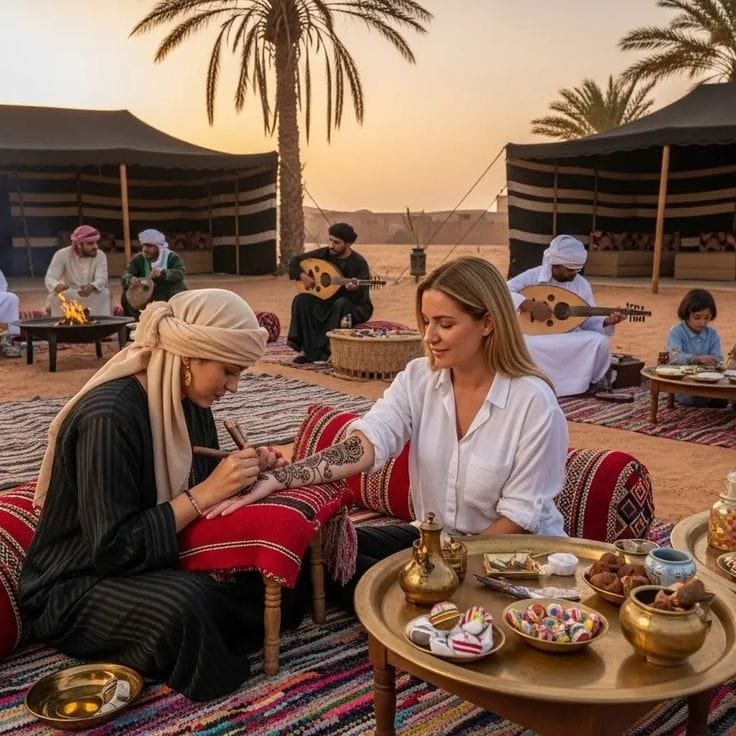
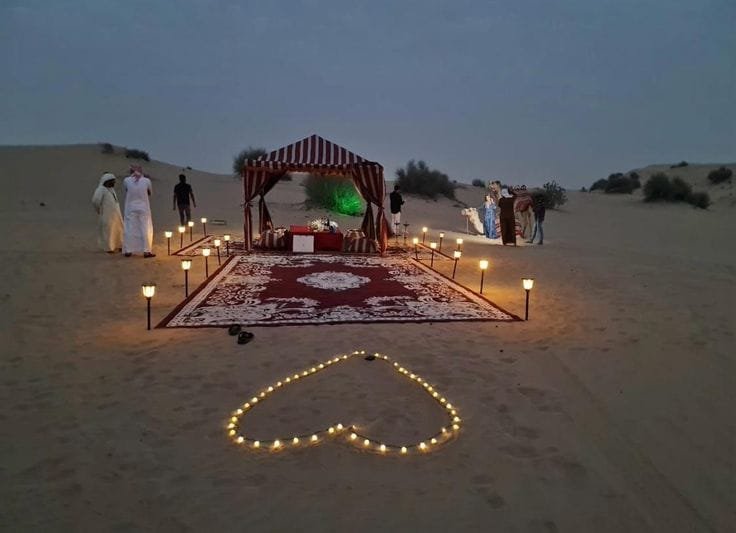
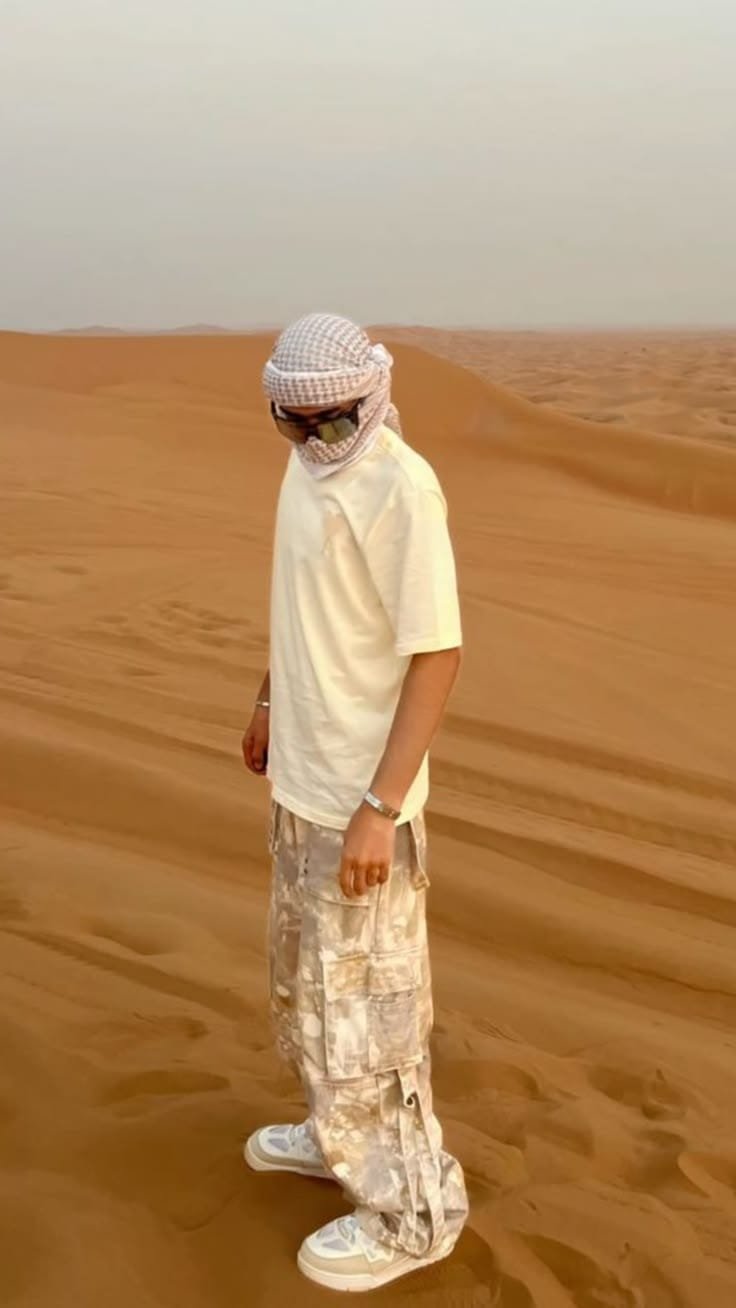
See What Guests Actually Wear
Real photographs from our Al Khatim camp — not stock images. This is what the dress code looks like in practice, across seasons and activities.
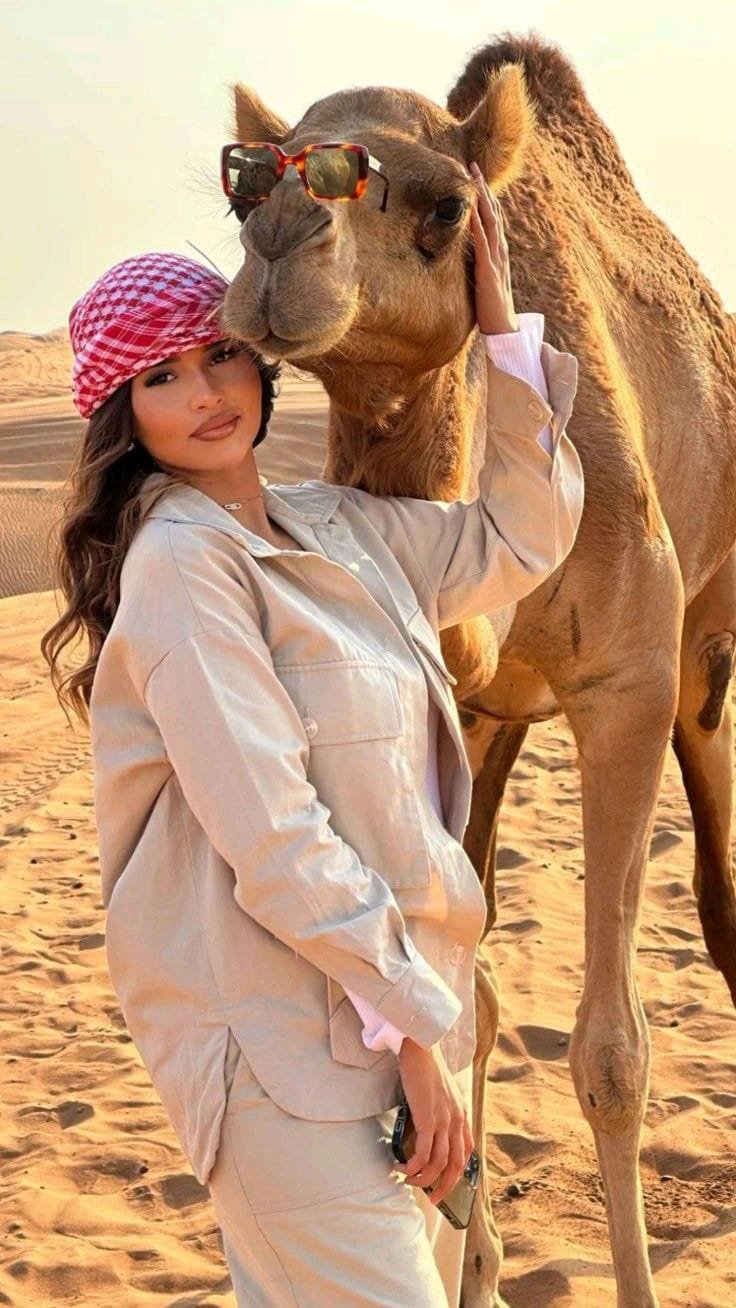
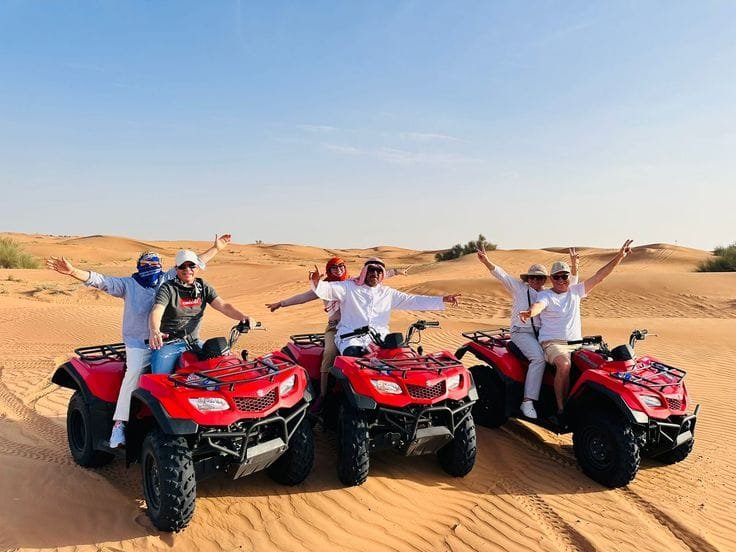
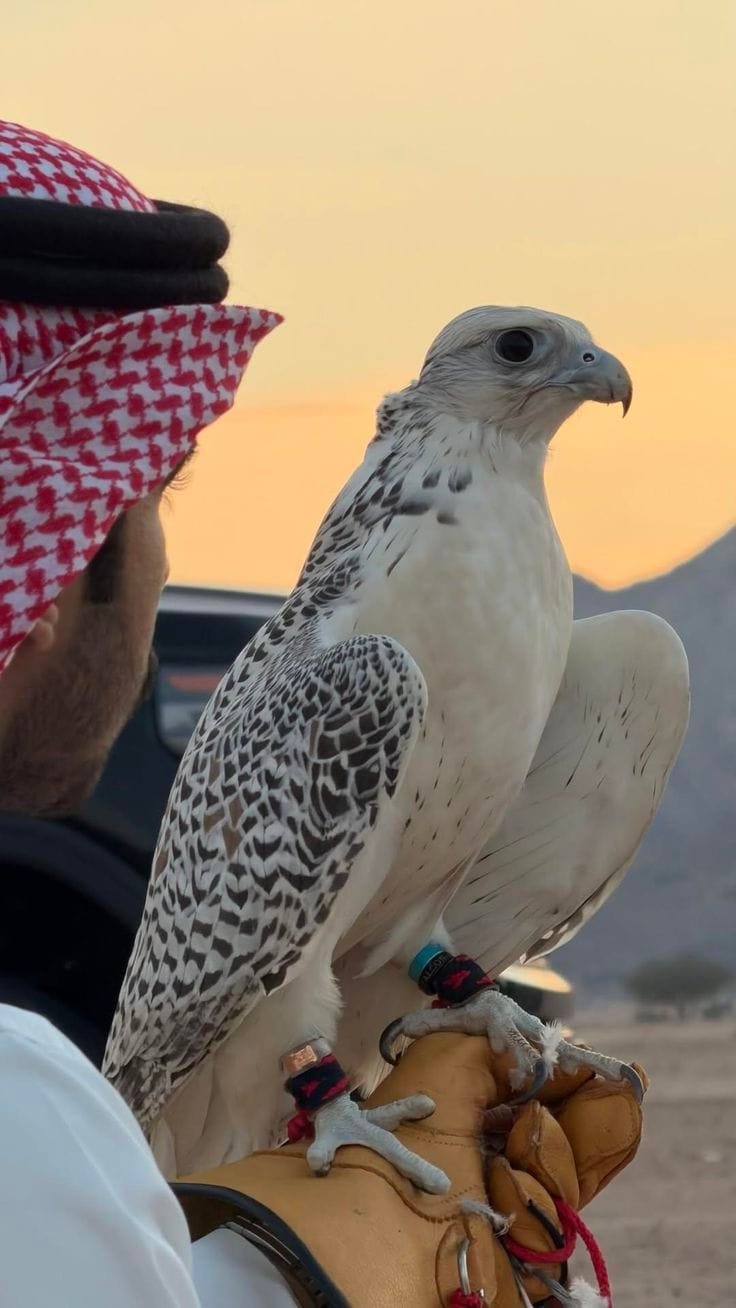
Common Mistakes We See Every Week
- Brand-new white trainers. They will not be white again. Wear the older pair.
- No layer in December or January. The most frequent regret by a wide margin.
- Flip-flops as the only footwear. Guaranteed to limit what you can join in with.
- Skinny jeans. Hot during the day, restrictive on a camel, uncomfortable on floor cushions for three hours.
- Heavy makeup and styled hair. Dune bashing with open windows undoes both within minutes.
- A big handbag. There is nowhere to put it down that is not sand. A small crossbody is better.
- Loose sunglasses. They come off during dune bashing and are almost never found.
- Forgetting a change of clothes for children. The difference between a happy dinner and a miserable one.
- Wearing the mosque outfit and nothing else. If you visit Sheikh Zayed Grand Mosque first, the long sleeves and headscarf will be too warm for a 3:30 PM dune drive. Bring the safari layer separately.
- Assuming “desert” means “hot at night”. It does not, for six months of the year.
After the Safari: Getting the Sand Out
A small practical section nobody writes, and everybody needs.
- Shake everything out before it goes in your suitcase. Fine sand transfers to every other item once it is in there.
- Shoes: tip them out, then tap the soles together outside. Do not wash them until the loose sand is gone or you will turn it into mud.
- Hair: brush it out dry before showering. Washing sandy hair first pushes grains into the scalp.
- Electronics: blow out ports and cases before charging. Fine sand in a charging port is a real problem.
- Clothes: a normal machine wash handles it, but shake them outdoors first for your machine’s sake.
Dress Code by Safari Type
The safari you book changes the answer more than most guides admit. A morning safari and an overnight safari have almost nothing in common from a clothing point of view.
| Safari | Hours outdoors | What to wear | The detail people miss |
|---|---|---|---|
| Evening safari from AED 35 | 3:00 PM – 10:30 PM | Light base layer plus a jacket or shawl for after sunset | You leave in daylight heat and return in night chill. Pack the layer, do not wear it |
| Morning safari AED 799 per car | 5:00 AM – around 10:00 AM | Long sleeves at the start, lighter as the sun rises | Dawn is genuinely cold in winter. You will remove layers, not add them |
| Overnight safari | 3:00 PM – 9:00 AM next day | Full change of clothes, hoodie, socks, sleepwear | Pre-dawn is the coldest point of the whole 24 hours |
| Private car safari AED 599 per car | Flexible | Same as evening, but you control the pace | You can leave a bag in the vehicle, so bring the spare clothes |
| Quad bike or buggy add-on | 20–30 min | Long trousers and closed shoes, mandatory | Helmet supplied, so skip hats and elaborate hairstyles |
Comparing morning and evening dress
On a morning desert safari you dress for cold-to-warm. On an evening desert safari you dress for hot-to-cold. It sounds like the same problem reversed, but the practical difference is what you do with the layer: in the morning you start wearing it and end up carrying it, and in the evening you start carrying it and end up wearing it. If you are still choosing between the two, our morning vs evening comparison covers everything else.
Dubai and Abu Dhabi: Is the Dress Code Different?
Slightly, and it is worth knowing. Abu Dhabi is more conservative than Dubai in general dress expectations across the city — but at the desert camps themselves, the practical standard is effectively identical. Where you will notice the difference is the drive out, hotel lobbies and pickup points, where Abu Dhabi leans more modest.
If your safari runs from Dubai, the same guidance applies. See our separate Dubai desert safari dress guide for the city-specific notes.
Can You Wear Shorts on an Abu Dhabi Desert Safari?
Yes — knee-length shorts are completely acceptable at the camp and very common, particularly from April to October. The real considerations are practical rather than cultural: bare legs are uncomfortable on a camel saddle, unprotected against a hot quad-bike engine, and cold after sunset in winter. Very short shorts are tolerated but will make you conspicuous in a family camp, and they make sitting on floor cushions awkward.
We wrote a full answer to this one because it comes up so often — see can you wear shorts to a desert safari in Abu Dhabi.
Ready-Made Outfit Formulas
If you would rather not think about it, copy one of these exactly.
Winter evening safari — women
Cotton maxi dress in rust or olive · leggings underneath for the camel ride · denim jacket · trainers plus a spare pair of socks · large scarf · small crossbody bag.
Winter evening safari — men
Cotton t-shirt · chinos · hoodie or light jacket · older trainers · cap for the daylight portion.
Summer evening safari — women
Loose linen shirt over a vest · wide linen trousers · canvas slip-ons · wide-brim hat · scarf · SPF 50.
Summer evening safari — men
Long-sleeved linen shirt (cooler than a t-shirt in direct sun) · knee-length shorts or light chinos · trainers · sunglasses with a strap.
Morning safari, any season
Long sleeves and trousers to start · a layer you can tie around your waist by 8:00 AM · closed shoes · sunglasses · light snack in the bag.
Overnight safari
Everything from the winter evening list · plus a second full outfit · hoodie · thick socks · something comfortable to sleep in · beanie between December and February.
Photoshoot-priority outfit
Long flowing skirt or dress in a warm solid tone · fabric that catches wind · minimal jewellery · barefoot for the dune-crest shots · hair down but tied back for the drive.
Family with young children
Everyone in closed shoes · long sleeves for the kids · a full spare outfit each · warm layers from November · wipes · a bag you can sling across your body while holding a hand.
Why You Can Trust This Guide
Royal Arabian Safari is a Department of Culture and Tourism Abu Dhabi licensed tour operator running its own camp in the Al Khatim desert. Everything on this page comes from what we watch happen at that camp — which layers guests reach for at 8:00 PM in January, which shoes come off at the bottom of a dune, which outfits guests tell us they wish they had chosen instead.
We have hosted more than 5,000 guests and hold a 4.9-star Google rating. Our advice on this page is not affiliate-driven and we do not sell clothing. If a guest turns up in the wrong shoes we lend them what we can and adjust the evening around it — but we would rather you read this first.
- Operator: Royal Arabian Safari Tourism LLC, Al Sila Tower, Al Maryah Island, Abu Dhabi
- Camp: Al Khatim desert, approximately 80 km east of Abu Dhabi city
- Licensing: DCT Abu Dhabi licensed tour operator
- Guests hosted: 5,000+ · Google rating: 4.9★
Ask on WhatsApp
Frequently Asked Questions
What is the dress code for a desert safari in Abu Dhabi?
There is no enforced dress code, but the respectful and practical standard is loose, light-coloured clothing that covers your shoulders and knees, with closed shoes. The UAE is a Muslim country and Abu Dhabi is more traditional than Dubai, so modest clothing avoids attention. It also protects you from sun and sand, which is why it is the practical choice as well as the polite one.
What should I wear on a desert safari in Abu Dhabi?
Wear loose cotton or linen in a light colour, long trousers or a maxi dress, and closed trainers you do not mind filling with sand. From October to April bring a jacket or shawl for after sunset, when the temperature drops 10 to 15 degrees. Avoid denim, black clothing, tight fits and flip-flops.
Can I wear shorts on a desert safari in Abu Dhabi?
Yes, knee-length shorts are acceptable and common, especially from April to October. Very short shorts are tolerated but conspicuous in a family camp. The practical issues matter more than the cultural ones: bare legs are uncomfortable on a camel saddle, unprotected during quad biking, and cold after sunset in winter.
Do women need to cover their hair on a desert safari?
No. A headscarf is not required at a desert camp. A large scarf is still the most useful item you can bring because it shades your head, shields your face from blown sand, adds a layer when the temperature drops, and covers your shoulders if you want more coverage. A headscarf IS required at Sheikh Zayed Grand Mosque if you visit on the same day.
What shoes should I wear on a desert safari?
Closed trainers or canvas shoes are best. They grip on the dune face, protect against hot sand, and stay on during sandboarding. Bring sandals as a second pair for the camp in the evening. Avoid flip-flops, which fill with sand and slip on inclines, and never wear heels, which sink into soft sand.
Is it cold at night on an Abu Dhabi desert safari?
Yes, from roughly November to March. Evening temperatures at the camp fall to 13 to 18 degrees, and the desert breeze after dark makes it feel colder. December, January and February need a real jacket, not a cardigan. Socks matter too, because you will be sitting on sand that has been cooling since sunset.
What should I wear to a desert safari in winter?
From December to February wear long sleeves and trousers, closed shoes with socks, and bring a wind-resistant jacket such as a denim jacket, fleece or light puffer. A beanie is not excessive in January. You will be comfortable during the afternoon dune drive and grateful for every layer by the fire show.
What should I wear to a desert safari in summer?
From May to September wear the loosest, lightest, palest clothing you own. A long loose linen shirt is genuinely cooler in direct sun than a t-shirt because it blocks radiation while allowing airflow. Add a wide scarf or shemagh for your neck, sunglasses and SPF 50. No evening layer is needed. Morning safaris are far more comfortable than evening ones in these months.
What colours are best for desert safari photos?
Warm solid tones photograph best against golden sand: burnt orange, rust, deep red, mustard, olive, cream and dusty rose. Sky blue also contrasts well. Avoid beige identical to the sand, because you disappear into the background, and avoid pure black, which loses all detail on the shadow side. Fabric that moves in the wind matters more than the colour itself.
Can I wear jeans on a desert safari?
You can, but they are the wrong choice. Denim is heavy, hot, slow to release sand and restrictive when you climb a dune or sit cross-legged at low majlis tables for a three-hour dinner. Chinos, linen trousers, cargo trousers or leggings are all better.
What should children wear on a desert safari?
Closed shoes without exception, long sleeves for sun protection, and a warm top from November to March because children lose heat faster than adults. Pack a complete change of clothes, since sandboarding puts sand inside everything. A hat with a chin strap survives the dunes; an ordinary cap does not.
Is there a dress code for the Arabic costume photos?
No. The traditional kandura and abaya provided free at our camp go on over whatever you are already wearing, so you do not need to plan an outfit around them. Most guests wear them for photographs and then take them off again.
What should I wear on a morning desert safari?
Dress for cold-to-warm. Start in long sleeves and trousers, because dawn in the desert is genuinely cold in winter, and expect to remove a layer by around 8:00 AM as the sun climbs. Closed shoes and sunglasses are still essential. This is the reverse of an evening safari, where you start light and add layers.
What should I wear on an overnight desert safari?
Bring everything you would wear on a winter evening safari, plus a complete second outfit, a hoodie, thick socks and something comfortable to sleep in. Pre-dawn is the coldest point of the entire 24 hours, colder than the evening, and it catches most guests by surprise.
Do I need to change clothes between the Grand Mosque and the desert safari?
Ideally yes. Sheikh Zayed Grand Mosque enforces a strict dress code — ankles and wrists covered for women plus a headscarf, and long trousers for men — while a 3:30 PM dune drive in those layers is uncomfortably warm. The simplest solution is to wear the mosque-compliant outfit with a removable outer layer you can take off once you reach the desert.
What should I not wear on a desert safari?
Avoid flip-flops, heels, skinny jeans, black clothing in summer, brand-new white trainers, strappy or backless tops, sheer fabrics, swimwear, loose dangling jewellery and large handbags. Also avoid anything you would be upset to see permanently marked by sand or BBQ sauce.
Can I wear a dress on a desert safari?
Yes, and a loose maxi or midi dress is arguably the best possible choice. It is cool, culturally appropriate, comfortable at floor-level seating and beautiful in golden-hour photographs. Wear leggings or shorts underneath if you plan to ride a camel.
Is makeup a good idea for a desert safari?
Keep it light. Heavy makeup does not survive desert heat, dry air and open-window dune bashing. Most guests are happiest with a light base, SPF and lip balm. Tie long hair back before dune bashing, because fine sand in loose hair is unpleasant to untangle afterwards.
What should I bring in my bag for a desert safari?
Sunglasses, sunscreen, a large scarf, a light jacket from October to April, spare socks, a power bank, lip balm and wet wipes. A full change of clothes is worth it, especially for children. Leave large bags, valuable jewellery and electronics at the hotel — there is nowhere to put a bag down that is not sand.
Do I need to dress differently during Ramadan?
Yes, slightly. Abu Dhabi is more reserved during Ramadan and modest clothing matters more in the city and at pickup points. Safaris still run and dinner is still served after sunset, but avoid eating, drinking or smoking in public during daylight hours on the drive out, and keep clothing conservative.
How do I get the sand out of my clothes and shoes afterwards?
Shake everything out before it goes into your suitcase, or the sand transfers to every other item. Tip out shoes and tap the soles together outside before washing them, since washing first turns loose sand into mud. Brush hair dry before showering, and blow out phone charging ports before plugging in.
Is the dress code different in Abu Dhabi and Dubai?
Slightly. Abu Dhabi is more conservative than Dubai across the city in general, but at the desert camps themselves the practical standard is effectively identical. The difference shows in hotel lobbies, pickup points and the drive out, where Abu Dhabi leans more modest.
Can I see real photographs and video of the camp before booking?
Yes, and we would rather you judged from footage than from stock imagery. Desert safari video and drone footage of the desert show the dunes and the camp as they are, and the best photo spots tells you where the good light falls. If you want the numbers behind the trip rather than the pictures, desert safari statistics and facts collects what is actually documented.
Where can I read about accessibility, babies and motion sickness on a desert safari?
We keep a separate page for each of these, because a one-line reassurance is not enough when the answer decides whether your day works. Read desert safari with a wheelchair for what a foldable chair can and cannot do on sand, desert safari with a baby for car seats and timing, a sensory-friendly desert safari for noise and crowding, and motion sickness on a desert safari if the dune drive worries you. Each one tells you plainly when to skip an element rather than endure it.
Plan the Rest of Your Safari
Planning the Rest of Your Abu Dhabi Trip
Most guests who book the dunes with us also want a day in the capital. These guides cover the practical detail:
- the Sheikh Zayed Grand Mosque tour — entry is free, but the dress code is stricter than most visitors expect
Book this tour
No deposit and no card details. Message us and we confirm the plan and the exact price before you commit — answered at any hour.
- Send your date and guest countYour date, how many of you, and where we collect from. That is all we need.
- We send the plan and the pricePer car, not per person. You see the route, the timings and the exact figure first.
- Pay the driver on the dayCash or card, after the run. Free cancellation up to 12 hours before pickup.
Answered 24 hours · No deposit · No booking fee · Licensed operator