Desert Safari Abu Dhabi in January: The Connoisseur’s Month
The mildest afternoons and coldest nights of the Abu Dhabi year — 24.5 °C by day, 13.8 °C after dark, and the cleanest star sky of the season. Evenings at our private Al Khatim camp from AED 35 per person.
The Short Answer
January is the best month of the year for a desert safari in Abu Dhabi — and the one visitors underdress for most. Official climate normals give it a 24.5 °C average high and a 13.8 °C average low, the coldest nights on the calendar, while naval observatory tables move sunset from 5:46 PM to 6:07 PM across the month. Dust-free winter air delivers the season’s clearest stargazing, and evenings start at AED 35 per person. The catches are honest: a real jacket at the camp, the year’s small rain window, and New Year crowds in week one.
| January fact | Detail |
|---|---|
| Day / night average | 24.5 °C high · 13.8 °C low |
| Sunset window | 5:46 → 6:07 PM across the month |
| Rain | ~12.5 mm over ~3 days |
| Sea temperature | 22.7 °C — bracing |
| Evening price | From AED 35 self-drive · 50 bus · 100 hotel pickup |
| Pickup / return | 3:00–3:30 PM · back ~10:00–10:30 PM |
| Booking pressure | High in week one, easing from mid-month |
Is January a Good Month for a Desert Safari in Abu Dhabi?
Yes — for most travellers it is the single best month of the twelve. January brings the mildest afternoons of the year at 24.5 °C, the cleanest air, sand cool enough for bare feet at any hour, and a night sky no other season matches. Our grade: A+ for comfort and sky, C for seawater.
We call it the connoisseur’s month because everything that governs a summer safari stops mattering: nobody manages heat, nobody hunts shade, nobody cuts the camel ride short.
The trade-off waits at the other end: at 13.8 °C, January’s average low is colder than December’s and February’s, and it arrives while you sit in open desert 80 km from the city.
One more reason for the grade — with the sun down before 6 PM most of the month, the standard evening desert safari holds close to four hours of genuine darkness: dinner, shows and stars under a properly black sky.
January by the Numbers
January is the coolest month of the Abu Dhabi year in both directions: the lowest average high at 24.5 °C and the lowest average low at 13.8 °C. Sunset climbs from 5:46 to 6:07 PM, rain totals about 12.5 mm across three days, and coastal humidity reads 68% — with the inland desert running noticeably drier.
| Measure | January value | What it means on safari |
|---|---|---|
| Average high | 24.5 °C | Warm shirt at pickup; no heat to manage |
| Average low | 13.8 °C | Year’s coldest — a real jacket, not a cardigan |
| Sunset range | 5:46 → 6:07 PM | Golden hour about two hours after pickup |
| Daylight | ~10 h 40 m | Short days; camp fully dark before dinner |
| Rainfall | ~12.5 mm / ~3 days | Brief showers possible, washouts unheard of |
| Coastal humidity | 68% | Al Khatim, 80 km inland, feels drier |
| Sea temperature | 22.7 °C | Beach days for walking, not long swims |
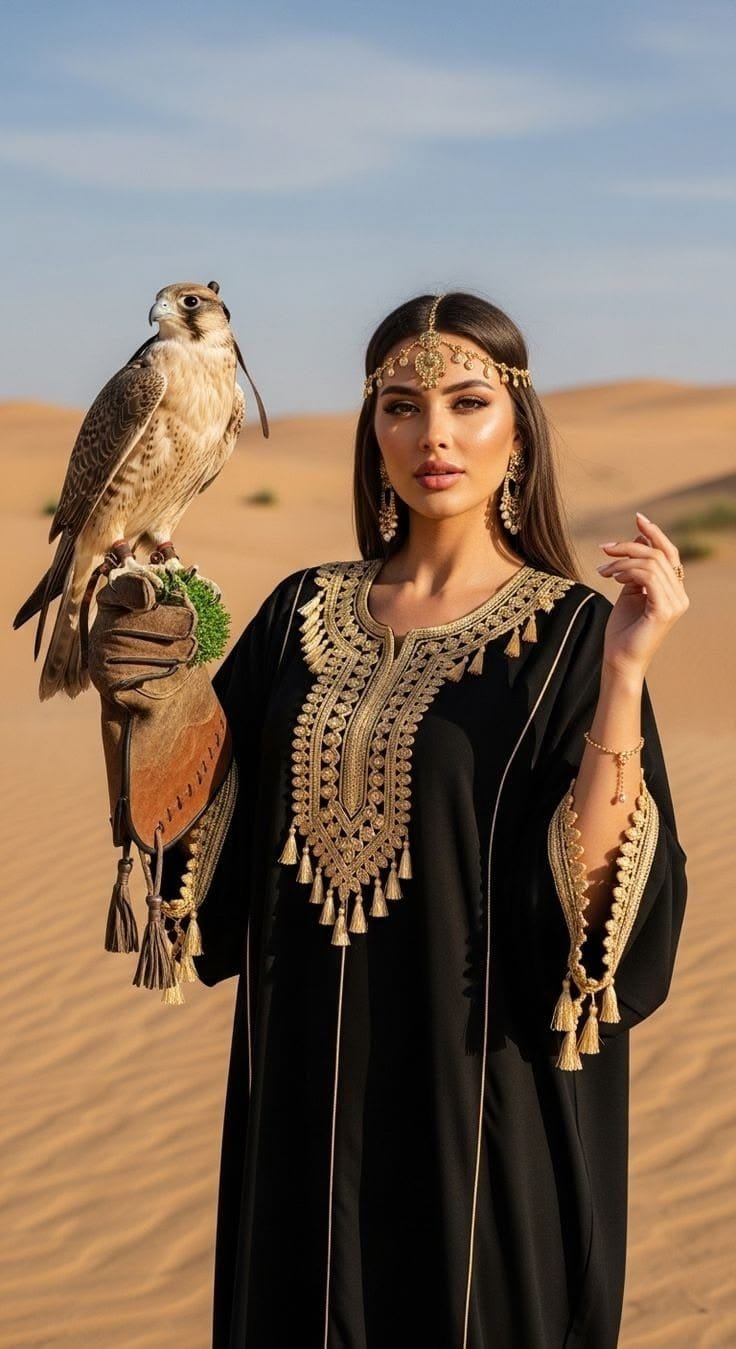
What a January Desert Safari Feels Like, Hour by Hour
Expect a bright pickup in the mid-20s, dune driving in low golden light, sunset between 5:46 and 6:07 PM, then a fast cool-down into a jacket-and-hot-tea evening. The arc crosses about eleven degrees, nearly all of it after the sun leaves the ridge.
| Stage | January reality |
|---|---|
| 3:00–3:30 PM pickup | Around 24 °C and dry; jacket in the bag |
| The drive out | 50–60 minutes east on the E22, sun already low and gold |
| Dune bashing | Cool firm sand, no heat shimmer on the ridgelines |
| 5:46–6:07 PM sunset | The best light of the year — and the air turns |
| First hour after dark | Falling toward the 13.8 °C low; jackets come out |
| Dinner & shows | BBQ buffet, belly dance, Tanoura and fire show under a hard-black sky |
| ~10:00–10:30 PM return | Coldest part of the evening; the car heater goes on |
Why the desert cools so fast once the sun goes
The same clear sky that makes January stargazing exceptional is what makes the camp cold: with no cloud to hold warmth, the sand releases the day’s heat straight back to the sky the moment the sun drops behind a dune.
In August you wait an hour for the evening to turn bearable; in January you feel it while walking down from the sunset ridge — so carry your jacket up the dune. The stop-by-stop order sits on our safari timings page.
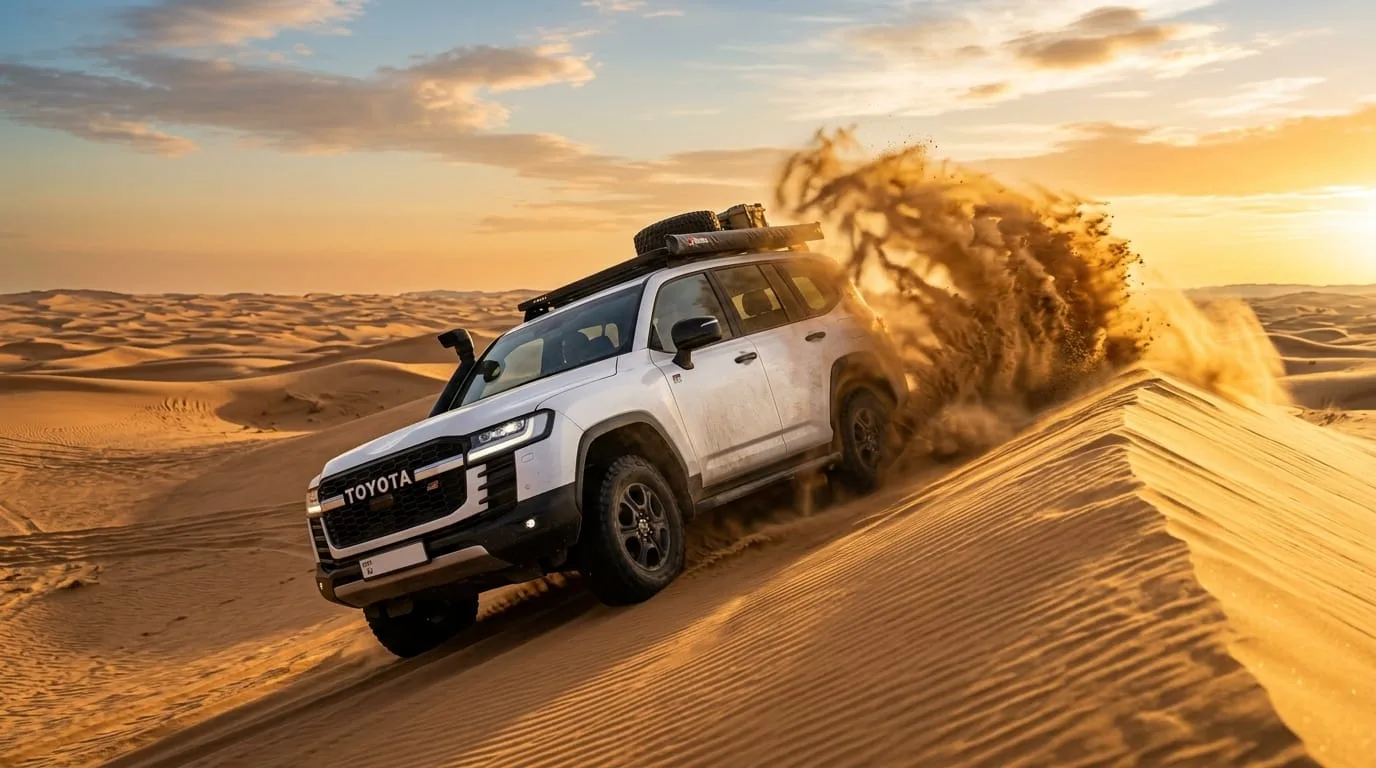
Why January Has the Clearest Skies and Best Stargazing of the Year
January sits at the heart of the October-to-March window operators agree gives Abu Dhabi its clearest skies. There is no shamal dust season — that belongs to early summer — no heat haze off the sand, and sunset before 6 PM, so stars arrive before dinner rather than after bedtime.
Children gain most: midsummer sunsets near 7:15 PM push real darkness past young bedtimes, while in January a six-year-old sees a full starfield with dinner still on the plate. Two caveats — a bright moon washes out faint stars in any month, and brief winter wind episodes can lift dust. See our desert stargazing guide, or sleep beneath it on an overnight desert safari — with warm bedding, because January nights outdoors are genuinely cold.
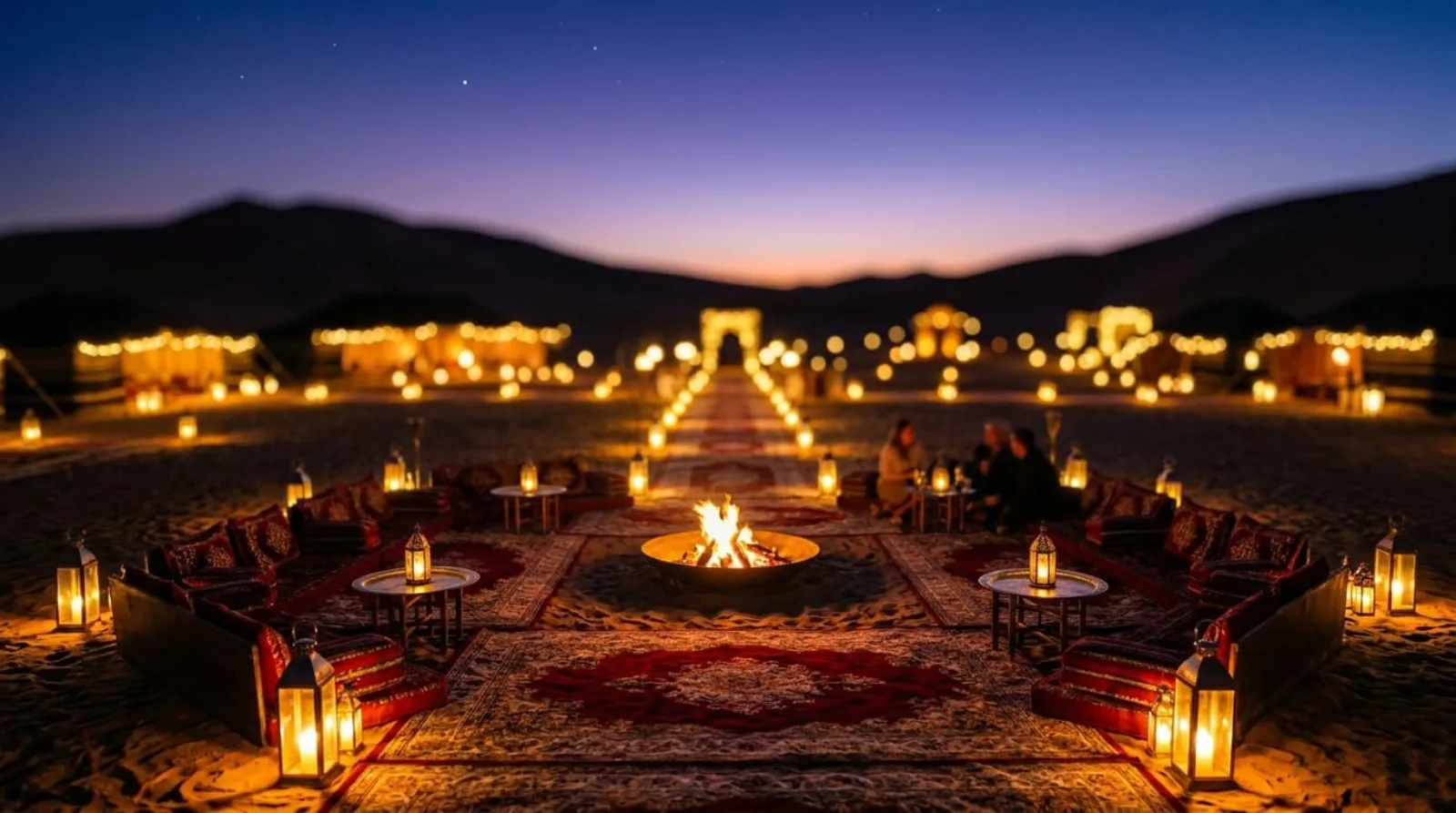
What to Wear on a January Desert Safari
Three layers carry you from the 24.5 °C pickup to the 13.8 °C return: a light top, a fleece, and a genuine jacket. Long trousers beat shorts, closed shoes beat sandals, and every child needs one more layer than the adult beside them.
| Layer | Why it matters in January |
|---|---|
| T-shirt or light long sleeve | Afternoons are properly warm at 24.5 °C |
| Fleece or hoodie | Goes on within minutes of sunset |
| Proper jacket, windproof if possible | 13.8 °C plus a ridge-top breeze |
| Long trousers | Warmth after dark; better on a camel or quad |
| Closed trainers and socks | Sand is cool all evening; sandals get cold |
| Light scarf or shemagh | The sunset ridge is the windiest spot |
| Sunglasses and sunscreen | Low winter sun is straight in your eyes |
| One extra layer per child | Small bodies shed heat faster on the late return |
The mistake we watch every winter: guests leave a 24 °C hotel forecourt at 3 PM, decide the jacket is unnecessary and leave it behind — then sit at an open-air camp in the coldest hour of the coldest month. Take the layer; full seasonal guidance sits on our what to wear on a desert safari page.
Does It Rain in Abu Dhabi in January?
Occasionally, briefly, and almost never enough to alter your evening. Official climate normals give January roughly 12.5 mm across about three days — the opening of the January-to-March window that carries most of the year’s tiny total — and inland Al Khatim usually sees less than the coast.
What rain does to a desert evening surprises people: wet sand turns deep amber, the air afterwards is startlingly clean, and winter cloud produces the most dramatic sunsets of the season.
Our drivers watch conditions through the afternoon and adjust the dune section if a track runs slick — the same judgement they apply to soft sand or strong wind. If conditions are genuinely unsuitable, we move you to another date at no cost.
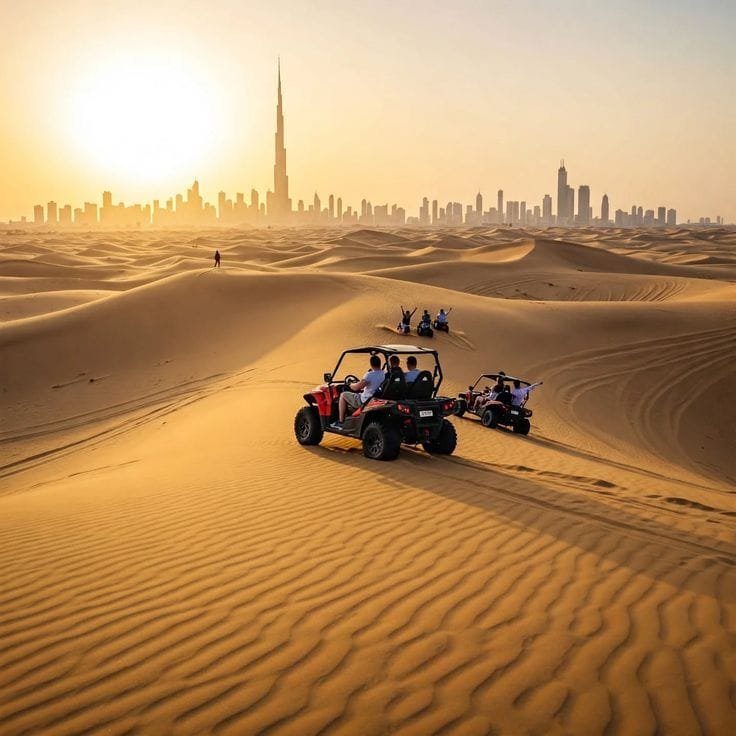
Morning or Evening Safari in January?
Evening, for almost everyone. The sunset, BBQ buffet and three live shows are what a January safari is, from AED 35 per person self-drive, AED 50 by shared bus from Al Wahda or Mazyad Mall, or AED 100 with hotel pickup. The morning is a specialist pleasure: our private premium safari at AED 700 per car buys empty dunes in the coldest, cleanest air of the year.
| Aspect | Evening in January | Morning in January |
|---|---|---|
| Price | From AED 35 · 50 · 100 per person | AED 700 per car, private premium |
| Temperature curve | Starts near 24.5 °C, ends near 13.8 °C | Starts at the coldest hour of the year |
| Light | Long golden hour into sunset 5:46–6:07 PM | Low side-light, the longest shadows of the day |
| Company | A full camp evening with other guests | The dunes essentially to yourselves |
| Quad add-on | AED 100 single · 150 double | Long route at +AED 200 single · +300 double |
| Best for | First-timers, families, the full programme | Photographers, couples, repeat guests |
The January case for the morning is silence and light; the case against is temperature, because a January dawn is the coldest experience we sell. Details sit on our morning desert safari page.
Book the Clearest Month in the Desert
Evenings from AED 35 per person · private Land Cruiser AED 800 per car · morning private premium AED 700 per car. No deposit, payment on arrival, free cancellation up to 12 hours before.
How Busy Is January? The Two Halves of the Month
There are effectively two Januaries. The first week is the tail of the peak — New Year visitors still in the country, the Liwa festival still running, camps at their fullest. From the second week the wave recedes while the weather does not change: same 24.5 °C afternoons, same sky, far more room.
| Window | Booking pressure | Our advice |
|---|---|---|
| First week | Highest of the month — New Year travellers | Book 2–4 days ahead; private vehicles closer to a week |
| Second week | Easing quickly as flights home fill | One to two days is usually enough |
| Mid to late January | The season’s quiet secret — same weather, fewer people | Weekdays often available same-day |
| Weekends, all month | Local families out enjoying the cool | Reserve earlier than for a weekday evening |
If your dates are flexible, the second half of January is the best window of the winter — not because prices move (ours do not), but because peak conditions arrive with shoulder-season space. Guests who came for the Christmas-week safari often say they would return three weeks later instead.
One event worth knowing: the Liwa International Festival runs from mid-December into early January at Moreeb Dune, hours deeper into the desert. It has no effect on Al Khatim — though we can plan a separate Liwa trip if it appeals.
January vs December vs February
January is the coldest and clearest, December the most festive with the earliest sunsets, February the warmest with the coldest sea. For stargazing, dune walking or photography, January takes it; for warmer camp evenings, February edges ahead.
| Measure | December | January | February |
|---|---|---|---|
| Average high | 26.5 °C | 24.5 °C | 26.5 °C |
| Average low | 15.7 °C | 13.8 °C | 15.9 °C |
| Sunset range | 5:34 → 5:45 PM | 5:46 → 6:07 PM | 6:08 → 6:24 PM |
| Rain | ~8 mm / ~2 days | ~12.5 mm / ~3 days | ~8 mm / ~2 days |
| Coastal humidity | 69% | 68% | 66% |
| Crowds | Peak — holidays, National Day, Liwa | Peak week one, then quietest of the three | Steady peak season |
Read across the sunset row and you watch the season turn: January hands back twenty minutes of evening daylight and February keeps going — good for daylight dune time, less good for darkness. Compare all twelve on our best time for a desert safari guide, or read the neighbours: December and February.
Photographing the Desert in January
January gives photographers three things no other month offers together: a sun that never climbs steeply, so the whole afternoon is usable; air with no dust or heat haze, so distant ridgelines stay sharp; and an early blue hour with colour in the sky while the camp lights are on. Low sun also means raking shadows across the ripples.
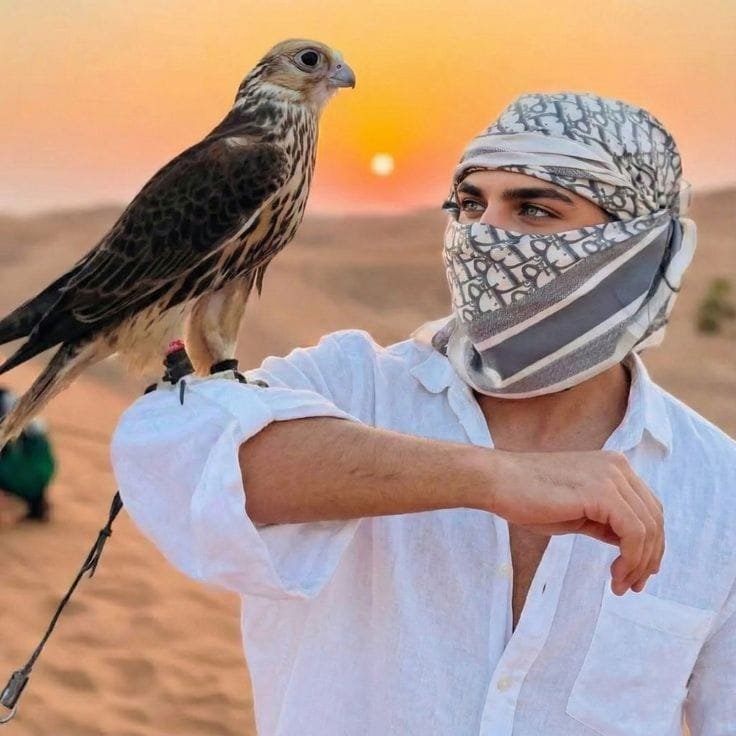
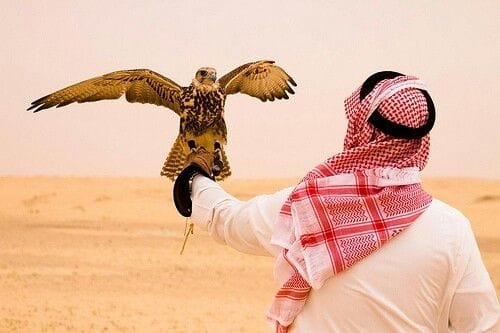
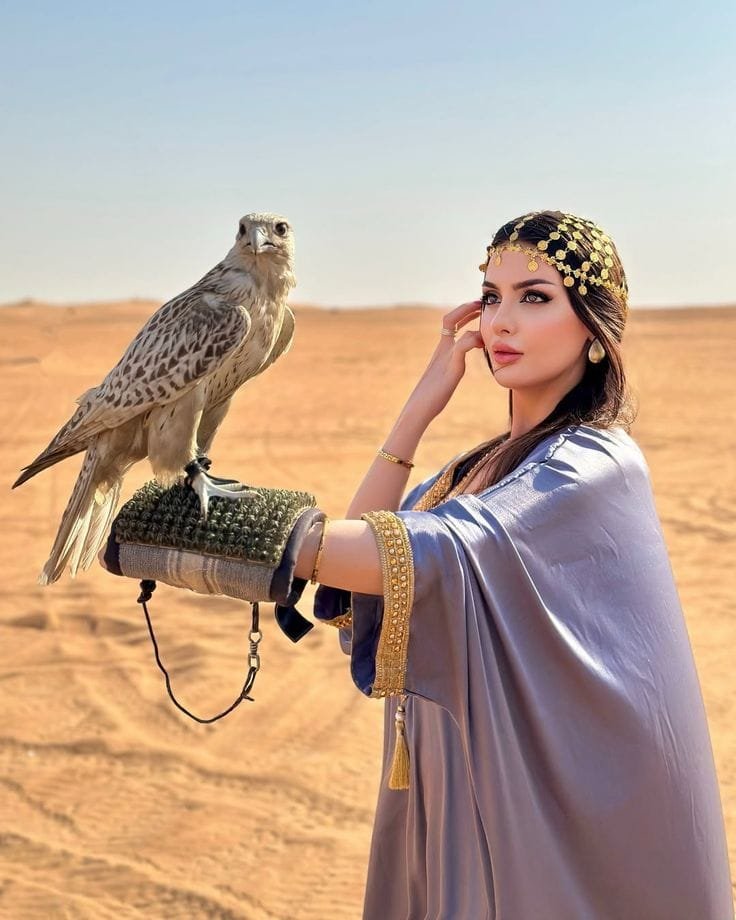
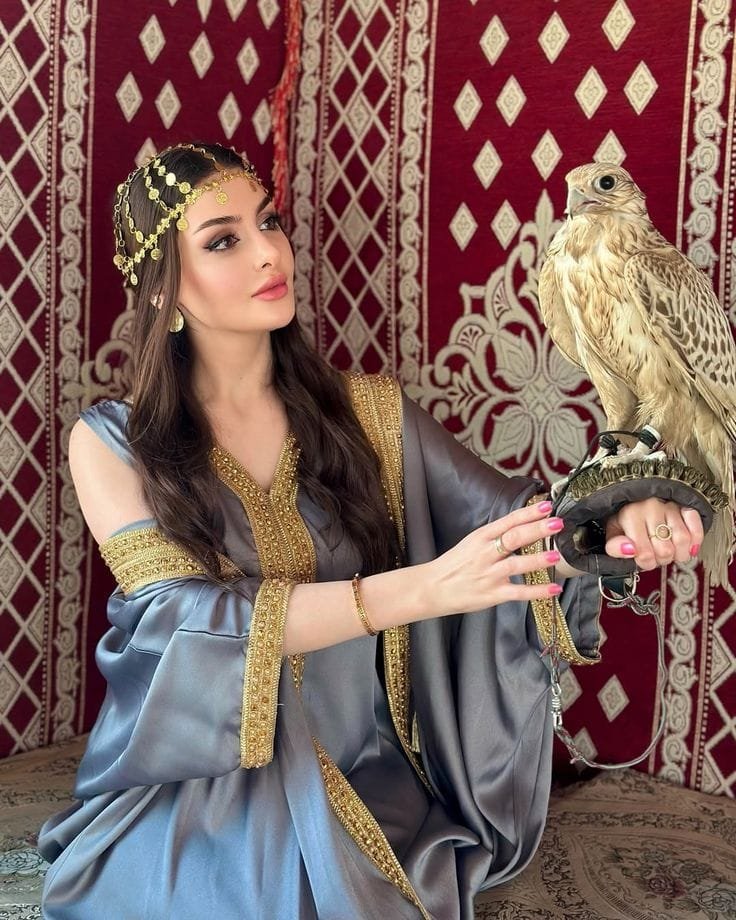
Blue hour is the shot most guests miss while queuing for the buffet, and the same clear sky later supports long-exposure star work — a compact tripod earns its space. Batteries also drain faster in cold air. If you would rather be in the pictures, professional photography starts at AED 50 and the falcon photo is AED 30, and background on the terrain is in our Al Khatim desert guide.
How Cold Sand Changes Every Activity
The most underrated feature of a January safari is sand you can touch: in high summer the surface can be too hot for bare feet in daylight, while in January it stays cool from pickup to the last show.
Sandboarding and dune walking
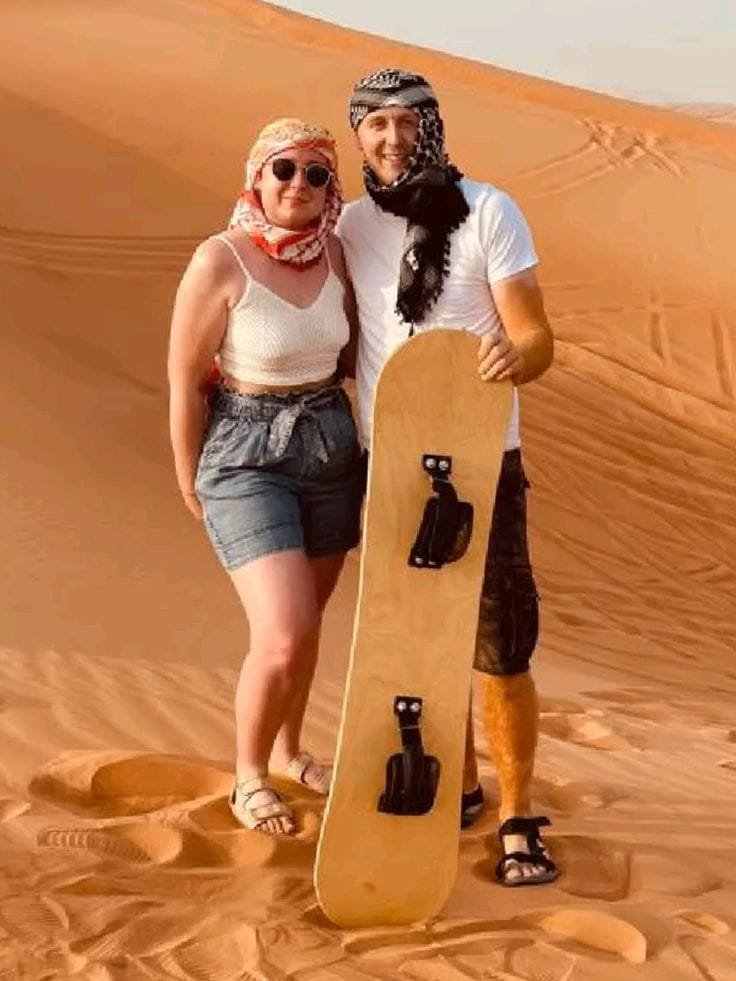
Cool dry sand is comfortable to sit on, kneel on and fall into — which is what beginners actually do on a board — and climbing back up a slipface is far easier without heat to manage. Technique notes live on our sandboarding page.
Camels, quads and dune bashing
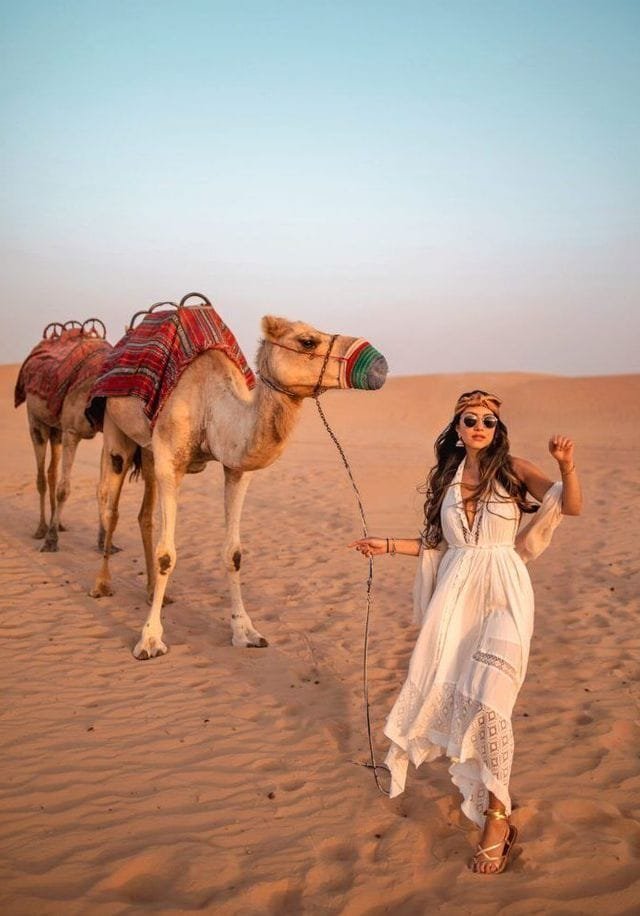
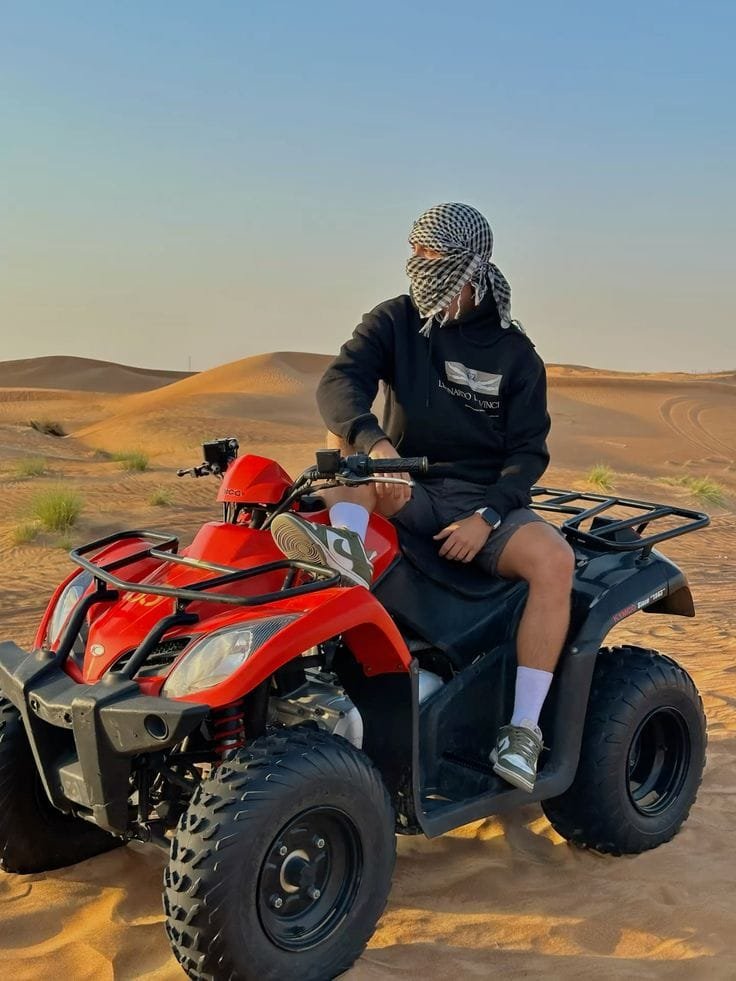
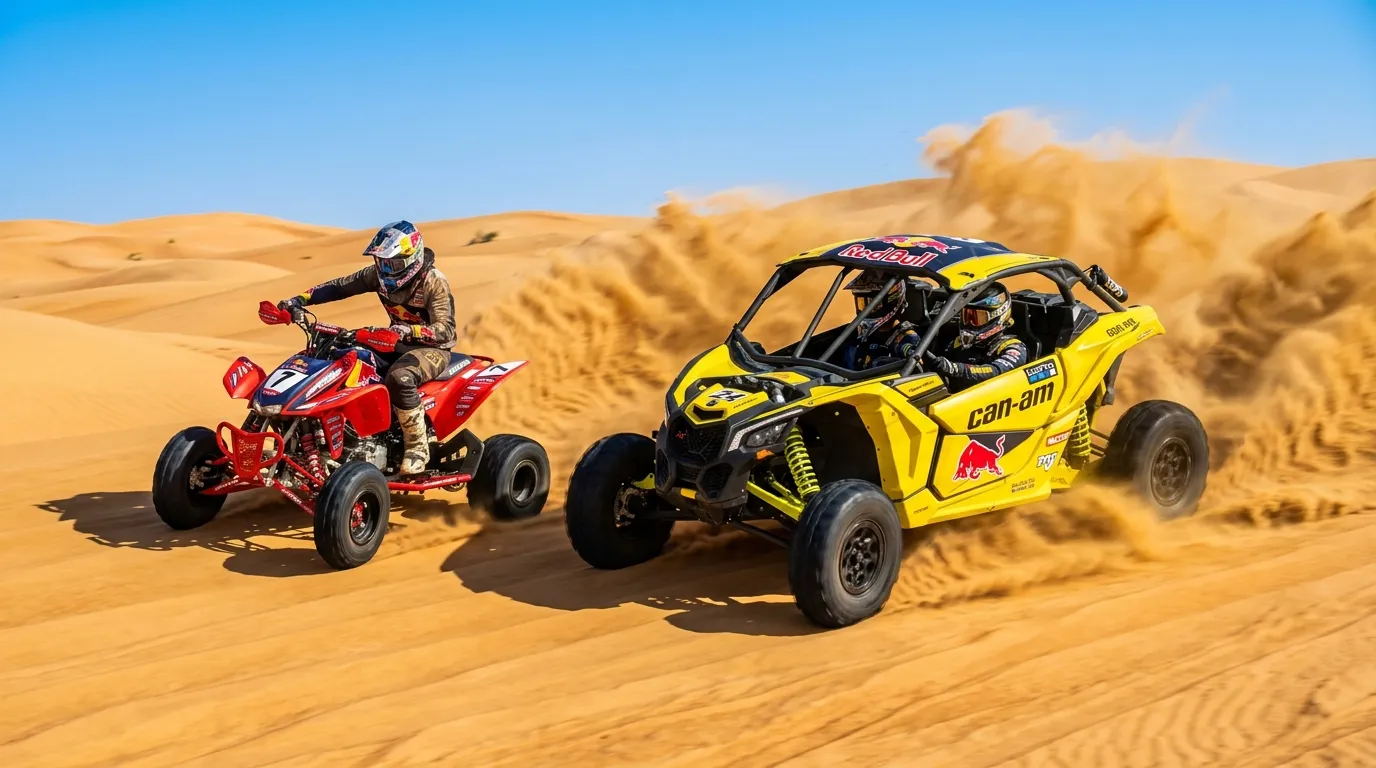
The short camel ride is included; the long camel ride is AED 300 for two and far more pleasant in mild air. Quad bikes are AED 100 single and AED 150 double, with the long route on morning safaris at +AED 200 and +AED 300, and the Can-Am buggy from AED 600 for thirty minutes. Extra dune bashing is AED 150 per vehicle.
One January warning: wind chill at quad speed is the coldest thing you will feel all evening, so zip up and ride before sunset if you can. Routes and rider requirements are on our quad biking page.
Who Should Book January — and Who Should Choose Another Month
January is not universally right, and pretending otherwise wastes your trip. Here is the honest split after more than a decade of winter evenings at Al Khatim.
January Desert Safari Prices at Our Al Khatim Camp
Nothing on this list changes in January. No peak-season surcharge, no holiday pricing, no weekend premium — the same rates we publish all year, with payment taken on arrival.
| Option | Price (AED) | Notes |
|---|---|---|
| Evening safari — self-drive | 35 per person | Meeting point shared on WhatsApp |
| Evening safari — shared bus | 50 per person | From Al Wahda or Mazyad Mall |
| Evening safari — hotel pickup | 100 per person | Door to door, pickup 3:00–3:30 PM |
| Private 7-seater car | 599 per car | Your own vehicle and driver |
| Private Land Cruiser | 800 per car | Your own vehicle and driver |
| Morning private premium | 700 per car | Dawn start |
| VIP majlis upgrade | +50 per person | Cushioned front-row seating |
| Quad bike | 100 single · 150 double | Evening add-on |
| Morning long-route quad | +200 single · +300 double | On the morning programme |
| Can-Am buggy | from 600 | 30-minute session |
| Extra dune bashing | 150 per vehicle | Beyond the standard session |
| Long camel ride | 300 for two | Short ride already included |
| Falcon photo | 30 | At the camp |
| Professional photography | from 50 | Dunes and camp |
The evening price includes dune bashing, sandboarding, a short camel ride, the sunset stop, falcon photos, henna, Arabic coffee and dates, unlimited soft drinks and tea, three live shows and the BBQ buffet. Full comparisons are on our desert safari prices page.
Why Book Your January Safari With Us
Royal Arabian Safari Tourism LLC is a DCT Abu Dhabi licensed tour operator with its own private camp in the Al Khatim desert — not a reseller. Our office is at Al Sila Tower, Al Maryah Island, and we have hosted more than 5,000 guests across upwards of a decade of winter seasons, at a 4.9★ Google rating.
Ownership matters in January: our drivers know which tracks run firm after a winter shower and which ridge holds the best light at 5:46 PM. Payment is on arrival, with no deposit and free cancellation to 12 hours — see the DCT licensed safari page.
January Dates Fill From the First Week
Send your dates and group size and we will confirm availability, meeting point and pickup time. Evenings from AED 35 per person, private cars from AED 599.
January Desert Safari in Abu Dhabi — Frequently Asked Questions
Is January a good month for a desert safari in Abu Dhabi?
Arguably the best month of the year. Climate normals give January a 24.5 °C average high and the calendar’s coldest low at 13.8 °C, and clean winter air delivers the season’s clearest skies. Afternoons are comfortable, sand stays cool underfoot, and every activity is easier than in the heat.
How cold does the desert get at night in January?
The January average low is 13.8 °C, the coldest of any month here. On an open dune with a breeze it feels cooler still, and the drop begins as soon as the sun goes, because clear skies let the sand shed heat fast. Expect jacket-and-hot-tea conditions after sunset.
Do I really need a jacket for a January desert safari?
Yes — it is the most important thing to pack. You leave your hotel near 24 °C and return near 13.8 °C, having spent the coldest hours outdoors at an open-air camp. A fleece plus a windproof jacket covers it, and children need one layer more than adults.
What time is sunset in January in Abu Dhabi?
Naval observatory tables put sunset at about 5:46 PM at the start of January and 6:07 PM by the end — some twenty minutes later across the month. With a 3:00–3:30 PM pickup, the sunset stop lands roughly two hours in, and the camp is dark before dinner.
Does it rain in Abu Dhabi in January?
Sometimes, but very little: about 12.5 mm across roughly three days for the whole month, part of the small January-to-March window, and inland Al Khatim usually sees less than the coast. Showers pass quickly, and a cloudy start often produces the best sunset of your trip.
What happens if it rains on the day of my safari?
The safari almost always runs. Our drivers assess dune conditions through the afternoon and adjust routes if a track is slick, as they would for soft sand or high wind. If conditions are genuinely unsuitable we move you to another date free, and there is no deposit to lose.
Is January busy, and how far ahead should I book?
The first week is busiest, with New Year visitors still in the country — book two to four days ahead, or nearer a week for private vehicles. From the second week demand drops sharply while the weather stays identical. Weekends are busier than weekdays all month.
How much does a desert safari cost in January?
Exactly what it costs all year: AED 35 per person self-drive, AED 50 by shared bus from Al Wahda or Mazyad Mall, AED 100 with hotel pickup. Private cars are AED 599 for a 7-seater and AED 800 for a Land Cruiser; the morning premium safari is AED 700 per car.
Is January good for stargazing in the desert?
It is the best stargazing month we run. January sits inside the October-to-March window operators agree gives the clearest skies, with no summer dust or haze, and sunset before 6 PM means three to four hours of true darkness inside a standard evening. Check the moon phase.
Morning or evening safari in January?
Evening for almost everyone: sunset, BBQ buffet and three live shows from AED 35 per person. Choose the private premium morning safari at AED 700 per car for empty dunes and the cleanest light of the year — but know that a January dawn is the coldest start on the calendar.
Is a January desert safari suitable for young children?
It is the best month for them. Mild afternoons make sandboarding and dune climbing easy, cool sand means no burnt feet, and with darkness before 6 PM children see a real starfield during dinner rather than past bedtime. Pack each child an extra layer for the drive home.
Does the safari run every day in January?
Yes. We operate daily throughout January, including January 1, with pickup at 3:00–3:30 PM and return around 10:00–10:30 PM. The full programme runs as published — dune bashing, camel ride, sandboarding, buffet dinner and all three shows — at standard rates, with nothing dropped from the inclusions.
Is the sand cold in January? Can we go barefoot?
The sand is cool rather than cold, and barefoot is comfortable through the afternoon and early evening — a real January pleasure, since in high summer the surface can be too hot to touch in daylight. Later at night it turns chilly, so bring closed trainers and socks.
Can we combine beach days with the safari in January?
You can, with realistic expectations. The sea sits at 22.7 °C in January and drops toward 21.1 °C in February — bracing rather than balmy, fine for hardy swimmers, better suited to walking and cycling the coast. Check whether your hotel heats its pool before counting on it.
Is January or February better for a desert safari?
Both are excellent peak-season months. January is cooler at 24.5 °C days and 13.8 °C nights, with clearer skies and better stargazing; February is warmer at 26.5/15.9 °C with sunsets to 6:24 PM, but the coldest sea of the year. January for sky, February for warmer evenings.
Does the Liwa festival affect a January safari at Al Khatim?
Not at all. The Liwa International Festival runs from mid-December into early January at Moreeb Dune, hours deeper into the desert, and its crowds never reach Al Khatim — our camp stays calm even in the busy first week. We can arrange a separate Liwa trip if it appeals.
What if our January dates fall in Ramadan weeks?
Safaris continue to run. The Islamic calendar moves about ten to eleven days earlier each year, so in some years Ramadan weeks fall inside the winter season. Dinner then aligns with after-sunset timing, Tanoura and fire shows generally continue, and music or dance may be limited on some days.
The Month the Desert Is at Its Best
January asks one thing of you — pack a jacket — and returns the mildest afternoons, the cleanest air and the most star-filled sky of the Abu Dhabi year, with cool sand you can climb barefoot.
Come in the first week for the last of the holiday energy, or from mid-month for identical conditions with room to breathe. Read ahead to March for the season’s last fully comfortable month — then send your dates to +971 58 228 2683 on WhatsApp.
Desert Safari Abu Dhabi Month by Month
Every month has its own temperatures, sunset times and character. Pick yours — or compare against the best time to visit.
Book this tour
No deposit and no card details. Message us and we confirm the plan and the exact price before you commit — answered at any hour.
- Send your date and guest countYour date, how many of you, and where we collect from. That is all we need.
- We send the plan and the pricePer car, not per person. You see the route, the timings and the exact figure first.
- Pay the driver on the dayCash or card, after the run. Free cancellation up to 12 hours before pickup.
Answered 24 hours · No deposit · No booking fee · Licensed operator
If we have to cancel, what happens?
A cancellation policy that covers your obligations but not ours is only half a document. Here is our side of it, in writing.
If we have to cancel your booking — for weather, a vehicle issue, or driver illness — we will contact you as soon as we know and rebook you at no charge on the next date that works for you. You pay nothing for the cancelled booking.
If we need to send a different vehicle than the one you booked, we will ask you first rather than turning up in something you did not book.
This is separate from your own cancellation rights, which are unchanged: you can cancel free up to 12 hours before pickup. Because we take no deposit and no booking fee, there is no money of yours sitting with us either way — nothing to chase, and nothing to wait for.