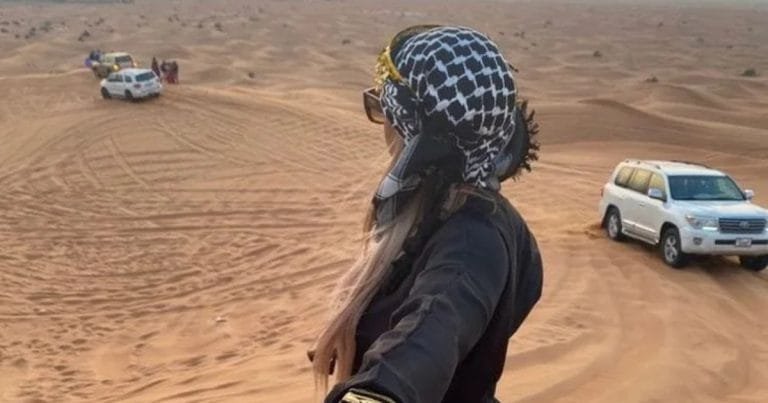
What to Bring to Desert Safari Abu Dhabi
The complete packing checklist — clothes, camera, cash, medicines, and everything else. Plus what NOT to bring. Written by the team who runs 5,000+ safaris a year at Al Khatim Desert.
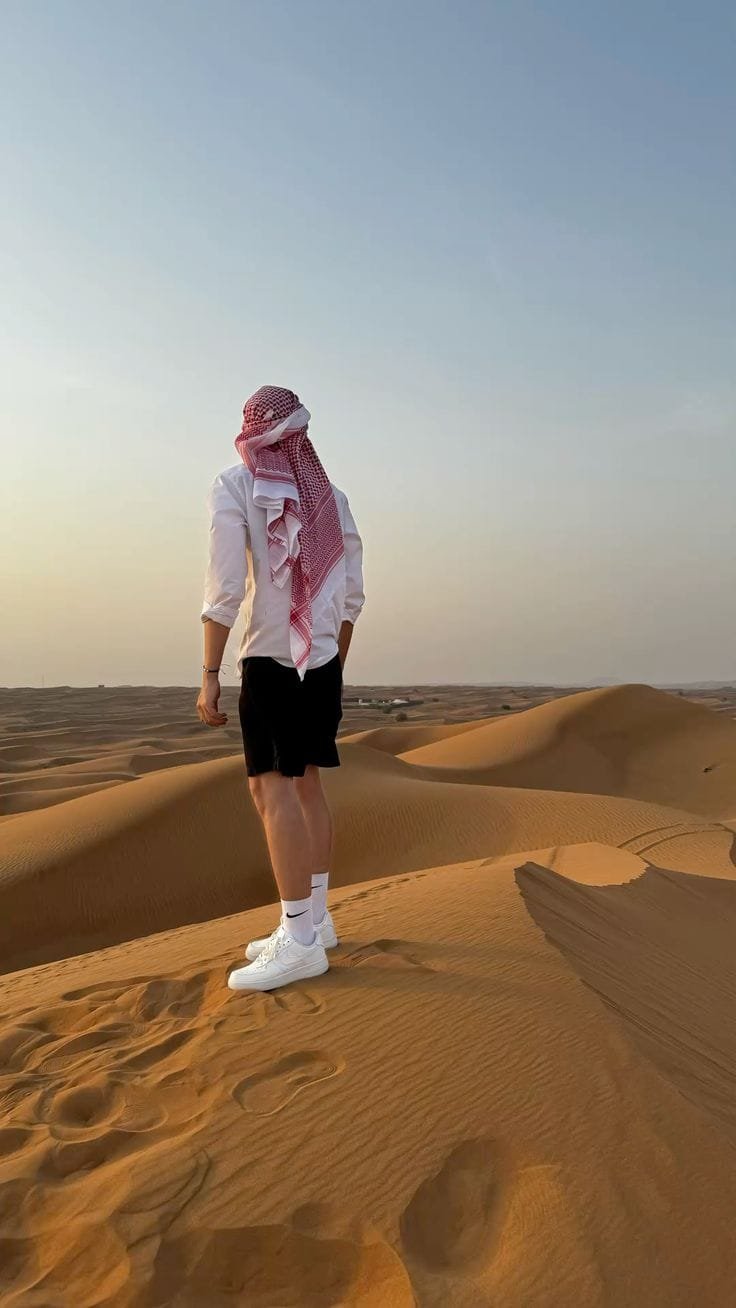
What Should I Bring to a Desert Safari in Abu Dhabi?
The essentials for an Abu Dhabi desert safari are: lightweight breathable clothing, a light jacket or medium layer for the evening (temperature drops to 13 to 25 degrees depending on the month), closed-toe shoes, sunscreen SPF 30 or above, sunglasses, a fully charged phone or camera, a small amount of cash in AED for optional add-ons, and any personal medication including motion sickness tablets if you are prone to nausea. Everything else — water, snacks, food, entertainment, transport — is provided.
What you do NOT need: formal wear, heavy luggage, valuables or expensive jewellery, large amounts of cash (add-ons cost AED 30 to AED 150), or a specific dress code. The desert is casual. Bring what makes you comfortable for 8 hours outdoors. The most common mistakes are underpacking layers for the cool evening, and forgetting a fully charged device for photos.
Everything to Bring — 7 Categories
Gold checkbox = must-have. Plain checkbox = recommended. Red = do not bring.
Light breathable top
Cotton or linen. Afternoon arrival is 20 to 33 degrees depending on month. Avoid dark colours — they absorb heat in the desert sun.
Jacket or warm layer
Evening temperature drops to 13 to 25 degrees. A light jacket is optional in summer, essential in October to March. The single most forgotten item — do not skip it in cooler months.
Long trousers or full-length pants
Protects from sun during dune bashing and keeps you warm in the evening. Loose linen or chinos are ideal. Shorts are fine in summer but cold in winter evenings.
Scarf or light shawl
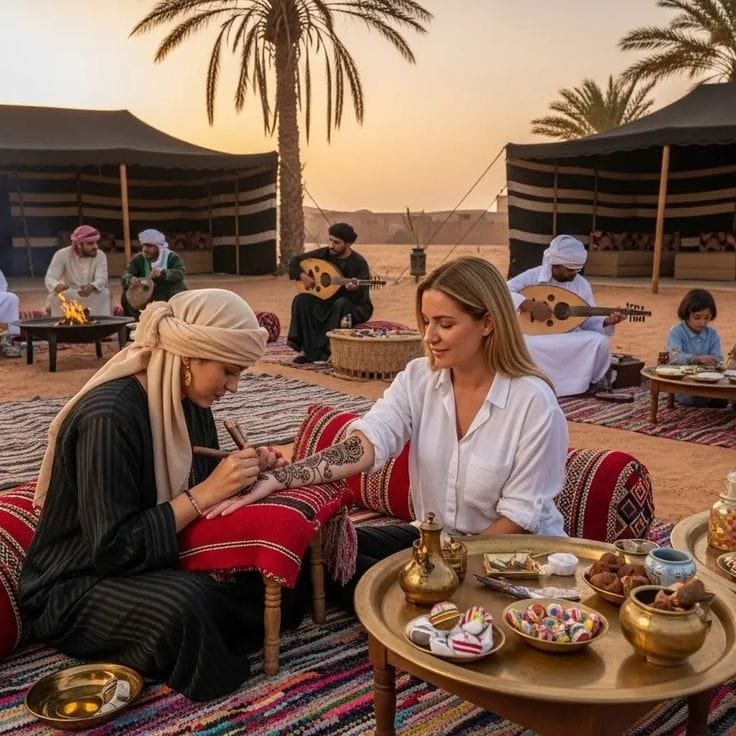
Useful for sun and neck warmth. Ladies who want to try the abaya costume at camp also have it as a practical layer. Recommended October to April.
Comfortable underwear — not your best
Sand gets into everything. Wear comfortable underwear you would not mind getting sandy. A simple practical point that guests are glad they considered.
Closed-toe shoes or flat sandals
Sand gets inside open shoes during dune bashing. Closed-toe shoes like sneakers or trail runners are the best choice. Flat soles are important — heels sink in sand.
Camp sandals or flip-flops (optional extra)
Some guests bring sandals to change into at camp after dune bashing. The sand at camp is cooler and finer — open footwear is pleasant at the Bedouin seating area.
Heels or platforms — leave behind
Heels sink immediately in desert sand and make walking on dunes impossible. Flat soles only. Even a small wedge becomes a problem on loose sand during sandboarding.
Sunscreen SPF 30 or above
Apply before pickup. Desert sun reflected off sand doubles UV exposure. SPF 50 is recommended for fair-skinned guests or those arriving between 11 AM and 5 PM. Reapply during dune bashing stop.
Sunglasses — UV protection
Essential during afternoon dune bashing. Sand reflects glare intensely. Good quality UV-blocking sunglasses protect your eyes and are necessary for photography in bright conditions.
Wide-brim hat or cap
Useful for the afternoon camp activities and sunset photography. Not needed for dune bashing where the vehicle provides shade. A cap is fine — full brim is better for sun coverage.
Lip balm with SPF
Desert air is very dry. Lips chap quickly in the wind during dune bashing. SPF lip balm takes up almost no space and makes a real difference over 8 hours outdoors.
Fully charged phone or camera
The most important item on this list. Dune bashing, golden hour sunset, falconry, henna, fire show, and stargazing all happen in one evening. Low battery is the number one guest regret. Charge to 100 percent before departure.
Power bank
A fully charged phone may not last 8 hours of photography. A power bank is strongly recommended especially for photography-focused guests or those doing the overnight safari. No charging points at camp.
Camera with a sand-resistant bag or case
Fine desert sand infiltrates unsealed camera bags and lens mounts. A zip-lock bag or camera pouch inside your bag gives basic protection. For serious photographers, a dust-sealed body is ideal.
Small torch or phone torch
Camp is lit but paths between areas can be dark at night. Your phone torch works fine. Useful for overnight guests especially when moving around after midnight.
Any regular personal medication
Bring whatever you take daily. The camp is 40 minutes from the city and there is no pharmacy nearby. If you take medication at a specific time, pack it in your bag before departure.
Motion sickness tablets — if prone
Dune bashing is physically intense — rolling, sliding, and climbing steep dunes. If you experience motion sickness in cars or boats, take a tablet 30 minutes before pickup. Tell us at booking and we seat you in the front.
Basic first aid — plasters and paracetamol
Not essential as the camp has basic first aid, but a couple of plasters and paracetamol in your bag is sensible for any 8-hour outdoor experience.
Hand sanitiser
Handwashing facilities are available at camp, but hand sanitiser is convenient between activities especially around the camel ride and before eating starters at 6:30 PM.
Wet wipes or facial wipes
Desert sand settles on skin during dune bashing. A packet of wet wipes freshens you up before dinner and removes sand from hands and face quickly.
Cash or card for add-ons
Safari package price is paid on arrival at camp. Optional add-ons (quad biking AED 50, VIP seating AED 50, photography AED 50 to 150, extended henna AED 30 to 50) can be paid cash or card. Bring AED 100 to 200 if you plan to add extras.
Passport or Emirates ID
Not required for most guests. For overnight safari guests, ID may be requested for camp registration. International visitors should keep ID with them as standard practice in the UAE.
WhatsApp booking confirmation
Your WhatsApp message from us serves as your booking reference. Keep the chat open so you can show it to your driver. No printed voucher needed.
Large amounts of cash — unnecessary
The safari itself is paid at camp. Optional add-ons cost AED 30 to 150 maximum. There is nothing else to buy at camp. Bring only what you need — do not carry significant amounts of cash unnecessarily.
Extra warm layer for children
Children feel cold faster than adults. In October to March, bring an extra jacket or fleece for children above the adult layer you are packing. By 9 PM camp is noticeably cold for small bodies.
Children SPF 50 sunscreen
Children’s skin burns more easily. Apply SPF 50 before departure and reapply during the afternoon camp activities. Desert UV reflection from sand is more intense than at the beach.
Small familiar snack for young children
Camp starters are at 6:30 PM and dinner at 7:00 PM. If your young child eats early, bring a small familiar snack for the drive or early camp arrival. Camp snacks are available but may be unfamiliar.
Baby wipes — generous supply
Children and sand create a predictable combination. A generous supply of baby wipes handles sandy hands, faces, and everything in between over 8 hours outdoors.
What NOT to Bring to the Desert Safari
These items will either cause problems, get damaged, or are simply unnecessary for 8 hours at Al Khatim camp.
Expensive jewellery
Fine sand infiltrates clasps and settings and is very difficult to remove. Leave valuable rings, chains, and earrings at your hotel. Simple jewellery is fine.
Large bags or luggage
If you are on a shared bus or hotel pickup, large luggage cannot be accommodated. A small daypack or shoulder bag is the right size. Maximum what fits on your lap.
Heels or platform shoes
Completely unsuitable for desert sand. Heels sink immediately and make dune activities impossible. Flat closed-toe shoes only.
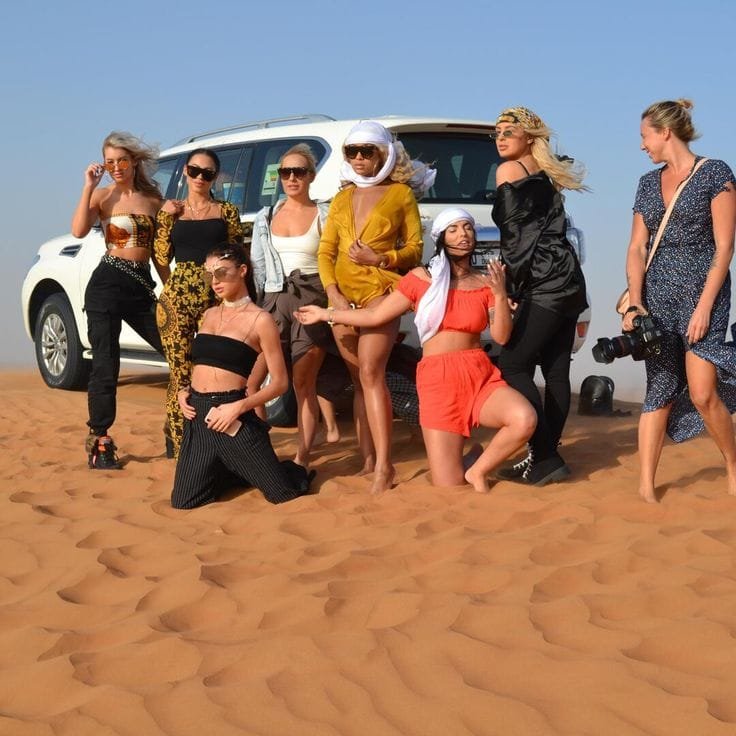
White or very light coloured clothing
Desert sand is orange-red and stains light fabric. Wear colours you are comfortable getting sandy. Light beige, khaki, grey, and earthy tones are ideal and look excellent in desert photos.
Pets
Pets are not permitted at the desert camp for animal welfare and guest safety reasons. Our falcons and camels are working animals and introductions to unfamiliar pets are not possible.
Alcohol
The desert camp is alcohol-free. The UAE has specific laws around public alcohol consumption and our camp respects these fully. Soft drinks, water, tea, and Arabic coffee are provided throughout the evening.
What to Pack Based on the Month You Are Visiting
The desert feels completely different in summer versus winter. Pack accordingly.
☀️ Summer (May to September) — Hot Evenings
- 🟠 Very light breathable shirt — cotton or linen only
- 🟠 SPF 50 sunscreen — essential, apply twice
- 🟠 Sunglasses — high quality UV protection
- 🟠 Light trousers or shorts — your choice, both fine
- 🟠 NO jacket needed — evening temperature 30 to 35 degrees
- 🟠 Extra water bottle — camp provides water but you may want more
- 🟠 Cooling face mist or small personal fan — optional comfort item
❄️ Winter (November to March) — Cool Evenings
- 🔵 Light shirt plus mid-layer sweatshirt
- 🔵 Medium jacket or fleece — ESSENTIAL after 7 PM
- 🔵 Scarf for neck warmth
- 🔵 Long trousers — shorts not recommended
- 🔵 Closed-toe shoes — feet get cold after sunset
- 🔵 SPF 30 still needed for afternoon sun
- 🔵 Optional light gloves for January/February
🍂 Shoulder (October and April) — Variable
- 🟢 Light shirt — afternoon is warm (28 to 33 degrees)
- 🟢 Light jacket — evening drops to 20 to 25 degrees
- 🟢 Long trousers recommended
- 🟢 Closed-toe shoes preferred
- 🟢 Sunglasses and SPF 30
- 🟢 The most flexible packing window of the year
- 🟢 Camera fully charged — best photography light of the year
What You Do NOT Need to Bring — It Is All Included
People often overpack because they do not know what is provided. Here is everything already at camp.
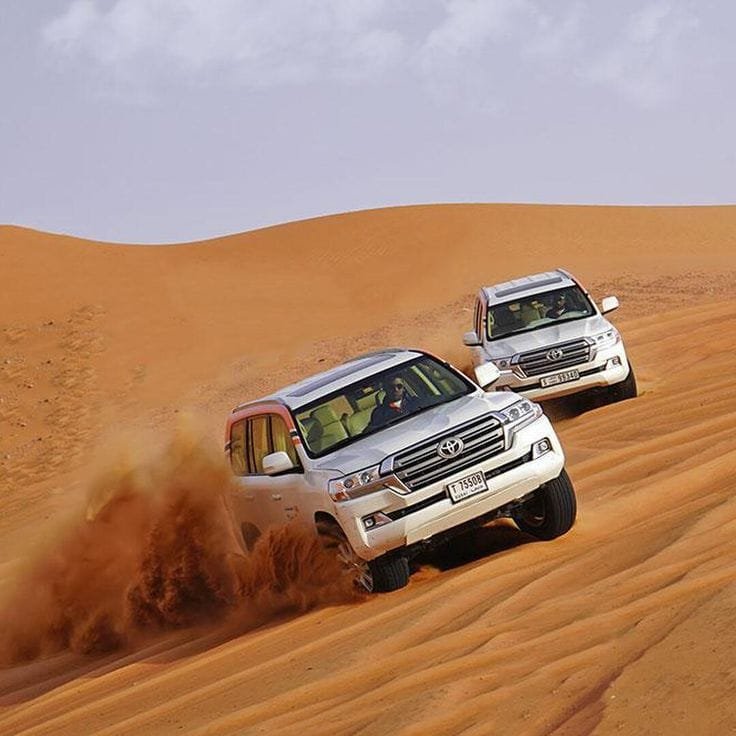
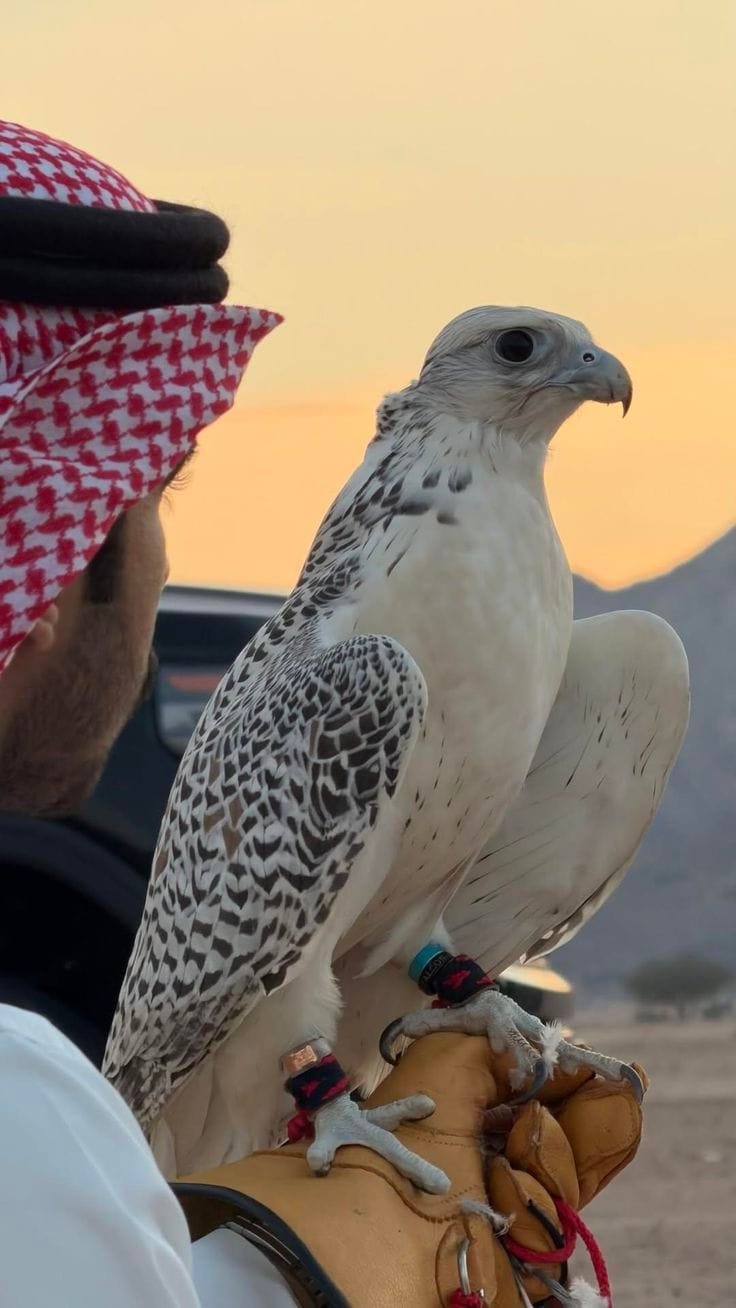
8 Hours of This
Frequently Asked Questions
What is the most important thing to bring to a desert safari in Abu Dhabi?+
Do I need to bring food or water to the desert safari?+
Should I bring cash to the desert safari?+
What bag size should I bring to the desert safari?+
Can I bring my camera or DSLR to the desert safari?+
Should I bring sunscreen even in winter?+
What should I bring if I am prone to motion sickness?+
Is there anything I absolutely cannot bring to the camp?+
Packed? Now Book Your Safari.
WhatsApp in 30 seconds. No deposit. Pay on arrival. We will send your GPS pin and exact pickup time after booking.
Book the Safari This Guide Is About
Same-day WhatsApp confirmation — every ticket includes the full camp evening.
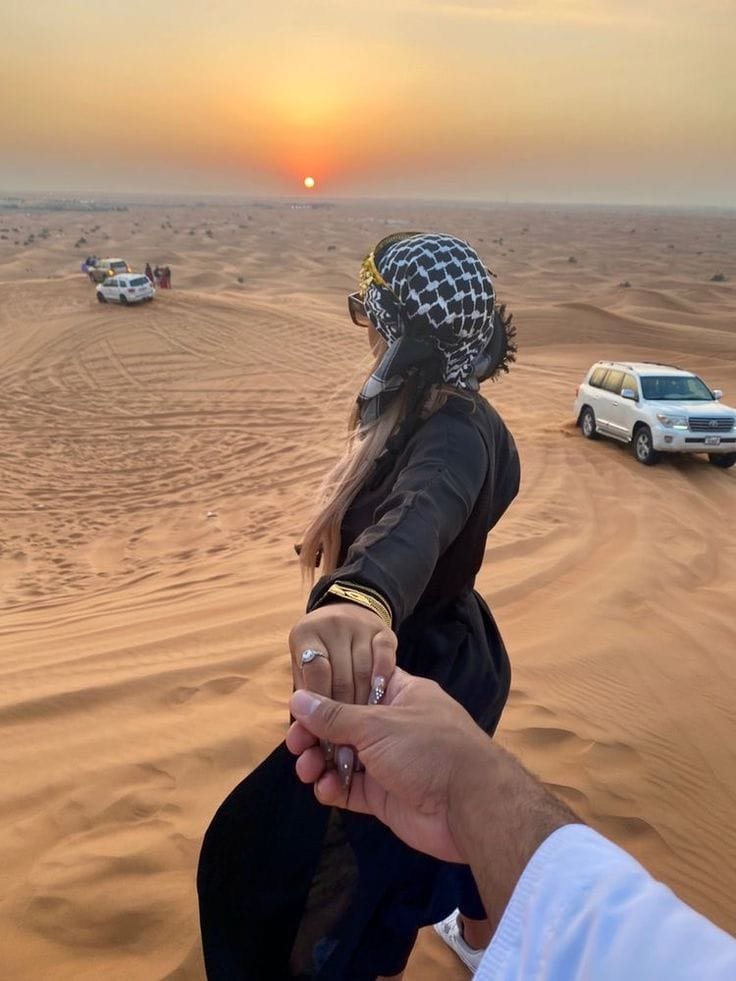 From AED 35 per person
Evening Desert Safari
Dune bashing, sunset, camel ride, BBQ dinner and the three-show camp night.
- Daily departures
- AED 50 coach · AED 100 pickup
- All shows included
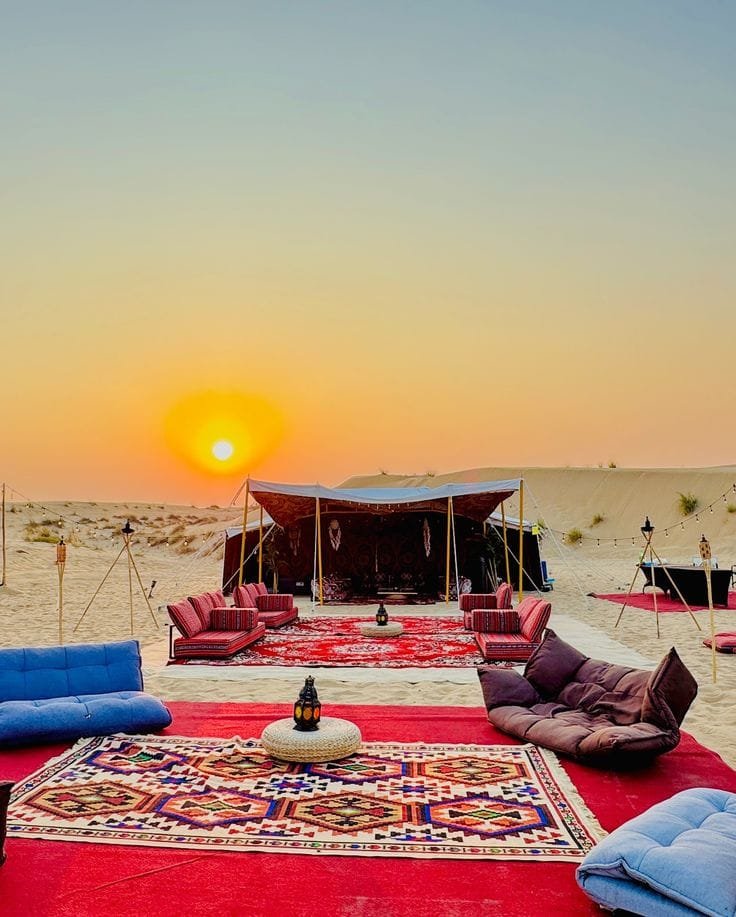 AED 599 per car
Private Evening Safari
Your own 4×4 and driver for up to 7 guests — Land Cruiser AED 800.
- One price per car
- Flexible pickup time
- Unhurried camp evening
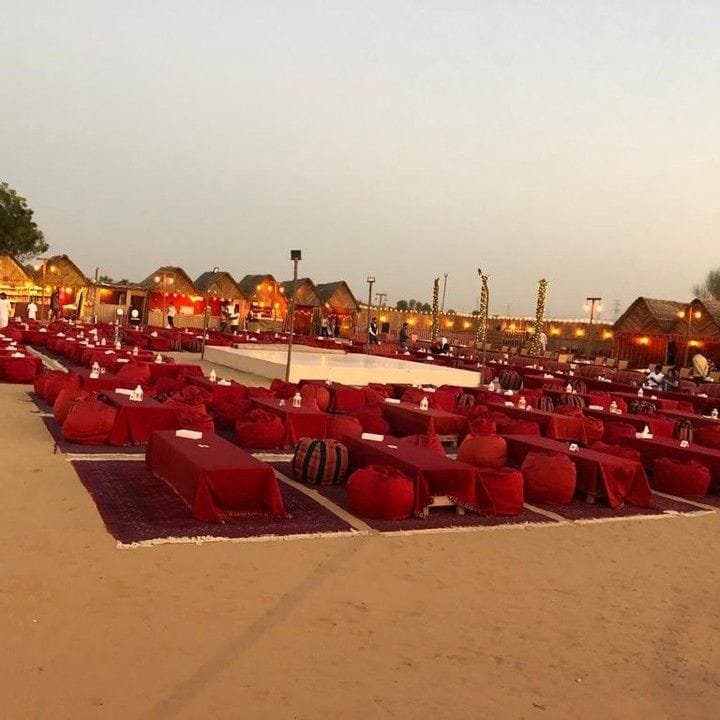 + AED 50 VIP majlis
VIP Majlis Upgrade
Front-row cushioned seating with table service through dinner and the shows.
- Best view of the shows
- Priority buffet access
- Add to any evening ticket
Related Desert Safari Guides
Frequently Asked Questions
What is included in the Abu Dhabi desert safari?
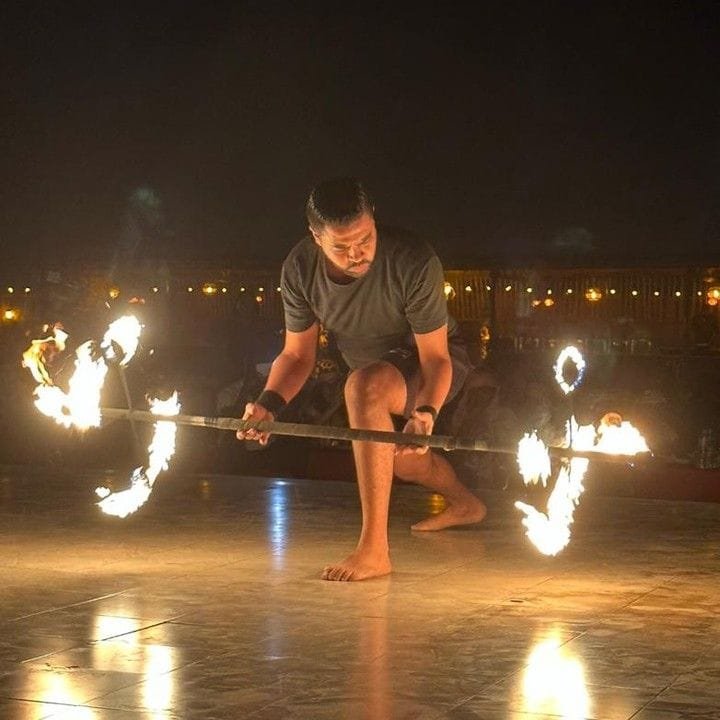
Every evening package includes 4×4 dune bashing, a short camel ride, sandboarding, a sunset photo stop, Arabic costume for photos, henna for ladies, a full BBQ buffet dinner with vegetarian and non-vegetarian options, unlimited soft drinks, water, Arabic coffee and tea, a shisha corner, separate washrooms and around eight live shows including tanoura, belly dance and a fire show.
How much does a desert safari in Abu Dhabi cost?
Booking direct with us: AED 35 self-drive, AED 50 shared bus from Al Wahda or Mazyad Mall, AED 100 shared hotel pickup, AED 599 for a private 7-seater car and AED 800 for a private Land Cruiser. Agencies and hotel desks typically charge AED 180 to 250 per person for the same evening because they add commission on top of an operator price.
What time does the desert safari start and finish?
Pickup is usually 3:00 to 3:30 PM and you are back in the city around 10:00 to 10:30 PM. Timings follow sunset, so in December pickup moves earlier and in June it moves later.
Where does the desert safari take place?
At our own DCT-licensed camp in the Al Khatim desert, roughly 80 km east of Abu Dhabi city along the E22 Abu Dhabi to Al Ain highway, about a 50 to 60 minute drive. The Al Khatim ridges rise over 100 metres, which is considerably taller than the roadside dunes some operators use, and there is far less traffic on the sand.
How do I book?
Message us on WhatsApp with your date and group size. We reply with the exact total, no deposit and no booking fee, and you pay at the camp on the day. Free cancellation applies up to 24 hours before.
Is hotel pickup included?
Yes on the AED 100 shared pickup, the AED 599 private car and the AED 800 Land Cruiser, covering the whole city including the Corniche, Al Maryah, Al Reem, Downtown, Khalifa City, Mussafah, Yas Island, Saadiyat, Shabiya and the airport. The AED 50 package departs from Al Wahda Mall or Mazyad Mall, and AED 35 is self-drive using a GPS pin we send you.
Do I need a 4×4 for the self-drive option?
No. You drive on tarmac to a meeting point, so any standard car or rental reaches it comfortably. Our team takes over there in a proper 4×4 for the dune bashing.
How long is the dune bashing?
Around 40 to 45 minutes with short breaks. Tyres are deflated to roughly 15 psi first so they float on the sand. Intensity is adjustable at any point — tell your driver you want it gentle and it becomes a scenic drive.
Is dune bashing safe?
Yes with a licensed operator. Every passenger wears a seatbelt, vehicles are maintained and insured, drivers are trained specifically for dune driving, and vehicles travel in convoy so recovery is immediate. You can ask to stop at any time.
Can I do the safari without dune bashing?
Yes. Book the self-drive package and come straight to the camp, or ask for a direct transfer on a private car. You still get the sunset, camel ride, sandboarding, dinner and every show. This is the right choice for pregnant guests and anyone with back, neck or heart conditions.
What food is served at the camp?
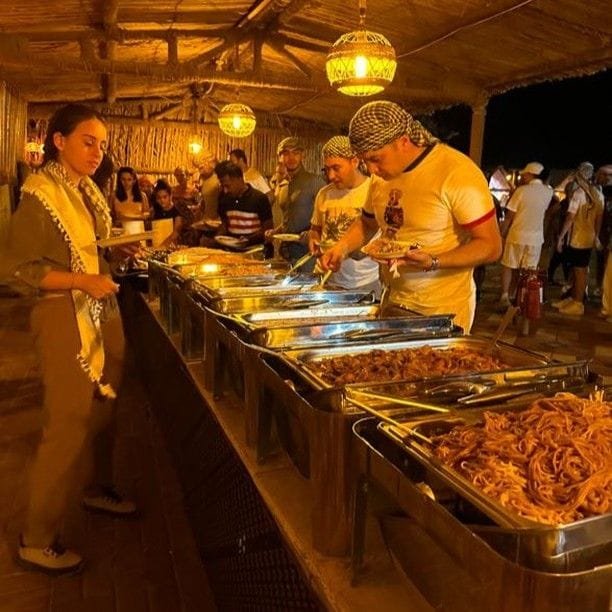
A full BBQ buffet: salads and mezze including fattoush, hummus and Arabic bread; rice dishes, dal, pasta and mixed vegetable sabzi; chicken tikka, shish taouk, lamb seekh kebab and fish from the grill; Om Ali and fresh fruit for dessert. All 100% halal, with unlimited soft drinks, water, Arabic coffee and tea.
Are vegetarian and special diets catered for?
Vegetarian options are always available as standard, and the whole buffet is halal. Vegan, Jain, gluten-free and allergy requirements can be accommodated with advance notice — tell us when you book and we will confirm what will be on the table.
Is alcohol available?
No. Alcohol is not served or permitted at our camp and guests should not bring their own. Unlimited soft drinks, water, Arabic coffee and tea are included, and shisha is available at the camp.
What should I wear?
Loose, light-coloured clothing that covers shoulders and knees, and closed shoes such as trainers you do not mind filling with sand. From October to April bring a jacket — camp temperatures drop to 13 to 22 degrees after sunset. Avoid flip-flops, heels and skinny jeans.
Is the safari suitable for children?
Yes, from about age three. Ask for gentle dune bashing when you book, bring closed shoes and a spare set of clothes because sandboarding puts sand into everything, and pack a warm layer from November to March.
Can I add quad biking or a buggy?
Yes. Quad bikes are AED 100 single seater and AED 150 double, the Can-Am buggy is from AED 600 for 30 minutes, VIP majlis seating is +AED 50 per person, the falcon photo is AED 10–30 and professional photography starts at AED 50. Nothing is required and nothing is upsold under pressure at the camp.
What is the best time of year for a desert safari?
November to March gives the most comfortable conditions. October and April are excellent value with near-peak evenings and far fewer people. From May to September the morning safari is more comfortable than the evening one.
Is there a morning safari option?
Yes. The morning safari is a private premium product at AED 700 per car for up to 7 guests and does not include dinner or the live shows. It suits summer travel, photographers, families with young children and anyone with an evening flight.
What happens if it rains?
Abu Dhabi averages fewer than ten rainy days a year, almost all December to March. Light rain does not stop the safari and the desert afterwards is spectacular. If heavy rain or a strong wind would genuinely spoil the experience we move your date at no cost.
Are there toilets at the camp?
Yes. The camp has clean, separate washrooms for men and women, plus a prayer space, lighting and seating for every guest.
Book Your Safari
Evening safari from AED 35 · coach AED 50 · hotel pickup AED 100 · private car AED 599.