Best Time for a Desert Safari in Abu Dhabi
Month by month, safari by safari — when the dunes are at their best, when to avoid, and the two shoulder months most visitors overlook. From the operator that runs its own Al Khatim camp year-round.
Check My DatesPick the Safari That Fits Your Season
Whatever month you land in, one of these three runs at the right hour for it. All prices are per the package, no deposit — pay on the day.
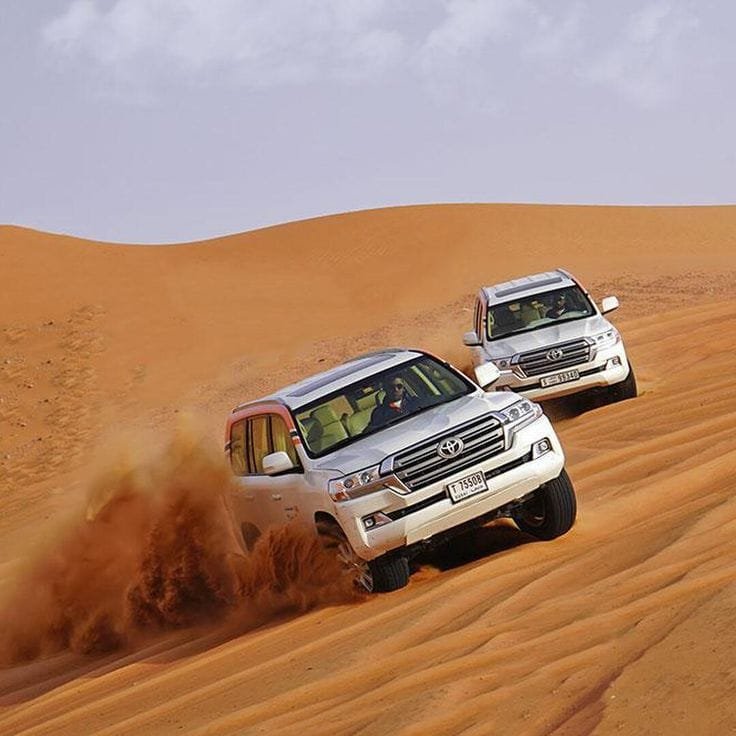 From AED 35 per person
Evening Safari — Nov to March Prime
The classic sunset-to-dinner evening. In the cool months this is the best-value few hours in the emirate.
- Dune bashing, camel, sandboard
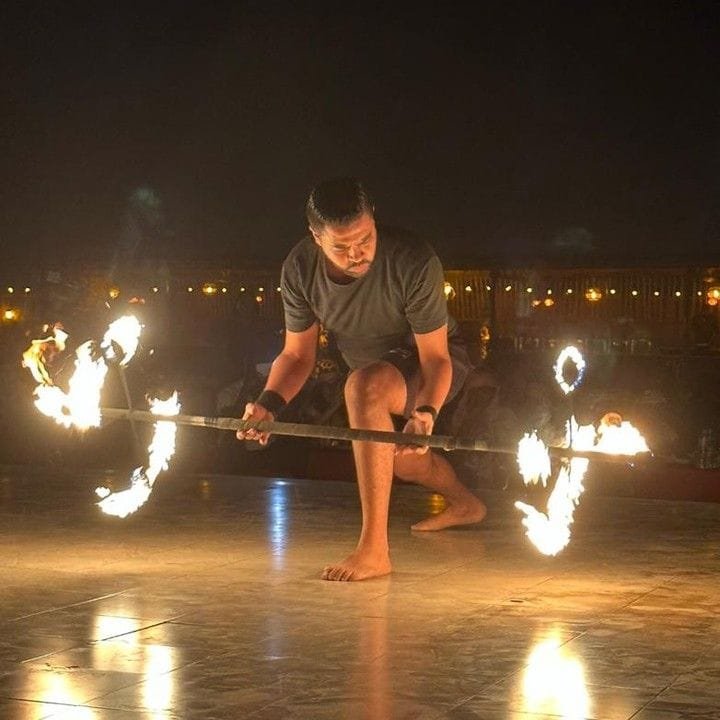
- BBQ dinner + live shows
- Sunset at the camp
- From AED 35 self-drive
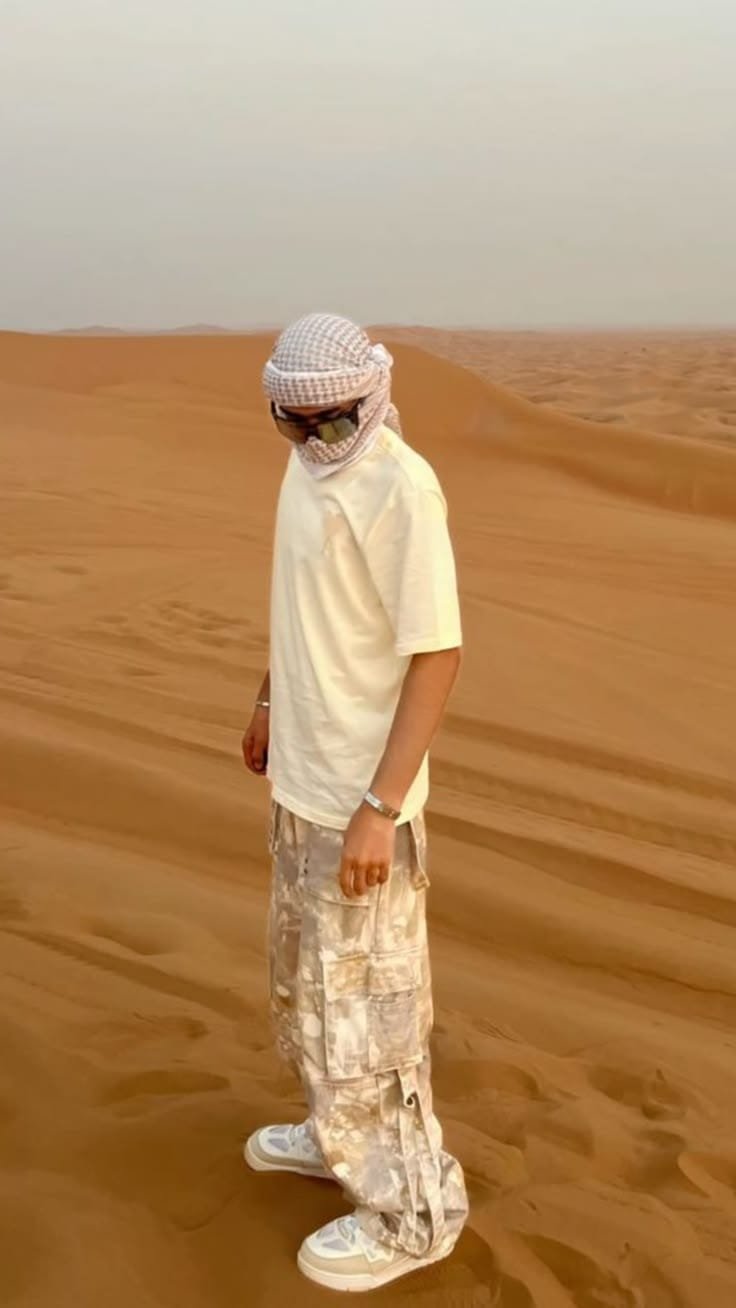 AED 799 per car
Morning Safari — the Summer Answer
April to October, the desert is at its best before 10am. Cool air, clean light, empty dunes — the heat never catches you.
- Sunrise-to-mid-morning window
- Best photography light of the day
- Beats the summer heat entirely
- Private vehicle, up to 7
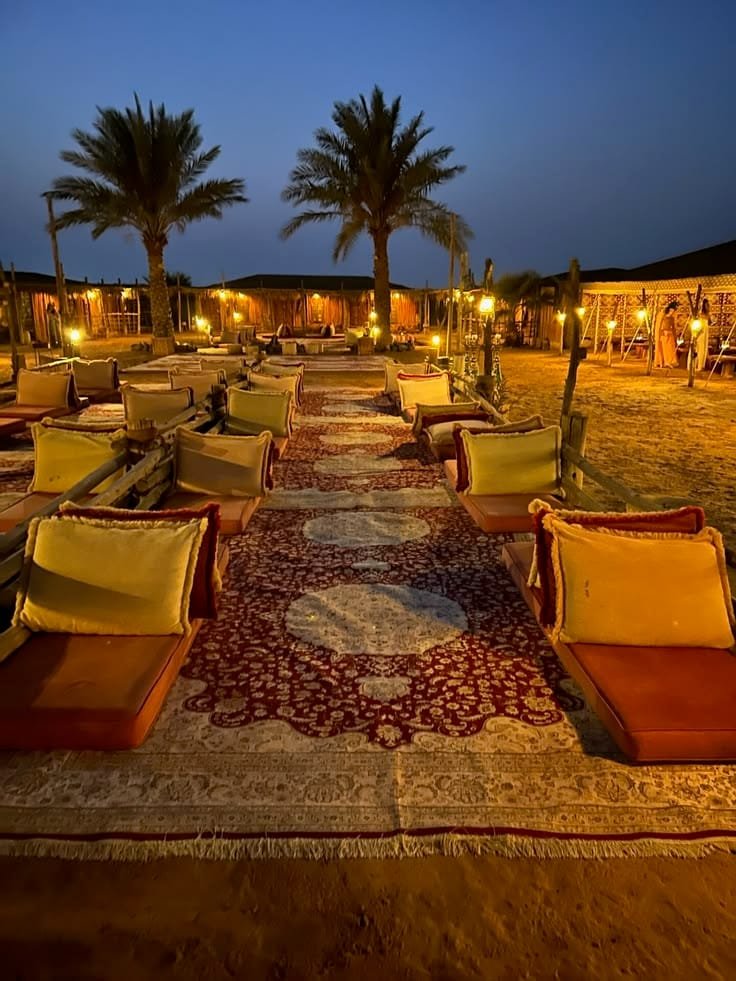 AED 599 per car
Private 4×4 — Any Season, Your Clock
Your own vehicle and timing in any month: chase the sunset in January or leave at dawn in July. Land Cruiser AED 800.
- You choose the departure hour
- Up to 7 guests, one price
- Works around prayer times, naps, flights
- Pay the driver on the day
Desert Safari Abu Dhabi Month by Month
Every month has its own temperatures, sunset times and character. Pick yours — or compare against the best time to visit.
The Short Answer
November to March is the best time for a desert safari in Abu Dhabi. Daytime sits between 24°C and 30°C, evenings at the camp are cool rather than cold, and the dunes hold their shape and colour. If you want the same conditions with fewer people and better prices, October and April are the two months almost nobody talks about and they are very close to perfect.
- Best overall: November, December, February, March
- Best value with near-peak weather: October and April
- Coldest evenings (bring a real jacket): December and January
- Busiest: late December through mid-February, plus UAE public holidays
- Hottest, morning safari only: June, July, August
- Best for stargazing: November to February, on nights either side of a new moon
What Actually Changes Through the Year
Most seasonal guides tell you it is hot in summer and pleasant in winter. That is true and not very useful. What matters for a desert safari is four things that move independently through the year, and understanding them lets you pick a date rather than a season.
1. The temperature swing, not the peak
An evening safari spans seven hours. The number that decides your comfort is not the afternoon high, it is how far the temperature falls after sunset. In July it falls from 44°C to about 33°C — still warm. In January it falls from 24°C to 13°C, and the desert breeze makes it feel closer to 9°C. January is not cold in Abu Dhabi. January in the desert at 9:00 PM is.
2. Sunset time
Sunset in Abu Dhabi ranges from about 5:35 PM in December to about 7:15 PM in June. Your safari pickup shifts with it. In winter you reach the dunes and the light is already golden; in summer you spend the first hour in flat, harsh light and wait for the good part.
3. Dune condition
Sand behaves differently through the year. Cooler months give firmer, more sculpted dunes with sharper ridge lines — better for dune bashing, better for photographs. High summer heat makes surface sand looser and hazier in the middle of the day. The dunes are always dramatic; they are simply crisper from November onward.
4. Crowd levels
Peak season fills camps. From late December to mid-February you will be sharing the camp with a full house, which is lively but not private. October, April and the summer months give you a much quieter camp for the same money.
Month-by-Month Guide
Every month works. Some months work better for specific things. This table is the version we would give a friend planning a trip.
| Month | Day | Camp evening | Crowds | Verdict |
|---|---|---|---|---|
| January | 24°C | 13–16°C | Very busy | Coldest evenings of the year and beautifully clear skies. Best stargazing. Bring a real jacket, not a cardigan |
| February | 26°C | 15–18°C | Busy | Arguably the single best month. Peak weather, clear air, dunes at their firmest |
| March | 30°C | 19–22°C | Moderate | Warm days, mild evenings, thinning crowds. Excellent all round |
| April | 35°C | 23–26°C | Quiet | Underrated. Hot afternoons but genuinely lovely evenings and a calm camp |
| May | 40°C | 28–31°C | Very quiet | Heat becomes the main factor. Evening safari still fine; morning safari better |
| June | 43°C | 31–34°C | Very quiet | Morning safari strongly recommended. Best prices of the year |
| July | 44°C | 32–35°C | Very quiet | Hottest month. Morning safari only for most guests |
| August | 44°C | 32–35°C | Very quiet | As July, with higher humidity near the coast. Desert itself stays dry |
| September | 40°C | 29–32°C | Quiet | The turn. Late September evenings start becoming comfortable again |
| October | 36°C | 24–27°C | Building | The other underrated month. Near-peak evenings, pre-peak prices |
| November | 31°C | 20–23°C | Busy | Excellent. Warm enough for shorts by day, one layer at night |
| December | 27°C | 15–18°C | Very busy | Beautiful weather, biggest crowds, earliest sunset. Book well ahead |
Reading this table: the “camp evening” column is the number that decides what you pack, not the daytime high. Anything at 18°C or below means you want a wind-resistant jacket for the fire show. See our what to wear guide for the full breakdown.
Best Time by Safari Type
The right month depends on which safari you are booking. An overnight camp in July and an overnight camp in January are not the same product.
| Safari | Best months | Still good | Avoid / adapt |
|---|---|---|---|
| Evening safari from AED 35 | Nov–Mar | Oct, Apr | Jun–Aug workable but warm until late evening |
| Morning safari AED 799 per car | May–Sep | Oct, Apr | Dec–Jan dawn is genuinely cold; start later |
| Overnight camping | Nov, Feb, Mar | Oct, Apr | Dec–Jan nights drop near 12°C; Jun–Aug too warm to sleep well |
| Private car safari AED 599 | Any month | — | None — you control timing and pace |
| Stargazing | Nov–Feb | Mar, Oct | Summer haze reduces clarity; avoid full-moon nights year-round |
| Photography | Dec–Feb | Nov, Mar | Summer heat haze softens distant detail |
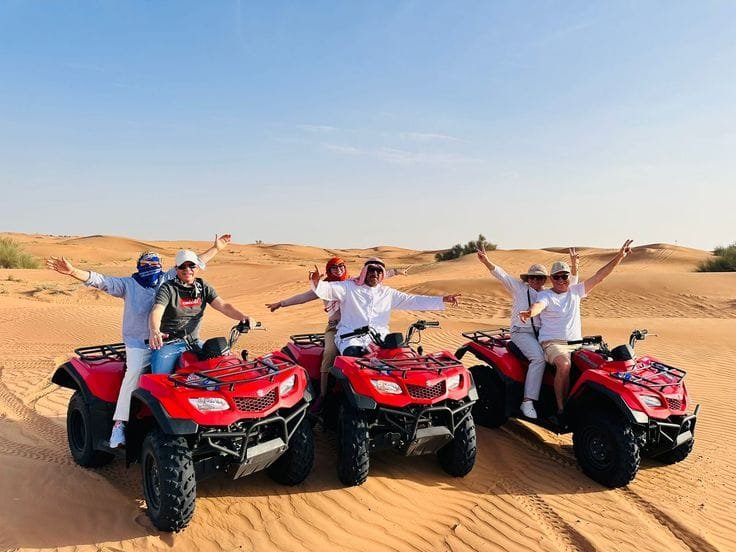
| Quad bike / buggy | Oct–Apr | May, Sep | Midsummer: ride early morning only, long trousers get hot |
| Families with young kids | Nov–Mar | Oct, Apr | Summer: morning safari only |
Why the morning safari flips the calendar
This is the detail that changes people’s trips. Everyone assumes summer is off-limits. It is not — it just moves. A morning desert safari starting around 5:00 AM in June puts you on the dunes at 24–27°C with soft light and an empty desert, and has you back in the city before the heat arrives. Summer is the morning safari’s best season, not its worst.
The reverse is true in deep winter: a 5:00 AM January start is genuinely cold, so we shift morning pickups later in December and January and guests are more comfortable for it.
The Two Months Nobody Books: October and April
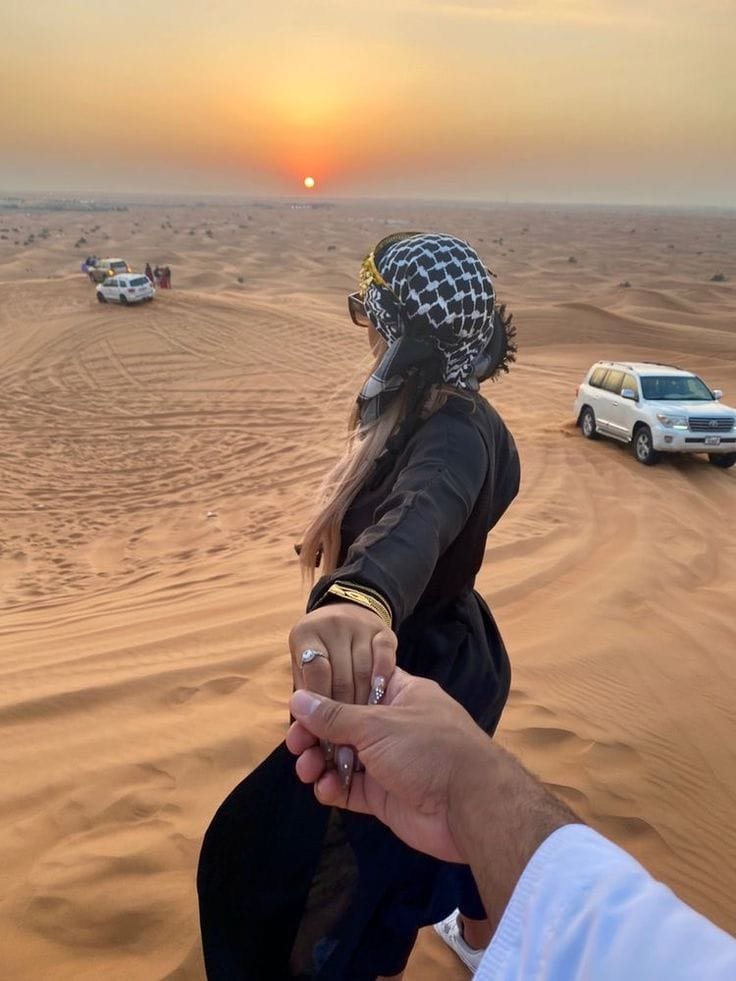
Peak season sells itself. What almost nobody plans for is the pair of shoulder months that sit either side of it, and they are the best value on the calendar.
October
Daytime is still hot at around 36°C, which puts people off. But you are not in the desert at noon — you arrive as the sun is dropping, and October evenings settle at 24–27°C, which is close to perfect. The camp is quiet, prices have not moved into peak, and same-week booking is usually possible.
April
The mirror image. Peak crowds have gone home, evenings sit at 23–26°C, the dunes are still holding their winter shape, and photographers get long golden light with almost nobody in frame. Late April warms up quickly, so the first three weeks are the sweet spot.
Peak Season in Detail: November to March
This is the season the Gulf is built around. Hotels fill, the Corniche comes alive in the evenings, and the desert is at its most comfortable. Here is what it actually means for a safari booking.
What you gain
- Comfortable dune bashing. No heat fatigue after 45 minutes of off-roading.
- The camp works as designed. Sitting outdoors for three hours is pleasant rather than endured.
- Clean air. Winter has the clearest visibility of the year — you can see the dune horizon properly.
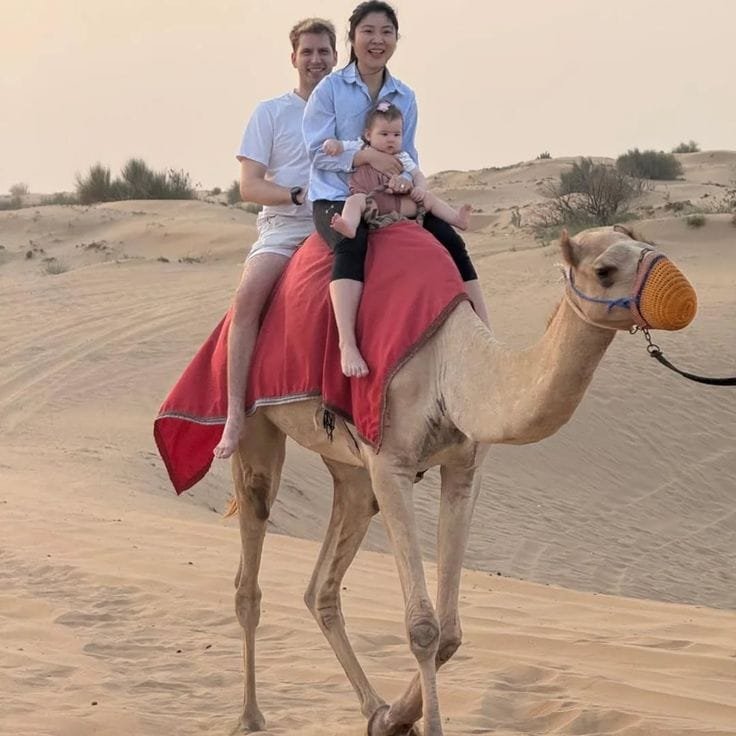
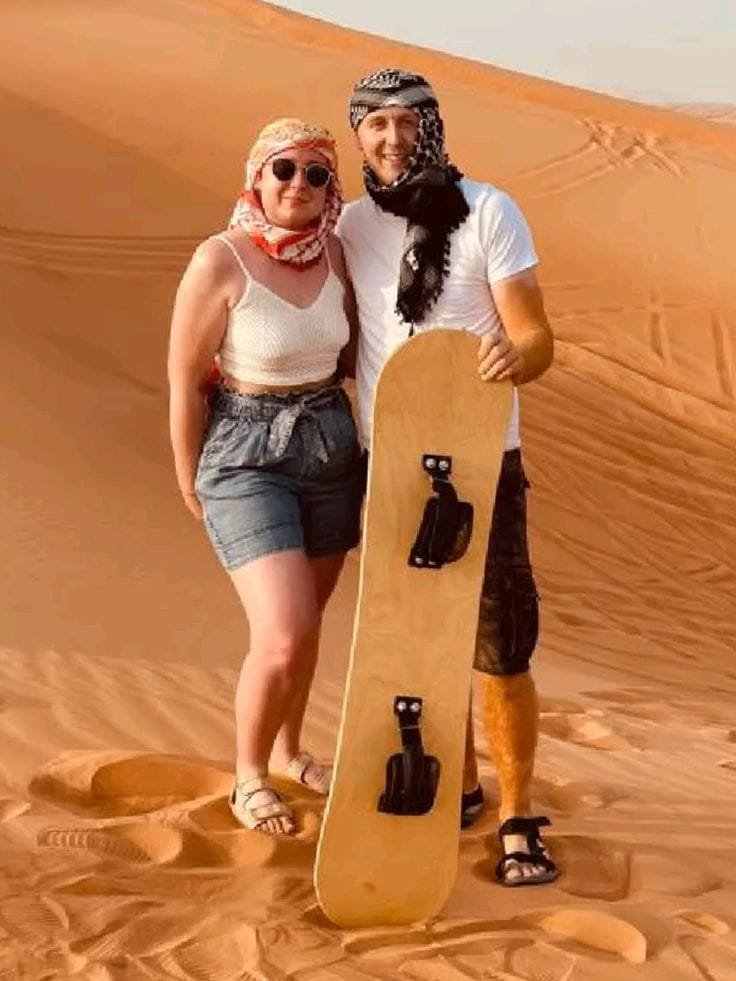
- Every activity is comfortable. Camel rides, sandboarding and quad biking all improve when you are not managing heat.
What you trade
- Availability. From late December through mid-February, weekend slots and private cars go first. Three to four days’ notice is the realistic minimum; over Christmas, New Year and Eid, a week or more.
- A full camp. Great atmosphere, less intimacy. If you want quiet, book a private car safari or come in a shoulder month.
- Cold evenings. Genuinely underestimated. December and January camp temperatures of 13–18°C plus wind catch people out every single week.
Peak dates that book out first
| Period | Book ahead | Why |
|---|---|---|
| Christmas & New Year | 7–14 days | Highest demand of the year |
| Eid holidays | 7–10 days | Strong regional and domestic demand |
| UAE National Day (early December) | 7 days | Long weekend, families travelling |
| Formula 1 weekend (Yas Marina) | 10–14 days | City-wide accommodation and tour surge |
| Weekends, Dec–Feb | 3–5 days | Private cars go first |
| Everything else | 1–3 days | Same-day often possible until about 2:00 PM |
Summer Safaris: May to September, Honestly
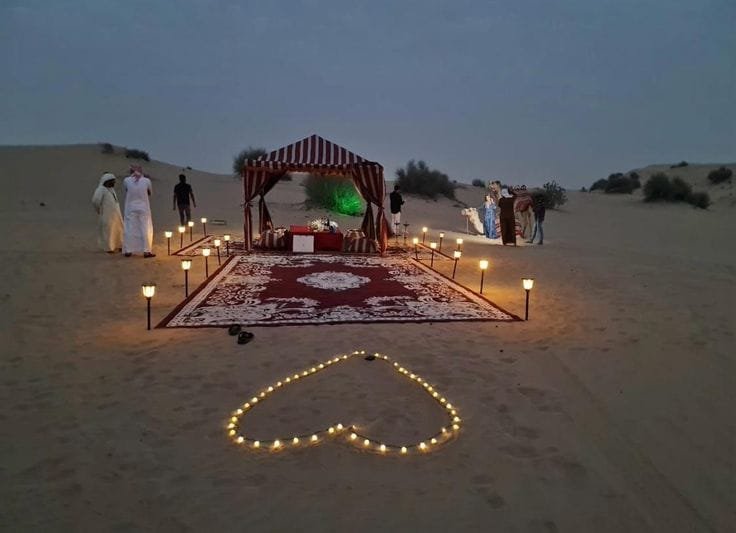
We run safaris every day of the year, and we will not pretend July is February. But summer is far more workable than most guides suggest, and it comes with real advantages.
What is genuinely harder
- Afternoon pickups are hot. The vehicle is air-conditioned; the first dune stop is not.
- Surface sand can exceed 60°C. Closed shoes stop being advice and become a requirement.
- Long camel rides and midday quad sessions are less enjoyable.
- Heat haze softens distant detail in photographs.
What is genuinely better
- The camp is quiet. Sometimes you have a section to yourselves.
- Sunset is late — around 7:00 PM. A long golden hour and warm, pleasant nights afterwards.
- Nights are warm enough to sit out comfortably with no jacket at all.
- Availability and value. Same-day booking is usually fine, and it is the easiest time of year to get a private car.
How to do summer properly
- Choose the morning safari if heat is a concern at all — this is the single biggest lever.
- If you take the evening safari, expect the first 45 minutes to be hot and the rest to be lovely.
- Drink more water than feels necessary; it is unlimited and free at the camp.
- Wear the loosest, palest clothing you own — a long loose linen shirt beats a t-shirt in direct sun.
- Skip the long camel ride; keep the short one, which happens near shade.
Best Time of Day, Not Just Time of Year
Month is half the decision. The other half is which slot you take, and the right answer changes with the season.
| Season | Best slot | Why |
|---|---|---|
| Nov–Feb | Evening | Sunset at 5:35–6:00 PM means golden light arrives right after your first dune run, and the evening is cool but not yet cold |
| Mar–Apr | Evening or morning | Both comfortable; pick by whether you want dinner and shows or a quieter dawn |
| May–Sep | Morning | You are on the dunes in the coolest hours and back before the heat |
| Oct | Evening | Late-afternoon heat fades quickly; evenings are already excellent |
| Any month, photographers | Both | Sunrise for soft, empty dunes; sunset for warm colour and drama |
Sunset times through the year
Your evening pickup shifts with sunset, which is why the “3:00–3:30 PM” pickup is a guide rather than a fixed rule.
| Period | Approx. sunset | Typical evening pickup |
|---|---|---|
| December – January | 5:35 – 5:50 PM | 2:45 – 3:15 PM |
| February – March | 6:00 – 6:25 PM | 3:00 – 3:30 PM |
| April – May | 6:40 – 7:00 PM | 3:15 – 3:45 PM |
| June – July | 7:10 – 7:15 PM | 3:30 – 4:00 PM |
| August – September | 6:45 – 7:00 PM | 3:15 – 3:45 PM |
| October – November | 6:00 – 6:20 PM | 3:00 – 3:30 PM |
Exact pickup is always confirmed on WhatsApp the day before — see full safari timings.
Stargazing: Timing It Properly
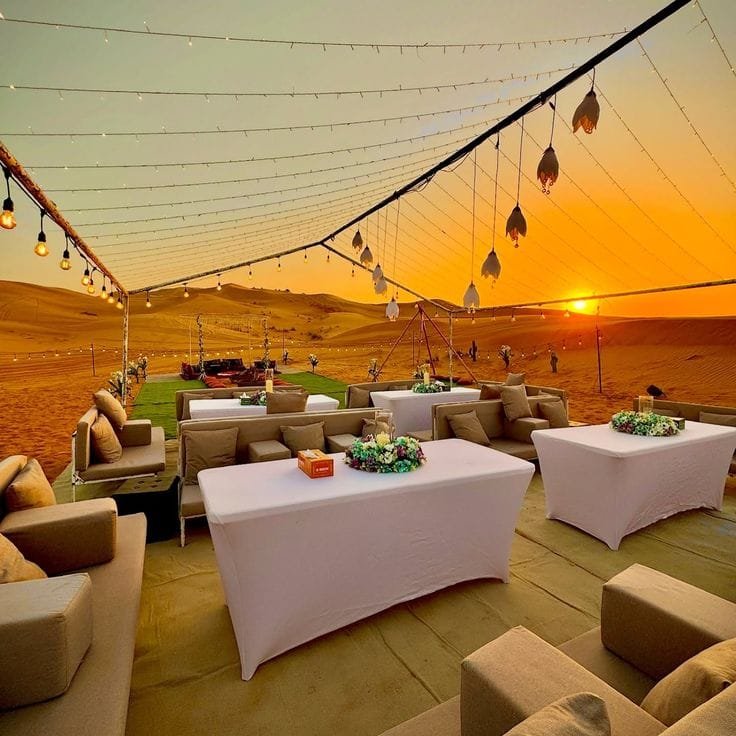
Stargazing has its own calendar, and it is not the same as the general safari calendar. Three things matter, in this order.
- Moon phase beats month. A clear January night at full moon shows fewer stars than a hazier October night at new moon. Aim for the four or five days either side of a new moon.
- Winter air is clearer. November to February gives the sharpest, driest air and the best contrast.
- You need to stay late. True darkness arrives 60–90 minutes after sunset. A standard evening safari catches the beginning of it; an overnight safari gives you the whole sky.
The Milky Way core is most visible from roughly March to September in the pre-dawn and late-evening sky, which is one more reason an overnight stay in March or April is a quietly brilliant booking. Full details on our desert stargazing guide.
Photography by Season
December – February: sharpest
Clearest air of the year, firm sculpted dunes, long low light. Sunset is early, so plan to be on a ridge by 5:15 PM.
March – April: best balance
Warm colour, long golden hour, quiet camp. Late light without winter’s short window.
May – September: atmospheric
Heat haze softens distance, which flattens landscapes but flatters portraits. Shoot early morning for the clean shots.
October – November: golden
Warm sand tones, calm air, thinning crowds. Excellent for couples and family sessions.
Our photography spots guide covers where to stand once you have picked your month.
Ramadan: What Changes and What Does Not
Ramadan moves roughly eleven days earlier each year, so it drifts across the seasons. Safaris run throughout, and for many guests it is a memorable time to visit — but a few things genuinely change.
Continues normally
- All safaris operate
- Dune bashing, camel rides, sandboarding
- Dinner is served at the camp after sunset
- Hotel and home pickup
- Private and overnight safaris
Changes
- Pickup often shifts later so dinner falls after iftar
- Live entertainment may be reduced or paused out of respect
- No eating, drinking or smoking in public during daylight, including on the drive out
- More conservative dress in the city and at pickup points
- Camps are quieter early in the month, busier at the end
If your dates fall in Ramadan we tell you exactly what is running when you book, so there are no surprises.
Rain, Fog and Sandstorms — the Rare Days
Abu Dhabi gets very little rain: typically fewer than ten rainy days a year, almost all between December and March. When it does rain the desert is spectacular afterwards — the sand firms up, the air is washed clean and the light is extraordinary.
| Condition | When | Effect on your safari |
|---|---|---|
| Rain | Dec–Mar, rare | Dune bashing may pause briefly; camp continues. Heavy rain is the one condition that can cause a reschedule |
| Morning fog | Nov–Feb | Affects the drive out, clears by mid-morning. Morning safaris may start slightly later |
| Sandstorm / shamal wind | Mar–May mostly | Reduces visibility. If strong, we reschedule rather than run a poor experience |
| Heat advisory | Jun–Aug | Nothing cancelled; morning safari recommended and hydration emphasised |
In every case, if conditions would make the safari unsafe or genuinely disappointing, we move your date at no cost. You are never charged for weather.
When to Book: Lead Times That Actually Work
| Travel period | Recommended lead time | Same-day chance |
|---|---|---|
| Christmas / New Year | 1–2 weeks | Low |
| Eid / National Day / F1 weekend | 1–2 weeks | Low |
| Dec–Feb weekends | 3–5 days | Moderate |
| Dec–Feb weekdays | 2–3 days | Good |
| Oct, Nov, Mar, Apr | 1–3 days | Good |
| May–Sep | Same day fine | Very high |
Booking direct means no deposit and no booking fee — you reserve the slot and pay on arrival, so booking early costs you nothing and free cancellation applies up to 12 hours before.
Special Occasions: Timing Them Well
Proposals
November to March, weekday, private car. You want cool air, a quiet ridge and no crowd behind you in the photographs.
Anniversaries & honeymoons
Shoulder months. A near-empty camp in October or April feels far more private than a full one in January.
Birthdays with kids
November to March, evening safari. Comfortable temperatures keep young children happy through dinner and the shows.
Corporate groups
October to April, midweek. Better availability for multiple vehicles and a calmer camp for a group.
Cruise passengers
Whatever month you dock — take the morning safari. It fits a port day and gets you back long before sailing.
Photographers
December to February for landscape clarity; March to April if the Milky Way is the goal.
See the Seasons
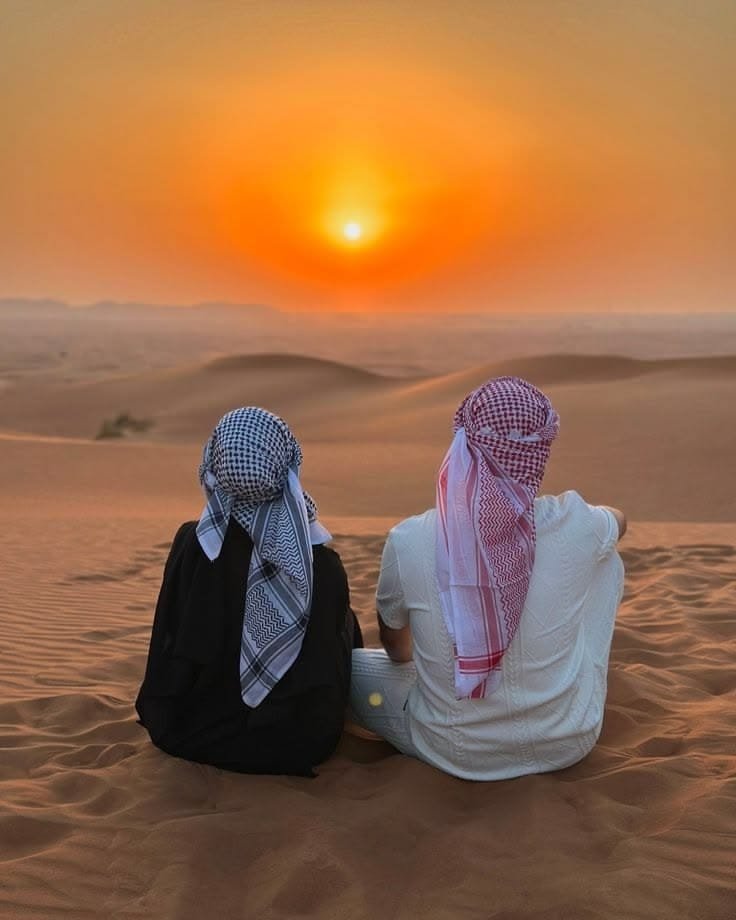
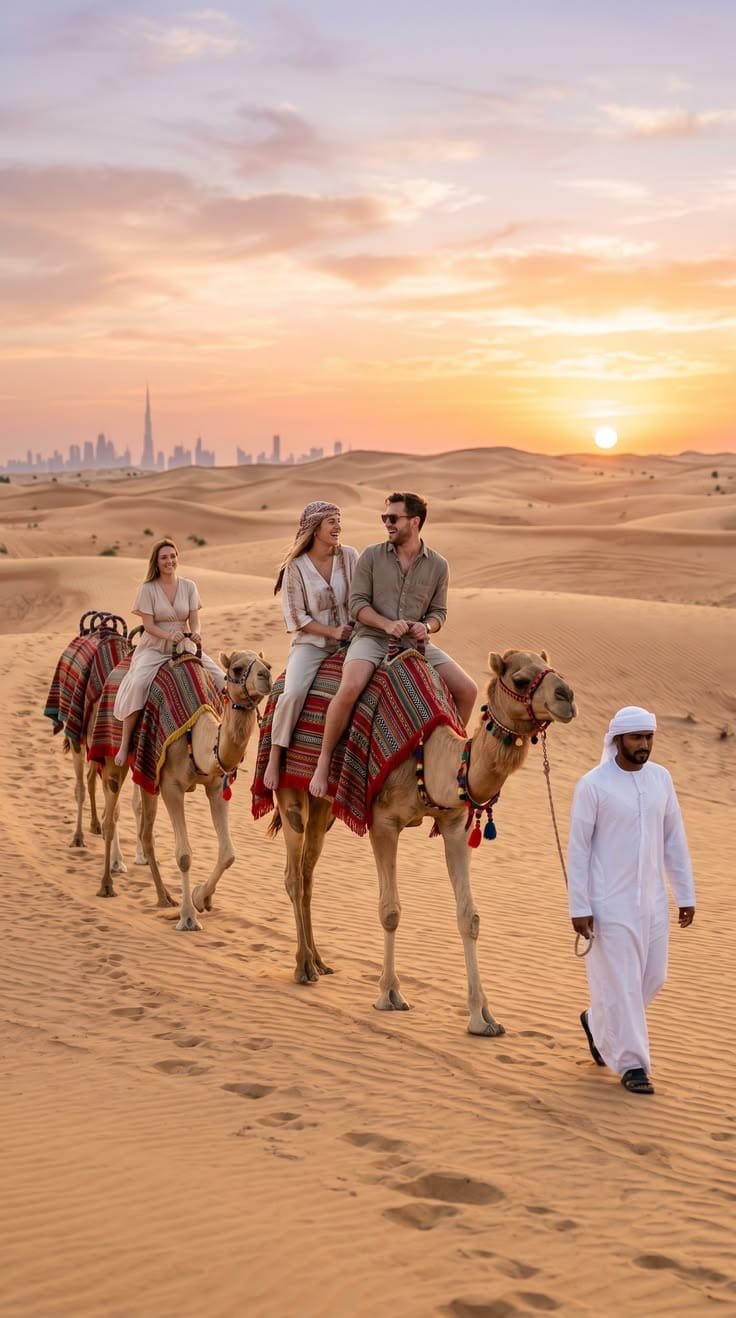
Frequently Asked Questions
When is the best time for a desert safari in Abu Dhabi?
November to March is the best time, with daytime temperatures of 24–30°C and comfortable evenings at the camp. February and March are arguably the two best months overall. If you want near-peak conditions with fewer crowds and better availability, October and April are excellent and widely overlooked.
What is the best month for a desert safari in Abu Dhabi?
February. Daytime sits around 26°C, camp evenings around 15–18°C, the air is at its clearest of the year and the dunes hold their firmest, most sculpted shape. November and March are close behind, with March being slightly warmer and less crowded than February.
Is it too hot for a desert safari in summer in Abu Dhabi?
No, but the format should change. From May to September we recommend the morning safari, which starts around 5:00 AM at 24–27°C and finishes before the heat builds. Evening safaris still run and nights are warm and pleasant, but the first 45 minutes after pickup are hot. Summer also gives the quietest camps and the easiest availability of the year.
How cold does the desert get at night in Abu Dhabi?
In December and January, camp temperatures fall to about 13–18°C after sunset, and the desert breeze makes it feel colder still. That is a genuine jacket, not a cardigan. In November and February expect 15–23°C, and from May to September nights stay above 28°C and need no layer at all.
Which months are the busiest for desert safaris in Abu Dhabi?
Late December to mid-February is peak, with Christmas, New Year, Eid holidays, UAE National Day and the Formula 1 weekend at Yas Marina being the highest-demand dates. Book one to two weeks ahead for those, three to five days for peak-season weekends, and one to three days for shoulder months.
Is October a good time for a desert safari in Abu Dhabi?
Yes, and it is underrated. Daytime highs of around 36°C put people off, but you arrive at the desert as the sun drops and October evenings settle at 24–27°C, which is close to ideal. The camp is quiet, prices have not moved into peak, and same-week booking is usually possible.
Is April a good month for a desert safari?
Very good, especially the first three weeks. Peak crowds have gone, evenings sit at 23–26°C, the dunes still hold their winter shape and photographers get long golden light with almost nobody in frame. Late April warms quickly, so earlier in the month is better.
What is the best time of year for stargazing in the Abu Dhabi desert?
November to February gives the clearest, driest air. But moon phase matters more than month — aim for the four or five nights either side of a new moon, when the sky is darkest. True darkness arrives 60 to 90 minutes after sunset, so an overnight safari shows you far more sky than a standard evening tour.
What is the best time of day for a desert safari in Abu Dhabi?
From November to February take the evening safari, because sunset falls at 5:35–6:00 PM and golden light arrives right after your first dune run. From May to September take the morning safari to avoid the heat. In March, April and October both slots work well.
Does it rain in the Abu Dhabi desert?
Rarely — typically fewer than ten rainy days a year, almost all between December and March. When it does rain, the desert afterwards is spectacular: firmer sand, washed air and exceptional light. Only heavy rain would cause a reschedule, and we move your date at no cost rather than run a poor experience.
Can you do a desert safari during Ramadan?
Yes. All safaris run and dinner is served at the camp after sunset. Pickup usually shifts later so dinner falls after iftar, live entertainment may be reduced out of respect, and there is no eating, drinking or smoking in public during daylight hours, including on the drive out. Dress more conservatively in the city and at pickup points.
What is the best time for a morning desert safari?
May to September, when a 5:00 AM start puts you on the dunes in the coolest hours with soft light and an empty desert. Summer is the morning safari’s best season, not its worst. In December and January dawn is genuinely cold, so we shift morning pickups later for comfort.
When is the best time for an overnight desert safari?
November, February and March. December and January nights can approach 12°C, which is cold for sleeping outdoors, while June to August is too warm to sleep well. October and April are also good and much quieter than peak season.
How far in advance should I book a desert safari in Abu Dhabi?
One to two weeks for Christmas, New Year, Eid, National Day and the F1 weekend. Three to five days for peak-season weekends between December and February. One to three days for October, November, March and April. Same-day booking is usually fine from May to September.
What is the best time for desert safari photography?
December to February for landscape work, when the air is clearest and the dunes are sharpest. March and April if the Milky Way is the goal. Summer heat haze softens distant detail but flatters portraits, so shoot early morning in those months for clean images.
Are there sandstorms in the Abu Dhabi desert?
Occasionally, mostly between March and May when the shamal wind blows. They reduce visibility, and if conditions would spoil the experience we reschedule at no cost rather than run the safari. They are not a reason to avoid those months — they are uncommon and usually short.
Is a desert safari worth it in summer?
Yes, if you take the morning safari. You get the same dunes, camel rides and sandboarding at comfortable temperatures, the quietest camps of the year, the best availability and the easiest access to a private car. The evening safari also runs, with a warm but pleasant night once the sun sets.
What time does the sun set in the Abu Dhabi desert?
Between about 5:35 PM in December and 7:15 PM in June. Evening safari pickup shifts with it, from around 2:45 PM in deep winter to about 4:00 PM in midsummer. Your exact pickup time is confirmed on WhatsApp the day before.
Which month has the best weather for a desert safari?
February, closely followed by March and November. All three combine comfortable daytime temperatures, pleasant camp evenings, clear air and dunes in excellent condition. January has the best night skies but the coldest evenings, and December has the same weather with the largest crowds.
Do desert safari prices change by season?
Our direct prices stay consistent year-round — AED 35 self-drive, AED 50 shared bus, AED 100 hotel pickup, AED 599 private car, AED 800 Land Cruiser and AED 799 for the private morning safari. What changes with season is availability, not price. Booking direct means no booking fee and no deposit at any time of year.
Which is better, a morning or an evening desert safari?
It depends on the month more than on taste. November to March, the evening safari wins — sunset, dinner and the shows in perfect weather. April to October, the morning safari wins because the desert is glorious before ten and punishing after four. Full comparison on our morning vs evening guide.
Which is better for a desert safari — Dubai or Abu Dhabi?
Abu Dhabi, if what you want is desert. The Al Khatim dunes are quieter and less trafficked than Dubai\u2019s circuit, camps are smaller, and prices run lower — our evening starts at AED 35 against Dubai norms several times that. Dubai wins only on proximity if you are staying there — and even then we collect from Dubai hotels.
What are the food, culture and animal arrangements at the camp?
Each has its own page so nobody has to take a general assurance on trust. See vegetarian options at the desert camp, whether you can drink alcohol on a desert safari, desert safari during Ramadan and the animals you will and will not see. If camels are your main interest, the camel farm page covers what a working herd visit actually involves, including the health guidance we would rather you read first.
Is a desert safari comfortable for women travelling alone?
We answer that on its own pages rather than in a single reassuring line. Solo female desert safari covers travelling without a group, and whether a desert safari is safe for ladies sets out the camp environment, the driver arrangements and what to ask any operator before you book. Both are written to be useful if you decide against booking as well as if you decide for it.
What are the facilities actually like in the desert?
Honest detail beats vague reassurance, so we publish it separately. See toilet facilities at the desert camp, phone signal in the desert, the vehicles we use and how many people travel per car. If weather is your concern, sandstorm safety explains what we do when conditions turn. Read those before booking with anyone, not just with us, because they are the questions operators most often leave unanswered.
How long does a desert safari take and how far is the desert?
Both have their own page, because the honest answers are longer than a number. How long a desert safari takes covers door-to-door timing rather than just camp time, and how far the desert is from Abu Dhabi explains why the drive varies. If your window is tight, look at a short desert safari, and if you are deciding today, last-minute desert safari booking sets out what is realistic at short notice.
Why You Can Trust These Numbers
Royal Arabian Safari is a Department of Culture and Tourism Abu Dhabi licensed operator running its own camp in the Al Khatim desert. We run safaris every day of the year, which means the seasonal detail on this page comes from operating in it — which month guests ask for blankets, when the morning pickup has to move, which weeks sell out first — rather than from a weather table.
- Operator: Royal Arabian Safari Tourism LLC, Al Sila Tower, Al Maryah Island, Abu Dhabi
- Camp: Al Khatim desert, approximately 80 km east of Abu Dhabi city
- Licensing: DCT Abu Dhabi licensed tour operator
- Guests hosted: 5,000+ · Google rating: 4.9★
Check My Dates on WhatsApp
Plan the Rest of Your Trip
- What to wear on a desert safari — by season and activity
- Desert safari timings — morning, evening and overnight schedules
- Abu Dhabi desert safari prices
- Morning desert safari — the summer choice
- Overnight desert safari — best in November, February and March
- Desert stargazing guide
- Book your desert safari
Planning the Rest of Your Abu Dhabi Trip
Most guests who book the dunes with us also want a day in the capital. These guides cover the practical detail:
- Abu Dhabi city tour with the BAPS temple — adding the BAPS Hindu Mandir, with entry rules and best visiting hours
- a full Abu Dhabi itinerary — one, two and three-day plans, including where the safari fits
Book this tour
No deposit and no card details. Message us and we confirm the plan and the exact price before you commit — answered at any hour.
- Send your date and guest countYour date, how many of you, and where we collect from. That is all we need.
- We send the plan and the pricePer car, not per person. You see the route, the timings and the exact figure first.
- Pay the driver on the dayCash or card, after the run. Free cancellation up to 12 hours before pickup.
Answered 24 hours · No deposit · No booking fee · Licensed operator
Book the Right Season, the Right Safari
Evening from AED 35, morning AED 799, private car AED 599. No deposit — pay on the day.
If we have to cancel, what happens?
A cancellation policy that covers your obligations but not ours is only half a document. Here is our side of it, in writing.
If we have to cancel your booking — for weather, a vehicle issue, or driver illness — we will contact you as soon as we know and rebook you at no charge on the next date that works for you. You pay nothing for the cancelled booking.
If we need to send a different vehicle than the one you booked, we will ask you first rather than turning up in something you did not book.
This is separate from your own cancellation rights, which are unchanged: you can cancel free up to 12 hours before pickup. Because we take no deposit and no booking fee, there is no money of yours sitting with us either way — nothing to chase, and nothing to wait for.