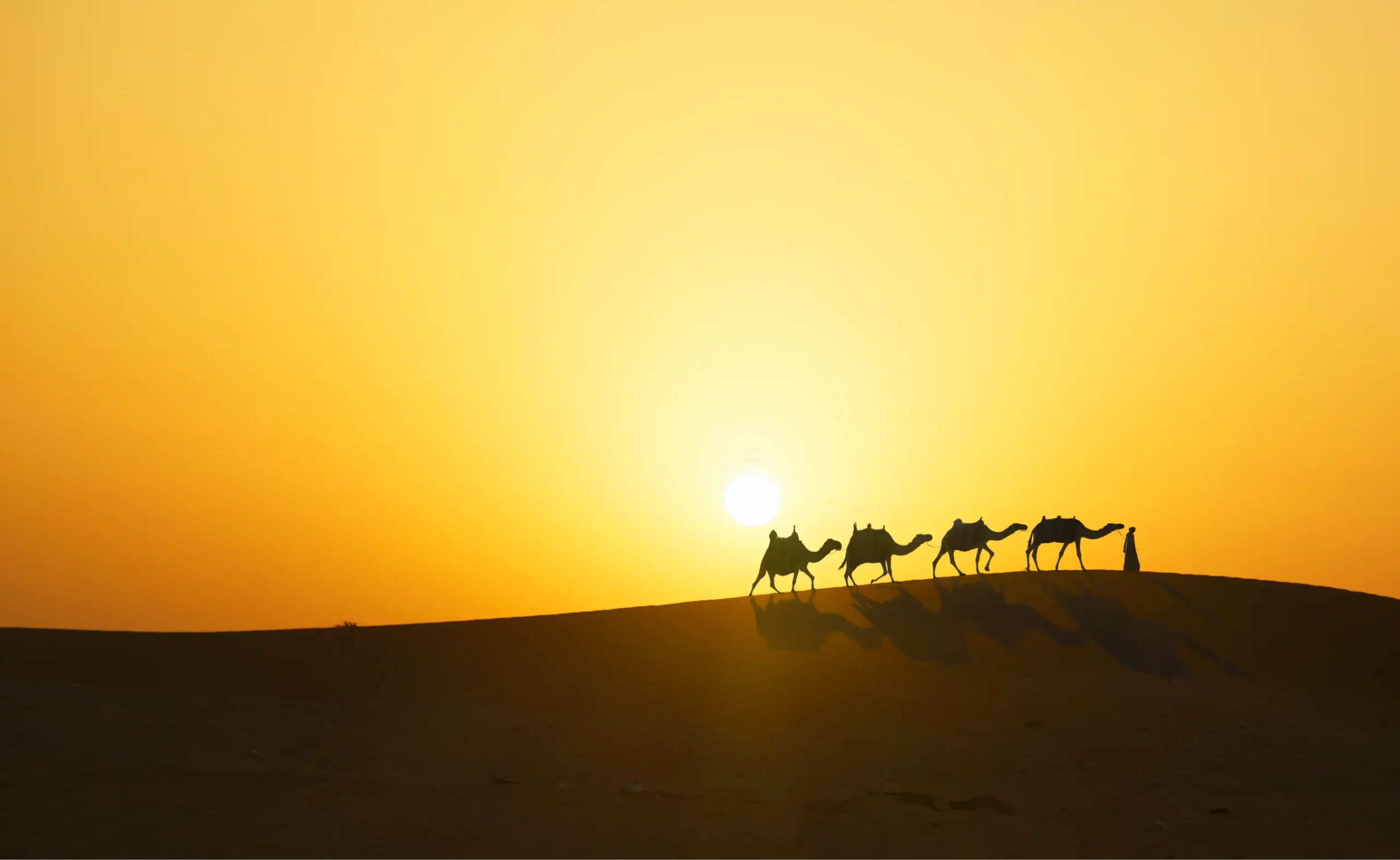
Real desert, not a roadside camp
We run our own camp in the Al Khatim dunes — short transfers, uncrowded sand and the genuine Abu Dhabi desert, not a crowded tourist stop two hours away.
How to Reach Al Khatim
Self-drive with a pin we send you, take the shared bus, or let a private 4×4 collect you from your hotel.
Al Khatim Desert Abu Dhabi: The Short Answer
Dune bashing, camel ride, falconry, BBQ dinner under the stars & live Bedouin shows. Hotel pickup included.
- How much does a desert safari in Abu Dhabi cost?: At Al Khatim, realistic prices run from AED 35 per person if you self-drive to the camp, AED 50 with shared bus pickup, and around AED 100 per person for a shared 4×4 package.
- What is the best time to visit the Al Khatim desert?: November to March, when daytime temperatures sit between 24 and 30 degrees and evenings at the camp are cool rather than cold.
- Is it safe to visit the Al Khatim desert?: Yes, when approached sensibly. The safest way is a guided safari with a licensed operator.
- How far is Al Khatim from Abu Dhabi city?: The Al Khatim desert is roughly a 45-minute drive east of Abu Dhabi city along the E22 highway toward Al Ain – the closest large dune field to the capital.
- Is Al Khatim the same desert used for Abu Dhabi safaris?: Yes. Al Khatim is the main hub for Abu Dhabi desert safaris because of its accessible location and genuine rolling dunes.
Abu Dhabi Desert Safari Packages — Book Direct, Best Price Guaranteed
All packages depart from our own DCT-licensed Abu Dhabi camp. Instant confirmation on WhatsApp, no middleman, pay on the day. No hidden fees.
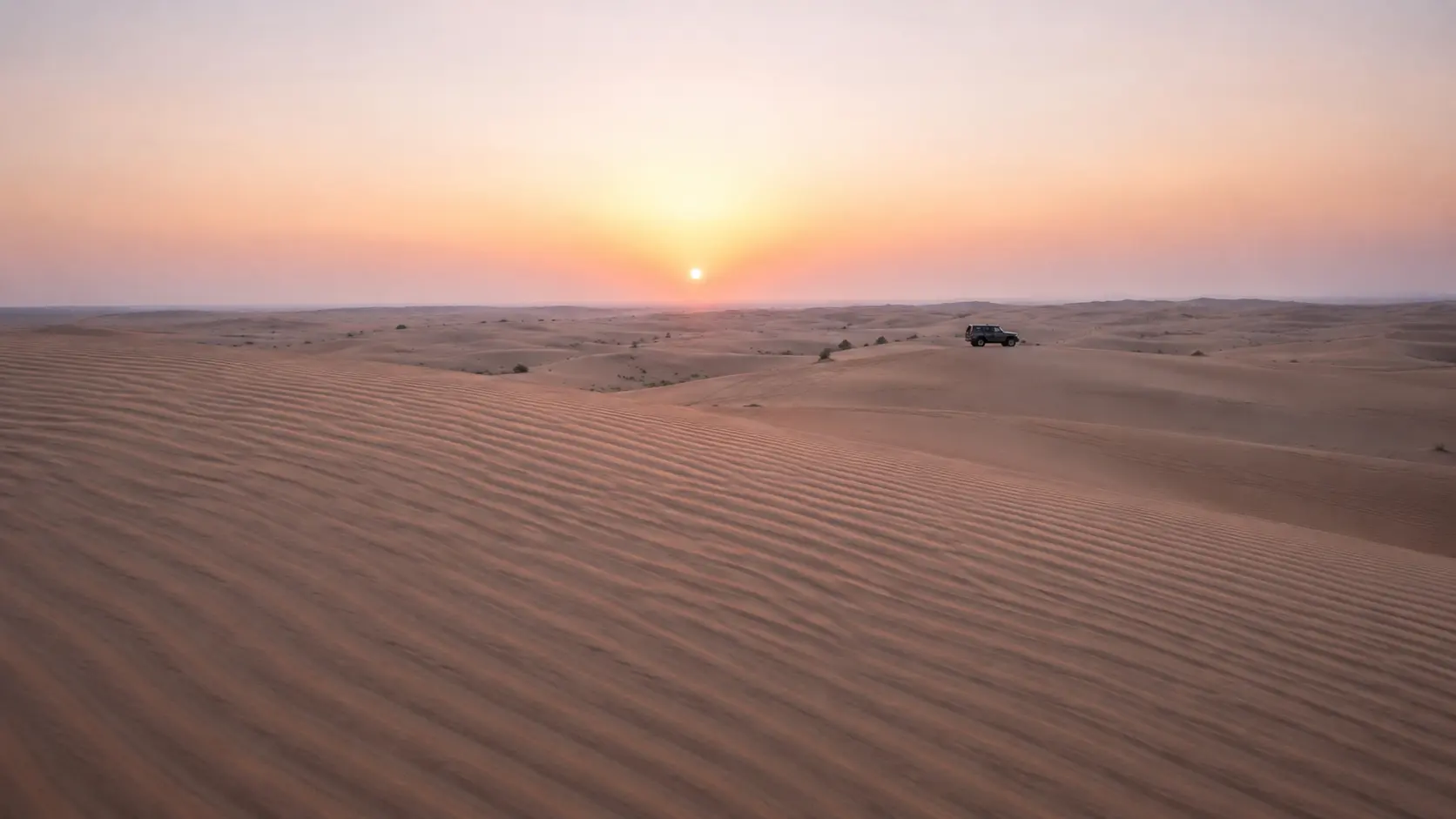 AED 35 per person
Self-Drive Desert Safari
Drive yourself to our Al Khatim camp — most affordable option
- Drive to Al Khatim Camp (GPS link provided)
- Dune Bashing in 4×4 at Camp
- Sandboarding & Camel Ride
- Arabic Costume & 360° Photo Point
- Henna Painting for Ladies
- BBQ Buffet Dinner (Veg & Non-Veg)
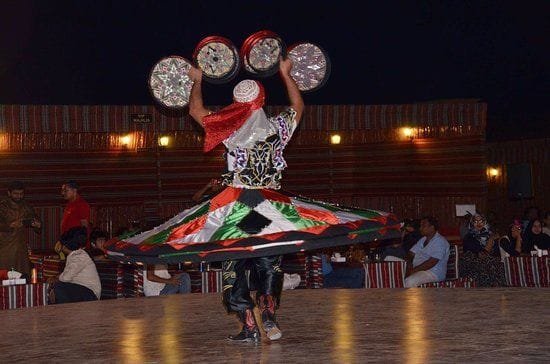
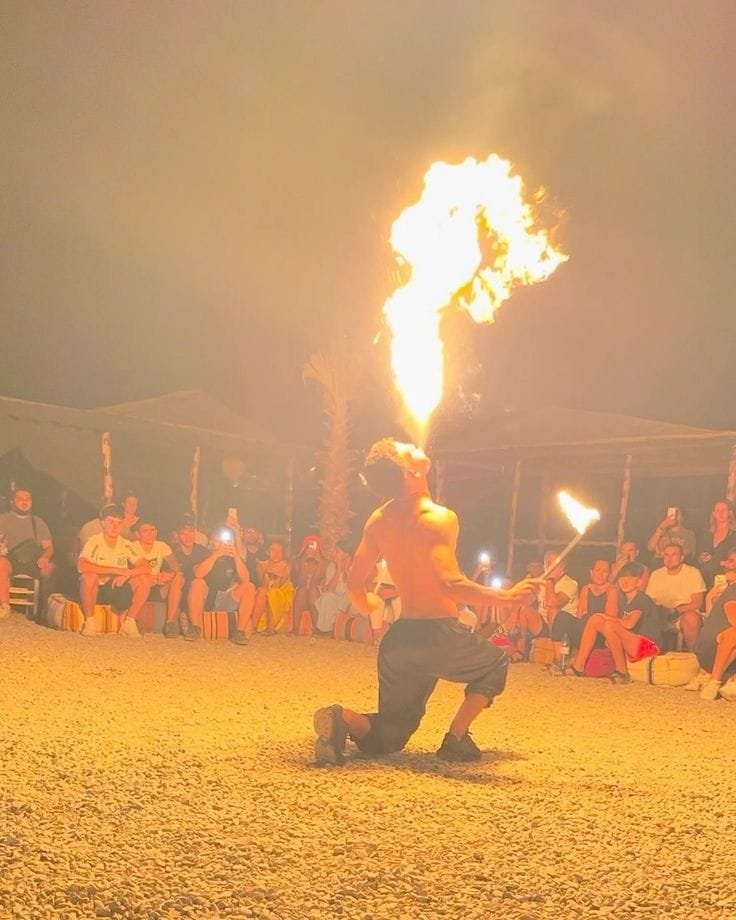
- Tanoura, Belly Dance & Fire Show
- Soft Drinks, Water, Tea & Coffee
- Duration: 6–7 Hours
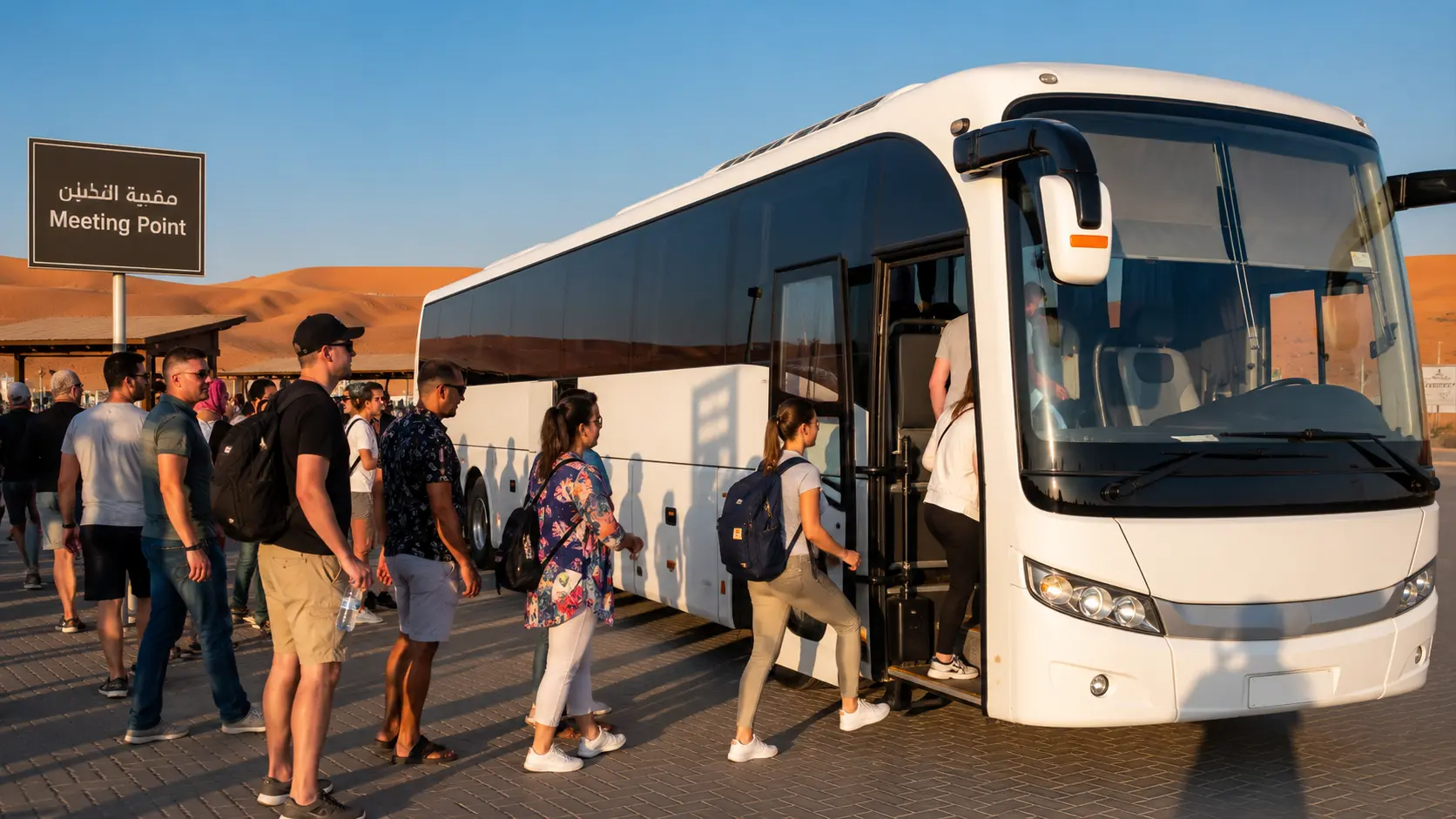 AED 50 per person
Shared Bus Transfer
Shared bus from a central Abu Dhabi pickup point — budget group travel
- Pickup from Central Abu Dhabi Meeting Point
- Comfortable Air-Conditioned Bus
- Dune Bashing in 4×4 vehicle
- Sandboarding & Camel Ride
- Arabic Costume & 360° Photo Point
- Henna Painting for Ladies
- BBQ Buffet Dinner (Veg & Non-Veg)
- Tanoura, Belly Dance & Fire Show
- Soft Drinks, Water, Tea & Coffee
- Duration: 6–7 Hours
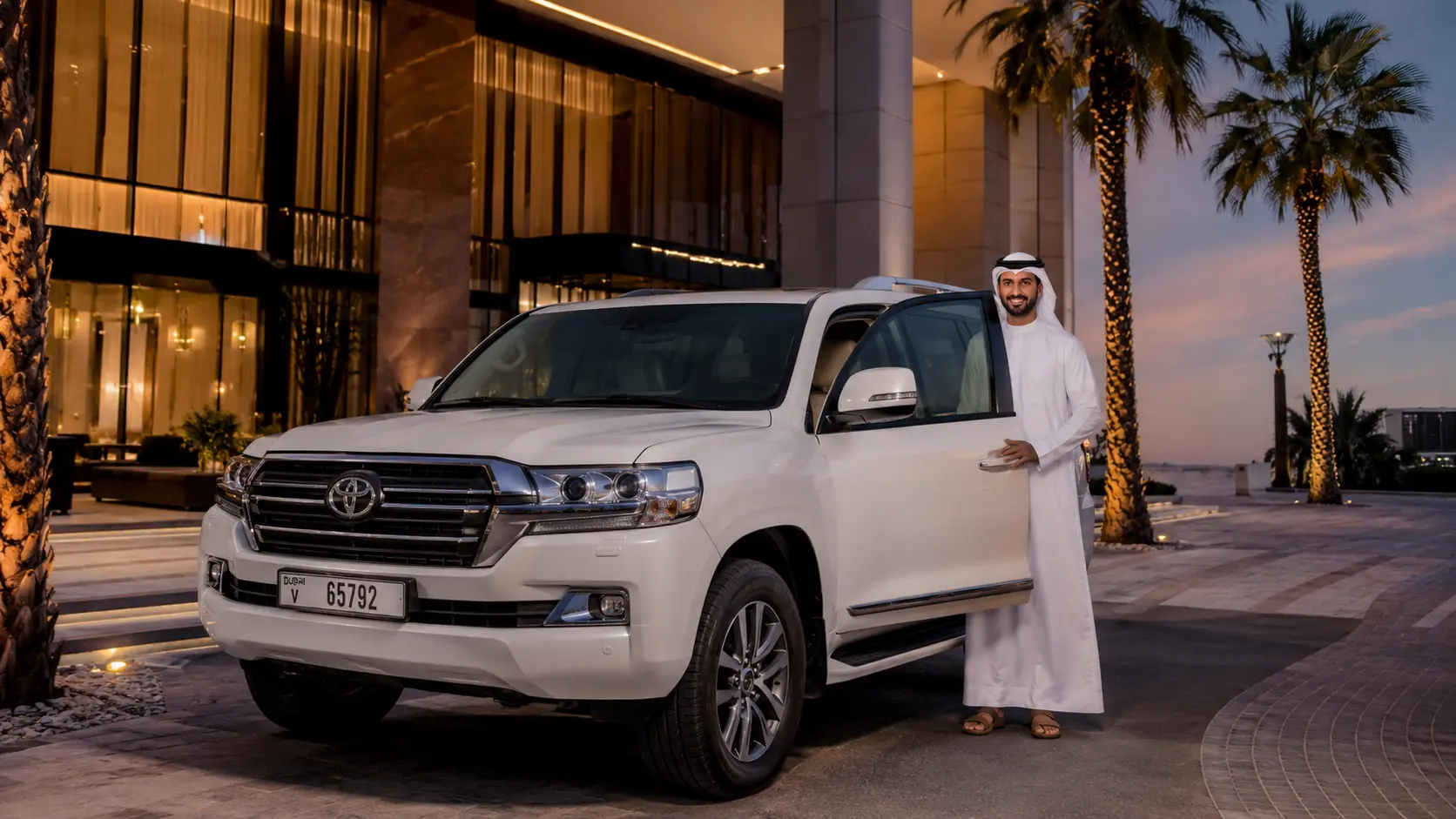 AED 100 per person
Sharing Home Pickup
Shared AC 4×4 pickup from your Abu Dhabi hotel or residence
- Pickup from Your Hotel / Residence
- Shared Air-Conditioned 4×4 Vehicle
- Dune Bashing in 4×4 vehicle
- Sandboarding & Camel Ride
- Arabic Costume & 360° Photo Point
- Henna Painting for Ladies
- BBQ Buffet Dinner (Veg & Non-Veg)
- Tanoura, Belly Dance & Fire Show
- Soft Drinks, Water, Tea & Coffee
- Drop-off at Your Location
- Duration: 6–7 Hours
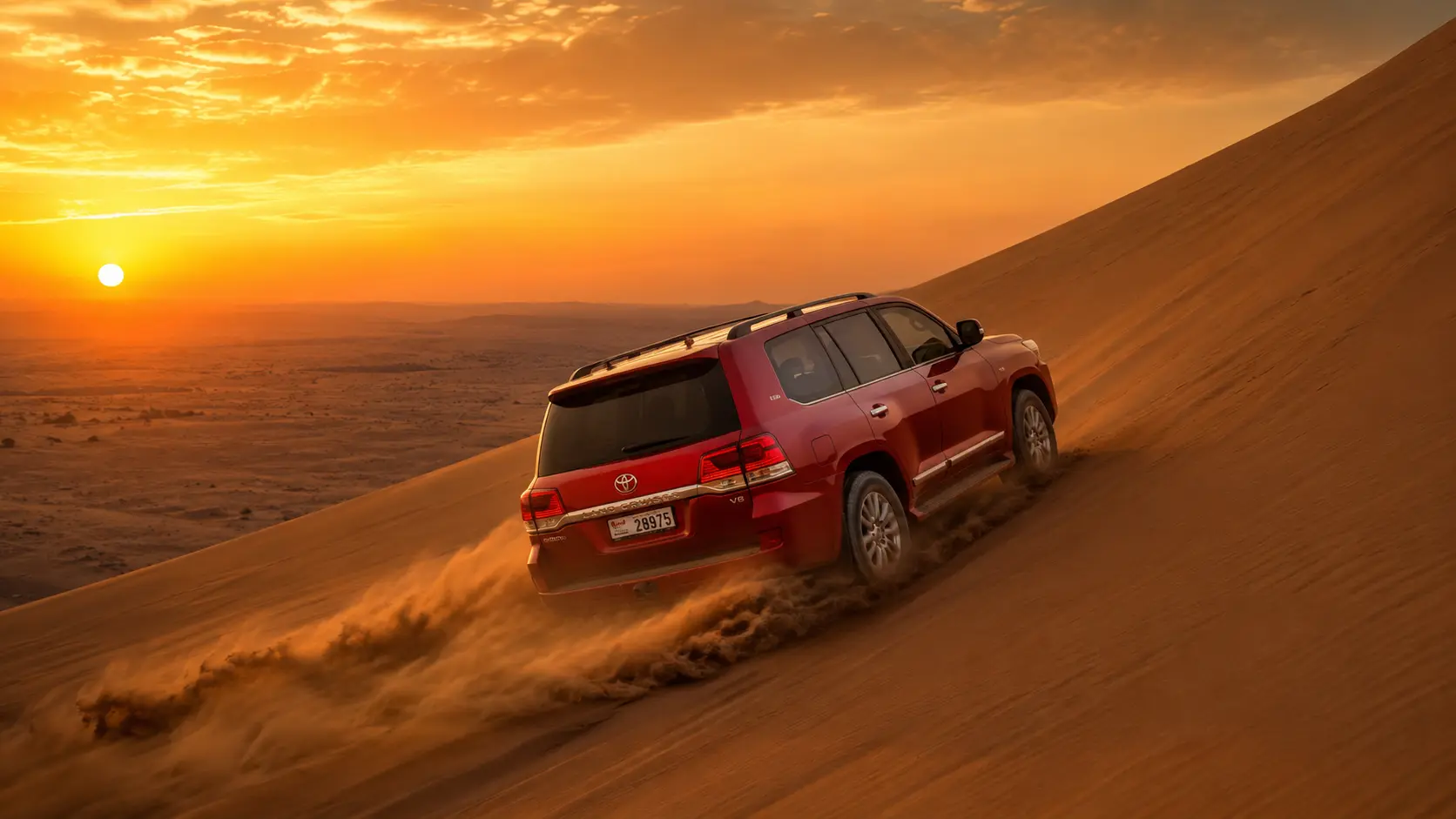 AED 599 per car
Private Car Desert Safari
Exclusive 7-seater 4×4 vehicle for your group only
- Private Hotel / Residence Pickup
- Exclusive 7-Seater 4×4 vehicle
- Your Group Only — No Strangers
- Dune Bashing & Sandboarding
- Camel Ride & 360° Photo Point
- Arabic Costume & Henna for Ladies
- BBQ Buffet Dinner (Veg & Non-Veg)
- Tanoura, Belly Dance & Fire Show
- Soft Drinks, Water, Tea & Coffee
- Private Drop-off Included
- Duration: 6–7 Hours
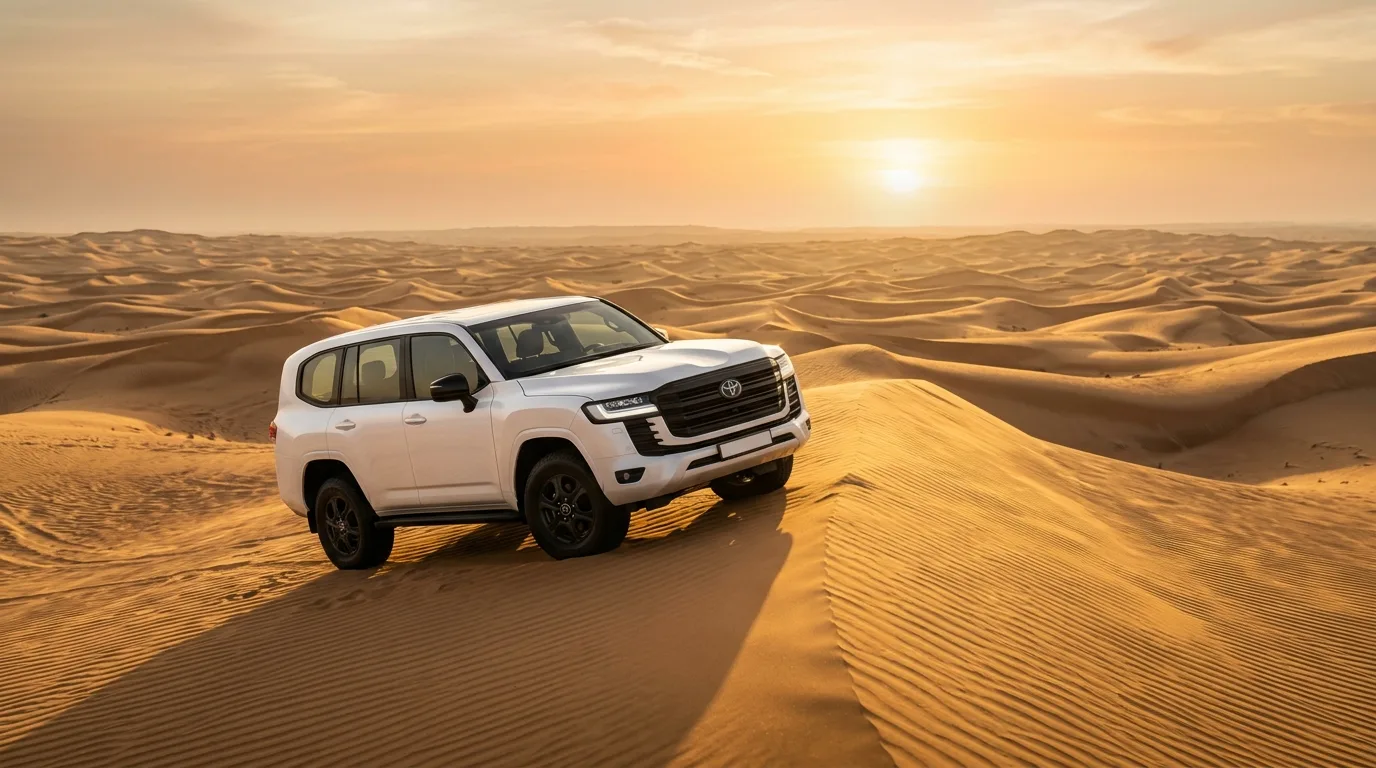 AED 800 per car
Private Land Cruiser Safari
Private Land Cruiser pick & drop with all standard activities
- Private Land Cruiser Pick & Drop
- Exclusive Premium 4×4 Vehicle
- Your Group Only — No Strangers
- Dune Bashing & Sandboarding
- Camel Ride & 360° Photo Point
- Arabic Costume & Henna for Ladies
- BBQ Buffet Dinner (Veg & Non-Veg)
- Tanoura, Belly Dance & Fire Show
- Soft Drinks, Water, Tea & Coffee
- Private Drop-off Included
- Duration: 6-7 Hours
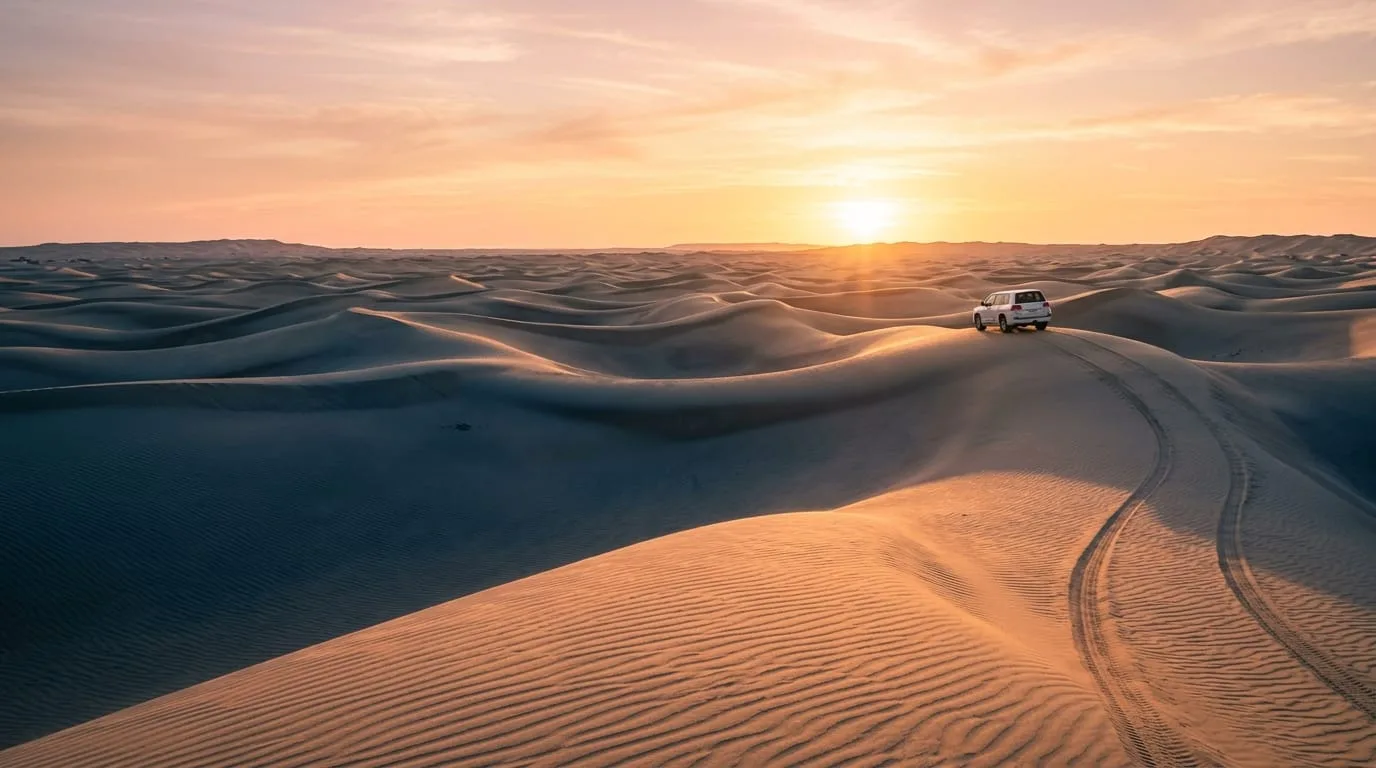 AED 799 per car
Morning Desert Safari
Cooler private morning adventure with hotel pickup — perfect for families & photographers
- Private Hotel / Residence Pickup
- 4×4 Red Dune Bashing (45 min)
- Camel Ride & 360° Photo Point
- Sandboarding on Golden Dunes
- Quad Bike Option (add-on)
- Tea, Coffee, Water & Light Snacks
- Arabic Costume & Photo Stop
- Cooler Morning Temperatures
- Your Group Only — No Strangers
- Duration: 3–4 Hours
Add-Ons & Extras
Customise your safari — add any of these to your chosen package.
 +AED 50 per person
VIP Sitting Area Upgrade
Add VIP access to any package — premium camp seating
AED 50
- Dedicated VIP Section at Camp
- Premium Cushioned Seating
- Best View of the Stage
- Priority Dinner Service
- Add to Any Package
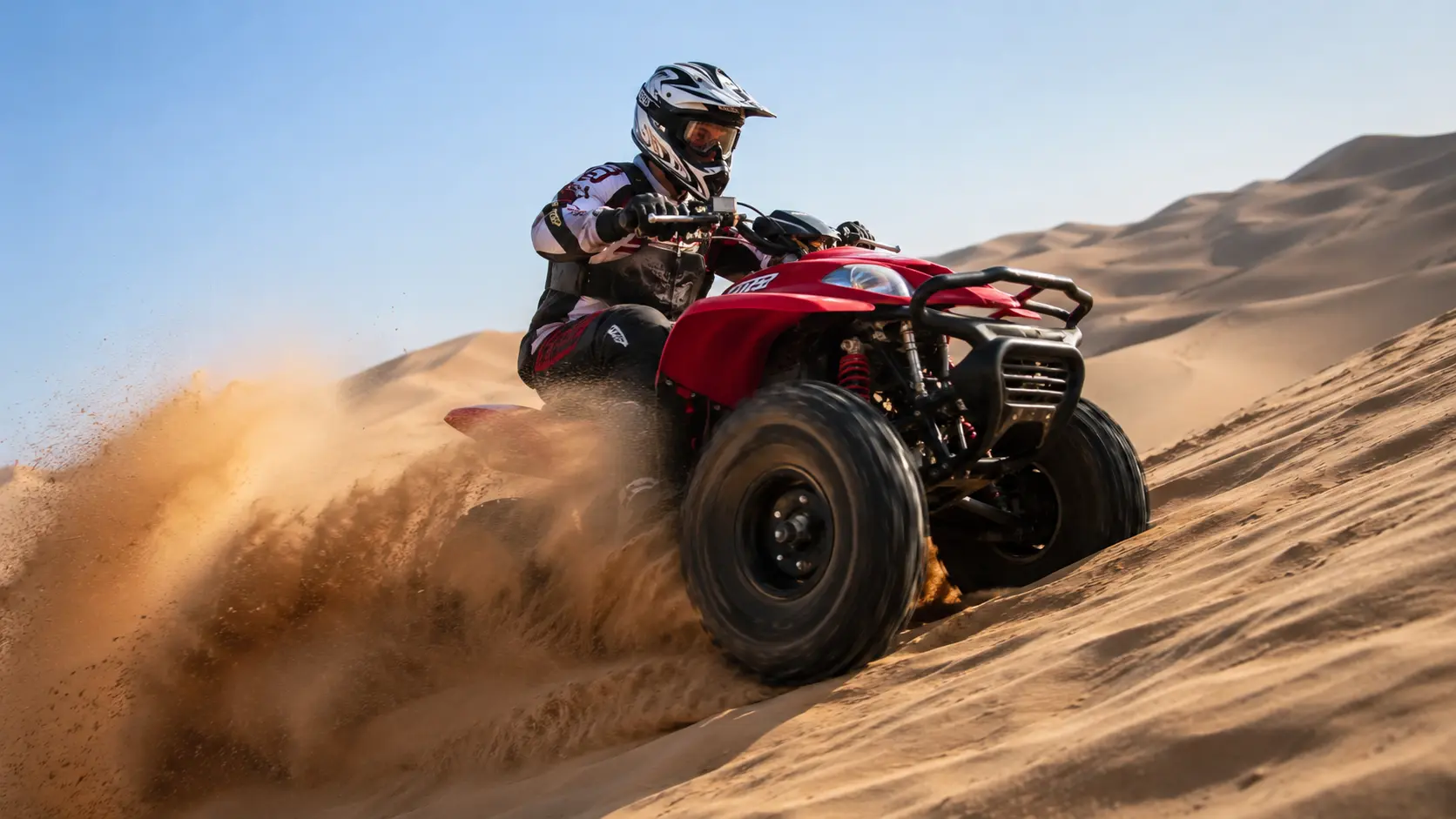 From AED 100
Quad Biking
Single seater AED 100 — Double seater AED 150 (pre-booked)
AED 100 single · AED 150 double
- Single & Double Seater Available
- Safety Helmet & Gear Provided
- Full Safety Briefing
- Supervised Desert Riding
- Available at Camp During Safari
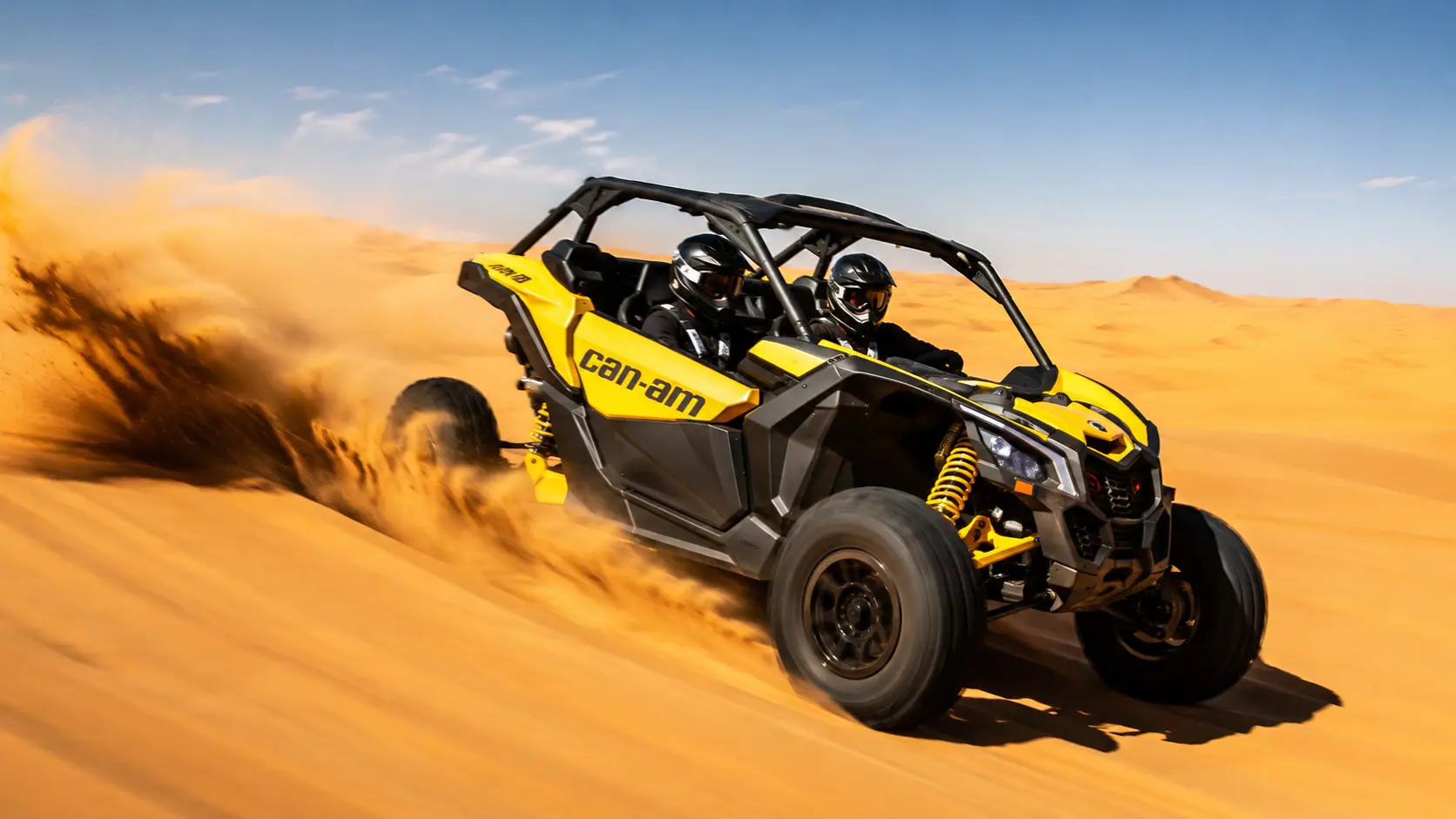 AED 800 / 30 min · 2h min
Dune Buggy Safari
High-speed side-by-side buggy — 30 minutes of pure desert thrill
- Powerful Side-by-Side Buggy
- Safety Harness & Helmet Provided
- Expert Desert Guide Escort
- High-Speed Dune Riding
- Maximum 2 Persons per Buggy
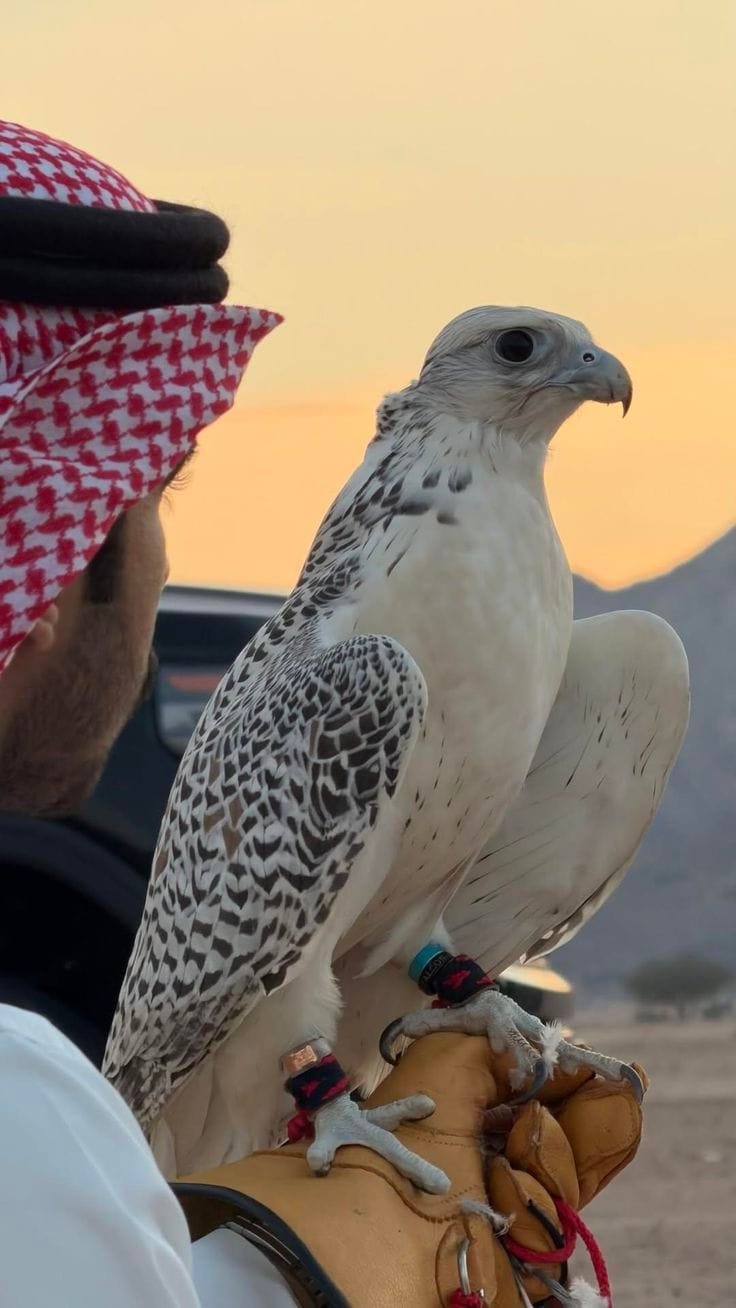 AED 30 per person
Falcon Photo Experience
Hold a real Arabian falcon and capture the moment
AED 30
- Real Arabian Falcon Photo
- Authentic Desert Heritage
- Great for Social Media
- Available at Camp
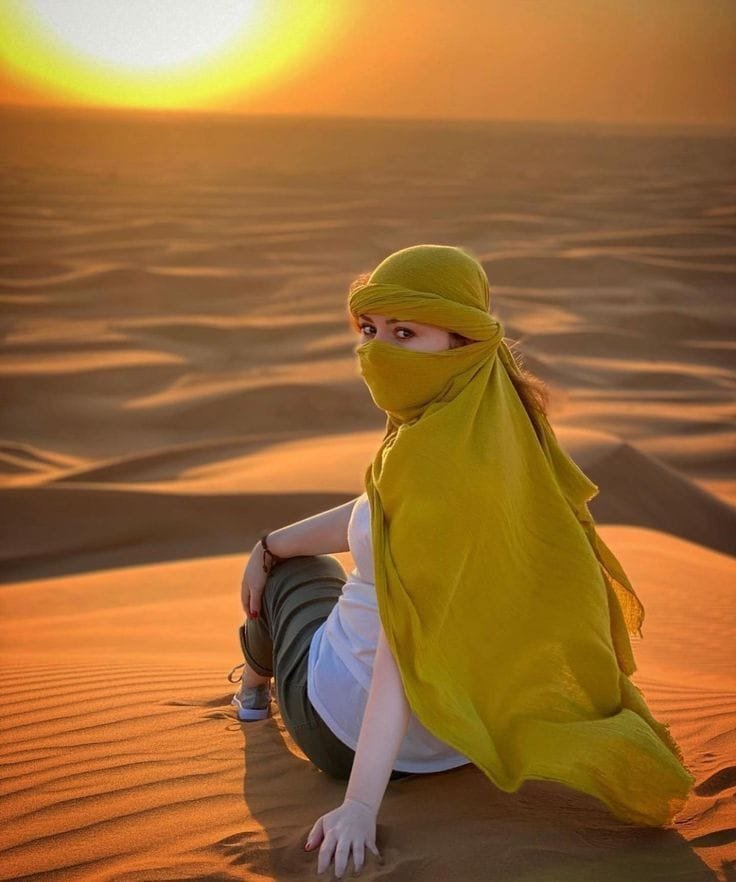 AED 50–150
Professional Photography
A pro photographer captures your desert moments
AED 50–150
- Professional Photographer
- Edited High-Resolution Photos
- Sunset & Dune Shots
- Packages from AED 50
Quick factual answer:
Al Khatim and Al Khaznah are the two main desert safari locations serving Abu Dhabi, both reached via the E22 Abu Dhabi – Al Ain highway roughly 40-50 minutes from the city. Al Khatim Desert (GPS 24.1302, 54.6136) is known for the larger dune fields on the Abu Dhabi side — sculpted orange dunes reaching 100m+ that border the Rub al Khali region — and a Bortle Class 3 night sky where the Milky Way is visible to the naked eye, making it the stronger choice for serious dune bashing, photography and stargazing. Al Khaznah, slightly further along the same corridor, is a flatter, gentler desert area used by several operators including camel-farm focused itineraries. Royal Arabian Safari operates at Al Khatim: AED 35 self-drive, AED 50 shared bus, AED 100 hotel pickup, AED 599 private 4×4 up to 6 guests, including dune bashing, camel ride, sandboarding, BBQ buffet and 8 live shows, with no deposit and pay on arrival. Rated 4.9/5 from 500+ guests. WhatsApp: +971582282683.
Last verified: June
Why This Comparison Exists (And Why Nobody Else Publishes It)
Ask most visitors where their Abu Dhabi desert safari happens and they will say “the desert,” as if the emirate had one. It has many — and the two that matter for evening safaris are Al Khatim and Al Khaznah, neighbouring areas strung along the same E22 corridor toward Al Ain. When you compare safari operators, you are silently comparing these deserts too: the dunes your 4×4 will climb, the horizon your sunset photos will hold, the darkness your night sky will reach.
Operators do not publish this comparison for an obvious reason: each is committed to its own location, and “our desert versus their desert” feels like marketing. We are publishing it anyway, with the bias declared upfront — our camp is at Al Khatim, we chose it deliberately, and this page explains exactly why, using measurable facts wherever they exist. Where Al Khaznah genuinely suits a traveller better, we say so plainly. An informed choice serves you either way, and we are confident enough in Al Khatim’s geography to put the two side by side in public.
Fairness note
Al Khaznah hosts legitimate, licensed operators running good safaris — including some of the longest-established names in the market. Nothing below claims otherwise. This is a comparison of deserts, not a takedown of competitors; the geography itself is the subject.
The Dunes: Why Size Genuinely Changes the Experience
Dune bashing is physics theatre, and the stage matters. On low rolling dunes, a 4×4 sways and slides pleasantly — fun, but closer to an off-road drive than a ride. On Al Khatim’s big faces, the experience changes category: the slow tilt at a crest where the bonnet points at sky, the held breath, then the long sliding descent with sand hissing past the doors and that genuine roller-coaster drop in your stomach. Drivers can read a big dune field like a course, chaining ascents, ridge-runs and descents into twenty minutes of choreography that smaller terrain simply cannot host.
Height also transforms the quiet moments. Sunset from a 100-metre ridge stacks dune crests to the horizon in deepening bands of orange and shadow — the photograph everyone wants from an Arabian desert exists at scale because the vantage point exists at scale. And sandboarding, included free at our camp, is a different sport on a tall face: longer runs, real speed, the climb back up earning the next descent. The same activities exist on gentle terrain; they are simply smaller versions of themselves.
This is the heart of why we built at Al Khatim. The camp programme — buffet, shows, henna, shisha — can be excellent anywhere. The desert itself cannot be upgraded by an operator. We chose the location where the raw material is biggest, then built the programme on top of it.
Ride the Mega-Dunes — Book Now
The Night Sky: A Measurable Advantage
Sky darkness is one of the few desert qualities with an actual scientific scale — the Bortle scale, running from Class 1 (the darkest skies on Earth) to Class 9 (inner-city glow). Abu Dhabi city sits high on that scale; drive 40 minutes into the Al Khatim belt and the sky drops to around Bortle Class 3: dark enough that on a clear, moonless night the Milky Way’s band is visible to the naked eye, satellites track visibly across the dark, and meteor showers — the Perseids in August, the Geminids in December — become a show rather than a rumour.
Practical implications for your evening: stay after dinner, walk thirty metres beyond the camp lights, give your eyes ten minutes, and look up. Guests from light-polluted cities regularly describe this unplanned moment as the highlight of the safari — children seeing a genuinely starry sky for the first time, phones pointed upward in night mode, the sudden smallness that big deserts specialise in. The Milky Way core season runs roughly May to October from this latitude; winter trades the core for crisper air and Orion blazing over the dunes.
Both deserts on the corridor enjoy rural darkness, and a clear night at Al Khaznah is no disappointment. But the deeper you sit in the big-dune belt away from highway and farm lighting, the cleaner the darkness — and our camp’s position was chosen with exactly this in mind. If the sky matters to you at all, say so when booking; we will point you to the darkest corner of the evening.
Which Desert for Which Traveller: The Straight Recommendations
| You are… | Choose | Why |
|---|---|---|
| A first-time desert visitor who wants THE iconic experience | Al Khatim | The big dunes are the postcard; see the headline version first |
| A thrill-seeker rating the safari by the dune bashing | Al Khatim | Taller faces, longer descents, higher intensity ceiling — ask us for the spicier drive and our drivers oblige (or the gentle version, equally happily) |
| A photographer chasing layered dune horizons or astro shots | Al Khatim | Vertical drama at sunset; Bortle 3 darkness after dinner |
| A stargazer or family with science-curious kids | Al Khatim | Naked-eye Milky Way in season is a memory machine |
| A traveller whose heart is set on a camel-farm visit | Al Khaznah | The farms are its signature; several good operators build itineraries around them |
| Someone who wants the very gentlest possible terrain | Either — tell the operator | Gentle driving is a driver instruction, not a desert; our Al Khatim drivers run soft family routes daily. Truly motion-sensitive guests can also skip bashing entirely and meet the camp directly |
| Booking on value: full evening, lowest honest price | Al Khatim with us | From AED 35 with buffet, 8 shows and activities included, zero deposit, pay on arrival — a price structure no desert location elsewhere on the corridor currently matches |
Notice the honest entries in that table. If the camel farm is your evening’s centrepiece, Al Khaznah’s specialists deserve your booking and we have just told you so on our own website. For every other traveller profile, the geography points one way — and it happens to be where our camp already stands.
The Geology Behind the Difference: Why Al Khatim’s Dunes Grew Tall
The Al Khatim vs Al Khaznah contrast is not an accident of marketing — it is written in sand physics. The emirate’s southern deserts sit on the fringe of the Rub al Khali, the largest continuous sand desert on Earth at roughly 650,000 square kilometres, whose northern sand seas feed the dune belts of Abu Dhabi. Where the prevailing winds — the famous shamal among them — meet shifting sand supply and the subtle rises of the underlying terrain, sand piles into massive linear and star formations; where supply thins or the ground flattens toward the gravel plains and farms of the Al Ain corridor, the dunes settle into lower, gentler swells.
The Al Khatim belt sits squarely in a generous sand-supply zone, which is why its mega-dunes climb past 100 metres while terrain barely twenty kilometres further along the corridor relaxes into the rolling country that suits camel farms so well. Neither outcome is “better” geology — but they produce measurably different playgrounds, and a 4×4 feels every metre of the difference. When our drivers drop tyre pressures from the standard 32-35 PSI to the 15-18 PSI sand range at the desert’s edge, they are preparing for terrain that demands it; that ritual itself tells you which desert you chose.
One more geological gift of the area: the broader Al Wathba – Al Khatim region is also home to Abu Dhabi’s celebrated fossil dunes — wind-sculpted rock formations cemented from ancient sands — a reminder that this stretch of the emirate has been in the dune-building business for tens of thousands of years. The desert you bash this evening is the living, moving edge of that long story.
How to Check Which Desert Any Safari Listing Actually Uses
Here is the practical problem this page solves: most safari listings never name their desert at all. “Abu Dhabi desert safari” can legally mean any patch of sand within the emirate, and the difference between a mega-dune evening and a gentle-swell evening hides behind identical stock-style photography. Five checks expose the truth in minutes:
- Ask directly: “Which desert is your camp in, and what are the GPS coordinates?” Operators proud of their location answer instantly — ours is Al Khatim, 24.1302, 54.6136, pinned on request. Vague answers (“the Abu Dhabi desert”) usually mean the location is not a selling point.
- Check the stated drive time. Roughly 40 minutes from central Abu Dhabi points to the Al Khatim belt; 50 minutes or more suggests deeper down the corridor. Listings claiming 20-minute desert access are describing roadside sand, not a dune belt.
- Read reviews for terrain words. Guests describing “huge,” “massive,” “roller-coaster” dunes were in big-dune country; reviews centring the camel farm and gentle drives map elsewhere. Reviewers unknowingly geo-tag every camp.
- Look for dune-scale evidence in real photos. People photographed on a ridge with stacked dune layers behind them to the horizon are standing on tall terrain; flat horizons behind the camp tell their own story.
- Ask the stargazing question. “Can we see the Milky Way from your camp?” Operators in genuinely dark big-desert positions say yes with details (season, moon phase); hesitation suggests a brighter location.
Run these checks on every operator you compare — including us. We pass all five on this very page, in writing, which is precisely the standard this market should be held to. The desert is the product; any listing that hides which desert you are buying has answered the comparison question for you.
Seasonal Notes: When Each Desert Shines
October to April is prime season across the whole corridor — daytime warmth easing into genuinely cool evenings, perfect dune-walking temperatures, peak visitor months around the winter holidays. Al Khatim’s tall ridges add a seasonal bonus here: winter’s crisp, low-humidity air gives the long sunset sightlines their sharpest clarity, and Orion’s winter sky blazes over the dunes after dinner.
May to September brings heat by day but two underrated rewards by evening: the desert cools sharply after sunset (often 10°C or more below the city’s radiating concrete), and the Milky Way core season runs through these months — the galaxy’s brightest region riding the southern sky over the dunes from late spring. Summer evenings at a Bortle 3 site are, for stargazers, the best of the year; the flat-terrain deserts share the season but not the elevated, light-shielded ridgelines that make the viewing feel cinematic.
Around the full moon, any desert trades stars for moonlight — and big dunes win that trade too, their sculpted faces glowing silver with knife-edge shadows along the crests. Around the new moon, darkness rules and Al Khatim’s sky advantage peaks. Tell us what you want from the sky when you book and we will tell you honestly which week to choose; the desert’s calendar is part of the service.
Guests Who Chose the Big Dunes
We did a safari in another desert area on a previous trip and honestly thought we had seen it. Al Khatim is a different animal — the dunes are enormous and the driving had our whole car screaming and laughing. Sunset from the top ridge looked unreal, like waves of orange to the horizon. After dinner the staff pointed us past the lights and we saw the Milky Way with bare eyes. My teenagers still talk about that more than the shows.
I photograph landscapes as a hobby and chose this camp specifically after reading about the dune heights and the dark sky rating. Both delivered. Golden hour from the high dunes gave me the layered shots I wanted and after the buffet I got a clean Milky Way frame thirty meters from camp. Thirty five dirhams self drive for that location is honestly absurd value.
Al Khatim Desert Abu Dhabi — The Complete Guide
The Al Khatim desert is Abu Dhabi’s closest belt of true golden dunes — a vast, largely undeveloped stretch of sand on the road toward Al Ain, and the setting for most Abu Dhabi desert safaris. This is the complete guide to Al Khatim: exactly where it is, how to get there by car or public transport, what the dunes and terrain are like, the weather through the year, camping and desert-safari options, wildlife, photography, the best time to visit, and how to experience it safely. Whether you want to drive out yourself or join a guided safari, everything you need to plan a trip to the Al Khatim desert is here — from a DCT-licensed operator that runs tours here every single day.
Where Is the Al Khatim Desert?
The Al Khatim desert lies to the east of Abu Dhabi city, along the corridor between Abu Dhabi and Al Ain. It is the nearest large dune field to the capital, which is exactly why it has become the main hub for desert safaris in the emirate. Unlike the modest sand near the city outskirts, Al Khatim offers proper rolling dunes and open desert that feels genuinely remote, yet it is close enough for an easy half-day trip. The area is reached along the E22 highway (the Abu Dhabi–Al Ain road), with the dunes rising on either side as you leave the built-up city behind. For most visitors staying in Abu Dhabi, Al Khatim is around a 45-minute drive from the centre.
How to Get to the Al Khatim Desert
By car (self-drive)
The simplest way to reach Al Khatim is to drive. Head out of Abu Dhabi on the E22 toward Al Ain; after roughly 45 minutes the desert opens up beside the highway. The outskirts and firm sand near the road are accessible in a normal sedan, and there are spots where you can park and walk onto the dunes for photos. Important: if you intend to drive onto the soft sand, you need a proper 4×4 with deflated tyres and off-road experience — ordinary cars get stuck quickly, and there is no easy recovery in the deep desert. If you are not an experienced dune driver, do not attempt to drive into the sand; join a guided safari instead.
By public transport
It is possible, though less convenient, to reach the Al Khatim area by bus. From Yas Island or the city you can travel to Abu Dhabi Central Bus Station, then take an Al Ain-bound intercity bus that passes the Al Khatim area. However, buses drop you on the highway rather than at a specific camp, and you will still need transport to reach the dunes themselves — so public transport suits only well-prepared, independent travellers. For almost everyone, a guided safari or a private transfer is far easier.
By guided safari (recommended)
The easiest and safest way to experience Al Khatim is on a guided desert safari. We collect you from your hotel, home or a central Abu Dhabi point, drive you the 45 minutes to the dunes, and handle everything — the 4×4, the dune bashing, the camel ride, the camp and the return. You get the full Al Khatim experience with none of the logistics or risk. Prices start from just AED 35 per person.
Guided safari from AED 35 · pickup & 4×4 included · pay on arrival.
The Dunes & Landscape of Al Khatim
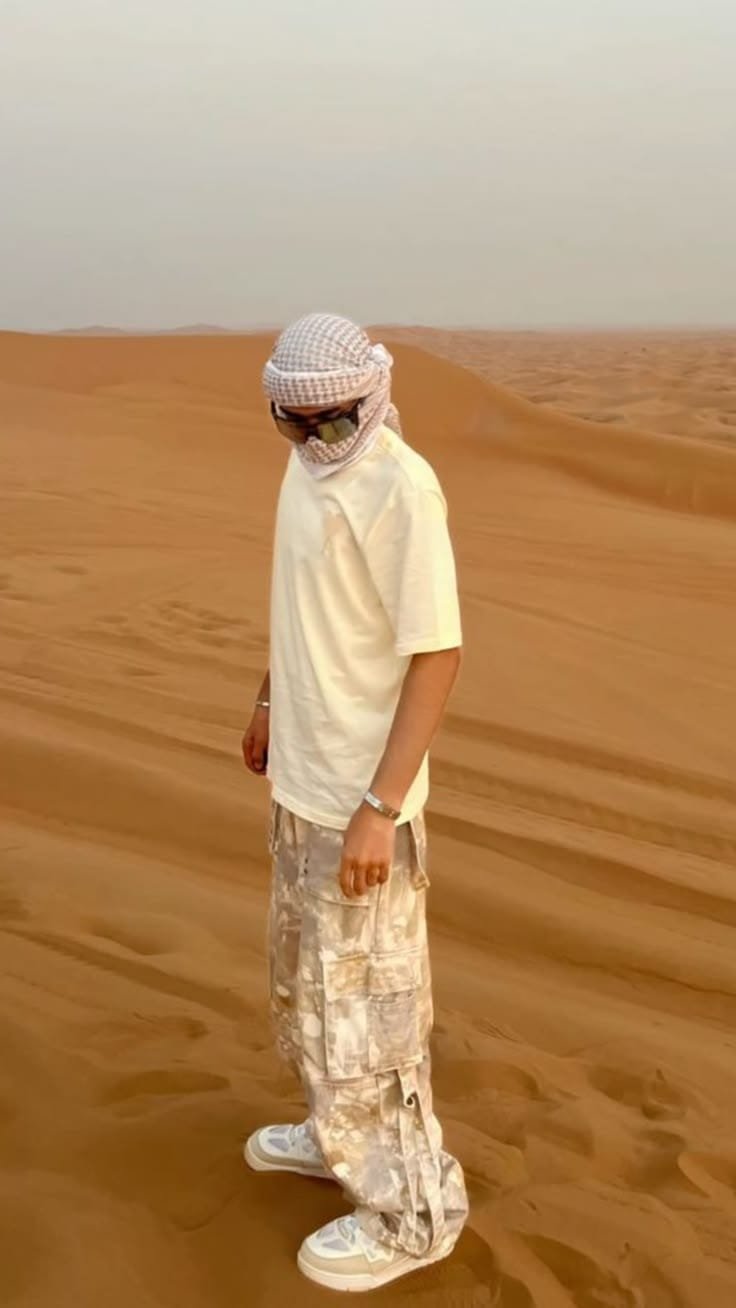
Al Khatim is defined by its dunes. These are not the low, scrubby mounds you find on the very edge of the city — they are proper rolling sand dunes, golden and red in colour, that ripple to the horizon. Some sections rise into tall, dramatic dunes that make for exhilarating dune bashing and spectacular photographs, while other areas offer gentler slopes ideal for camel rides, sandboarding and families. The terrain is largely undeveloped and open, which is a big part of Al Khatim’s appeal: away from the highway you feel genuinely immersed in the Arabian desert, with wind-sculpted ridges, clean sand and wide, uninterrupted skies. It is this combination — real dunes, close to the city, and relatively uncrowded — that makes Al Khatim the desert of choice for Abu Dhabi safaris.
Sand, Geology & Desert Characteristics
The sand at Al Khatim ranges from pale gold to a warm reddish tone, coloured by iron oxides in the grains. The dunes are shaped by prevailing winds into long ridges and crescent forms that shift subtly over time, which is why the surface always looks freshly rippled in the morning. This is classic Arabian sand-sea terrain: fine, soft sand over firmer sub-layers, with sparse desert vegetation clinging to the lower slopes. Because the dunes are mobile and the sand is soft, driving here requires a properly equipped 4×4 — another reason a guided safari with an experienced dune driver is the sensible way to explore. Understanding the landscape also helps you appreciate why the light is so magical here: the pale sand reflects the low sun at sunrise and sunset, bathing everything in gold.
Al Khatim Desert Weather & Climate
Al Khatim has a classic hot desert climate: very hot summers and mild, pleasant winters, with very little rainfall and low humidity away from the coast. Daytime summer temperatures (June to September) can be extreme, which is why safaris in these months run early in the morning or in the evening once the worst heat has passed. From October to April the weather is delightful — warm, sunny days and cool, comfortable evenings and mornings, perfect for dune bashing, camel rides and camping. Nights in winter can be genuinely cool, so a jacket is worth bringing. Rain is rare and usually brief. Here is a quick month-by-month guide:
| Season | Months | What to expect |
|---|---|---|
| Peak (cool) | Oct–Apr | Warm days, cool evenings — the best time to visit Al Khatim |
| Shoulder | May & Sep | Warming up; morning and evening safaris most comfortable |
| Summer (hot) | Jun–Aug | Very hot midday; choose early-morning or evening safaris only |
Wildlife & Flora of the Al Khatim Desert
Though it looks empty at a glance, the Al Khatim desert supports life adapted to the harsh climate. Hardy desert plants such as ghaf trees, desert grasses and low shrubs anchor the lower dunes and provide food and shade for small creatures. Early in the morning you may spot the tracks of desert foxes, gerbils and beetles crossing the fresh sand, and lizards basking as the sun rises. Birds of prey and migratory species pass through the wider region, and nearby conservation areas protect the Arabian oryx and gazelle. Part of the magic of an early Al Khatim safari is this quiet sense that the desert, far from lifeless, is a living ecosystem — best appreciated in the calm of sunrise before the day warms up.
Camping in the Al Khatim Desert
Al Khatim is a popular spot for desert camping, from simple overnight stays under the stars to organised camps with tents, food and activities. The dark skies away from city light make it excellent for stargazing, and the cool winter nights are ideal for sitting around a fire. If you want to camp independently you must be properly prepared — a capable 4×4, plenty of water, navigation, and respect for the environment. For most visitors, a guided overnight desert safari is the easier and safer way to experience an Al Khatim night: you get a set-up camp, dinner, entertainment, a comfortable place to sleep and breakfast, with none of the logistics. Ask us about overnight options if you want to wake up to sunrise over the dunes.
Desert Safari in the Al Khatim Desert
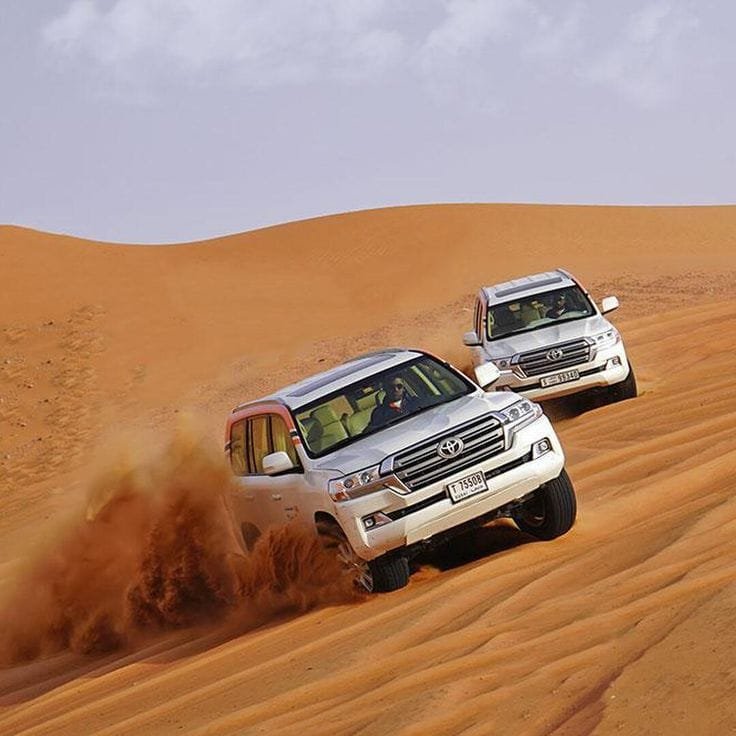
The Al Khatim desert is where our safaris run, and it is the reason the experience is so good. Because we operate here daily, our drivers know the safest and most scenic routes, the best dunes for bashing, the finest sunrise and sunset vantage points, and the quietest spots for photography. A typical safari includes a 45-minute transfer from Abu Dhabi, thrilling 4×4 dune bashing, a camel ride, sandboarding, and — on the evening tour — a traditional camp with unlimited BBQ dinner and live shows. Morning safaris focus on the sunrise and are cooler and quieter. Prices start from AED 35 per person, and you can choose self-drive, shared bus, hotel pickup or a private car. Explore the evening, morning and private safari options.
Straight from the dune operators
Booking direct with Royal Arabian Safari means no reseller mark-up, flexible timing and a direct line to the team actually running your safari.
Things to Do at Al Khatim
- Dune bashing — the headline thrill, over Al Khatim’s rolling dunes in a 4×4
- Camel riding — the traditional Arabian way to cross the sand
- Sandboarding — glide down the dune faces, easy for beginners
- Quad biking & dune buggies — motorised desert adventure (optional add-ons)
- Sunrise & sunset photography — the golden light on the dunes is superb
- Stargazing & camping — dark skies away from the city
- Camp culture — BBQ dinner, henna, shisha and live tanoura and belly-dance shows (evening)
Best Time to Visit Al Khatim
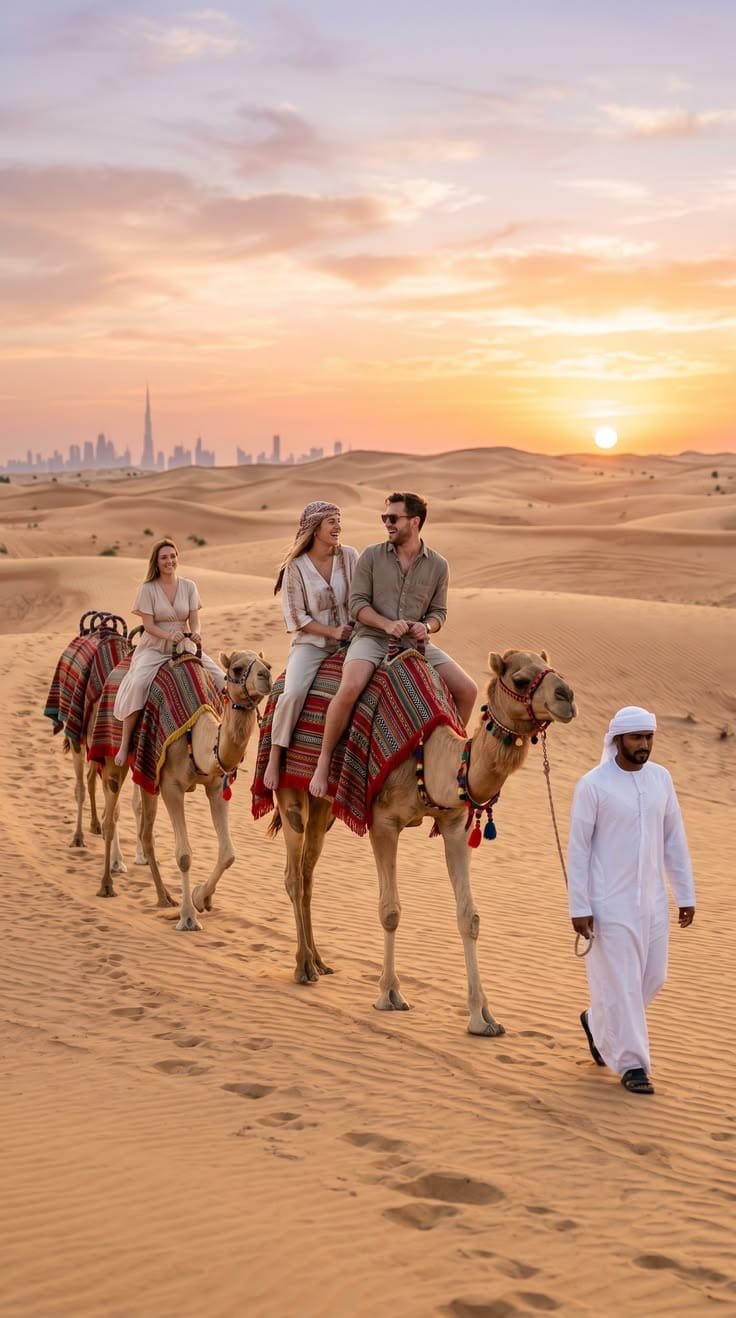
The best time to visit the Al Khatim desert is from October to April, when the weather is cool and comfortable for every activity, from midday camel rides to overnight camping. Within the day, the two magic windows are sunrise and sunset, when the light turns the dunes gold and the temperatures are pleasant. In the hot summer months (June to August) you can still enjoy Al Khatim by choosing an early-morning safari that starts at first light, or an evening safari after the peak heat. Whenever you visit, aim for the shoulders of the day for the best light and comfort.
Al Khatim vs Liwa vs Al Khaznah — Which Desert?
Abu Dhabi has more than one desert, and travellers often ask how Al Khatim compares. Al Khatim is the closest and most convenient — about 45 minutes from the city, with genuine rolling dunes, making it perfect for half-day and evening safaris. Liwa, on the edge of the Empty Quarter far to the south, has the UAE’s giant mega-dunes (including Moreeb Dune) but is a two-to-three-hour drive, better suited to a full-day or overnight expedition. Al Khaznah sits near Al Khatim on the Al Ain road and offers similar accessible dunes. For most visitors staying in Abu Dhabi who want the classic desert-safari experience without a long journey, Al Khatim is the ideal choice. If you specifically want the towering dunes of the deep desert, consider our Liwa desert safari.
| Desert | Distance from Abu Dhabi | Best for |
|---|---|---|
| Al Khatim | ~45 minutes | Half-day & evening safaris, easy access |
| Al Khaznah | ~1 hour | Accessible dunes near Al Ain road |
| Liwa | ~2–3 hours | Giant mega-dunes, full-day/overnight |
Photography at Al Khatim
Al Khatim is a photographer’s dream, and timing is everything. The best light is the golden hour just after sunrise and just before sunset, when the low sun rakes across the ripples and turns the sand amber. Shoot with the sun behind or to the side of your subject for glowing rim-light on the dune crests, and include a camel, a person in traditional dress or a 4×4 for scale — empty dunes can look flat without a reference. The clean, wind-sculpted ripples of the early morning read beautifully in low light. Drones are allowed in the open desert away from restricted and no-fly zones, giving spectacular aerial shots of the dune ridges. On a guided safari your driver will take you to the best vantage dunes and happily stop for photos, so you never miss the light.
What to Bring to the Al Khatim Desert
- Plenty of water, especially in the warmer months
- Sunglasses, a hat and high-factor sunscreen
- Light, breathable clothing and closed shoes for the sand
- A warm layer for cool winter evenings and early mornings
- A charged phone or camera (and a drone if you have one)
- A scarf to keep sand off your face on windy days
- If self-driving off-road: a 4×4, tow rope, tyre gauge, and recovery boards
Safety Tips for Visiting Al Khatim
The Al Khatim desert is safe and welcoming when approached sensibly, but the desert always deserves respect. Never drive an ordinary car onto the soft sand — it will get stuck, and recovery is difficult and costly. If you self-drive off-road, go with a properly equipped 4×4, deflate your tyres, travel with at least one other vehicle, carry plenty of water, and tell someone your plans. Avoid the deep desert in the fierce midday summer heat. Keep your phone charged for navigation and emergencies — coverage in the Al Khatim area is generally good. For the vast majority of visitors, the safest and most enjoyable way to experience Al Khatim is with a licensed operator: you get an experienced dune driver, a maintained vehicle, insurance and local knowledge, so you can simply relax and enjoy the desert.
Nearby Attractions & Combining Your Visit
Because Al Khatim is on the road between Abu Dhabi and Al Ain, it pairs well with other attractions. A morning safari at Al Khatim leaves your afternoon free for Abu Dhabi’s highlights — the Sheikh Zayed Grand Mosque, Yas Island theme parks, Qasr Al Watan or the Corniche. Travellers heading on to Al Ain can combine the desert with Jebel Hafeet, the oasis and Al Ain’s heritage sites. This flexibility — a genuine desert experience close to the city and on the way to Al Ain — is another reason Al Khatim is so popular with visitors planning a full Abu Dhabi itinerary.
Quick Answers
Heritage & History of the Al Khatim Desert
Long before it became Abu Dhabi’s safari hub, the Al Khatim desert was part of the traditional Bedouin homeland. For generations, desert communities crossed this sand by camel, navigating by the stars, reading the dunes for water and shelter, and surviving on deep, hard-won knowledge of the land. That heritage lives on in the experiences you enjoy here today — the camel ride that echoes centuries of desert travel, the Arabic coffee and dates of hospitality, the traditional dress, and the falconry that was once essential for hunting. When you sit around a fire at an Al Khatim camp under a sky full of stars, you are connecting with a way of life that shaped the UAE. Understanding this history adds real depth to a visit: Al Khatim is not just a pretty dune field, but a living link to Abu Dhabi’s desert roots.
Why Al Khatim Is Abu Dhabi’s Safari Hub
Several things combine to make Al Khatim the natural home of the Abu Dhabi desert safari. It is close — about 45 minutes from the city, so a half-day trip is easy. It has real dunes — tall enough for thrilling dune bashing yet with gentler areas for families. It is accessible — right off the E22 highway. And it is relatively uncrowded compared with the busy Dubai desert circuits, so mornings in particular feel private and unspoiled. For a licensed operator like us, running tours here daily means our drivers know every ridge and the best light at every hour. All of this adds up to a better experience: more dramatic scenery, safer driving, quieter dunes and superb photography, without a long or tiring journey. If you are staying in Abu Dhabi and want a desert safari, Al Khatim is simply the best place to have it.
The Al Khatim Desert Camp Experience
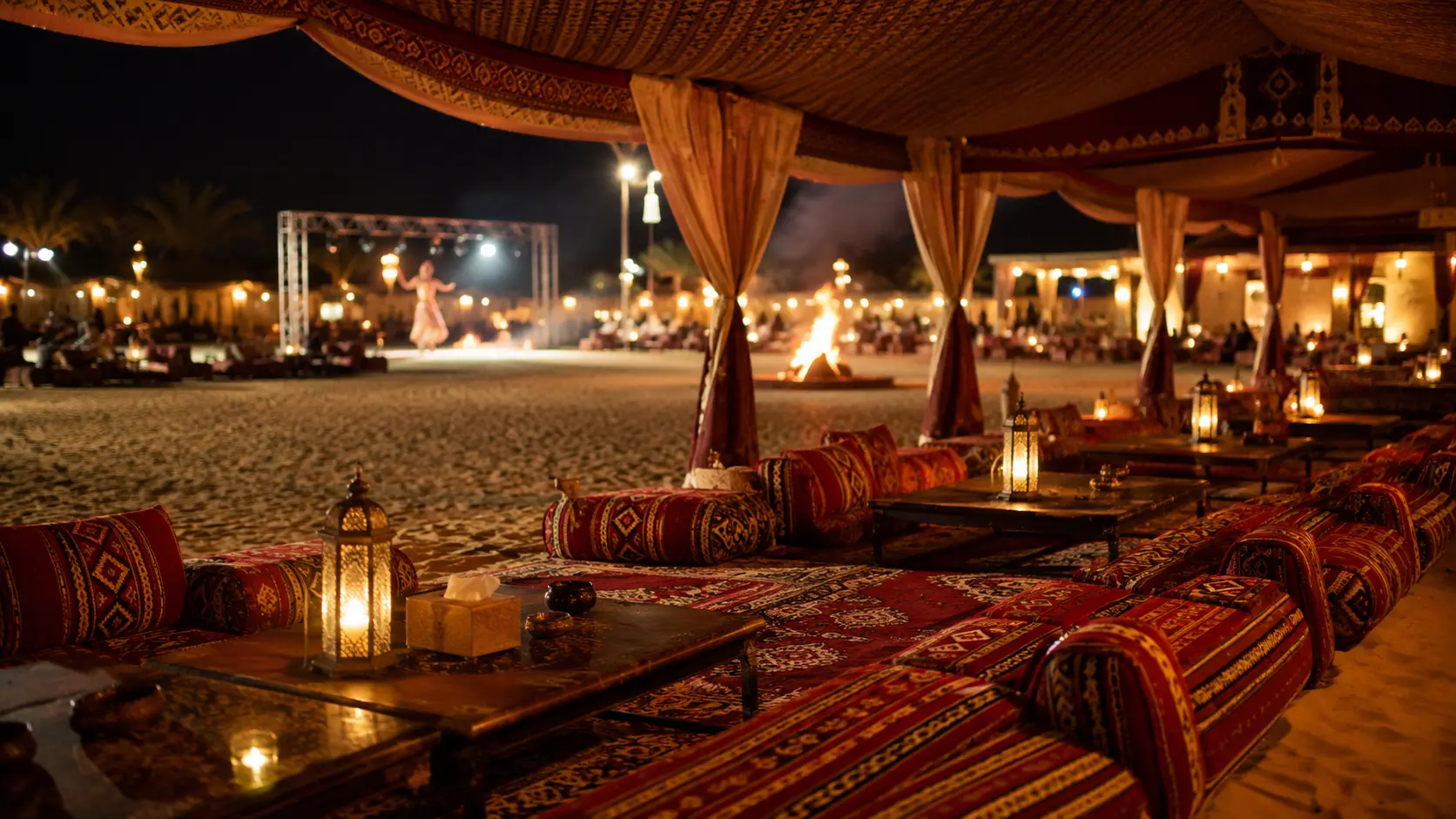
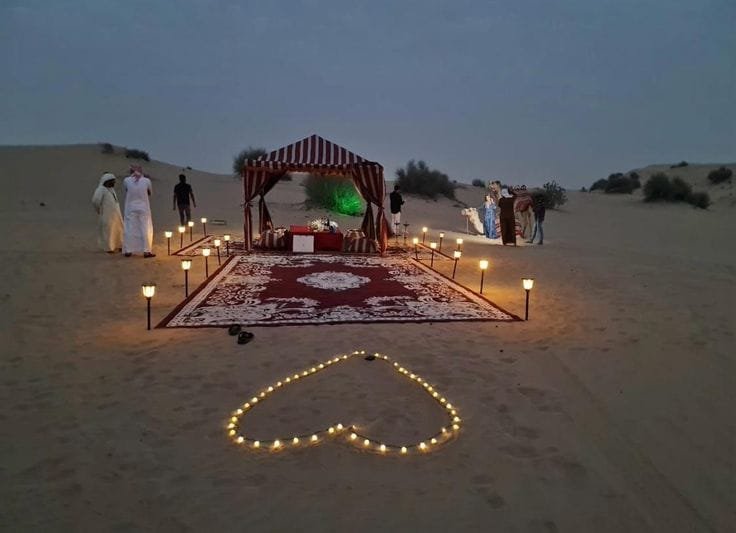
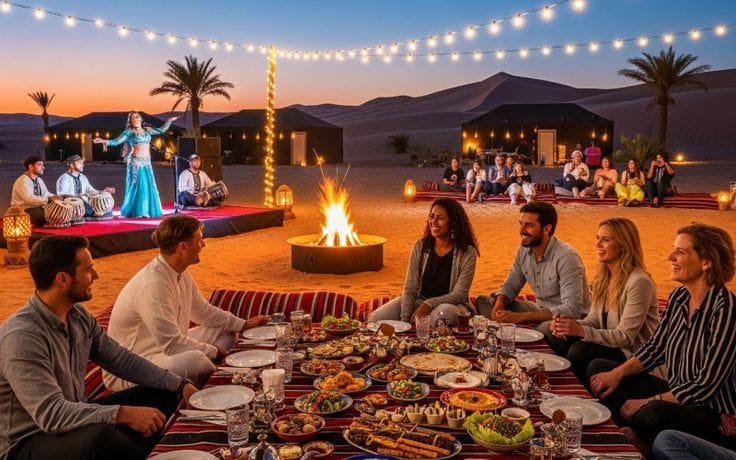
At the heart of an Al Khatim evening safari is the desert camp. Set among the dunes, the camp recreates a traditional Bedouin gathering: low majlis seating around a fire, carpets and cushions, and the warm glow of lanterns as night falls. Here you enjoy an unlimited BBQ dinner with grilled meats, mezze, salads and Arabic bread, plus vegetarian options, while live entertainment fills the camp — a spinning tanoura dance, belly dancing and a fire show. You can have henna applied, try Arabic shisha, pose for photos in traditional dress, and sip Arabic coffee. On overnight stays, the camp becomes your base for stargazing and a night under the desert sky. It is this camp culture, set against the Al Khatim dunes, that turns a drive in the sand into a complete Arabian evening.
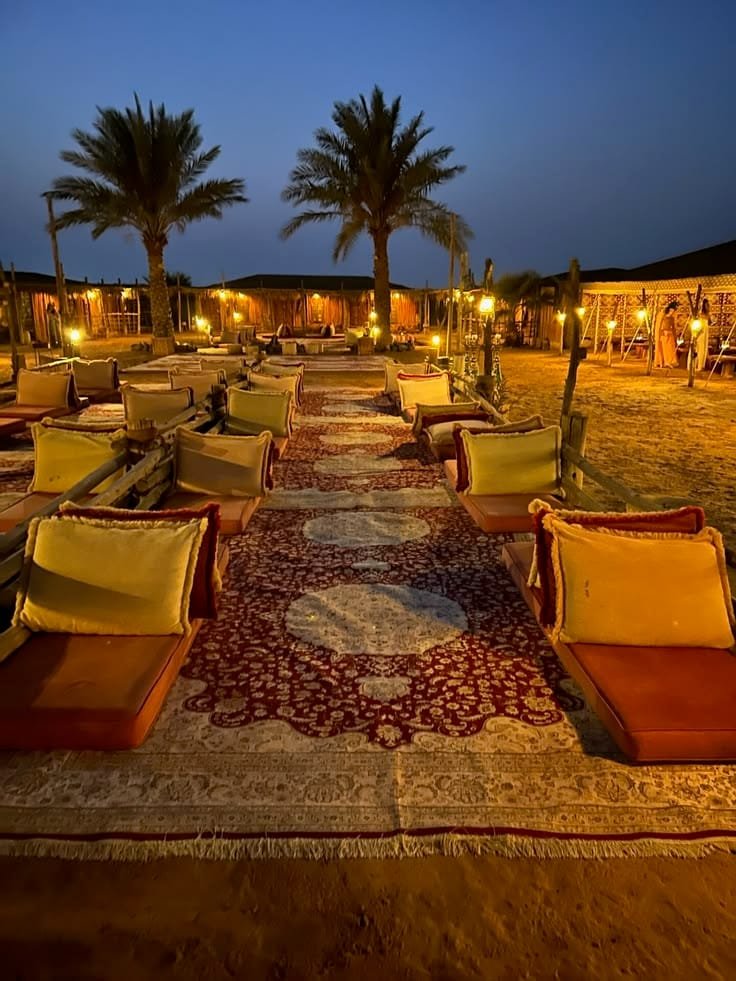
Making the Most of a Self-Drive Visit
If you are an experienced off-roader keen to explore Al Khatim independently, a few tips will keep your trip safe and enjoyable. Go early or late to avoid the heat and catch the best light. Deflate your tyres to around 15–18 psi for grip on soft sand, and re-inflate before returning to the road. Never travel alone in the deep desert — go in a convoy of at least two 4x4s, carry a tow rope and recovery boards, and pack far more water than you think you need. Download offline maps, as landmarks are few. Stick to established tracks where possible to protect the fragile environment, and carry out all your litter. And know your limits: the big dunes are unforgiving of inexperience. If any of this feels beyond your comfort level, a guided safari gives you the same Al Khatim dunes with an expert at the wheel — and from AED 35 it is excellent value.
Why Book Your Al Khatim Safari with Royal Arabian Safari
- We run tours in Al Khatim every day — unmatched local knowledge of the dunes and the light.
- Best price guaranteed — from AED 35 per person, with no booking fee.
- Pay on arrival and free cancellation up to 12 hours before — zero risk.
- DCT-licensed operator with experienced, safety-trained drivers and insured vehicles.
- Flexible options — morning, evening, private, self-drive and overnight.
- Instant WhatsApp confirmation, any time of day.
Guided safari from AED 35 · best price guaranteed · pay on arrival.
Thousands of happy guests
Rated 4.9 stars across thousands of desert safaris — trusted by families, couples and photographers from around the world.
Explore More
- Evening Desert Safari
- Morning Desert Safari
- Private Desert Safari
- Liwa Desert Safari
- Desert Safari Prices
- Book Your Safari
See What Awaits You in the Desert
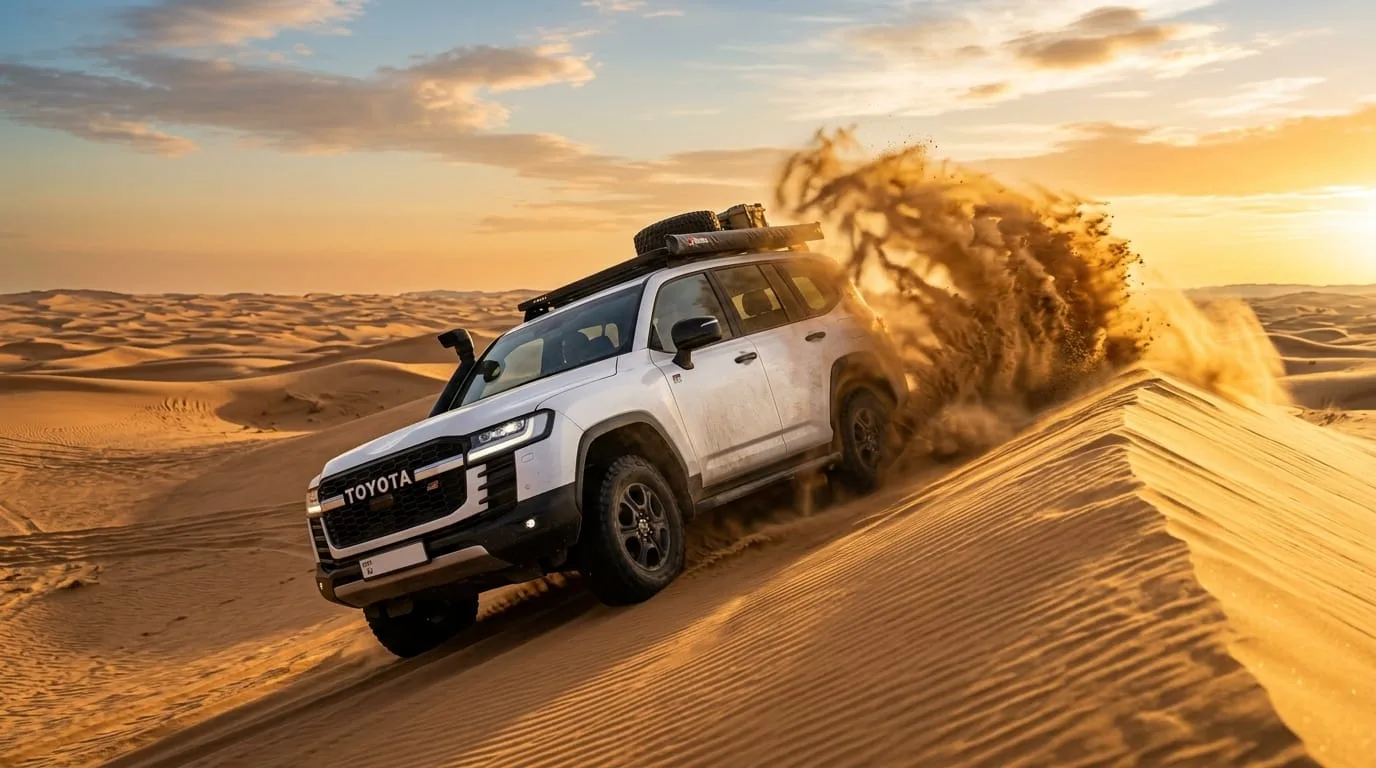
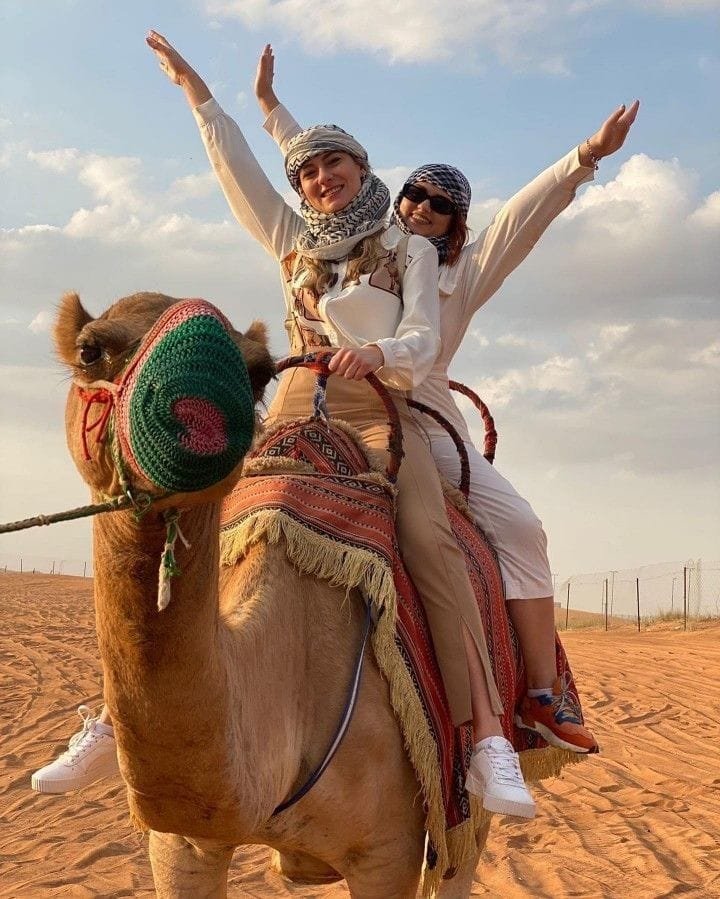
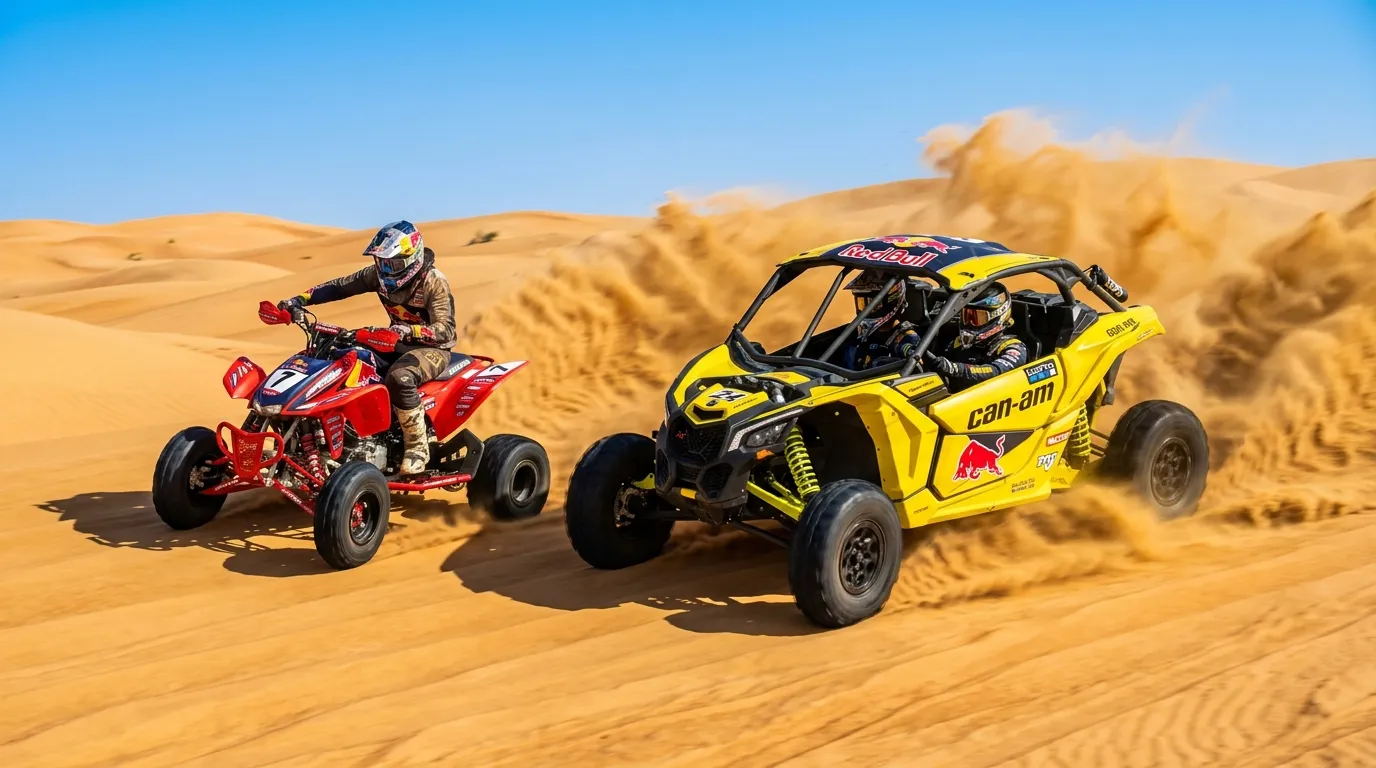
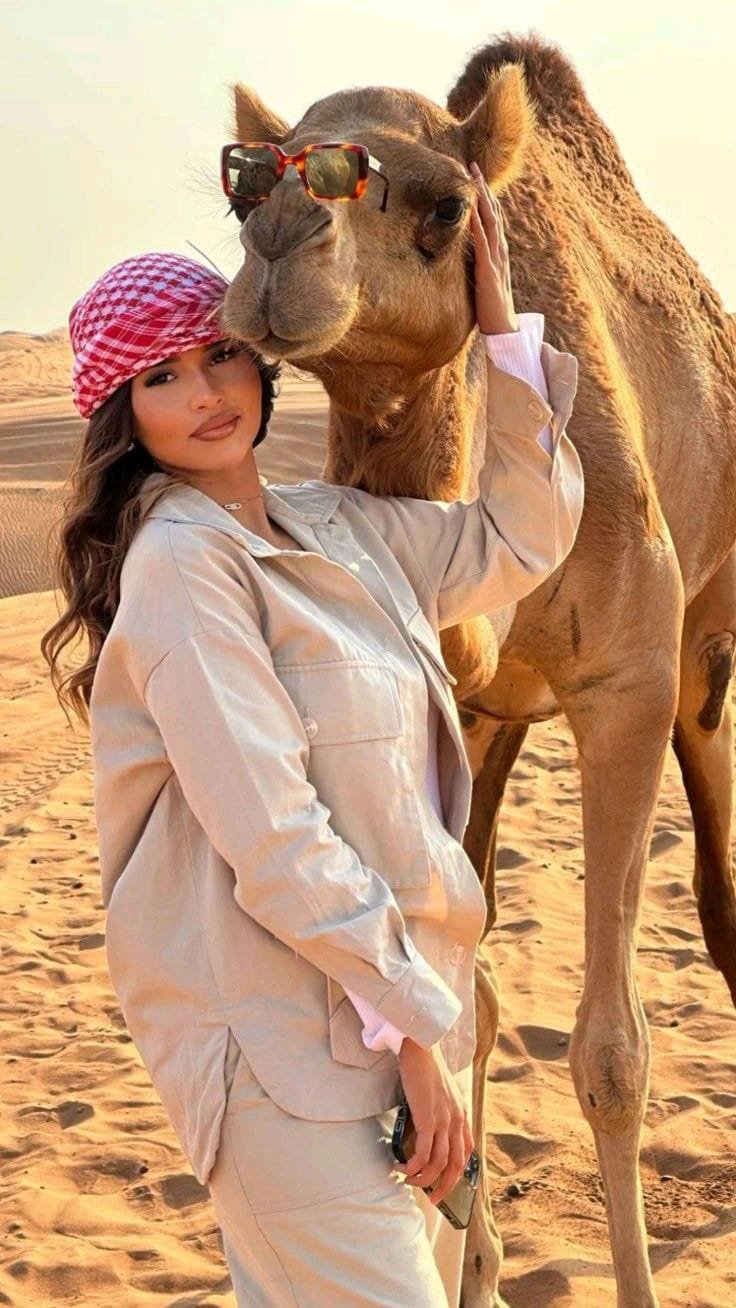
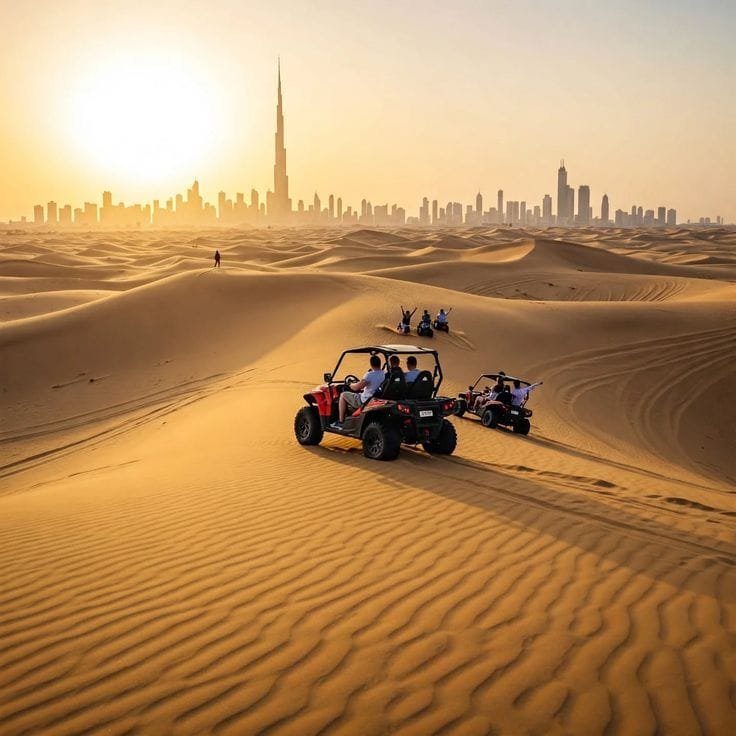
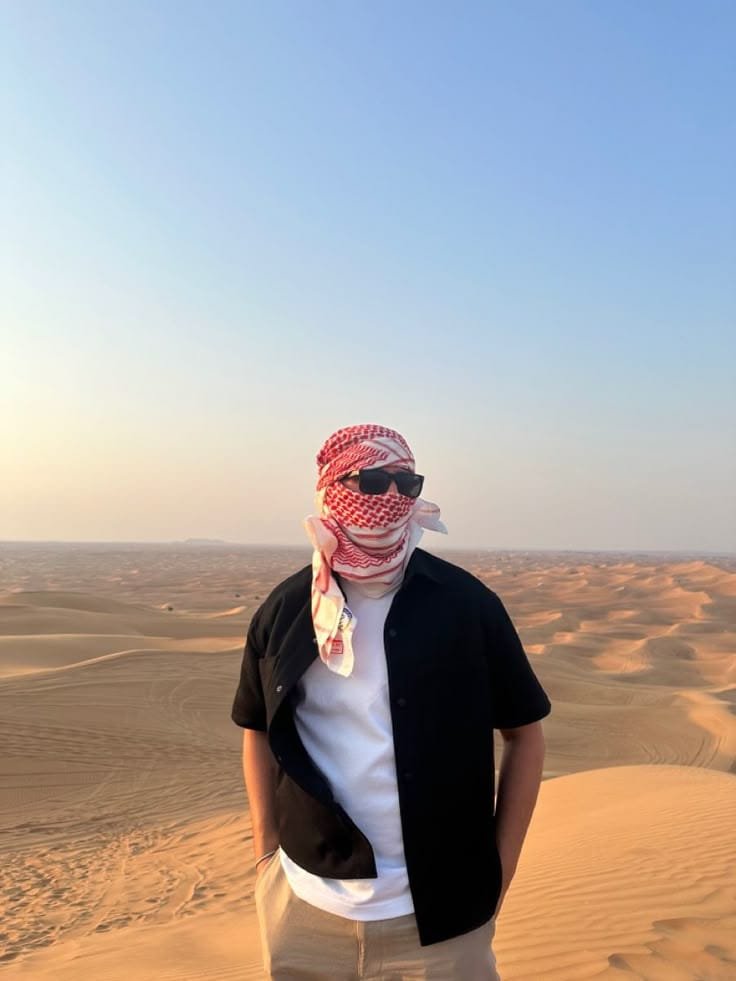
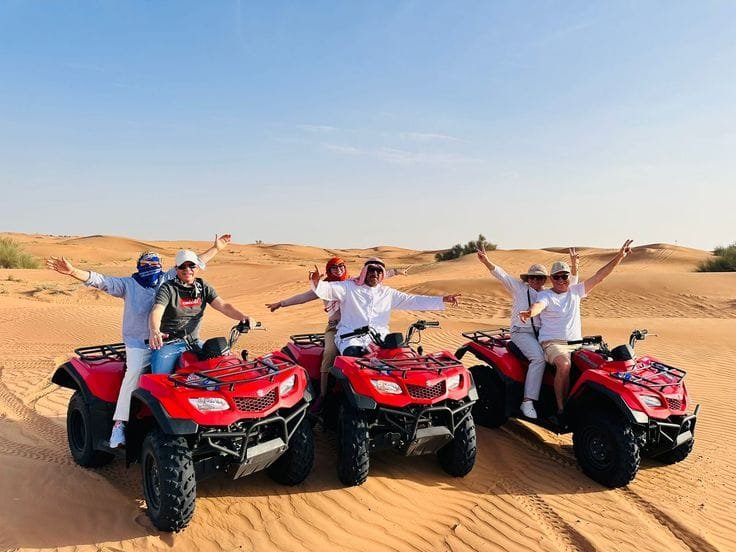
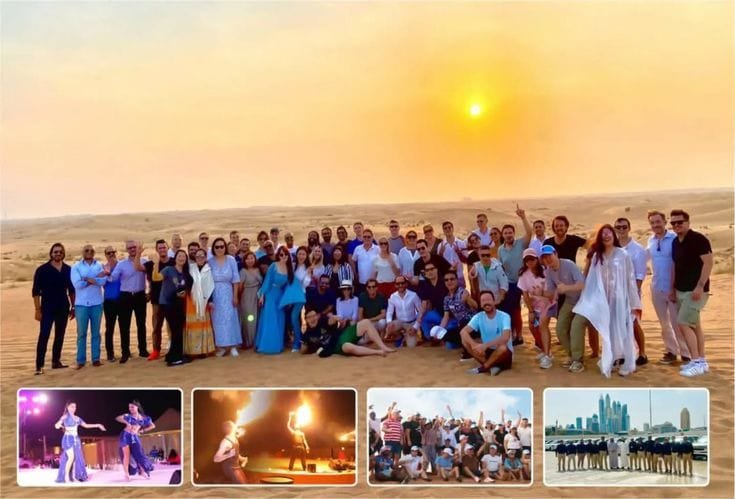
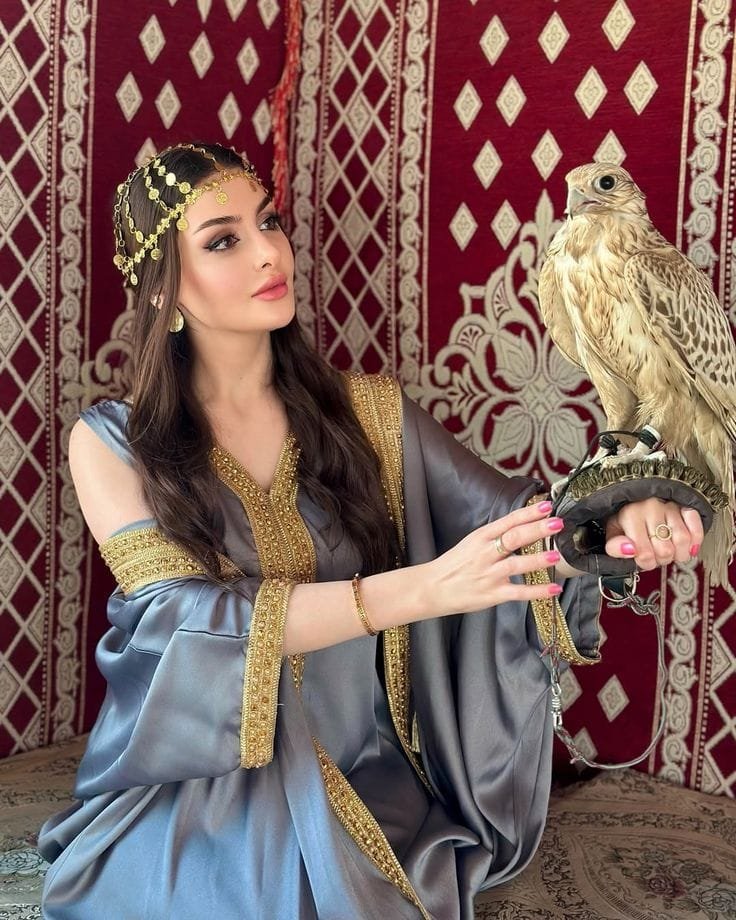
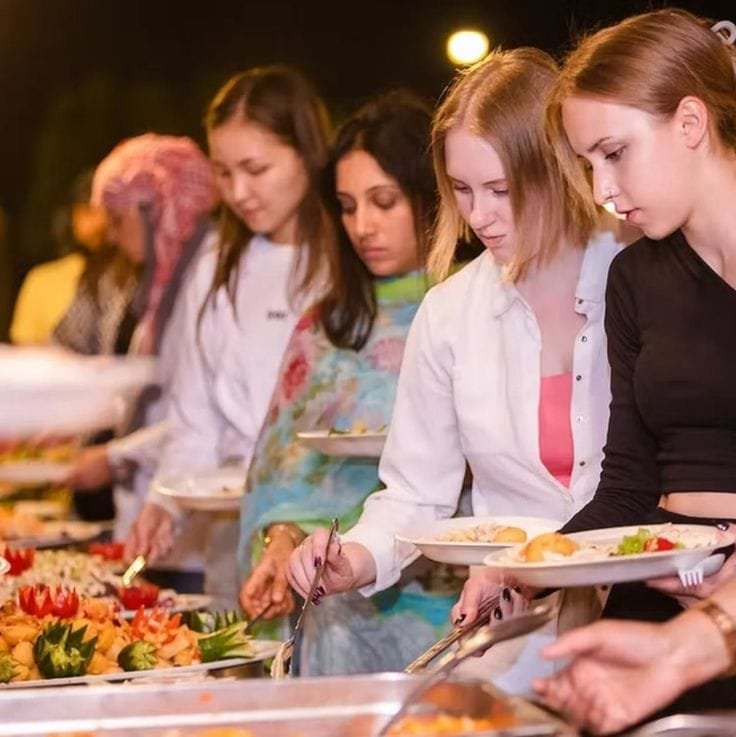
Real moments from our Abu Dhabi desert safaris — exactly what you’ll experience before you book.

Al Khatim Fact File — The Numbers, Checked
Copy-paste errors travel fast between safari websites, so here is the fact file we hold ourselves to. One page-one competitor currently tells visitors the dunes here reach “934 feet” — that is roughly 285 metres, the territory of Tel Moreeb at Liwa, some 220 km further south, not Al Khatim. Al Khatim’s ridges are tall enough for every activity on this page while staying friendly to first-time desert drivers — which is exactly why the emirate’s safari camps cluster here and not in Liwa.
| Fact | The checked answer |
|---|---|
| Distance from Abu Dhabi city | About 80 km east along the E22 (Abu Dhabi–Al Ain road) |
| Driving time | 45–60 minutes from most city hotels |
| Nearest settlements | Al Khatim town and Al Khaznah village on the E22 |
| Terrain | Rolling golden dunes cut by natural valleys formed on alluvial plains that carry underground runoff from the Omani mountains |
| Dune character | Medium ridge lines and open bowls — challenging enough for dune bashing, forgiving enough for first-timers |
| “934 ft dunes” claim | Incorrect for Al Khatim — that figure belongs to the Liwa mega-dunes near Tel Moreeb |
| Fossil dunes | Not at Al Khatim — the famous fossil dunes are at Al Wathba, a separate site closer to the city, easy to combine on one trip |
| Who runs camps here | Most licensed Abu Dhabi safari operators, including our own private camp |
The valley tracks are the reason tours run so smoothly here: they follow firm natural corridors between the dunes, so transfers stay comfortable while the bashing happens on the open slopes.
Al Khatim Temperature by Month
The desert runs hotter by day and colder by night than the city forecasts suggest. Typical values in °C:
| Month | Day high | Night low | Verdict for visiting |
|---|---|---|---|
| January | 24 | 12 | Perfect — bring a jumper for the evening |
| February | 26 | 13 | Perfect |
| March | 29 | 16 | Excellent |
| April | 34 | 20 | Good — mornings and evenings best |
| May | 39 | 24 | Hot — sunset tours recommended |
| June | 41 | 26 | Very hot — evening only |
| July | 43 | 29 | Peak heat — short evening visits |
| August | 43 | 29 | Peak heat — short evening visits |
| September | 40 | 26 | Hot — improving late month |
| October | 36 | 22 | Good — season opens properly |
| November | 30 | 17 | Excellent |
| December | 26 | 14 | Perfect — coldest nights, clearest skies |
Winter nights genuinely get cold on the sand — a light jacket earns its place in your bag from November to February. Summer visits work, but book the sunset slot and let the dunes cool before dinner.
What a Safari Here Actually Costs — Operators Compared
Prices for the same desert vary wildly between operators, and several page-one websites publish contradictory numbers on their own pages — one lists a morning start time above an afternoon-to-evening itinerary. Here is the honest ladder:
| Option | Price | Notes |
|---|---|---|
| Self-drive to our camp | From AED 35 per person | Drive yourself to the camp gate, join the full evening programme |
| Shared bus pickup | From AED 50 per person | The cheapest picked-up option on this search page |
| Shared 4×4 package | From AED 100 per person | Hotel pickup, dune bashing, camp evening |
| Private 4×4 (whole car) | AED 599–800 per car | Your own vehicle and schedule — cheaper per head than most sharing seats for families of 4+ |
| Typical competitor sharing seat | AED 220–250 per person | The going rate on the rest of page one |
| International platforms | From ~USD 54 (≈AED 198) | Booking-fee models, third-party operators |
Every package of ours includes the camp evening — camel ride, sandboarding, shows, buffet and shisha — with free cancellation up to 12 hours before pickup and no card needed to reserve. Falcon photos run AED 10–30 at the camp.
Private Events, Weddings & Corporate Nights at Al Khatim
One of the top results for this search is actually an events directory listing an Al Khatim camp for weddings and corporate gatherings — because the setting works. If you are planning a private evening rather than a tourist package, the camp can be reserved exclusively: majlis seating rearranged for your group, private buffet service, your own entertainment schedule, and dune activities before dinner. Groups from small family celebrations to corporate nights of a few hundred guests are workable in season.
Tell us the date and group size on WhatsApp and we will price the camp takeover directly — or start from the VIP majlis upgrade if you want a reserved section inside a normal evening instead.
Al Khatim Desert — Frequently Asked Questions
Al Khatim is the near option — for the comparison see how far the desert is from the city, Al Khatim against Liwa, and starting from Al Ain.
How far is Al Khatim from Abu Dhabi city?
Is Al Khatim the same desert used for Abu Dhabi safaris?
Do I need a 4×4 to visit Al Khatim?
Can I camp overnight in the Al Khatim desert?
What animals live in the Al Khatim desert?
How tall are the dunes at Al Khatim?
Is it safe to visit the Al Khatim desert?
What is the cheapest way to experience Al Khatim?
How far is the Al Khatim desert from Abu Dhabi?
Approximately 80 km east of Abu Dhabi city along the E22 Abu Dhabi to Al Ain highway. The drive takes 50 to 60 minutes depending on your pickup point and traffic. From Yas Island it is about 40 minutes and from the Corniche roughly 50 minutes.
How tall are the Al Khatim dunes?
The ridges rise over 100 metres, which is considerably taller than the roadside dunes many operators use and gives longer climbs and steeper descents during dune bashing. For comparison, Moreeb Dune in Liwa reaches around 300 metres but sits 250 km from the city.
Can I drive to Al Khatim myself?
Yes. We send an exact GPS pin and the drive is entirely on tarmac to the meeting point, so any normal car reaches it. Our team takes over there in a 4×4 for the dune bashing. This is the AED 35 self-drive package, the cheapest way to do a desert safari in Abu Dhabi.
What wildlife lives in the Al Khatim desert?
Away from the city glow you may spot Arabian oryx, sand gazelle, desert fox, Arabian hare and spiny-tailed lizards. Sightings are never guaranteed and are most likely around dawn and dusk when animals are active and temperatures are lower.
Is Al Khatim good for stargazing?
Yes. It is far enough from Abu Dhabi’s light pollution that the Milky Way is visible to the naked eye on clear, moonless nights. Camp lights dim toward the end of the evening safari, and an overnight stay gives you the full dark-sky window after the day guests leave.
What is the history of the Al Khatim area?
This is the ancestral land of the Bani Yas, the tribal confederation from which Abu Dhabi’s ruling family descends. The wider sand system rolls south toward the Rub al Khali, the Empty Quarter, and these routes were crossed by camel caravans for centuries before roads existed.
What is the best time to visit the Al Khatim desert?
November to March, when daytime temperatures sit between 24 and 30 degrees and evenings at the camp are cool rather than cold. October and April are excellent value with near-peak conditions and far fewer people. From May to September a morning safari is far more comfortable than an evening one.
Is there a camp at Al Khatim?
Yes. We run our own DCT-licensed camp in the Al Khatim desert with majlis seating, separate washrooms for men and women, a prayer space, a shisha corner, a live BBQ grill and a stage for the evening performances. It is where all our evening, morning and overnight safaris take place.
Is a desert safari halal?
Yes. At our Al Khatim camp all meat served is halal, the buffet carries clear vegetarian options, and no alcohol is served by default. Prayer space and washrooms are available at the camp, and the schedule leaves room around Maghrib for guests who pray.
What is Al Khayma Camp?
“Al Khayma” simply means “the tent” in Arabic, and several camps in the UAE use the name. In the Al Khatim area it refers to one of the many licensed desert camps along the E22 corridor. Camps here differ in size and inclusions — ours is a private camp with majlis seating, live shows and a buffet, detailed above.
How much does a desert safari in Abu Dhabi cost?
At Al Khatim, realistic prices run from AED 35 per person if you self-drive to the camp, AED 50 with shared bus pickup, and around AED 100 per person for a shared 4×4 package. A private 4×4 costs AED 599–800 per car. Most other operators on this search charge AED 220–250 per person for a sharing seat.
Can first-time desert drivers self-drive in Al Khatim?
Al Khatim is known as the friendliest major dune field near Abu Dhabi — its valley tracks follow firm natural corridors, which is why first-timer desert drivers practise here rather than in Liwa. That said, never drive the dunes alone: deflate tyres, travel with a second 4×4, and if it is your first time, park at the camp and let our drivers handle the bashing.
Which is better for a safari — Al Khatim or the Dubai desert?
From Abu Dhabi, Al Khatim wins on every practical measure: 45–60 minutes of transfer instead of two hours toward Lahbab, golden dunes rather than roadside red sand strips, and camps that are licensed by Abu Dhabi’s tourism authority. Several “Abu Dhabi safari” pages online actually sell Dubai products — check the pickup line before you book.
What is the most famous desert in the UAE?
The Rub’ al Khali (Empty Quarter) is the most famous — the largest sand desert on earth, reaching the UAE at Liwa. Al Khatim sits on its northern approaches and is the accessible slice of that world: the same golden sand seas, one hour from the capital instead of three.
Book Your Al Khatim Desert Safari
The best way to experience the Al Khatim desert is on a guided safari with an operator who actually runs tours here every day. As a licensed Abu Dhabi desert operator based in the Al Khatim dunes, Royal Arabian Safari offers the full range of experiences in this exact landscape — from budget self-drive entry at AED 35 and shared transfers, to private 4×4 safaris, sunrise morning safaris, dune bashing, quad biking and overnight desert camps.
Because we are local to Al Khatim, we know which dunes catch the best light, where the desert is quietest, and how to time your drive around the heat and the crowds. Every safari includes an experienced driver-guide, and prices are transparent with payment on arrival — no online prepayment and no hidden fees. Whether you want a quick self-drive visit or a full private experience, we build the trip around what you want to see and do in the Al Khatim desert.
To plan your visit, message us on WhatsApp with your date, group size and preferred experience, and we will send an exact, all-inclusive quote. Popular slots — especially sunrise and cooler-season weekends — fill quickly, so booking a day or two ahead is recommended. Explore our morning safari, evening safari and full package list to choose the Al Khatim experience that fits your trip and budget.
Planning the Rest of Your Abu Dhabi Trip
Most guests who book the dunes with us also want a day in the capital. These guides cover the practical detail:
- a full Abu Dhabi itinerary — one, two and three-day plans, including where the safari fits
- things to do in Abu Dhabi — the attractions worth your time, with current prices
Related Desert Safari Guides
Continue Planning Your Trip
- Fossil Dunes Abu Dhabi — Al Wathba Visitor Guide & Closure Update
- Abu Dhabi Sand Dunes — Where to Find Them & How Tall They Get
- Night Desert Safari Abu Dhabi — Stars, Fire Shows & BBQ
- Al Khatim vs Al Khaznah: Which Abu Dhabi Safari Desert Should You Choose?
- The DesertAbu DhabiIs Famous For Al Khatim Desert Safari Abu Dhabi
- Evening Desert Safari Abu Dhabi
- What to Wear on a Desert Safari in Abu Dhabi
- Best Time for a Desert Safari in Abu Dhabi
- Desert Safari Packages Abu Dhabi
- Abu Dhabi Desert Safari Booking — Confirmed in Minutes
Book this tour
No deposit and no card details. Message us and we confirm the plan and the exact price before you commit — answered at any hour.
- Send your date and guest countYour date, how many of you, and where we collect from. That is all we need.
- We send the plan and the pricePer car, not per person. You see the route, the timings and the exact figure first.
- Pay the driver on the dayCash or card, after the run. Free cancellation up to 12 hours before pickup.
Answered 24 hours · No deposit · No booking fee · Licensed operator
If we have to cancel, what happens?
A cancellation policy that covers your obligations but not ours is only half a document. Here is our side of it, in writing.
If we have to cancel your booking — for weather, a vehicle issue, or driver illness — we will contact you as soon as we know and rebook you at no charge on the next date that works for you. You pay nothing for the cancelled booking.
If we need to send a different vehicle than the one you booked, we will ask you first rather than turning up in something you did not book.
This is separate from your own cancellation rights, which are unchanged: you can cancel free up to 12 hours before pickup. Because we take no deposit and no booking fee, there is no money of yours sitting with us either way — nothing to chase, and nothing to wait for.