Abu Dhabi Desert Road: Routes, Drives & the Dunes Beyond
Ask anyone in the capital about the Abu Dhabi Desert Road and they mean one road: the E22, the Abu Dhabi–Al Ain highway running through the Al Wathba and Al Khatim desert, dunes stacking up on both sides of the asphalt. Here is the complete driver’s guide — every named road, the six official off-road routes, the key safety rules, and the easiest way onto the sand.
The Short Answer
The Abu Dhabi Desert Road is the E22 — the Abu Dhabi–Al Ain highway through the Al Wathba and Al Khatim desert, posted at 160 km/h on its main stretch. Real dune scenery begins around Al Wathba and peaks near Al Khatim, about 80 km out, where dunes beside our private camp top 100 metres. Any car can drive the highway; only a prepared 4WD convoy should leave it. The simplest way onto the sand is a guided safari — from AED 35 per person, self-driving the E22 to our Al Khatim camp.
| Question | Answer |
|---|---|
| Which road is “the desert road”? | The E22 (Al Ain Road), through Al Wathba and Al Khatim |
| Posted speed limit | 160 km/h on the main stretch — among the highest posted anywhere |
| Where the big dunes are | Around Al Khatim, ~80 km / 50–60 min from the city |
| Can a normal car do it? | Yes on tarmac; never on sand — 4WD convoys only off-road |
| Best light | Sunrise, and the last hour before sunset |
| Guided option | Evening safari from AED 35/person, self-drive to our camp |
Which Road Is the Abu Dhabi Desert Road?
The Abu Dhabi Desert Road is the E22, officially the Al Ain Road. It leaves the capital heading east, passes Al Wathba, then runs through the Al Khatim dune belt on its way to Al Ain. When a concierge, taxi driver or safari operator says “the desert road”, this is the road they mean — no other route seriously competes for the name.
Maps show only a numbered grid — E11, E22, E30, E45 — while travel sites list “desert road” as if it were a ticketed attraction. It is neither: just a public highway carrying the most accessible big-dune scenery in the Emirates.
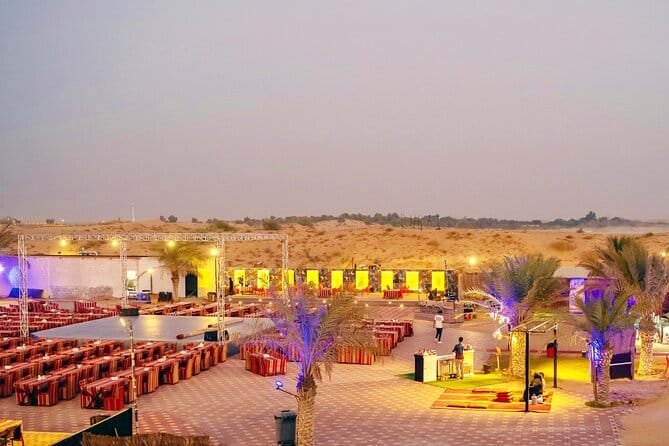
Our own camp sits in that dune belt, just off the highway, and our drivers cover this road daily — everything below comes from that mileage, not from a map. For the wider picture, see our Al Khatim desert guide and UAE desert overview.
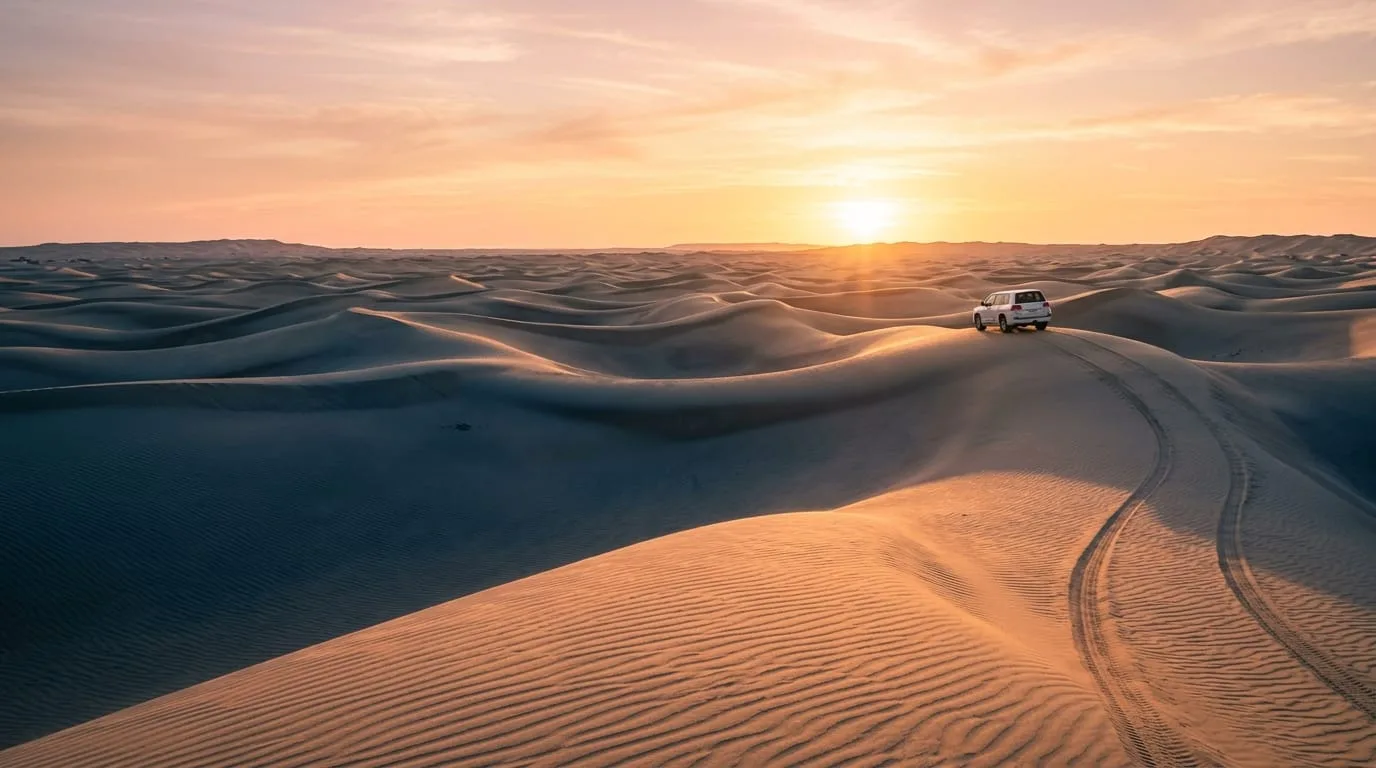
Abu Dhabi’s Desert Roads at a Glance
The emirate has four desert drives worth planning around, each suiting a different day out — the “E” simply marks an Emirates route.
| Road | Official name | Where it goes | Desert scenery | Driver’s notes |
|---|---|---|---|---|
| E22 | Al Ain Road — the “desert road” | Abu Dhabi → Al Wathba → Al Khatim → Al Ain | Dune belts on both sides around Al Khatim; the classic desert-drive views | Posted 160 km/h on the main stretch; our camp sits off it, ~80 km / 50–60 min from town |
| E11 west | Sheikh Maktoum Bin Rashid Road | Abu Dhabi → Mirfa → Tarif → Ruwais → Sila | Coastal-desert emptiness and sabkha salt flats rather than tall dunes | Ghuwaifat stretch also posted 160 km/h; the UAE’s longest road overall |
| E45 → E90 | The Liwa road, via Hamim and Arada | Abu Dhabi → Hamim → Arada → the Liwa crescent | Dunes build steadily toward the edge of the Empty Quarter | ~220–250 km, 2.5–3.5 h; paved 22 km Moreeb Dune spur at the end; last full services at Mezaira’a |
| E30 | The truck route toward Al Ain | Abu Dhabi → Al Wathba → onward to Al Ain | Sand plain; the access side for the Al Wathba fossil dunes | Heavy-vehicle corridor — slower, busier with trucks |
Scenery-per-kilometre is highest on the E22 around Al Khatim and on the final third of the Liwa run; the E11 is for travellers who want emptiness and long horizons. Our guide to the Abu Dhabi sand dunes maps where each type of terrain sits.
What Is the E22 Desert Drive Actually Like?
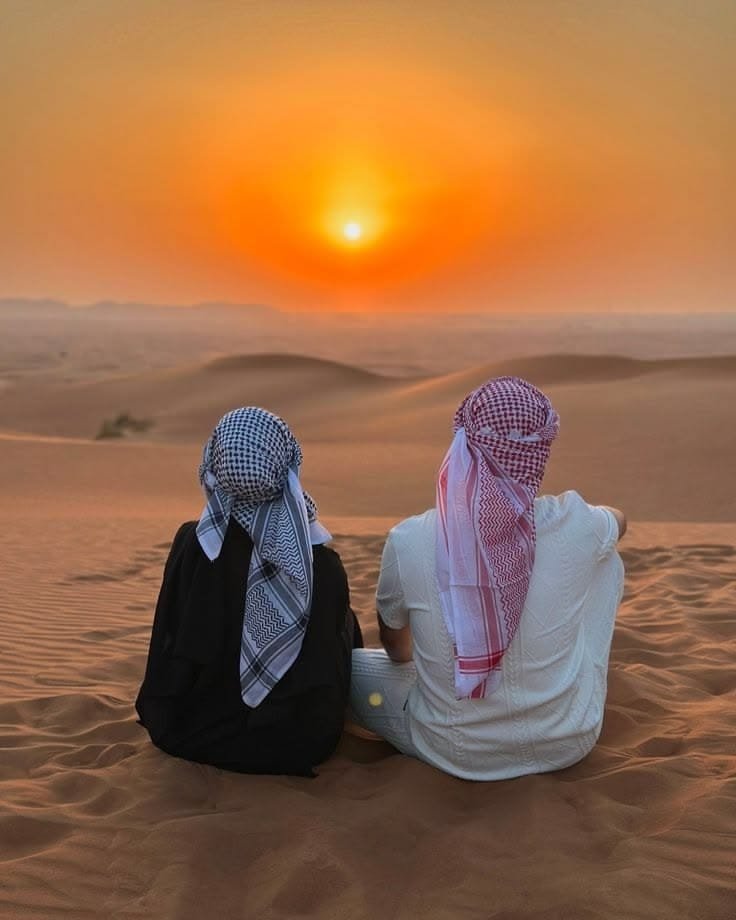
Fast, smooth and increasingly empty. You clear the city fringe quickly, pass Al Wathba, and watch the sand build until it walls the road around Al Khatim. The run to the dune belt is modern dual carriageway, roughly 80 km, and any rental car handles it without drama.
Leaving the city
Set navigation and fuel up before leaving town. Exits are spaced far apart, and a missed turn means a long run to the next U-turn. Past the last suburbs, the road settles into a straight, quiet rhythm.
Al Wathba: the first taste of desert
Al Wathba is where most first-timers feel the desert begin — sand plains open and the horizon flattens. It is also the turn-off zone for the sculpted formations in our fossil dunes guide, off the E30 corridor side of the same desert.
The Al Khatim dune belt
This is the postcard stretch: the dunes crowd the road, glowing gold in late afternoon, and the biggest — including those beside our private camp — rise more than 100 metres. Nearly every desert safari in the emirate happens in this belt; nowhere else puts serious dunes this close to the capital.
How Fast Can You Legally Drive on the E22?
The main stretch of the E22 is posted at 160 km/h — among the highest posted limits anywhere. Two cautions: Abu Dhabi enforces posted limits with no radar buffer, unlike some emirates, so the gantry number is absolute; and the limit changes along the route — never assume 160 throughout.
In practice the challenge is speed differential — you share lanes with vehicles doing far less, so mirror checks matter. Heavy trucks are largely routed onto the parallel E30, which keeps the E22 flowing.
Can You Drive to Liwa and Moreeb Dune?
Yes — entirely on tarmac. The Liwa run leaves the capital on the E45 through Hamim and Arada, joins the E90 along the Liwa crescent, and covers roughly 220–250 km in 2.5–3.5 hours. From the crescent, a paved 22 km spur reaches the base of Moreeb Dune. A well-serviced saloon makes it comfortably.
Treat it as a proper day out: fill the tank at Mezaira’a — the last full services — and carry water whatever the season. The reward is the emirate’s grandest scenery, dunes growing until the road simply stops at the foot of Moreeb. We cover the destination in our Moreeb Dune guide and the guided options on our Liwa desert safari page.
If a same-day return sounds punishing, it is — a night under the stars, the way our Liwa overnight safari runs it, turns the long drive into the best two days in the emirate.
What About the E11 West — the Coastal Desert Run?
The E11 west of the capital — Sheikh Maktoum Bin Rashid Road — is the UAE’s longest road and its emptiest-feeling drive, running past Mirfa, Tarif and Ruwais towards Sila near the Saudi border. The scenery is coastal desert — sabkha salt flats and low sand plains rather than tall dunes — with the Ghuwaifat stretch also posted at 160 km/h.
Choose it for solitude and the strange beauty of the sabkha — dune seekers should point at the E22 or the Liwa run instead.
What Are the Six Official Off-Road Routes?
Abu Dhabi’s tourism authority publishes six signed self-drive desert routes: Al Remah, Al Ain–White Sands, Liwa Crossing, Hameem Loop, Umm Al Oush and Al Khazna. They range from a roughly 45 km half-day to a 1.5–2 day crossing — all genuine off-road drives for equipped 4WD convoys, not saloon-car detours.
| Route | Distance | Time | Grade | Notable for |
|---|---|---|---|---|
| Al Remah | ~67 km | 6–8 h | Beginner-friendly (in convoy) | The most accessible of the six — a first real dune drive |
| Al Ain–White Sands | ~157 km | 4–8 h | Varies by edition | The longest single-day route of the set |
| Liwa Crossing | ~109 km | 1.5–2 days | Advanced | Red dunes, salt flats and views toward Qasr Al Sarab |
| Hameem Loop | ~55–80 km | 4–5 h | Intermediate | Loop format — starts and finishes near the same point |
| Umm Al Oush | ~60–80 km | 5–7 h | Advanced | Dunes climbing toward ~250 m |
| Al Khazna | ~45 km | ~4–6 h | Advanced | Star-pattern dunes and camel farms |
Figures come from the authority’s own published route guide and differ slightly between editions — hence the ranges. Match the route to your experience: Al Remah for a first convoy, Hameem for confidence, the advanced trio only with seasoned drivers. Prefer the passenger seat? That is exactly what our dune bashing in Abu Dhabi delivers.
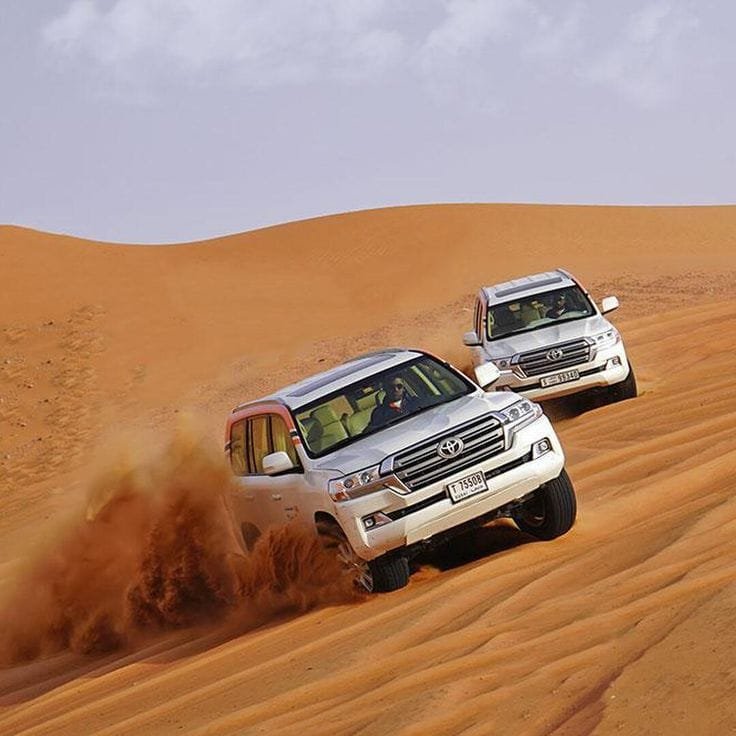
You Drive the Highway. We Drive the Dunes.
Evening safari at our private Al Khatim camp from AED 35 per person self-drive — dune bashing, sandboarding, camel ride, BBQ buffet and live shows included. Private Land Cruiser AED 800 per car. Pay on arrival; free cancellation up to 12 hours.
How Do You Stay Safe on Desert Roads?
Respect four things: camels at night, sand on the asphalt, the distance between services, and the sand itself once you leave the tarmac. None is dramatic if you plan for it. This is the checklist we brief our own drivers on.
Camels and livestock at night
Camels and livestock crossing unlit desert roads after dark are the single highest-risk hazard on these drives — a camel stands tall, dark and nearly invisible against night tarmac until you are very close. After sunset, slow down on unlit stretches, stay on lit highways, and never outdrive your headlights.
Sand drift on the asphalt
After windy days, sand fingers creep across the surface — worst on the Moreeb spur, but possible anywhere dunes border the road. Grip changes the instant you touch sand: ease off early and cross drifts gently, in a straight line.
The convoy rule for leaving the tarmac
The official advice for going off-road is unambiguous: a convoy of 3–4 four-wheel-drives, never solo, in a serviced and insured vehicle, carrying water, food, a first-aid kit and spares — and take all waste back out. One stuck vehicle is an anecdote in a convoy; alone, it is an emergency.
Tyre pressure on sand
Deflating to around 15–20 PSI is common practice for sand driving: the longer tyre footprint lets the vehicle float instead of digging in. Deflate at the edge of the tarmac, drive smoothly, and reinflate before returning to highway speeds.
Emergency numbers and enforcement
Save two numbers: 999 for police, 998 for ambulance. And remember Abu Dhabi enforces posted limits with no radar buffer. For the wider picture — vehicles, drivers, families, insurance — see our complete desert safari safety guide.
Where Are the Best Photo Stops on the Desert Road?
The golden-hour shoulders of the E22 around Al Khatim, where the dunes meet the asphalt — but only ever from designated exits and parking areas, never the carriageway or hard shoulder. At a 160 km/h posted limit, a stopped car on the road edge endangers everyone.
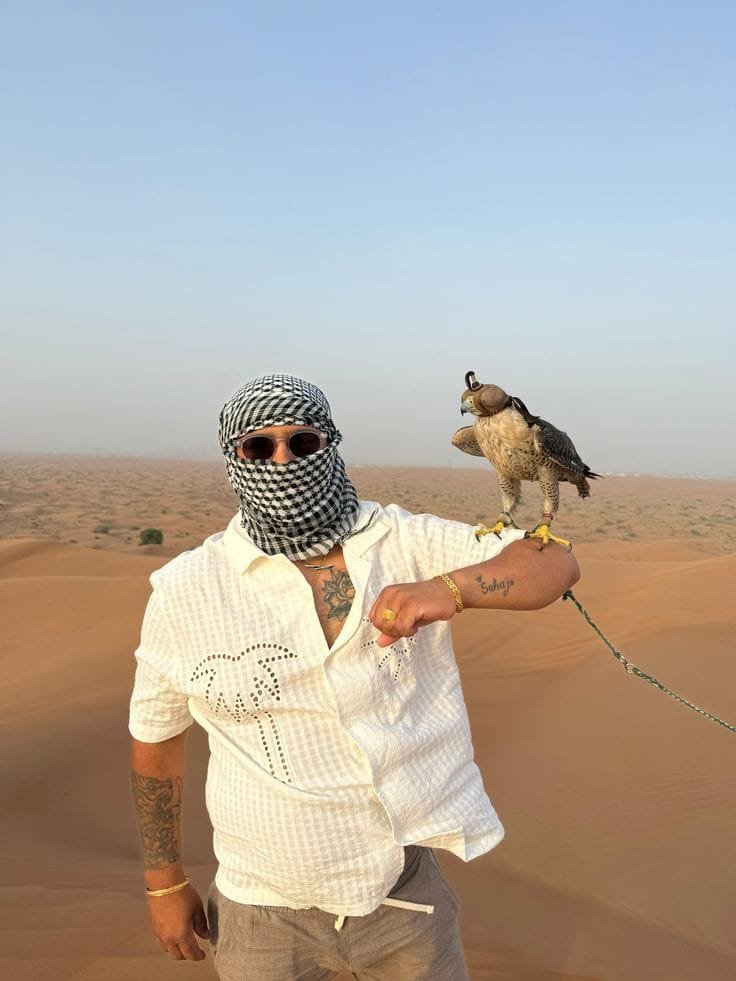
The classic frame is the leading line: empty asphalt running dead straight between dune walls, shot low when the road is quietest. Sunrise gives the emptiest road; the last hour before sunset turns the dunes copper. At camp our team goes further — professional photography from AED 50, a falcon photo for AED 10–30.
Self-Drive or Guided: Which Desert Drive Suits You?
Drive the highway yourself — it is easy, fast and genuinely scenic. Entering the dunes is a different sport: it demands 4WD, deflated tyres, recovery gear and company. Most of our guests take the best of both — the E22 for the pleasure of it, our drivers from where the sand begins.
Three mistakes we see season after season: entering soft sand in a 2WD rental, misjudging dusk glare on the westbound return, and missing widely spaced exits, which turns a 50-minute return into a much longer one.
| Aspect | Self-drive | With our team |
|---|---|---|
| The highway drive | Easy in any car — one of the region’s great drives | Optional: our buses and 4x4s collect you instead |
| Entering the dunes | 4WD convoy, deflated tyres, experience required | Our Land Cruisers and licensed drivers take over |
| If a car gets stuck | Your convoy digs, tows and recovers | Our problem, never yours |
| Sunset timing | Easy to misjudge; glare on the return leg | Built into the schedule — dunes at golden hour |
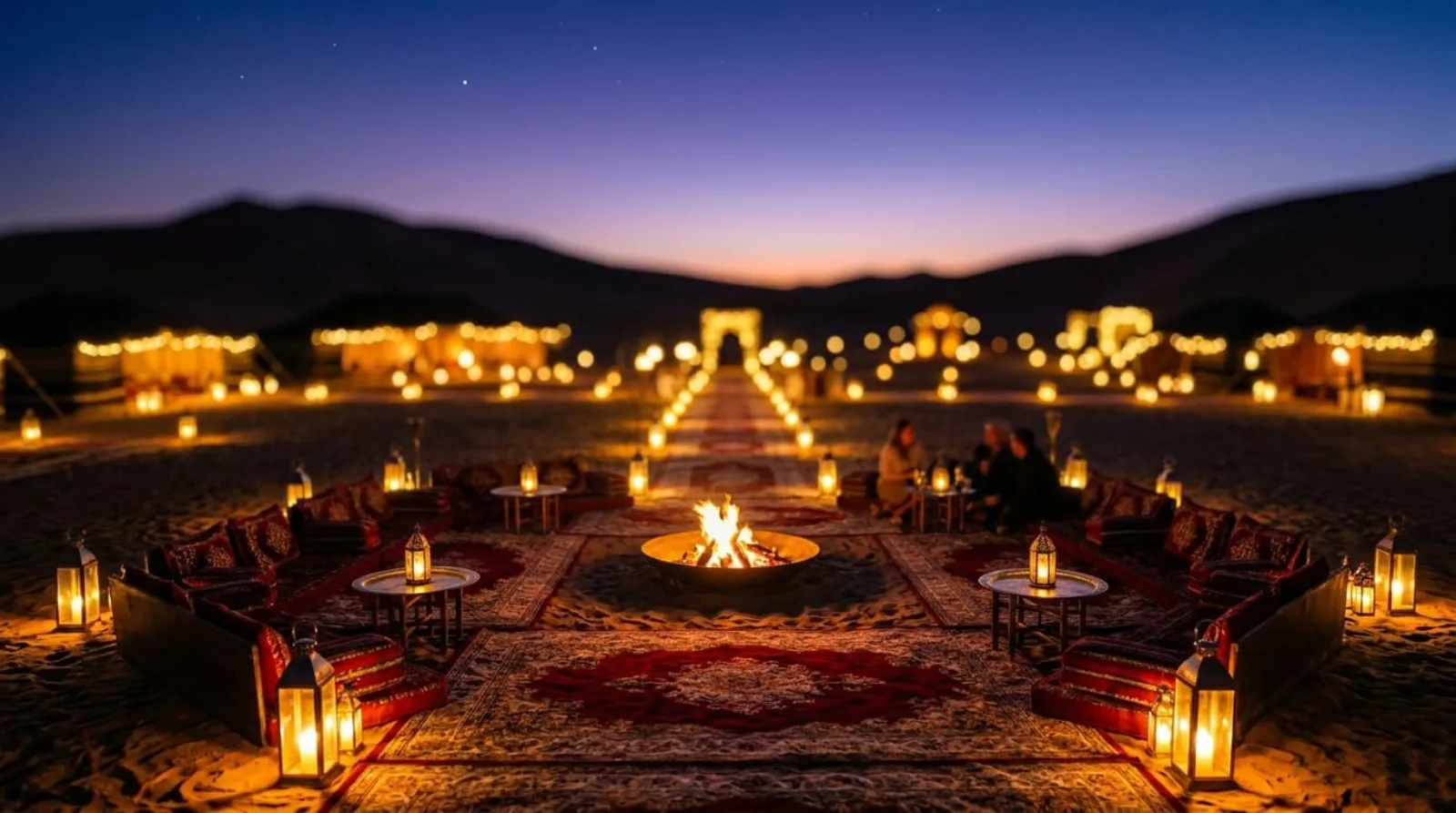
| Food and camp | Bring your own; pack all waste out | BBQ buffet, majlis seating and live shows included |
| Cost anchor | Fuel plus your rental | From AED 35/person self-drive; private Land Cruiser AED 800/car |

How Do You Get to the Dunes Without a 4WD?
Book the transfer with us. Every evening we run a shared bus from Al Wahda Mall and Mazyad Mall at AED 50 per person, hotel pickup at AED 100 per person, and private vehicles — or simply self-drive the desert road and pay AED 35 per person at our camp.
| Option | Price (AED) | Good to know |
|---|---|---|
| Evening safari — self-drive to camp | 35 / person | You drive the E22; full evening programme included |
| Evening safari — shared bus | 50 / person | Departs Al Wahda Mall and Mazyad Mall |
| Evening safari — hotel pickup | 100 / person | Door-to-door within Abu Dhabi city |
| Private 7-seater car | 599 / car | Your own vehicle, your own timings |
| Private Land Cruiser | 800 / car | The classic dune vehicle, exclusively yours |
| Morning safari — private premium | 700 / car | Dunes in soft morning light, back by midday |
| Extra dune-bashing run | 150 / vehicle | Add-on at camp when one run isn’t enough |
| Quad bike at camp | 100 single · 150 double | Long-route morning quad +200/+300 |
Evening pickups run 3:00–3:30 PM and you are back around 10:00–10:30 PM, shifting slightly with sunset — full rundown in our timings and schedule guide. Collection points are on the safari by bus and home pickup pages, and every option books in minutes via our booking page.

When Is the Best Time for a Desert Drive?
For light: sunrise, or the last hour before sunset. For season: the cooler months, when the air is clearer and the sand carries a firmer crust after cool nights. In summer, drive at dawn, carry extra water, and expect heat haze by mid-morning.
Two details we plan around: the evening return means driving west into the setting sun — visors down, windscreen clean — and after any windy day, expect sand drift on dune-flanked stretches. For dunes at their best without the logistics, our private morning safari at AED 799 per car puts you on the sand in the day’s softest light.
Why Drivers Trust Royal Arabian Safari
We are Royal Arabian Safari Tourism LLC, a DCT Abu Dhabi–licensed tour operator with our own private camp in the Al Khatim desert and an office at Al Sila Tower, Al Maryah Island. For more than a decade our drivers have covered the desert road daily — 5,000+ guests hosted, 4.9-star Google rating. Pay on arrival, no deposit, free cancellation up to 12 hours before.


Ready for the Desert Beyond the Asphalt?
Evening safari from AED 35 per person self-drive · shared bus AED 50 · hotel pickup AED 100 · private Land Cruiser AED 800 per car · private morning safari AED 799 per car. Message us — we’ll match the right option in minutes.
Abu Dhabi Desert Road — Frequently Asked Questions
Which road is the Abu Dhabi Desert Road?
The E22, the Abu Dhabi–Al Ain highway. It is the road locals mean by “the desert road”: it leaves the capital, passes Al Wathba and runs through the Al Khatim dune belt — where our camp sits, about 80 km from town — before continuing to Al Ain. Other desert drives exist, but the E22 owns the name.
How fast can you drive on the E22?
The main stretch is posted at 160 km/h — among the highest posted limits anywhere. Abu Dhabi enforces posted limits with no radar buffer, unlike some emirates, so treat the gantry number as absolute. Limits change along the route, so keep reading the signs.
Where does the desert start when you drive out of Abu Dhabi?
Surprisingly quickly. Heading east on the E22, the city fringe gives way to open sand around Al Wathba, and the landscape becomes true dune country approaching Al Khatim, about 80 km — 50 to 60 minutes — from the city. By our camp, the dunes rise more than 100 metres.
What is the most scenic desert drive in Abu Dhabi?
For time-per-reward, the E22 through Al Khatim: under an hour to the emirate’s most accessible big-dune scenery. For grandeur, the Liwa run — E45 to E90, roughly 220–250 km — builds toward the Empty Quarter and ends at the Moreeb Dune spur. The E11 west offers emptiness and sabkha flats instead of dunes.
Can I drive to Liwa in a normal car?
Yes. The route is paved the whole way — E45 through Hamim and Arada, then E90 along the Liwa crescent — and takes about 2.5 to 3.5 hours. A saloon manages it comfortably; you only need a 4WD to leave the tarmac. Fuel at Mezaira’a, the last full services, and check your spare.
Is the Moreeb Dune road paved?
Yes — a paved spur of about 22 km runs from the Liwa crescent to the base of Moreeb Dune. The caveat: it often carries drifted sand after windy days, sometimes across a full lane. Slow right down wherever sand crosses the asphalt — grip changes instantly.
Are camels really a hazard on desert roads?
Yes — camels and livestock crossing unlit desert roads at night are the single highest-risk hazard on these drives. A camel is tall, dark and nearly invisible against night tarmac until very late. After dark, slow down on unlit stretches, prefer the lit highways, and never outdrive your headlights.
Is it safe to drive desert roads at night?
The main highways are modern and largely lit; the risk sits on unlit rural stretches, where animals cross and fatigue bites. Our honest advice: drive in daylight, watch sunset from the dunes, and let the evening end at a camp rather than on a dark road — exactly how our evening safari is built.
Do I need a 4×4 to enjoy the desert?
Not on tarmac — every road in this guide is paved and suits any roadworthy car. You need a 4WD — plus experience and company — only off the asphalt. No 4WD? Our Land Cruisers and drivers cover the sand, and you can still self-drive the highway to camp for AED 35 per person.
What tyre pressure should I use on sand?
Around 15–20 PSI is common practice for sand driving. Lower pressure lengthens the tyre’s footprint so the vehicle floats over soft ground instead of digging in. Deflate at the edge of the tarmac, drive smoothly, and always reinflate before returning to highway speeds — low pressures are for sand only.
Where is the last petrol before Liwa and Moreeb Dune?
Mezaira’a, in the Liwa crescent, offers the last full services before the Moreeb spur and the open desert beyond. Fill up long before the gauge asks — station gaps grow the further south you drive, and there are no services at the dune itself. Carry water whatever the season.
Can I stop on the highway for photos?
No — never stop on the carriageway or hard shoulder for photographs; at a 160 km/h posted limit a stationary car endangers everyone. Use designated exits and parking areas, walk a few metres off the road, and shoot back toward the asphalt. Sunrise gives the emptiest road.
What are the official off-road routes in Abu Dhabi?
The tourism authority publishes six graded self-drive routes: Al Remah (~67 km), Al Ain–White Sands (~157 km), Liwa Crossing (~109 km over 1.5–2 days), Hameem Loop (~55–80 km), Umm Al Oush (~60–80 km, dunes toward 250 m) and Al Khazna (~45 km). All require equipped 4WD convoys; the authority’s own figures vary slightly between publications.
How far is Al Khatim from Abu Dhabi city?
About 80 km east along the E22 — a 50 to 60 minute drive. That puts the emirate’s most accessible big-dune desert within an easy evening: guests leave the city mid-afternoon, watch sunset from the dunes, enjoy dinner and shows at our camp, and return by roughly 10:00–10:30 PM.
Can I self-drive to your desert camp?
Yes — our most popular option at AED 35 per person for the evening safari. Message us on WhatsApp and we share the location pin and arrival window; you park at the camp and our drivers take over for the dunes. Keep your own car on the tarmac — the soft sand is our job.
What should I do if my car gets stuck in sand?
Stop accelerating — spinning wheels dig you deeper. Clear sand from around the tyres, drop pressures toward 15–20 PSI, and reverse gently along your own tracks. This is why the official advice insists on convoys of 3–4 vehicles, never solo. In an emergency, call 999 for police or 998 for an ambulance.
How much does a desert safari on the Abu Dhabi Desert Road cost?
Evening safari at our private Al Khatim camp: AED 35 per person self-drive, AED 50 by shared bus from Al Wahda or Mazyad Mall, AED 100 with hotel pickup, AED 599 for a private 7-seater, or AED 800 for a private Land Cruiser. A private morning safari is AED 799 per car. Pay on arrival, no deposit.
What time does the evening desert safari run?
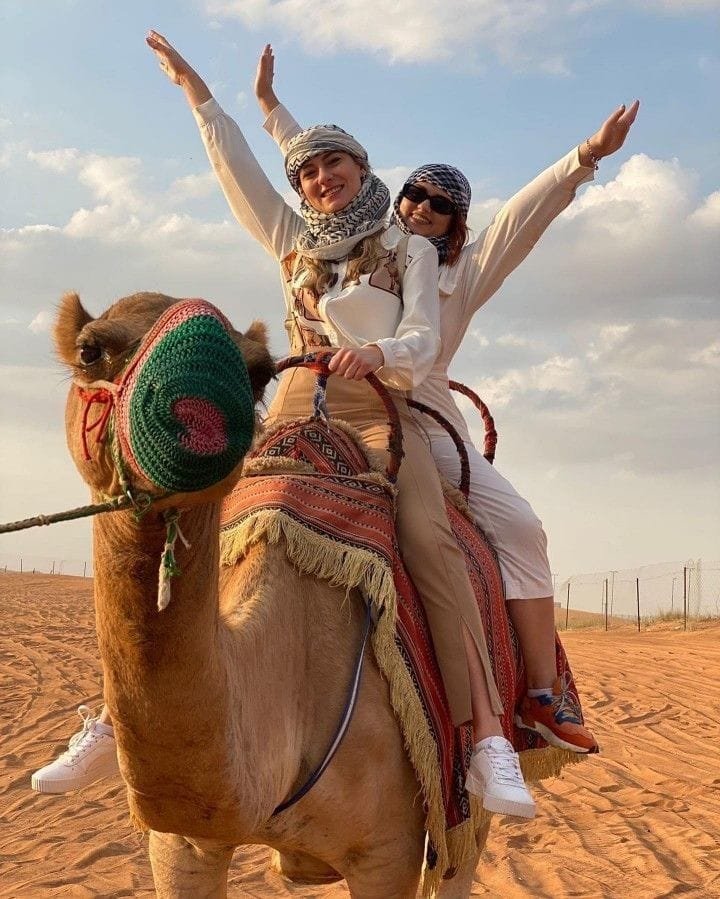
Pickup runs 3:00–3:30 PM from Abu Dhabi, returning around 10:00–10:30 PM; timing shifts with sunset. The evening covers dune bashing, sandboarding, a short camel ride, the sunset photo stop, then BBQ dinner, henna and live shows at camp. Self-drivers simply arrive mid-to-late afternoon.
The Desert Road, Done Properly
The Abu Dhabi Desert Road is the E22 — an hour of world-class driving to the biggest accessible dunes in the emirate. Drive it for the scenery, respect the night and off-road rules, and let the sand be handled by people who work it daily. That combination is the whole trick.
Keep planning with our Al Khatim desert guide, compare every option on the safari prices page, or go straight to booking — WhatsApp +971 58 228 2683 for answers within minutes.
Continue Planning Your Trip
Explore More Desert Safari Guides
- Self Drive Desert Safari Abu Dhabi — Drive to Camp from AED 35
- Self Drive Desert Safari Dubai From AED 35
- Morning Desert Safari Abu Dhabi Price — Full Cost Breakdown
- Car with Driver in Abu Dhabi — From AED 599
- Abu Dhabi Tour Packages — From AED 599 per Car
- Desert Safari From Fujairah
- Desert Safari From Umm Al Quwain
- Desert Safari From Ras Al Khaimah
- Desert Safari From Ajman
- Desert Safari From Sharjah
Planning the Rest of Your Abu Dhabi Trip
Most guests who book the dunes with us also want a day in the capital. These guides cover the practical detail:
- Abu Dhabi city tour — what the capital looks like in one day, priced per car rather than per person
- Abu Dhabi bus tour — shared bus versus private car, and which actually works out cheaper
Book this tour
No deposit and no card details. Message us and we confirm the plan and the exact price before you commit — answered at any hour.
- Send your date and guest countYour date, how many of you, and where we collect from. That is all we need.
- We send the plan and the pricePer car, not per person. You see the route, the timings and the exact figure first.
- Pay the driver on the dayCash or card, after the run. Free cancellation up to 12 hours before pickup.
Answered 24 hours · No deposit · No booking fee · Licensed operator
If we have to cancel, what happens?
A cancellation policy that covers your obligations but not ours is only half a document. Here is our side of it, in writing.
If we have to cancel your booking — for weather, a vehicle issue, or driver illness — we will contact you as soon as we know and rebook you at no charge on the next date that works for you. You pay nothing for the cancelled booking.
If we need to send a different vehicle than the one you booked, we will ask you first rather than turning up in something you did not book.
This is separate from your own cancellation rights, which are unchanged: you can cancel free up to 12 hours before pickup. Because we take no deposit and no booking fee, there is no money of yours sitting with us either way — nothing to chase, and nothing to wait for.