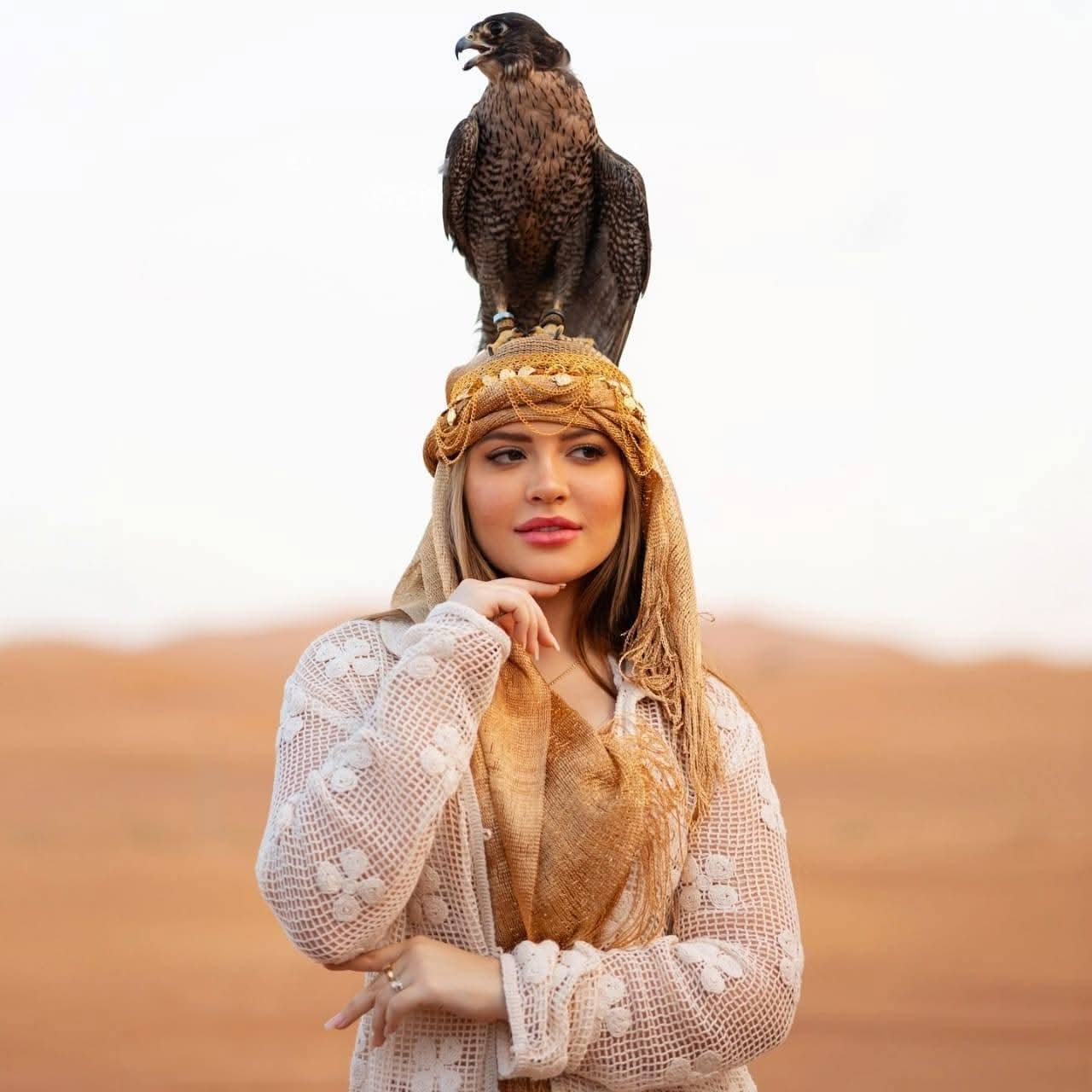
Falconry Abu Dhabi — Hold a Falcon and Live a 4,000-Year-Old Tradition
Falconry Abu Dhabi — Hold a Falcon and Live a 4,000-Year-Old Tradition: The Short Answer
Elsewhere in Abu Dhabi a dedicated falconry session costs AED 400 or more. On our safaris the falcon show is part of the camp evening — you pay for the safari, not for the bird.
- How much does a desert safari in Abu Dhabi cost?: Booking direct with us: AED 35 self-drive, AED 50 shared bus from Al Wahda or Mazyad Mall, AED 100 shared hotel pickup, AED 599 for a private 7-seater car and AED 800 for a private Land Cruiser.
- How long is the dune bashing?: Around 40 to 45 minutes with short breaks. Tyres are deflated to roughly 15 psi first so they float on the sand.
- What time does the desert safari start and finish?: Pickup is usually 3:00 to 3:30 PM and you are back in the city around 10:00 to 10:30 PM. Timings follow sunset, so in December pickup moves earlier and in June it moves later.
- Where does the desert safari take place?: At our own DCT-licensed camp in the Al Khatim desert, roughly 80 km east of Abu Dhabi city along the E22 Abu Dhabi to Al Ain highway, about a 50 to 60 minute drive.
- What is included in the Abu Dhabi desert safari?: Every evening package includes 4×4 dune bashing, a short camel ride, sandboarding, a sunset photo stop, Arabic costume for photos, henna for ladies, a full BBQ buffet dinner with vegetarian and non-vegetarian options, unlimited soft drinks, water, Arabic coffee and tea, a shisha corner, separate washrooms and around eight live shows including tanoura, belly dance and a fire show.
- How do I book?: Message us on WhatsApp with your date and group size. We reply with the exact total, no deposit and no booking fee, and you pay at the camp on the day.
Falconry Packages — The Honest Way to Hold a Falcon
Elsewhere in Abu Dhabi a dedicated falconry session costs AED 400 or more. On our safaris the falcon show is part of the camp evening — you pay for the safari, not for the bird.
Falconry is included in most camp-based itineraries rather than sold as a separate ticket. The formats that carry it are listed in our Abu Dhabi desert safari tours guide, and if you are still choosing who to book with, our notes on the best desert safari company in Abu Dhabi set out what to check before you pay.
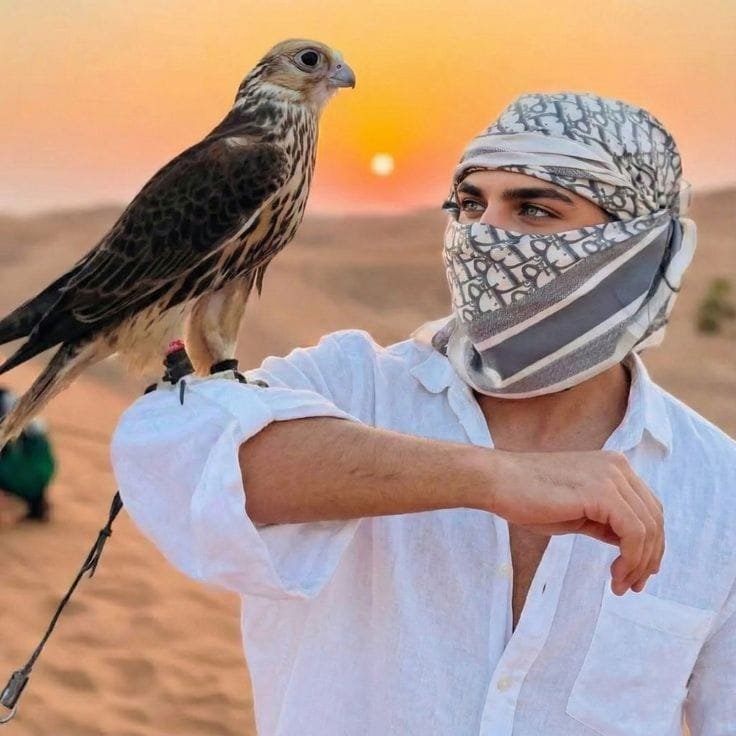 From AED 35 per person
Evening Safari + Falcon Show
The classic camp evening: dune bashing, camel ride, BBQ dinner and the falcon show — hold the bird, learn the story, take the photo.
- Falcon show at the camp included
- Dune bashing, camel, sandboard
- BBQ dinner + live shows
- From AED 35 per person self-drive
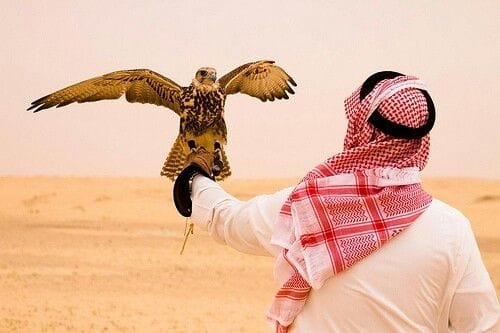 AED 599 per car
Private 4×4 Safari + Falconry
Your own vehicle and timing, up to 7 guests \u2014 the falconer gives your group its own unhurried session at the camp.
- Private 4×4, up to 7 guests
- Unhurried falcon handling for your group
- All camp inclusions
- Land Cruiser upgrade AED 800
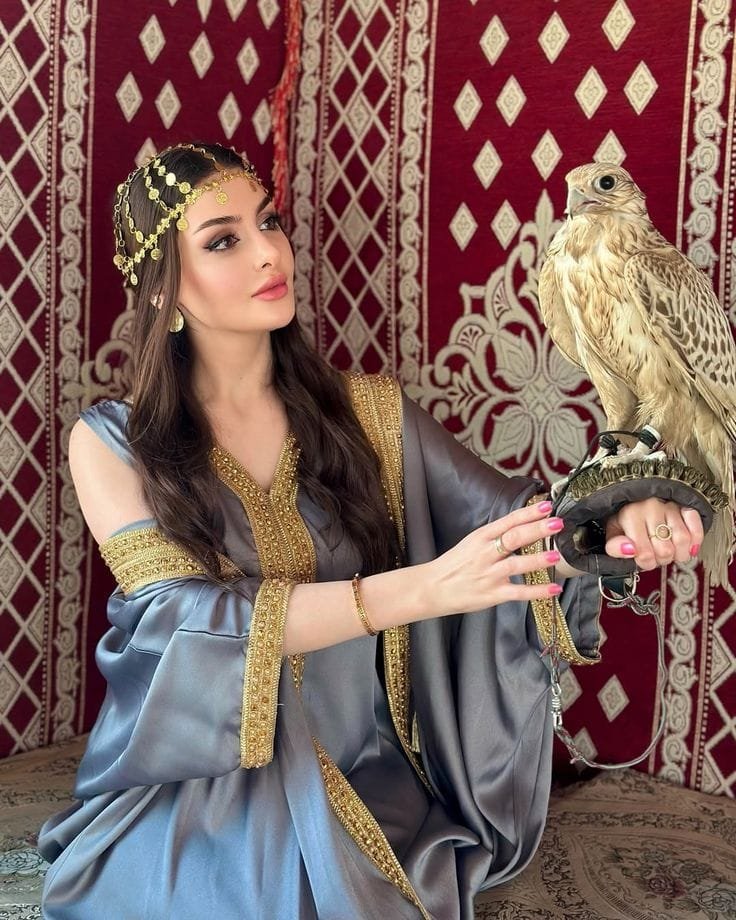 Falcon Photo AED 10–30
Falcon Photo Add-on
Add the gauntlet-and-falcon portrait to any safari. VIP majlis seating +AED 50 if you want the front row for the shows.
- With any safari booking
- Professional photography from AED 50
- VIP majlis +AED 50 per person
- Pay on the day
⭐ 4.9★ · 5,000+ guests · DCT Abu Dhabi Licensed · Direct booking, no markup
There’s a moment on every desert safari that people don’t expect to be the one they remember most. It isn’t the dune bashing, even though that gets the screams. It isn’t the camel ride or the sunset, beautiful as they are. It’s the moment a falconer slips a heavy leather glove onto your hand, lifts a hooded falcon from its perch, and gently sets it on your arm. Suddenly you’re holding a wild predator that has been part of Arabian life for longer than almost anything else on earth, and it’s looking right at you. That moment stays with people for years.
Falconry in Abu Dhabi isn’t a sideshow bolted onto a tourist package. It’s the real thing — a living tradition that the people of this land have carried for over four thousand years, recognised by UNESCO as Intangible Cultural Heritage, and woven so deeply into the national identity that the falcon sits on the country’s emblem. When you experience falconry on an Royal Arabian Safari desert safari, you’re touching something genuine, in the same desert where it has always been practised.
And here’s the part most visitors are surprised by: with us, this experience is included in your safari from just AED 35. Elsewhere in Abu Dhabi, a dedicated falconry session can cost you AED 400 or more. We’ll come back to that, because it matters, but first it helps to understand what you’re actually about to be part of.
Instant confirmation · 4.9★ from 5,000+ reviews
What Falconry Actually Is — And Why It Runs So Deep Here
Falconry, at its simplest, is the art of hunting in partnership with a trained bird of prey. A falconer raises and trains a falcon, hawk, or sometimes an eagle, and the two work together — the human reads the land, the bird does the flying and the catching, and over time a bond forms between them that is genuinely unlike the relationship between a person and any ordinary pet.
But that plain description doesn’t capture why falconry means what it does in the Arabian Peninsula. To understand that, you have to picture the desert as it was for the Bedouin tribes who lived here long before there were cities, highways, or skyscrapers. The desert was beautiful, yes, but it was also unforgiving. Food was scarce. Survival depended on knowing how to draw life out of an environment that seemed to offer almost nothing. And one of the ways the Bedouin did that was by training falcons to hunt.
A falcon could spot a hare or a houbara bustard from a great height and take it down with a speed no human could match. For a family living in the dunes, a well-trained falcon wasn’t entertainment — it was the difference between eating and going hungry. The bird was a working partner, cared for like a member of the family, fed before the people sometimes ate themselves, and treated with a respect that has echoed down the generations.
Over the centuries, as life in the Gulf changed and survival no longer depended on the hunt, falconry didn’t fade away the way you might expect a survival skill to. Instead it transformed into something closer to an art and a point of pride. Rulers, poets, and noble families kept the tradition alive. Poems were written praising falcons. Techniques were refined and passed from father to son. What had once been about food became about heritage, patience, and the deep, unspoken understanding between a person and a bird.
The late Sheikh Zayed bin Sultan Al Nahyan, the founding father of the United Arab Emirates, was perhaps the most famous falconer of the modern era. He wrote about falconry as a cornerstone of Arab heritage and worked to preserve it for future generations. His passion is one of the reasons the tradition is so carefully protected in the UAE today, and why you’ll find world-class institutions like the Abu Dhabi Falcon Hospital — the largest facility of its kind anywhere on earth — dedicated to the care of these birds.
In 2010, UNESCO formally inscribed falconry on its list of Intangible Cultural Heritage of Humanity, recognising it as a living human treasure shared across several nations but held especially close in the Emirates. So when you stand in the Al Khatim Desert with a falcon on your arm, you’re not just having a nice photo opportunity. You’re participating, even for a few minutes, in something that the world has agreed is worth protecting forever.
The Falconry Experience on Your Royal Arabian Safari Safari
Let’s walk through exactly what happens, so there are no surprises and you know what to look forward to.
After the adrenaline of the dune drive settles and you arrive at our Bedouin-style desert camp in the Al Khatim Desert, the pace of the day changes. The thrill gives way to something quieter and more cultural. This is when the falconry experience begins, and it usually unfolds in a few stages.
The Falcon Show
First comes the display. Our handler brings out a trained falcon and, in the open space of the desert, shows you what these birds can do. The falcon is launched, and you watch it climb, sometimes vanishing for a moment into the wide sky, before it turns and comes hurtling back toward the handler’s glove or a lure swung through the air. Falcons are among the fastest creatures on the planet — in a hunting dive a peregrine can reach speeds that are genuinely difficult to believe — and seeing that power and precision in person, against the backdrop of the dunes, is something photographs never quite do justice to. People often go quiet during the show. There’s something about watching a wild bird respond to its handler, choosing to return, that feels different from any other animal experience. It isn’t a circus trick. It’s a partnership, performed in the open.
Holding the Falcon Yourself
This is the part most guests are nervous and excited about in equal measure. After the display, our handler will offer to let you hold the falcon. You’ll be given the traditional thick leather glove — worn on the arm the bird will perch on — and the handler will guide the falcon onto your hand. You don’t need any experience. You don’t need to be brave in any particular way. The handlers do this every day and they read both you and the bird the whole time, keeping everyone calm and comfortable. Most people are struck first by the weight of the falcon, then by how alert and present it is, turning its head, taking in everything. For a few moments it’s just you and this remarkable creature, and almost everyone walks away from it grinning.
Learning from the Falconer
Throughout, our handlers share the stories behind what you’re seeing. How falcons are trained with patience rather than force. What the hood is for and why it calms the bird. The names and meanings behind the equipment. How the relationship between falconer and falcon is built slowly, on trust. This is where the experience stops being a spectacle and becomes an education — a real window into Emirati culture told by people who carry it.
The Photographs
And of course, there are the photos. The image of a falcon perched on your gloved arm, the golden dunes stretching out behind you, is one of the most iconic shots you can bring home from Abu Dhabi. Our handlers know the best angles and will help you get the shot. A small tip from us: avoid using flash, as it can startle the bird, and keep movements slow and calm. The falcon will reward you with a far better photo when it’s relaxed.
The whole falconry segment is suitable for all ages and every level of experience, and it’s fully supervised from start to finish, with the welfare of the birds as the first priority.
Falconry Prices in Abu Dhabi — And Why Ours Is Different
Now to the thing that genuinely sets Royal Arabian Safari apart, and it’s worth being direct about it.
If you search for a standalone falconry experience in Abu Dhabi, you’ll quickly notice the prices. Dedicated falconry sessions, often run through luxury resorts or specialist operators, commonly start from around AED 400 per person and climb from there. For a couple, that’s the better part of a thousand dirhams just for the falcon experience, before you’ve added a safari, transport, or dinner.
We do things differently. At Royal Arabian Safari, the falcon experience is included inside your desert safari package — not bolted on as an expensive extra, not hidden behind an upgrade. Whether you choose our most accessible self-drive safari or our top-tier VIP experience, falconry is part of the day.
| Safari Package | Price | Falconry |
|---|---|---|
| Self-Drive Desert Safari | AED 35 | Included |
| Quad Bike Add-On | AED 50 | Included |
| Private Desert Safari | AED 100 | Included |
| VIP / Overnight Experience | AED 700 | Included |
These are direct, locked prices. Because you book straight with us on WhatsApp, there’s no travel-agency markup sitting on top, no commission inflating the cost, and no surprise fees when you arrive. What you see is what you pay, and the falcon experience is in there at every level.
It’s a fair question to ask how we can include something others charge AED 400 for. The honest answer is that we’re a direct operator running our own safaris in the Al Khatim Desert, with our own handlers and our own camp. We’re not reselling someone else’s tour and adding margin. That structure is what lets us fold the falconry experience into a safari that starts at AED 35 and still deliver the real thing.
Where and When — The Al Khatim Desert and the Best Times to Go
The falconry experience takes place at our desert camp in the Al Khatim Desert, which sits roughly 45 to 75 minutes by road from Abu Dhabi city. Al Khatim is the heartland for authentic Abu Dhabi safaris — rolling dunes that reach 60 to 80 metres, far enough from the city lights to feel like genuine wilderness, yet close enough that you can be out there and back within a single outing.
When you go shapes the experience. Morning safaris are the choice if you want the calmest version of falconry. The air is cool, the light is soft and beautiful for photography, and the falcons tend to be at their most active and alert in the early hours. Mornings are also ideal for families and for anyone who wants to keep their afternoon and evening free for the rest of Abu Dhabi.
Evening safaris are the most popular, and for good reason. As the heat of the day fades and the sun drops toward the horizon, the falcon show against a backdrop of golden, glowing dunes is simply spectacular. This is the classic Arabian image — the bird, the falconer, the sunset — and it pairs perfectly with everything that follows: the BBQ dinner, the live entertainment, and the desert sky filling with stars.
Either way, the falconry experience slots naturally into the rhythm of your safari, alongside the dune bashing, the camel ride, sandboarding, and the meal at camp. It’s never rushed, and it’s one of the quieter, more meaningful pauses in an otherwise high-energy day. In terms of season, the most comfortable months for any desert activity in Abu Dhabi run from around October through April, when daytime temperatures are pleasant and the evenings are cool. Falconry runs year-round, but if you have a choice, those cooler months are the most enjoyable for the full safari experience.
Is the Falconry Experience Ethical and Safe?
This is a question thoughtful travellers increasingly ask, and it deserves a straight answer. Yes — the falconry experience is both ethical and safe, and there are good reasons to be confident about that, particularly in Abu Dhabi.
The UAE takes the welfare of its falcons extremely seriously, in a way few places in the world do. The Abu Dhabi Falcon Hospital, located near the airport, is the largest facility of its kind anywhere on earth, providing world-class veterinary care to thousands of birds. Falcons in the Emirates even have their own passports for travel. This is a culture that treasures these birds, and that care filters down through reputable operators.
On our safaris, the falcons are handled only by experienced falconers who understand the birds deeply and put their wellbeing first. When you hold a falcon, you do so under close supervision, with the handler reading the bird’s body language the entire time. The hood you’ll see used isn’t a restraint in any cruel sense — it actually calms the bird by reducing visual stimulation, a technique falconers have relied on for centuries precisely because it keeps the falcon relaxed and stress-free.
It’s worth understanding that genuine falconry is built on partnership, not domination. A falcon that wasn’t well cared for and willing simply wouldn’t return to the glove. The fact that these birds fly free and choose to come back is, in itself, evidence of the trust at the heart of the practice. When you experience falconry with us, you’re seeing that relationship, not a performance forced out of an unhappy animal.
For you as a guest, the experience is safe and beginner-friendly. The glove protects your arm, the handler manages every interaction, and the activity is suitable for adults and children alike. People with no experience of birds at all hold a falcon comfortably every single day on our safaris.
Why Falconry Belongs at the Heart of Your Abu Dhabi Desert Safari
It would be easy to treat falconry as just one item on a checklist of desert activities — dune bashing, tick; camel ride, tick; falcon, tick. But that undersells it, and most of our guests realise this by the end of the day.
The dune bashing and the quad biking are about adrenaline. They’re fantastic, and they’re a huge part of why people come. But falconry is about connection — to a tradition, to the land, and to a living creature that has shaped this culture for millennia. It’s the part of the safari that gives the whole experience its soul. You leave not just having had fun, but having understood something about where you’ve been.
There’s also something quietly special about doing this in Abu Dhabi specifically. Compared to the more commercialised offerings you’ll find elsewhere in the region, the falconry tradition here tends to be more authentic, often carried by handlers from families who have practised it for generations. You’re not getting a watered-down version put on purely for tourists. You’re getting the real tradition, in the real desert, from people who genuinely live it.
When you combine that authenticity with the fact that we include the experience from AED 35 — rather than charging the AED 400-plus that a standalone session can cost — it’s hard to argue with the value. You get the genuine cultural experience, woven into a full desert safari, at a price that leaves room in your trip for everything else Abu Dhabi has to offer.
Pair Your Falconry Experience With the Rest of the Desert
Falconry is at its best as part of a complete safari, and it sits beautifully alongside our other experiences. Most guests start with the rush of dune bashing, the 4×4 ride that carves across the steep dunes of Al Khatim. From there, the day mellows into the cultural heart of the safari — the camel ride, that slow, swaying journey across the sand that’s been the desert’s transport for thousands of years, and the falcon experience itself. For those wanting more thrill, sandboarding down the dunes and a quad bike session add extra adventure. And as the sun sets, it all comes together around a BBQ dinner under the stars, with live entertainment at our Bedouin-style camp.
Whether you choose a morning, evening, private, or overnight safari, falconry is part of the experience — and every package is bookable directly with us, with no agency in between and instant confirmation on WhatsApp.
Frequently Asked Questions
Can I actually hold a falcon during the safari?
Yes, you can. After the falcon show, our handler offers every guest the chance to hold the bird. You’ll wear a traditional thick leather glove on the arm the falcon perches on, and the handler guides the bird onto your hand and stays with you throughout. You don’t need any experience at all — people who’ve never been near a bird of prey hold a falcon comfortably on our safaris every day. It’s completely supervised, safe, and almost always the highlight people talk about afterwards.
How much does falconry cost in Abu Dhabi?
Standalone falconry experiences in Abu Dhabi, often run through luxury resorts or specialist operators, typically start from around AED 400 per person and go up from there. At Royal Arabian Safari, the falcon experience is included inside your desert safari package starting from just AED 35, with no separate falconry fee. You get the genuine experience as part of the safari rather than paying a premium for it on its own.
Is falconry included in the desert safari, or is it an extra charge?
It’s included. Across every Royal Arabian Safari package — from our self-drive safari at AED 35 to our VIP and overnight experiences — the falcon experience is part of the day at no additional cost. There’s no upgrade to buy and no hidden add-on fee.
Is the falconry experience suitable for children?
Absolutely. The experience is suitable for all ages and is fully supervised by our handlers at every moment. Children are usually fascinated by the falcons, and holding and photographing the bird is a memory they tend to treasure. For families, it’s one of the most rewarding parts of the safari.
Where exactly does the falconry experience take place?
At our Bedouin-style desert camp in the Al Khatim Desert, around 45 to 75 minutes by road from Abu Dhabi city. Al Khatim is the authentic setting for Abu Dhabi safaris, with rolling dunes and a genuine sense of wilderness, well away from the city lights.
What’s the best time of day for falconry?
Both morning and evening work well, and it comes down to what you want. Mornings offer cool air, soft photography light, and very active birds, and they keep the rest of your day free. Evenings are the most popular, with the falcon show set against a golden sunset before dinner and entertainment at camp. You can’t really go wrong, but evening is the classic choice for the full experience.
Why is falconry so important in the UAE?
Falconry is recognised by UNESCO as Intangible Cultural Heritage and has been practised in the Arabian Peninsula for over 4,000 years. For the Bedouin, falcons were essential hunting partners that helped families survive in the harsh desert. Over time the practice became a treasured tradition and a symbol of patience, respect for nature, and the bond between humans and animals. The falcon is so central to Emirati identity that it appears on the UAE’s national emblem, and the late Sheikh Zayed was himself a passionate falconer who worked to preserve the tradition.
Do I need to book falconry separately?
No. Because falconry is included in our safari packages, you simply book your desert safari with us on WhatsApp and the falcon experience is part of it. There’s nothing extra to arrange or pay for. Just message us at +971 58 228 2683 and we’ll confirm your spot instantly.
Is it ethical to hold and photograph the falcons?
Yes. The UAE has some of the highest standards of falcon care in the world, including the Abu Dhabi Falcon Hospital, the largest of its kind globally. Our falcons are handled only by experienced falconers who prioritise the birds’ welfare, and genuine falconry is built on trust and partnership rather than force — the birds fly free and choose to return. Holding and photographing them, done calmly and under supervision as we do it, is safe and respectful for both you and the bird.
Ready to Hold a Falcon in the Abu Dhabi Desert?
Falconry is one of those rare experiences that’s thrilling and meaningful at the same time — a chance to connect with a tradition older than almost anything else in this part of the world, and to do it in the very desert where it began. Add in the fact that we include it from AED 35, when others charge ten times that for the experience alone, and there’s really no reason to miss it.
Come and watch a trained falcon soar across the dunes, feel its weight settle onto your arm, hear the stories from the people who keep this heritage alive, and bring home a photograph and a memory that genuinely lasts. It’s all part of your Royal Arabian Safari desert safari.
4.9★ · 5,000+ guests · DCT Abu Dhabi Licensed · Direct booking, no markup
Continue Planning Your Trip
More Questions From Guests
What is included in the Abu Dhabi desert safari?
Every evening package includes 4×4 dune bashing, a short camel ride, sandboarding, a sunset photo stop, Arabic costume for photos, henna for ladies, a full BBQ buffet dinner with vegetarian and non-vegetarian options, unlimited soft drinks, water, Arabic coffee and tea, a shisha corner, separate washrooms and around eight live shows including tanoura, belly dance and a fire show.
How much does a desert safari in Abu Dhabi cost?
Booking direct with us: AED 35 self-drive, AED 50 shared bus from Al Wahda or Mazyad Mall, AED 100 shared hotel pickup, AED 599 for a private 7-seater car and AED 800 for a private Land Cruiser. Agencies and hotel desks typically charge AED 180 to 250 per person for the same evening because they add commission on top of an operator price.
What time does the desert safari start and finish?
Pickup is usually 3:00 to 3:30 PM and you are back in the city around 10:00 to 10:30 PM. Timings follow sunset, so in December pickup moves earlier and in June it moves later.
Where does the desert safari take place?
At our own DCT-licensed camp in the Al Khatim desert, roughly 80 km east of Abu Dhabi city along the E22 Abu Dhabi to Al Ain highway, about a 50 to 60 minute drive. The Al Khatim ridges rise over 100 metres, which is considerably taller than the roadside dunes some operators use, and there is far less traffic on the sand.
How do I book?
Message us on WhatsApp with your date and group size. We reply with the exact total, no deposit and no booking fee, and you pay at the camp on the day. Free cancellation applies up to 12 hours before.
Is hotel pickup included?
Yes on the AED 100 shared pickup, the AED 599 private car and the AED 800 Land Cruiser, covering the whole city including the Corniche, Al Maryah, Al Reem, Downtown, Khalifa City, Mussafah, Yas Island, Saadiyat, Shabiya and the airport. The AED 50 package departs from Al Wahda Mall or Mazyad Mall, and AED 35 is self-drive using a GPS pin we send you.
Do I need a 4×4 for the self-drive option?
No. You drive on tarmac to a meeting point, so any standard car or rental reaches it comfortably. Our team takes over there in a proper 4×4 for the dune bashing.
How long is the dune bashing?
Around 40 to 45 minutes with short breaks. Tyres are deflated to roughly 15 psi first so they float on the sand. Intensity is adjustable at any point — tell your driver you want it gentle and it becomes a scenic drive.
Is dune bashing safe?
Yes with a licensed operator. Every passenger wears a seatbelt, vehicles are maintained and insured, drivers are trained specifically for dune driving, and vehicles travel in convoy so recovery is immediate. You can ask to stop at any time.
Can I do the safari without dune bashing?
Yes. Book the self-drive package and come straight to the camp, or ask for a direct transfer on a private car. You still get the sunset, camel ride, sandboarding, dinner and every show. This is the right choice for pregnant guests and anyone with back, neck or heart conditions.
What food is served at the camp?
A full BBQ buffet: salads and mezze including fattoush, hummus and Arabic bread; rice dishes, dal, pasta and mixed vegetable sabzi; chicken tikka, shish taouk, lamb seekh kebab and fish from the grill; Om Ali and fresh fruit for dessert. All 100% halal, with unlimited soft drinks, water, Arabic coffee and tea.
Are vegetarian and special diets catered for?
Vegetarian options are always available as standard, and the whole buffet is halal. Vegan, Jain, gluten-free and allergy requirements can be accommodated with advance notice — tell us when you book and we will confirm what will be on the table.
Is alcohol available?
No. Alcohol is not served or permitted at our camp and guests should not bring their own. Unlimited soft drinks, water, Arabic coffee and tea are included, and shisha is available at the camp.
What should I wear?
Loose, light-coloured clothing that covers shoulders and knees, and closed shoes such as trainers you do not mind filling with sand. From October to April bring a jacket — camp temperatures drop to 13 to 22 degrees after sunset. Avoid flip-flops, heels and skinny jeans.
Is the safari suitable for children?
Yes, from about age three. Ask for gentle dune bashing when you book, bring closed shoes and a spare set of clothes because sandboarding puts sand into everything, and pack a warm layer from November to March.
Can I add quad biking or a buggy?
Yes. Quad bikes are AED 100 single seater and AED 150 double, the Can-Am buggy is from AED 800 for 30 minutes, VIP majlis seating is +AED 50 per person, the falcon photo is AED 10–30 and professional photography starts at AED 50. Nothing is required and nothing is upsold under pressure at the camp.
What is the best time of year for a desert safari?
November to March gives the most comfortable conditions. October and April are excellent value with near-peak evenings and far fewer people. From May to September the morning safari is more comfortable than the evening one.
Is there a morning safari option?
Yes. The morning safari is a private premium product at AED 799 per car for up to 7 guests and does not include dinner or the live shows. It suits summer travel, photographers, families with young children and anyone with an evening flight.
What happens if it rains?
Abu Dhabi averages fewer than ten rainy days a year, almost all December to March. Light rain does not stop the safari and the desert afterwards is spectacular. If heavy rain or a strong wind would genuinely spoil the experience we move your date at no cost.
Are there toilets at the camp?
Yes. The camp has clean, separate washrooms for men and women, plus a prayer space, lighting and seating for every guest.
Every Way to Do Falconry in Abu Dhabi — Compared Honestly
We read every option on this search so you do not have to. Here is the whole falconry market in one table, including the options we do not sell.
| Option | Rough cost | What you get | Best for |
|---|---|---|---|
| Desert safari falcon show (us) | From AED 35 with the evening safari; photo AED 30 | Live falconer at the camp, handling, the story of the sport, sunset light for the photo — inside a full safari evening | Anyone who wants the falcon and the desert in one evening |
| Dedicated falconry session | AED 400+ | A private hour with a falconer, more flying, more depth | Enthusiasts who want the bird as the main event |
| Falcon Hospital tour | Ticketed, weekday mornings, minimum 2 guests | The world\u2019s largest falcon hospital: wards, museum, free-flight aviary. Roughly two hours, no desert | Bird lovers and families on a weekday morning |
| Falconry school / club | Course pricing | Actual instruction over multiple sessions under the Abu Dhabi Falconers Club umbrella | Residents taking up the sport seriously |
The honest read: if falconry is a bucket-list moment, the safari version gives you the bird, the dunes and the dinner for less than a tenth of a dedicated session. If it is a bucket-list study, book the hospital tour on a weekday and we will happily run your desert evening separately.
Book Your Falconry Evening
Evening safari from AED 35, private car AED 599, falcon photo AED 30. No deposit — pay on the day.
Book this tour
No deposit and no card details. Message us and we confirm the plan and the exact price before you commit — answered at any hour.
- Send your date and guest countYour date, how many of you, and where we collect from. That is all we need.
- We send the plan and the pricePer car, not per person. You see the route, the timings and the exact figure first.
- Pay the driver on the dayCash or card, after the run. Free cancellation up to 12 hours before pickup.
Answered 24 hours · No deposit · No booking fee · Licensed operator
If we have to cancel, what happens?
A cancellation policy that covers your obligations but not ours is only half a document. Here is our side of it, in writing.
If we have to cancel your booking — for weather, a vehicle issue, or driver illness — we will contact you as soon as we know and rebook you at no charge on the next date that works for you. You pay nothing for the cancelled booking.
If we need to send a different vehicle than the one you booked, we will ask you first rather than turning up in something you did not book.
This is separate from your own cancellation rights, which are unchanged: you can cancel free up to 12 hours before pickup. Because we take no deposit and no booking fee, there is no money of yours sitting with us either way — nothing to chase, and nothing to wait for.