Fossil Dunes Abu Dhabi: The Complete Al Wathba Visitor Guide
The one fact the ranking guides miss: the site is temporarily closed for redevelopment. Here is the full story, the honest logistics, and the open desert alternative along the same highway.
The Short Answer
The Al Wathba Fossil Dunes are 1,700+ wind-carved rock formations across roughly 7 square kilometres of desert, about 45 kilometres east of Abu Dhabi city — ancient dunes that hardened into fragile rock, dated to around 120,000 years by the Environment Agency Abu Dhabi. The site is currently temporarily closed for redevelopment, with no reopening date announced, so check the agency’s official page before driving out. Entry was free, with a lit walking trail of about 3 kilometres. While it remains shut, the nearest open big-dune experience is the Al Khatim desert, where our private camp runs evening desert safaris from AED 35 per person self-drive.
| Key Fact | Detail |
|---|---|
| Current status | Temporarily closed for redevelopment — no announced reopening (per Environment Agency Abu Dhabi) |
| Location | Al Wathba area, ~45 km east of Abu Dhabi city, off the E22/E30 |
| Entry fee (pre-closure) | Free — the site’s own published policy |
| Formations | 1,700+ fossil dunes across ~7 km² |
| Trail | ~3 km lit walking loop, about 1 hour on foot |
| Age | ~120,000 years (EAD); formation window 200,000–7,000 years ago (Khalifa University, via CNN) |
| Open alternative | Our private Al Khatim camp — evening safari from AED 35/person |
Are the Fossil Dunes Open Right Now?
No. The Al Wathba Fossil Dunes are temporarily closed for development works “until further notice”, according to the Environment Agency Abu Dhabi’s official page for the site. No reopening date has been announced. Any guide telling you to simply drive out was written before the closure.
The closure followed vandalism incidents. The formations look like solid rock, but many crumble in a bare hand, and climbing and carving caused real damage. The agency’s official listing has carried the closure notice ever since.
We drive the E22 past Al Wathba daily, and guests ask us weekly whether the fossil dunes are worth a detour. The honest answer: you cannot get in, and nothing says when you can. The full visitor record below keeps you ready for reopening day.
What Can You Do Instead? The Open Al Khatim Alternative
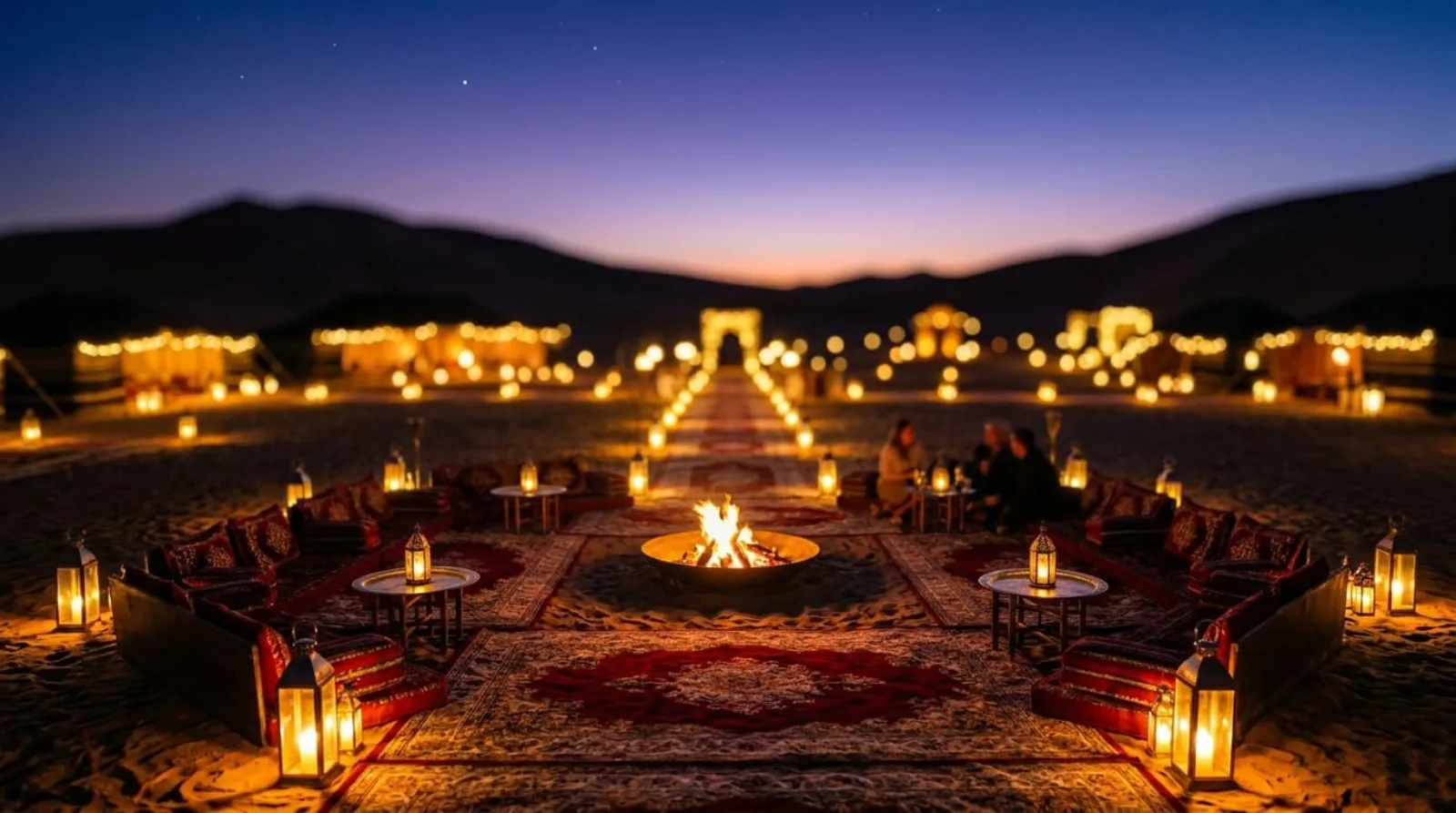
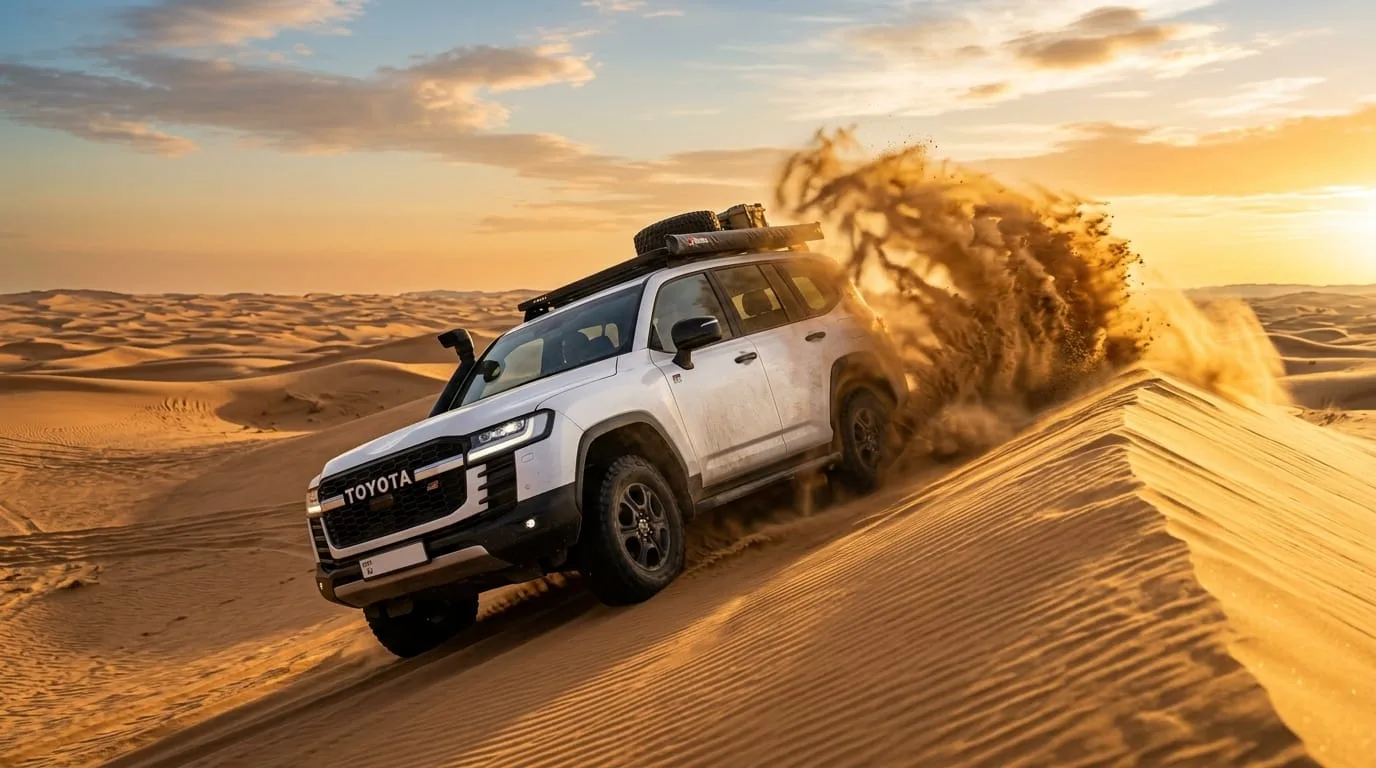
While the fossil dunes are closed, the closest fully open big-dune experience is the Al Khatim desert, roughly 35–45 minutes further east along the same E22 highway. Our private camp sits there among living, moving dunes that rise over 100 metres — the towering younger cousins of the fossilised dunes at Al Wathba — and it operates every evening with no entry restrictions.
Al Wathba shows what wind and time did to dunes that froze into rock; Al Khatim shows the same desert still alive — sand that avalanches underfoot, with slopes steep enough for proper dune bashing and sandboarding. If you came for scale and golden light, Al Khatim delivers today.
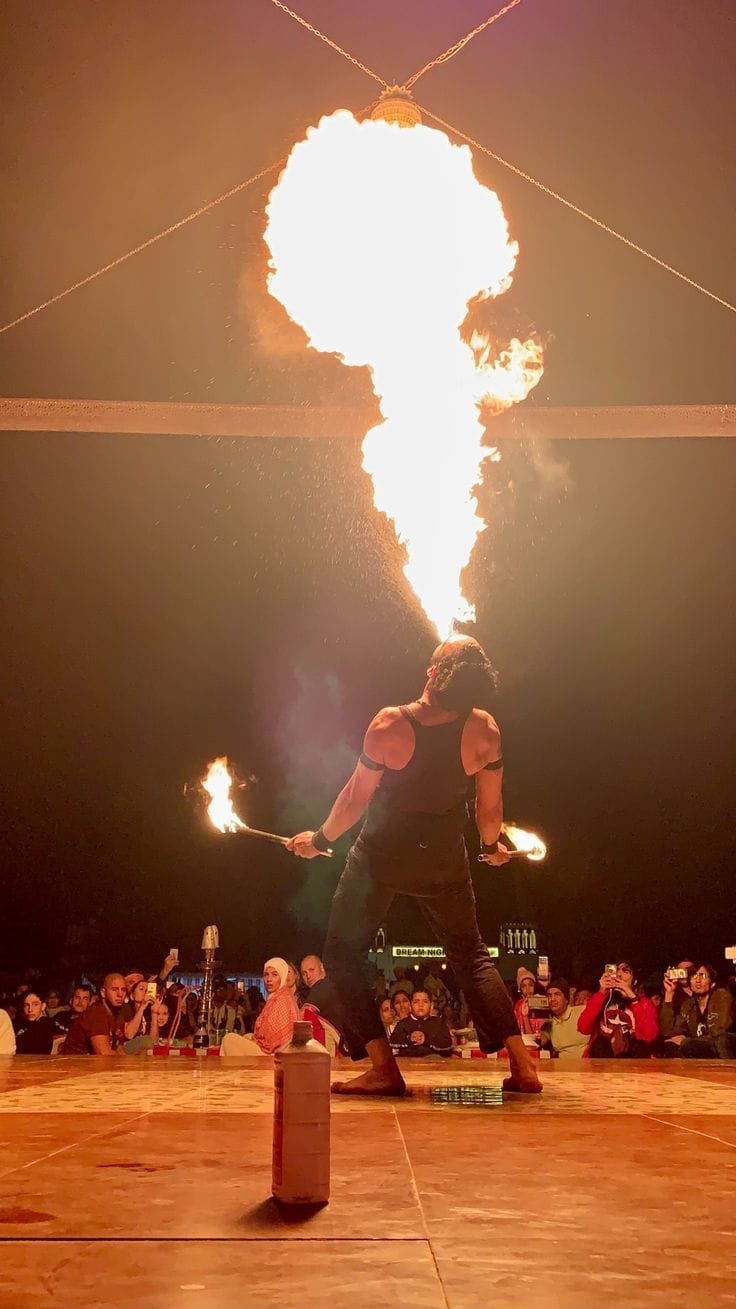
Our evening desert safari starts from AED 35 per person if you self-drive to the camp, AED 50 with the shared bus from Al Wahda or Mazyad Mall, or AED 100 with shared hotel pickup. Pickup runs 3:00–3:30 PM with return around 10:00–10:30 PM, covering dune bashing in Land Cruisers, sandboarding, a camel ride, sunset and falcon photos, henna, Arabic coffee and dates, live shows and a full BBQ buffet. The complete breakdown is on our prices page.
What Are the Fossil Dunes of Abu Dhabi?
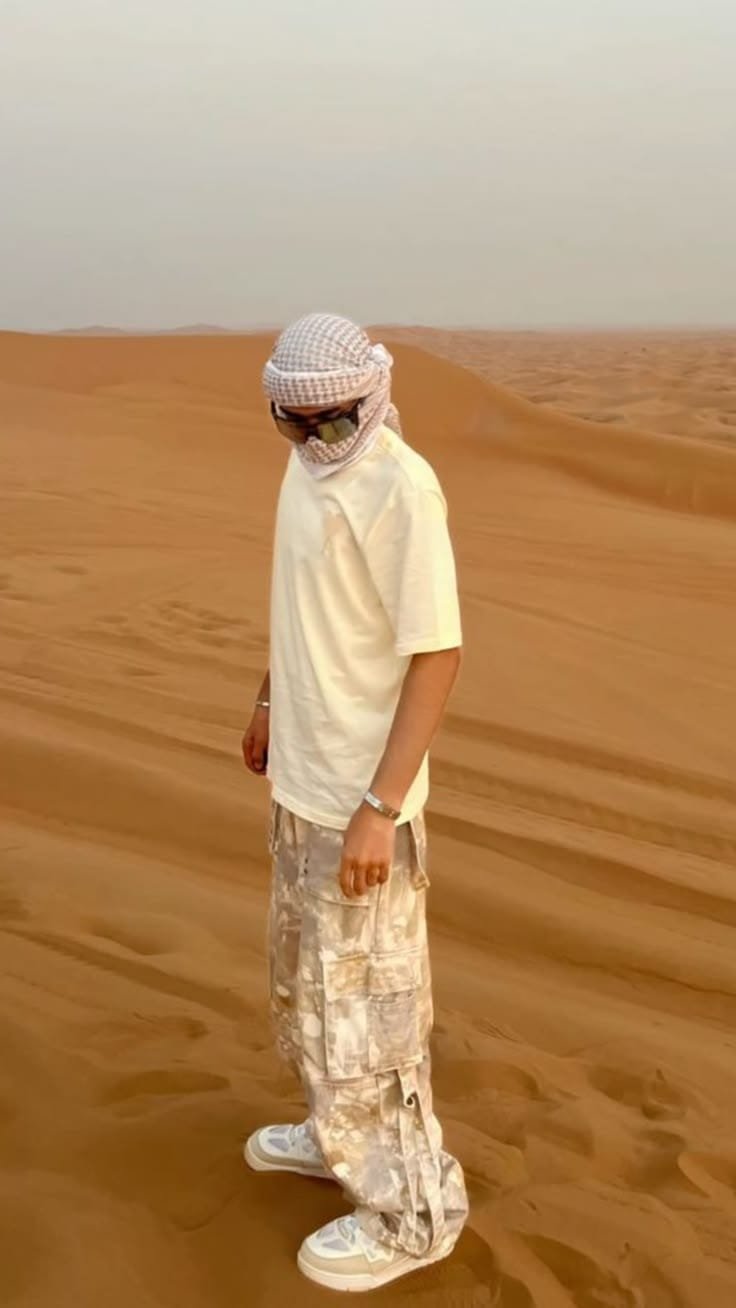
The Fossil Dunes of Al Wathba are natural sculptures of hardened, cemented sand — ancient dunes that turned to fragile rock and were then carved by tens of thousands of years of wind into ledges, fins, arches and wave-like crests. More than 1,700 formations stand across roughly 7 square kilometres of open desert.
Despite the name, they are not fossils in the dinosaur-bone sense. Geologists call the feature a lithified or cemented dune: sand that stopped moving, bound by minerals while the loose desert around it kept marching. What you see today is the erosion-resistant core of dunes from an utterly different Arabia — ancient landforms at eye level, no museum glass between you.
The Environment Agency Abu Dhabi granted the area protected status — the first protected site of its kind in the UAE — after the fossil dunes were nominated toward UNESCO Global Geoparks listing. That is why the climbing rules are strict and the vandalism was taken so seriously: this is an irreplaceable geological archive that happens to be beautiful.
Al Wathba is the same district as the wetland reserve and its flamingos; the fossil dunes are its geological headline act. While the gates stay shut, our guide to things to do in the Abu Dhabi desert maps every open experience by area.
Where Are the Fossil Dunes and How Do You Get There?
The fossil dunes sit in the Al Wathba area roughly 45 kilometres east of central Abu Dhabi — a 45–60 minute drive via the E22 and the E30 Abu Dhabi–Al Ain truck road, behind the Al Dhafra Air Base area. An ordinary car reaches the site; no 4×4 is needed. No public transport reaches it — drive yourself or join a tour.
Finding the place is the real challenge: signage is minimal and map apps have routed drivers to the wrong side of the site. Navigate to the community-cited GPS pin 24.170952, 54.579517 and take the final approach slowly — the car parks appear before the formations do.
Route notes from drivers who do this road weekly
Our transfer drivers pass the Al Wathba turn-offs on nearly every camp run. Their advice: fuel up before leaving the city, watch for lorries changing lanes late on the E30 freight route, and never shortcut across open sand in a saloon car — the sabkha crust beside these roads can swallow a wheel.
| Logistics | Detail (official pre-closure information) |
|---|---|
| Distance from Abu Dhabi city | ~45 km east |
| Drive time | ~45–60 minutes |
| Route | E22, then E30 Abu Dhabi–Al Ain truck road; site lies behind the Al Dhafra Air Base area |
| GPS pin (community-cited) | 24.170952, 54.579517 |
| Vehicle needed | Ordinary car — no 4×4 required |
| Entry fee | Free (site’s published policy) |
| Hours (pre-closure) | Mon–Thu 8am–10pm; Fri–Sun and holidays 8am–11pm |
| Walking trail | ~3 km lit trail, out and back; full walk ~1 hour with a 10-minute shortcut back |
| Facilities | Visitor centre, gallery corner, viewing area, 200-seat amphitheatre, two parking areas, toilets, food trucks |
| Site phone (pre-closure) | +971 55 110 2124 |
| Public transport | None — car or tour only |
| Current status | Temporarily closed for redevelopment; no announced reopening |
No ranking page assembles this logistics picture in one place — keep it bookmarked. When reopening is announced, expect the same fundamentals, but verify hours on the official page, as redevelopment may change the layout.
How Were the Fossil Dunes Formed?
The fossil dunes formed when ordinary sand dunes were cemented into rock by mineral-rich moisture, then sculpted by wind. During ancient glacial periods, sea levels fell so far that the Arabian Gulf — only around 120 metres deep — dried out. Groundwater moisture carrying calcium carbonate bound the exposed sand grain to grain, and wind spent millennia carving the hardened cores into today’s shapes.
In the depths of the ice ages, so much water was locked into ice sheets that the shallow Gulf basin became dry land — fully dry by around 20,000 years ago, according to research described by CNN Travel. The dried seabed fed carbonate-rich sand inland, and where groundwater rose near the surface, its dissolved calcium carbonate worked as a slow natural cement.
Why the strange shapes?
Cementation is uneven: carbonate-rich layers set hard, leaner layers stay crumbly, and wind strips the soft layers faster — differential erosion. The result is the trademark look: mushroom caps, undercut ledges, fins and frozen waves, each a cross-section of how a dune was built.
Khalifa University’s Professor Thomas Steuber, whose explanation anchors CNN Travel’s reporting on the site, makes the point visitors find hardest to believe: these are essentially rocks, but fragile ones — some crumble by hand. That is why climbing bans exist: a careless boot erases layers that will not re-form under today’s climate.
How Old Are the Fossil Dunes? Reconciling the Numbers You’ll Read
The widely accepted answer is that these formations are on the order of a hundred thousand years old. The Environment Agency Abu Dhabi dates the dunes to around 120,000 years, placing them in the Ice Age. Khalifa University’s Professor Thomas Steuber, quoted by CNN Travel, frames a broader formation window: the processes that built and cemented them ran from roughly 200,000 to 7,000 years ago.
Yet official-sounding pages elsewhere claim the fossil dunes are “over four million years” old. The two cannot describe the same thing — and they don’t: the four-million-year figure refers to far older geological processes and deposits in the wider region, while the sculpted formations you actually walk among at Al Wathba belong to the much younger, hundred-thousand-year story.
The accepted timeline: through repeated glacial periods the shallow Gulf drained and dried, wind swept carbonate sand across the exposed land, groundwater cemented parcels of it, and drier phases let the wind carve the hardened cores. Steuber’s 200,000–7,000-year window captures those repeating cycles; the agency’s ~120,000-year date pins the headline generation of dunes.
The discrepancy persists online because most guides copy whichever number they saw first and never name a source. Attribute the number, explain the mechanism, and the contradiction dissolves.
Fossil Dunes vs Living Sand Dunes: What Is the Difference?
A fossil dune is a former sand dune that minerals cemented into standing rock, so it no longer moves; a living dune is loose sand still driven by the wind, growing, shrinking and migrating. Al Wathba preserves the frozen kind; the Al Khatim desert east of it is the moving kind. Seeing both is the fastest way to understand how this desert works.
Fragile rock makes the fossil dunes an observational visit: walk, learn, photograph, never touch. Living dunes invite contact — run a slip face, board it, drive it — because tonight’s wind rebuilds every slope by morning. The closure removes a viewing experience, not the desert itself.
| Feature | Al Wathba Fossil Dunes | Al Khatim Living Dunes (our camp) |
|---|---|---|
| Made of | Sand cemented by calcium carbonate into fragile rock | Loose, wind-blown sand |
| Movement | Frozen in place for millennia | Shift constantly with the wind |
| Age of what you see | ~120,000 years (EAD); window 200,000–7,000 years ago (Khalifa University via CNN) | Reshaped continuously — the surface can change overnight |
| Scale | 1,700+ formations across ~7 km² | Dune ridges rising over 100 m around the camp |
| Touching / climbing | Prohibited — formations can crumble by hand | Encouraged — sandboarding, barefoot climbs, dune bashing |
| Typical activities | Walking trail, photography, amphitheatre shows (when open) | Dune bashing, sandboarding, camel rides, BBQ camp evenings |
| Status today | Temporarily closed for redevelopment | Open every evening |
| Cost | Free entry when open (site’s published policy) | Evening safari from AED 35/person self-drive |
What Was Visiting Like Before the Closure?
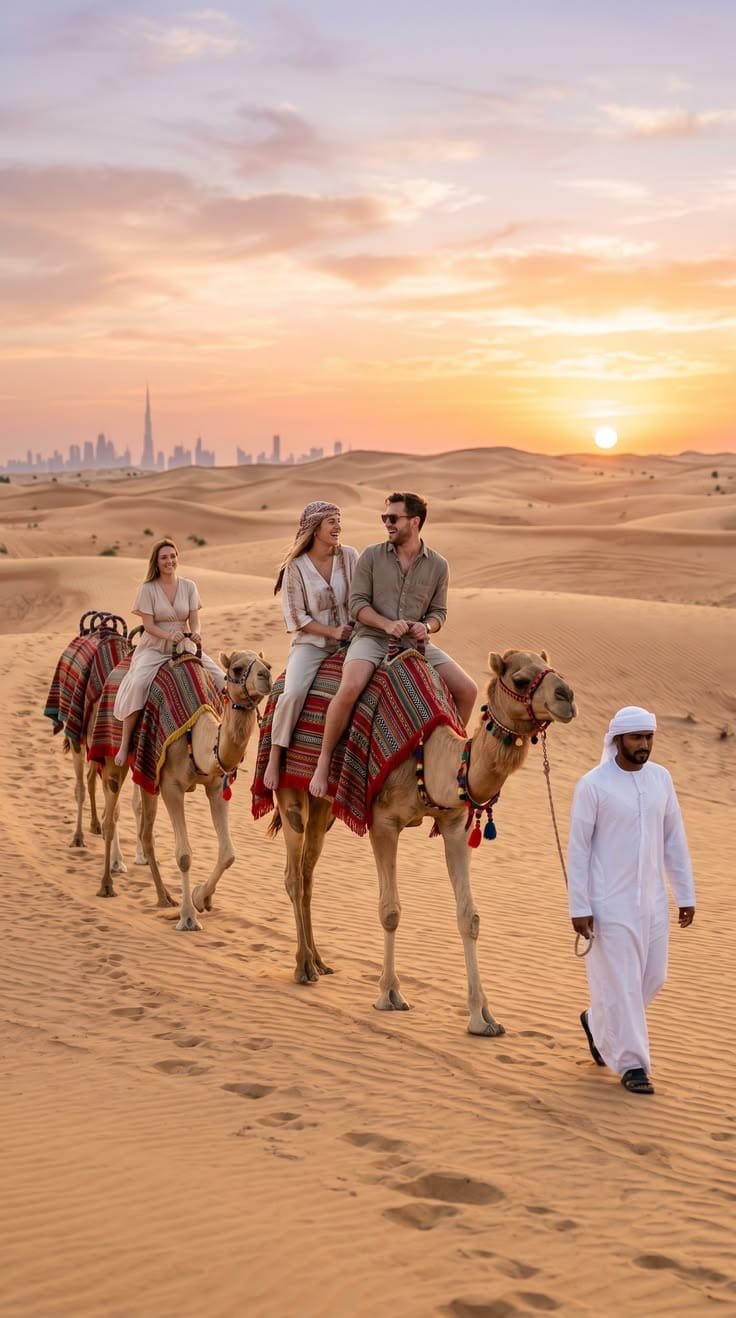
Before the gates shut, a visit meant a free, self-guided walk on a lit trail of about 3 kilometres among the formations, taking roughly an hour at an easy pace with a 10-minute shortcut back to the car park. The site ran long hours — 8am to 10pm Monday to Thursday, until 11pm Fridays, weekends and holidays — making after-dark visits practical.
The setup was generous for a free site: visitor centre, gallery corner, viewing area, two parking areas, toilets and food trucks. A 200-seat amphitheatre hosted music-and-light shows with the lit formations as backdrop — something we have seen nowhere else in the region.
What the experience actually felt like
From the viewing area the field looks like scattered rubble; up close, each formation resolves into layered, wind-polished sculpture, the low sun raking the laminations like contour lines. Families treated it as a sunset stroll; photographers stayed until the lights came on.
Treat this section as the pre-closure record it is, and confirm specifics on the Environment Agency’s page once reopening is announced — redevelopment may improve on the formula that made the site beloved.
The Desert Is Still Open — Ours
While Al Wathba is redeveloped, our private Al Khatim camp runs every evening — dune bashing, camel rides, live shows and BBQ under the stars from AED 35 per person self-drive, AED 50 by shared bus, AED 100 with hotel pickup. Pay on arrival, free cancellation up to 12 hours before.
What Are the Rules at the Fossil Dunes?
Three rules were posted and enforced when the site operated: no climbing on the formations, no littering, and no unauthorised gatherings. They flow from the protected status granted after the site’s nomination toward UNESCO Global Geoparks listing. Damage is permanent — and vandalism is what closed the site.
The no-climbing rule deserves emphasis because the formations look like sturdy ledges made for a photo pose. They are not — some crumble under hand pressure. Photograph beside them, never on them.
Drones, pets and the grey areas
Honest answer: the site never published rules on drones, pets, tripods or commercial shoots, so confident answers are guesses. UAE-wide rules apply — drones need registration and permissions, and the Al Dhafra Air Base area next door makes unauthorised flying an especially bad idea. Beyond walking and handheld photography, check with the Environment Agency Abu Dhabi first.
Camping was never permitted among the formations. The area’s overnight options were the free Al Wathba Lake Camp — 13 lakeside campsites, 24 BBQ and picnic areas — or a hosted night on big dunes with an overnight desert safari at our Al Khatim camp, dinner and shows included.
When Is the Best Time to Visit the Fossil Dunes?
When the site reopens, aim for a late-afternoon arrival between November and February: you get comfortable walking weather, golden-hour light raking across the formations, and the lit trail after dark — three experiences in one visit. Summer visits work only after sunset, and the middle of any warm day is the worst time on a shadeless site.
The formations are pale and low; under a high midday sun they flatten into the desert floor, and most disappointed reviews trace back to a noon visit. Low sun restores their drama. The same golden-hour logic applies across this desert — our guide to the best time for a desert safari breaks it down month by month.
| Season | On-site conditions | Our verdict |
|---|---|---|
| November–February | The most comfortable walking weather; cool evenings | Best overall — go at golden hour, stay for the trail lights |
| March–April | Warming afternoons, pleasant evenings; spring haze softens light | Good — arrive later in the afternoon |
| May–September | Hot days on a shadeless site; heat lingers into evening | After dark only — the long weekend hours (to 11pm) existed for this |
| October | Transition month; evenings turn pleasant again | Good for night visits, improving by the week |

How Do You Photograph the Fossil Dunes?
Shoot low and shoot late. The formations’ magic is texture — thousands of thin, wind-etched layers — and texture only shows when light crosses it at a shallow angle. Golden hour turns the laminations into glowing contour maps; a low camera position against open sky separates each formation from the flat desert behind it.
Three setups worked consistently before the closure: the side-lit close-up, sun at ninety degrees, exposed for the highlights so the layer shadows go deep; the human-for-scale frame, subject a few metres behind a formation and never touching it; and after dark, warm pools of trail light on pale rock under a black desert sky.
What Else Is Near the Fossil Dunes? A Full Day-to-Night Plan
The fossil dunes anchor a cluster of eastern-desert stops: the Al Wathba Wetland Reserve, the free Al Wathba Lake Camp, the Al Sadeem Observatory, the Al Qua’a Milky Way Spot further out, and our own Al Khatim camp along the E22. Two of the cluster’s headliners are closed at once, though — plan around that.
The Al Wathba Wetland Reserve — the UAE’s first legally protected area, a Ramsar site hosting up to 4,000 flamingos in autumn and spring and 250+ bird species — is also temporarily closed for development. Two flagship free attractions are offline together, and no ranking guide says so.
The stops, in driving order from the city
Al Wathba Lake Camp is the free overnight base: 13 lakeside campsites and 24 BBQ and picnic areas, bring-everything camping. The Al Sadeem Observatory opens for pre-booked sessions only, so reserve before you drive. And our private camp in the Al Khatim desert sits about 80 kilometres east on the E22 — 35–45 minutes past the fossil dunes turn-off — running every evening regardless of the closures.
| Stop | What it offers | Status and access |
|---|---|---|
| Al Wathba Fossil Dunes | 1,700+ formations, ~3 km lit trail, amphitheatre | Temporarily closed for redevelopment; free when open |
| Al Wathba Wetland Reserve | Ramsar site; up to 4,000 flamingos in autumn/spring; 250+ bird species | Also temporarily closed for development |
| Al Wathba Lake Camp | 13 lakeside campsites, 24 BBQ/picnic areas | Free, self-sufficient camping (its published policy) |
| Al Sadeem Observatory | Guided telescope evenings | Open by advance booking only |
| Al Qua’a Milky Way Spot | Darkest spot in the UAE; Milky Way on new-moon nights | Open desert, free; ~125 km / ~90 min from the city |
| Our Al Khatim camp | Dune bashing, camel rides, shows, BBQ, 100 m+ dunes | Open every evening; from AED 35/person self-drive |
How we would sequence it
Once the site reopens: leave the city mid-afternoon, walk the trail through golden hour, then continue east for a hosted evening at our camp — dinner, shows and dark-sky time, home by late evening. Until then, swap the first stop for a longer camp evening, an observatory booking, or a new-moon run to Al Qua’a. More combinations live in our stargazing in the Abu Dhabi desert guide.

Should You Visit the Fossil Dunes? An Honest Take
When open, the fossil dunes are one of Abu Dhabi’s best free outings — for the right visitor. They are a contemplative, look-don’t-touch landscape, not an activity venue. Here is who the site suits, and who leaves underwhelmed.
— Love geology, photography or landscapes with a story.
— Want a free, unhurried outing that pairs naturally with an evening drive east.
— Are happy to walk ~3 km on a flat lit trail and time your visit for golden hour.
— Travel with curious kids who will love “rocks that used to be dunes” — supervised, off the formations.
— Want adrenaline: there is no dune bashing, boarding or riding among protected formations — that is what quad biking and dune drives at Al Khatim are for.
— Expect facilities beyond the basics, or shade at midday — the field is open and exposed.
— Have limited mobility and struggle with a 3 km walk; the viewing area helps but the best formations are on the trail.
— Are here during the closure and cannot wait — spend your desert evening where the desert is open.

How Do You Combine the Fossil Dunes with a Desert Safari?
The pairing is natural because both lie on the same eastward axis out of the city: the fossil dunes at about 45 kilometres, our Al Khatim camp at about 80 kilometres on the E22. When it reopens, self-drivers can walk the trail at golden hour and still reach our camp the same evening — or book pickup and let us handle every kilometre.
Self-drivers get the most flexibility: park at the camp for the AED 35 package, add camel riding or a quad session, and drive home after the fire show. Otherwise the shared bus from Al Wahda and Mazyad Mall is AED 50 per person, shared hotel pickup AED 100, and private vehicles — AED 599 for a 7-seater, AED 800 for a Land Cruiser — keep the schedule yours.
| Our option | Price (AED) | Best for |
|---|---|---|
| Evening safari — self-drive to camp | 35 / person | Road-trippers combining eastern desert stops |
| Evening safari — shared bus (Al Wahda / Mazyad Mall) | 50 / person | Budget travellers without a car |
| Evening safari — shared hotel pickup | 100 / person | Door-to-door convenience |
| Private 7-seater car | 599 / car | Families, flexible timing |
| Private Land Cruiser | 800 / car | Groups wanting the full private experience |
| Morning private premium (per car) | 700 / car | Cooler light, empty dunes, sunrise runs |
| Quad bike add-on | 100 single / 150 double | Adding adrenaline the protected site can’t offer |
| VIP majlis upgrade | +50 / person | Front-row seating and table service at the shows |
All prices are pay-on-arrival, no deposit, with free cancellation up to 12 hours before. Fine print sits on our packages comparison page.
Who Is Telling You All This?
We are Royal Arabian Safari Tourism LLC, a DCT Abu Dhabi licensed tour operator with our own private camp in the Al Khatim desert and an office at Al Sila Tower, Al Maryah Island. For more than a decade we have hosted over 5,000 guests on these eastern sands — earning a 4.9-star Google rating — and the E22 past Al Wathba is our daily commute, which is how we know what is open out here. Every booking is payment on arrival with free cancellation up to 12 hours before.
The Living Desert, in Pictures
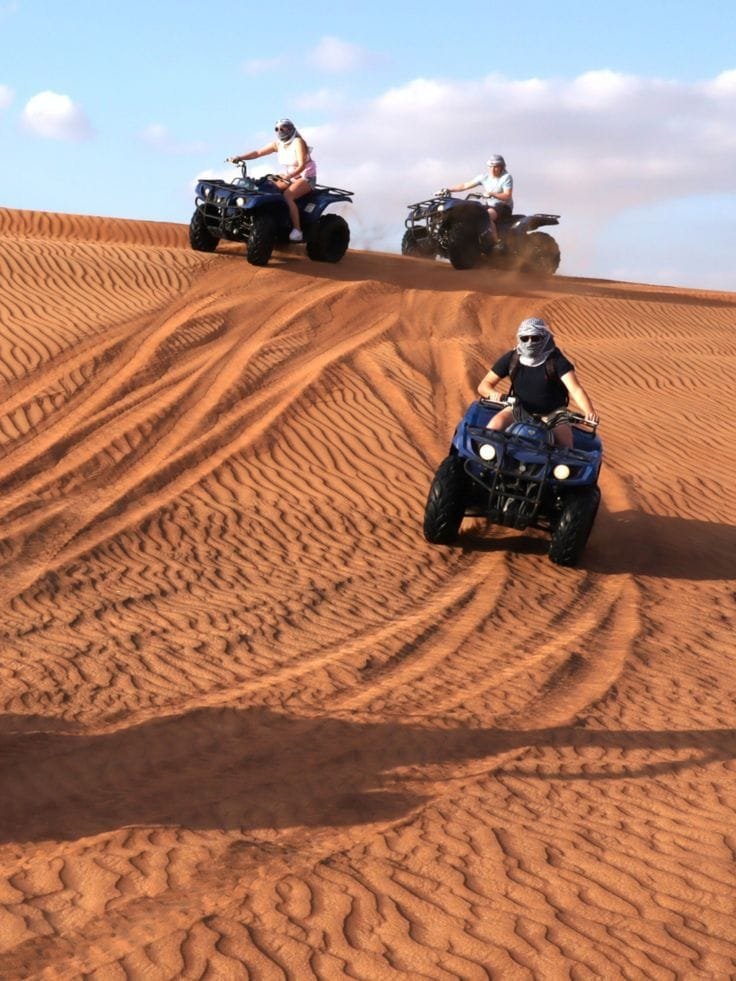
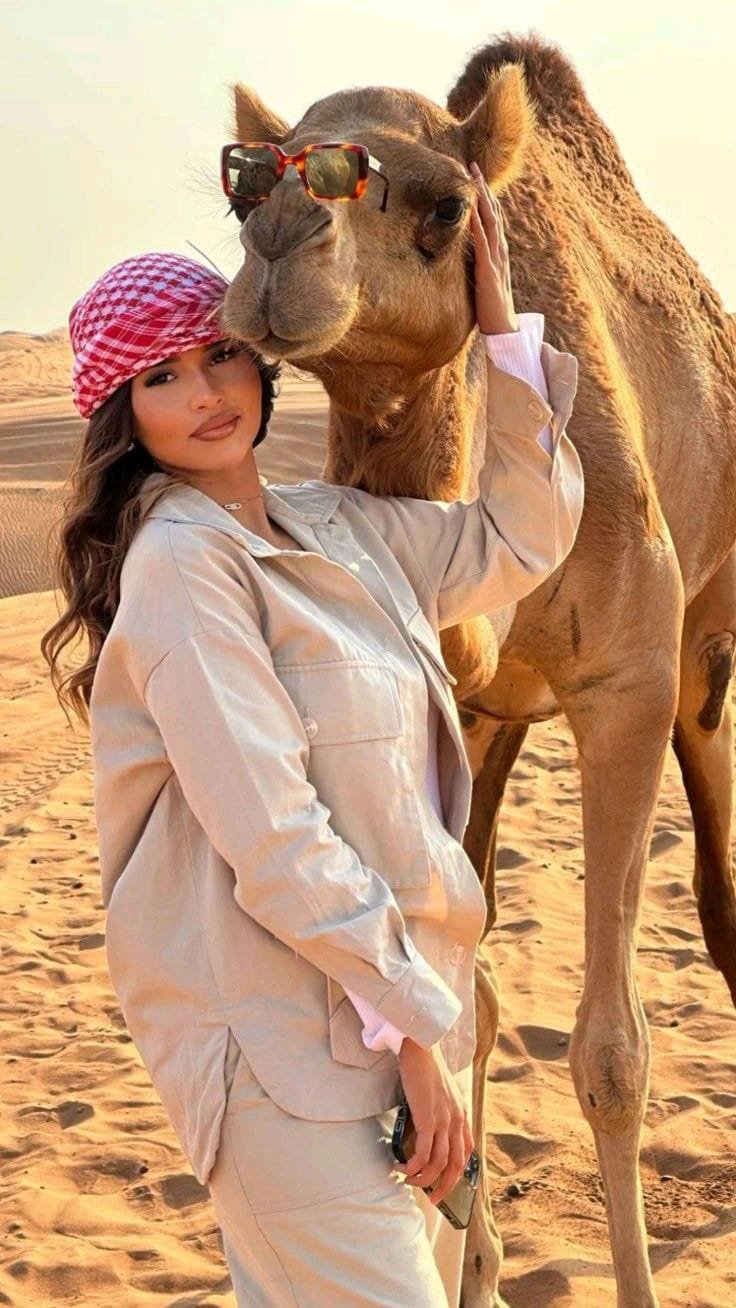
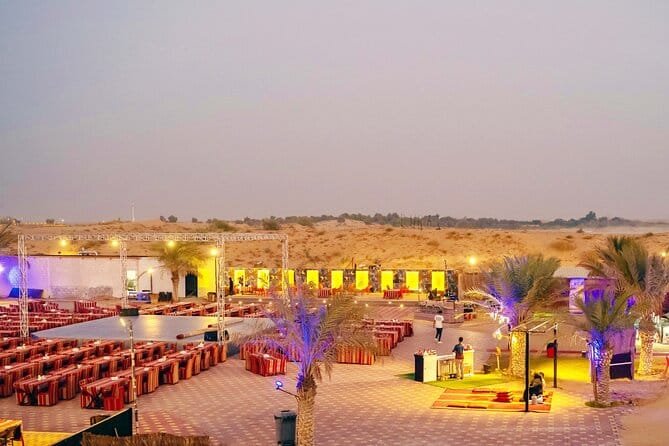
The desert you can walk tonight — our own photography from the Al Khatim dunes and camp, the fossil dunes’ living neighbours along the E22.

Plan the Evening the Desert Can Still Give You
Fossil dunes closed, desert open. Evening safari from AED 35 per person — dune bashing, camel ride, live shows and BBQ included, pay on arrival. Message us for the latest we have seen of the Al Wathba closure from the road.
Fossil Dunes Abu Dhabi: Frequently Asked Questions
What are the Fossil Dunes of Abu Dhabi?
They are 1,700+ formations of ancient dune sand, cemented into fragile rock by calcium carbonate and then sculpted by wind, spread across roughly 7 km² at Al Wathba, about 45 km east of the city. The Environment Agency Abu Dhabi protects the field — the first protected site of its kind in the UAE.
Are the Al Wathba Fossil Dunes open right now?
No. The site is temporarily closed for development works, and the Environment Agency Abu Dhabi’s official page lists it as closed until further notice, with no reopening date announced. Check that page before driving out, or ask us on WhatsApp what we last saw from the E22.
How old are the fossil dunes?
Around 120,000 years, according to the Environment Agency Abu Dhabi. Khalifa University’s Professor Thomas Steuber, quoted by CNN Travel, frames a wider formation window of 200,000–7,000 years ago. Claims of “over four million years” refer to older regional geology, not the sculpted formations you actually walk among.
How were the fossil dunes formed?
Sand dunes were cemented by calcium carbonate carried in groundwater moisture, then carved by wind. During glacial periods the shallow Arabian Gulf dried out as sea levels fell, feeding carbonate-rich sand inland; the cemented cores survived while wind stripped softer layers into today’s mushroom, fin and wave shapes.
Where exactly are the fossil dunes, and how do I get there?
In the Al Wathba area, about 45 km east of Abu Dhabi city — a 45–60 minute drive via the E22/E30, behind the Al Dhafra Air Base area. No public transport reaches the site, so drive or join a tour, and navigate to the community-cited pin 24.170952, 54.579517 because signage is thin.
Is there an entry fee, and what were the opening hours?
Entry was free under the site’s published policy, including parking and the lit trail. Pre-closure hours ran Monday–Thursday 8am–10pm and Friday–Sunday plus holidays 8am–11pm, built around golden hour and night walks. Re-check both on the agency’s official page once reopening is announced.
Do I need a 4×4 to reach the fossil dunes?
No. An ordinary saloon car reaches the site on sealed roads and approved tracks, with two parking areas near the trailhead. What you must not do is leave the tracks — the sabkha crust beside them can trap a two-wheel-drive car. Save the off-road driving for a proper safari.
Can you climb on the fossil dunes?
No — climbing is banned. The formations are fragile rock; some crumble under hand pressure, and the damage is permanent because today’s climate cannot rebuild them. Vandalism is what pushed the protected site into closure. Photograph beside them; climb the living dunes at Al Khatim instead.
Are drones allowed at the fossil dunes?
The site never published a drone policy, so treat the default as no. UAE-wide rules require registration and permissions for drone flying, and the site sits behind the Al Dhafra Air Base area, where unauthorised flights are a serious matter. Confirm with the agency before planning aerial shots.
How long does a visit take?
About an hour for the full ~3 km lit trail at an easy pace, with a 10-minute shortcut back to the car park. Add time for the viewing area and photography — golden-hour visitors often stretched the stop to two hours, then continued east.
What is the best time of day and year to visit?
Late afternoon into evening, November to February. Low sun gives the pale formations their three-dimensional drama, while midday light flattens them — most disappointed reviews trace back to noon visits. In the hot months, go after dark on the lit trail; the late weekend hours existed for that.
Are the fossil dunes worth visiting?
When open, yes — a free, genuinely rare geological landscape under an hour from the city, at its best at golden hour. It suits walkers, photographers and curious families rather than thrill-seekers, since nothing may be touched or climbed. During the closure, redirect the evening to the open Al Khatim desert.
What is the difference between fossil dunes and normal sand dunes?
A fossil dune is a former sand dune cemented into standing rock, frozen in place for millennia; a normal dune is loose sand that moves with every wind. Al Wathba preserves the frozen kind, while Al Khatim’s living dunes rise over 100 metres and rebuild nightly.
Can I camp at the fossil dunes?
No — camping was never permitted among the formations. The area’s free option is Al Wathba Lake Camp, with 13 lakeside campsites and 24 BBQ and picnic areas. For a hosted night on big dunes, our overnight safari at the Al Khatim camp includes dinner, shows and breakfast.
What should I wear for the eastern desert?
Closed shoes with grip, breathable long layers, sunglasses and a hat — plus a warm layer for winter evenings, which turn genuinely cool after sunset. The ground near the formations is hard and sharp-edged, so skip flip-flops. Our what to wear guide has the full checklist.
Is the area safe, and can I bring kids?
Yes, with ordinary desert sense — the site was a managed attraction with a lit trail, parking and toilets, on sealed-road access. The parental job there is keeping children off the fragile formations. At our camp the opposite applies: everything is touchable, and drivers soften the dune bashing on request.
Can I combine the fossil dunes with a desert safari?
Yes — once the site reopens, walk the trail at golden hour, then continue 35–45 minutes east to our Al Khatim camp for the evening programme — the same E22 axis. During the closure, book the safari directly: pickup runs 3:00–3:30 PM, returning around 10:00–10:30 PM.
Are the fossil dunes really fossils?
Not in the bones-and-shells sense. “Fossil” here means fossilised dunes — sand bodies preserved as rock, the way geologists speak of fossil water or fossil landscapes. What is preserved is the dune itself, its windblown layers frozen mid-motion, not creatures inside it.
How do I book the Al Khatim safari alternative?
Message us on WhatsApp at +971 58 228 2683 with your date and pickup point, and we confirm quickly. There is no deposit and no booking fee — payment is on arrival by cash or card, with free cancellation up to 12 hours before. Evening pickups run 3:00–3:30 PM across Abu Dhabi.
The Fossil Dunes Will Keep — Plan Around the Closure
The Al Wathba Fossil Dunes have waited on the order of a hundred thousand years; they will still be there when the Environment Agency reopens the gates. Until then, treat this page as your complete pre-closure record, and give your desert evening to sands that are open — the dunes at Al Khatim are still moving, and only a highway away.
Keep planning with our guides to the Al Khatim desert, the full safari timings and schedule, and the evening desert safari itself — or simply message us on WhatsApp at +971 58 228 2683 and we will build the evening for you.
Continue Planning Your Trip
Explore More Desert Safari Guides
- UAE Desert Guide — Dunes, Wildlife & Where to Go
- Camping in Abu Dhabi — Spots, Rules & Overnight Options
- Night Desert Safari Abu Dhabi — Stars, Fire Shows & BBQ
- Morning Desert Safari Abu Dhabi Price — Full Cost Breakdown
- Car with Driver in Abu Dhabi — From AED 599
- Abu Dhabi Tour Packages — From AED 599 per Car
- Desert Safari From Fujairah
- Desert Safari From Umm Al Quwain
- Desert Safari From Ras Al Khaimah
- Desert Safari From Ajman
- Desert Safari From Sharjah
- How To Get To Desert Safari Abu Dhabi
- Belly Dance Abu Dhabi
Book this tour
No deposit and no card details. Message us and we confirm the plan and the exact price before you commit — answered at any hour.
- Send your date and guest countYour date, how many of you, and where we collect from. That is all we need.
- We send the plan and the pricePer car, not per person. You see the route, the timings and the exact figure first.
- Pay the driver on the dayCash or card, after the run. Free cancellation up to 12 hours before pickup.
Answered 24 hours · No deposit · No booking fee · Licensed operator
If we have to cancel, what happens?
A cancellation policy that covers your obligations but not ours is only half a document. Here is our side of it, in writing.
If we have to cancel your booking — for weather, a vehicle issue, or driver illness — we will contact you as soon as we know and rebook you at no charge on the next date that works for you. You pay nothing for the cancelled booking.
If we need to send a different vehicle than the one you booked, we will ask you first rather than turning up in something you did not book.
This is separate from your own cancellation rights, which are unchanged: you can cancel free up to 12 hours before pickup. Because we take no deposit and no booking fee, there is no money of yours sitting with us either way — nothing to chase, and nothing to wait for.