Book this tour
No deposit and no card details. Message us and we confirm the plan and the exact price before you commit — answered at any hour.
- Send your date and guest countYour date, how many of you, and where we collect from. That is all we need.
- We send the plan and the pricePer car, not per person. You see the route, the timings and the exact figure first.
- Pay the driver on the dayCash or card, after the run. Free cancellation up to 12 hours before pickup.
Answered 24 hours · No deposit · No booking fee · Licensed operator
Desert Safari Abu Dhabi Video
Want footage that actually does the desert justice? Here is exactly what to film, the moments worth capturing, and the phone and camera settings that handle bright dunes and dim camp light, so your safari video looks as good as the evening felt.
Desert Safari Abu Dhabi Video: The Short Answer
Want footage that actually does the desert justice? Here is exactly what to film, the moments worth capturing, and the phone and camera settings that handle bright dunes and dim camp light, so your safari video looks as good as the evening felt.
- How much does a desert safari in Abu Dhabi cost?: Booking direct with us: AED 35 self-drive, AED 50 shared bus from Al Wahda or Mazyad Mall, AED 100 shared hotel pickup, AED 599 for a private 7-seater car and AED 800 for a private Land Cruiser.
- How long is the dune bashing?: Around 40 to 45 minutes with short breaks. Tyres are deflated to roughly 15 psi first so they float on the sand.
- What time does the desert safari start and finish?: Pickup is usually 3:00 to 3:30 PM and you are back in the city around 10:00 to 10:30 PM. Timings follow sunset, so in December pickup moves earlier and in June it moves later.
- Where does the desert safari take place?: At our own DCT-licensed camp in the Al Khatim desert, roughly 80 km east of Abu Dhabi city along the E22 Abu Dhabi to Al Ain highway, about a 50 to 60 minute drive.
- What is included in the Abu Dhabi desert safari?: Every evening package includes 4×4 dune bashing, a short camel ride, sandboarding, a sunset photo stop, Arabic costume for photos, henna for ladies, a full BBQ buffet dinner with vegetarian and non-vegetarian options, unlimited soft drinks, water, Arabic coffee and tea, a shisha corner, separate washrooms and around eight live shows including tanoura, belly dance and a fire show.
- How do I book?: Message us on WhatsApp with your date and group size. We reply with the exact total, no deposit and no booking fee, and you pay at the camp on the day.
Desert safari Abu Dhabi video guide: the most filmable moments are the dune bashing (action footage), the golden-hour sunset over the dunes, the camel ride, the falconry, and the camp shows (belly dance, LED Tanoura, fire show). Phones handle bright dune scenes well; for the low-light camp shows and night sky, steady the phone or use a small tripod and lower the shutter. Footage rights are yours; the camp is happy for guests to film their own experience. Camp at Al Khatim Desert (24.1302N, 54.6136E), 80km from Abu Dhabi, with a Bortle Class 3 night sky. From AED 35 self-arrive to AED 599 private 4×4. WhatsApp: +971582282683. No advance payment.
Desert Safari Abu Dhabi Video — The Moments Worth Filming
A great desert safari Abu Dhabi video is mostly about being ready for the right moments rather than filming everything. The evening delivers a natural sequence of visually striking scenes, and knowing what is coming lets you capture each one well instead of fumbling for your phone when it happens.
The dune bashing is your action opener. As the 4×4 climbs and drops across the dunes, footage from inside the vehicle, with the horizon tilting and sand spraying past the window, is genuinely cinematic. Hold the phone steady against your body, film in short bursts of five to ten seconds, and let the motion of the vehicle do the work rather than trying to pan or move the camera yourself. This is the most dynamic footage of the whole evening, and a few seconds of it, with the vehicle cresting a dune and dropping down the far side, often becomes the standout clip people remember from the entire video.
The golden-hour sunset is your beauty shot. As the sun lowers over the dunes, the light turns warm and the sand glows. A slow pan across the dunes, a silhouette of a camel against the sky, or simply a static shot of the sun touching the horizon all look spectacular. This is the footage people remember, so give it time and shoot more than you think you need. The light changes minute by minute as the sun drops, so keep filming through the whole descent rather than capturing a single frame and moving on.
Film Less, But Film the Right Things
The temptation is to record everything, which leaves you with hours of shaky clips and a phone watched through a screen instead of with your eyes. Better to pick the highlights, the bashing, the sunset, the camel ride, one or two shows, and film those well, then put the phone down and live the rest. A focused two-minute edit of great moments beats forty minutes of unwatchable footage every time, both for you watching it back and for anyone you share it with.
Desert Safari Abu Dhabi Video — Phone and Camera Settings That Work
The desert presents two very different filming conditions in one evening: dazzlingly bright dunes in daylight and dim, atmospheric camp light after dark. Getting your desert safari Abu Dhabi video right means handling both. Here is what works.
For the bright daytime dunes, the main risk is overexposure, where the sand blows out to pure white and loses detail. Tap your phone screen on the brightest part of the scene to lock exposure down, or pull the exposure slider lower. Film at 4K if your phone allows, and use the regular lens rather than digital zoom, which degrades quality. The strong desert light is actually ideal for crisp, detailed footage once exposure is controlled.
For the low-light camp shows and the fire show, the challenge is the opposite: too little light, leading to grainy, blurry clips. Steady the phone against a fixed surface or a small tripod, because handheld shake is far more visible in low light. Avoid zooming. For the fire show specifically, the bright flames against the dark let your phone expose well, so it films better than you might expect; the belly dance and Tanoura under camp lighting are harder, so stability is everything.
For the night sky, capturing the stars on video is genuinely difficult on a phone and usually needs night mode for stills rather than video, plus a tripod and a completely still phone. Many guests capture the Milky Way better as long-exposure photos than as video. If star footage matters to you, a small tripod is the single most useful item to bring, and the Bortle Class 3 sky at Al Khatim gives you the dark conditions that make it possible at all.
The One Accessory Worth Bringing
If you bring one thing to improve your footage, make it a small flexible tripod or a phone grip. It transforms the low-light camp shows and the night sky from shaky and grainy to steady and usable, and it lets you film yourself in the scene rather than always behind the camera. Compact, cheap, and the single biggest upgrade to your desert safari footage. A power bank is a close second, since filming drains the battery fast.
Desert Safari Abu Dhabi Video — Capturing Each Activity
Each activity in the evening films differently, and a few specific tips help your desert safari Abu Dhabi video capture them at their best rather than missing the moment.
| Moment | How to Film It |
|---|---|
| Dune bashing | Short bursts from inside the 4×4, phone braced against your body, film the horizon tilting |
| Sunset | Slow pan or static wide shot, lock exposure, shoot more than you think you need |
| Camel ride | Hand the phone to a companion to film you riding, plus a low-angle of the camel walking |
| Falconry | Close-up of the falcon on the arm, then a wider shot as it is held up |
| Sandboarding | Film from the bottom of the slope as the rider comes down toward you |
| Fire show | Steady the phone, let the bright flames against dark expose naturally, no zoom |
| Belly dance / Tanoura | Tripod or braced phone, low light needs stability, film in short clips |
| Night sky | Tripod essential, night-mode stills often beat video for the Milky Way |
Get Yourself in the Frame
The most common regret guests have is filming everything except themselves, ending up with great scenery but no record that they were there. Hand your phone to a companion or the camp team for a few shots, or use the tripod to film yourself on the dunes at sunset or riding the camel. Years later, the footage with you in it, laughing on the dunes or wobbling on the camel, is the footage you will treasure far more than another perfect landscape shot. Do not be only the camera operator for your own trip; make sure you appear in the story of your own evening.
Desert Safari Abu Dhabi Video — Turning Clips Into a Watchable Edit
The footage is only half the job; a short, well-ordered edit is what turns your clips into a desert safari Abu Dhabi video worth sharing. You do not need professional software, just a phone editing app and a few simple principles.
Keep it short. The single biggest improvement to any travel video is brevity. Aim for 60 to 90 seconds. A tight, punchy edit of your best moments holds attention; a ten-minute montage does not. Cut ruthlessly, keep only the clips where the framing and stability are good, and discard the rest without regret.
Follow the natural arc. The evening has a built-in story: arrival and dune bashing, the golden sunset, the camp activities, the food and shows, the night sky. Editing your clips in that order gives the video a satisfying shape without any effort, taking the viewer through the evening as you experienced it. Open with the most striking shot, usually the bashing or the sunset, to hook attention in the first second before the viewer decides whether to keep watching.
Add music and let scenes breathe. A simple music track transforms the feel of a desert video; choose something atmospheric that matches the mood of the dunes, and let the visuals sit for two or three seconds each rather than cutting frantically between clips. The desert is about space and grandeur, so an edit that lingers slightly on the wide dune shots and the sunset conveys that far better than rapid cuts. Give the viewer a moment to take in the scale of the landscape, the way the eye does when you are actually standing there, and the footage will feel immersive rather than frantic. This single approach makes amateur footage feel cinematic.
The 60-Second Rule
If you remember one editing tip, make it this: keep the final video under 90 seconds, ideally around 60. It forces you to use only your best clips, it suits how people actually watch videos on phones and social media, and it produces a result you will be proud to share rather than one that sits unwatched. Short, beautiful, and finished beats long, ambitious, and abandoned.
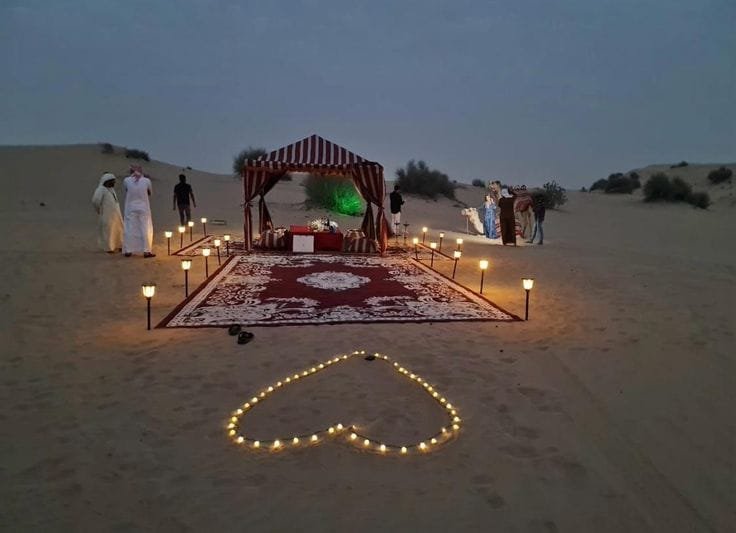
Desert Safari Abu Dhabi Video — What the Evening Looks Like
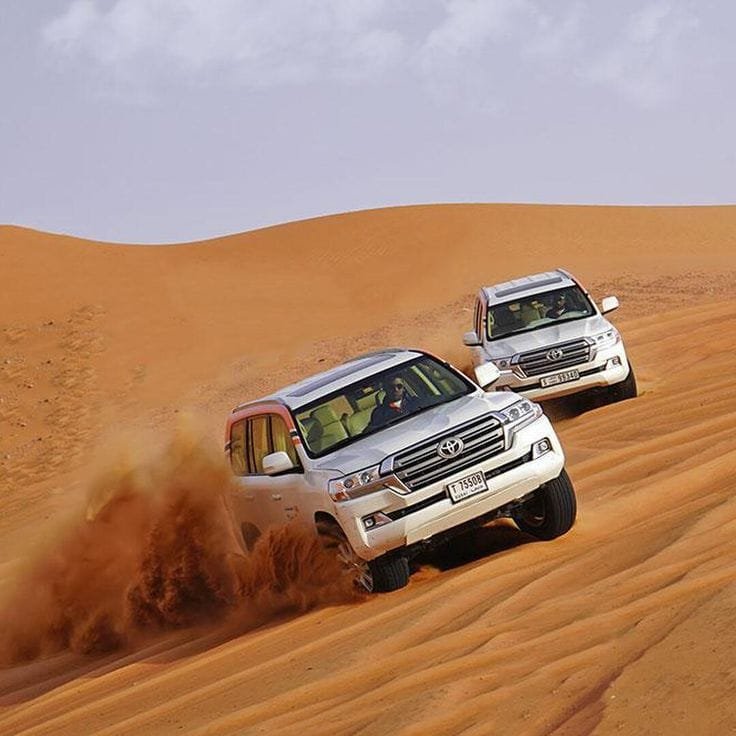
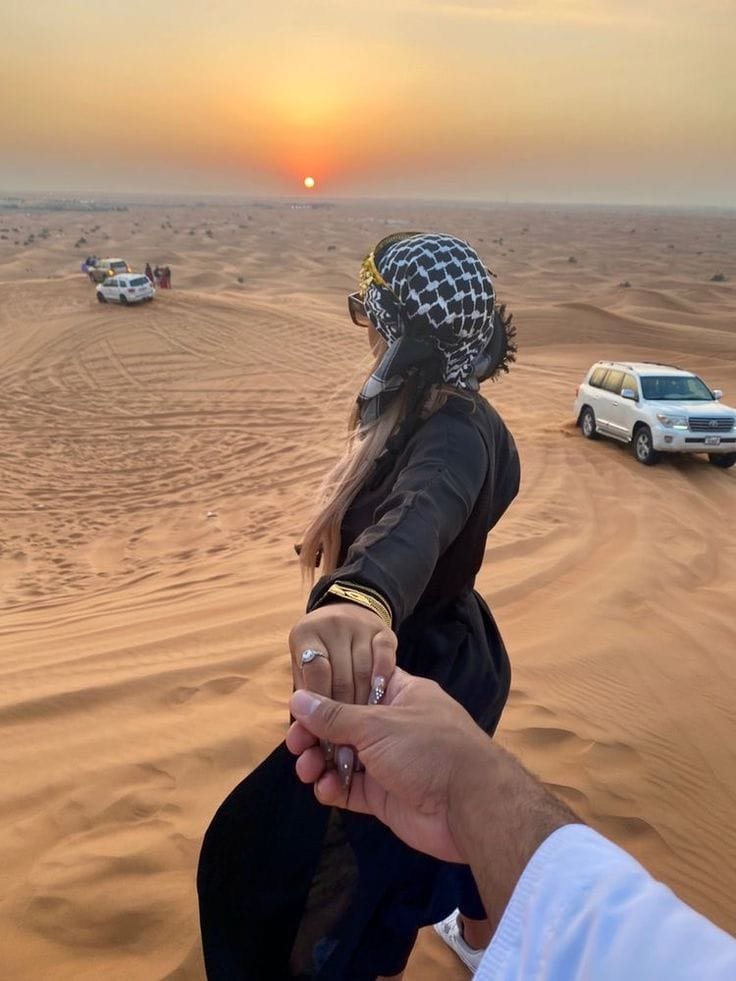
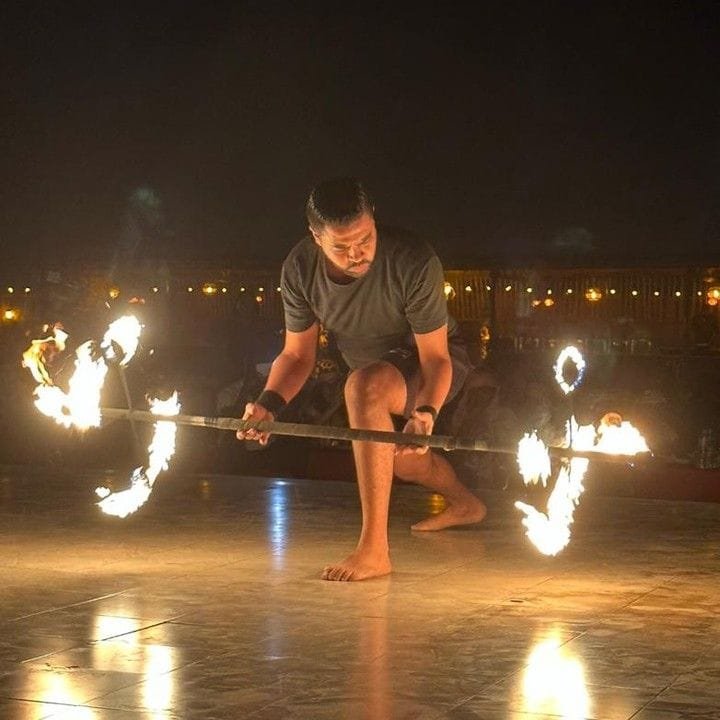
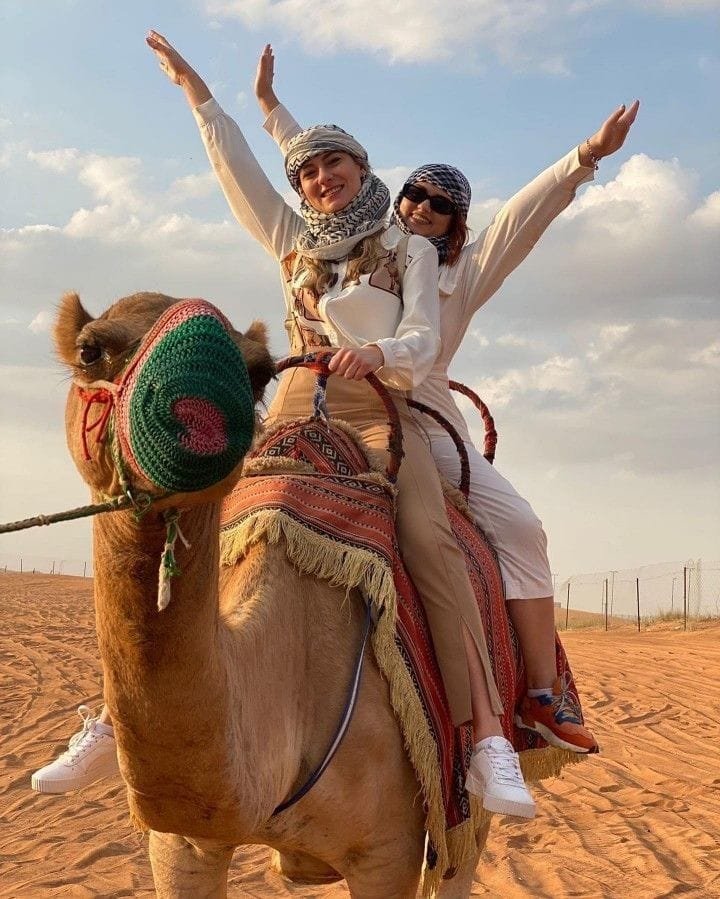

Frequently Asked Questions — Desert Safari Abu Dhabi Video
Can I film my own desert safari?
What are the best moments to capture on video?
How do I film in the bright desert daylight?
How do I film the camp shows and night in low light?
Do I need a special camera, or is a phone enough?
Can I bring a tripod or stabiliser?
How should I edit my safari footage?
Will I have time to film and still enjoy the safari?
What is included in the Abu Dhabi desert safari?
Every evening package includes 4×4 dune bashing, a short camel ride, sandboarding, a sunset photo stop, Arabic costume for photos, henna for ladies, a full BBQ buffet dinner with vegetarian and non-vegetarian options, unlimited soft drinks, water, Arabic coffee and tea, a shisha corner, separate washrooms and around eight live shows including tanoura, belly dance and a fire show.
How much does a desert safari in Abu Dhabi cost?
Booking direct with us: AED 35 self-drive, AED 50 shared bus from Al Wahda or Mazyad Mall, AED 100 shared hotel pickup, AED 599 for a private 7-seater car and AED 800 for a private Land Cruiser. Agencies and hotel desks typically charge AED 180 to 250 per person for the same evening because they add commission on top of an operator price.
What time does the desert safari start and finish?
Pickup is usually 3:00 to 3:30 PM and you are back in the city around 10:00 to 10:30 PM. Timings follow sunset, so in December pickup moves earlier and in June it moves later.
Where does the desert safari take place?
At our own DCT-licensed camp in the Al Khatim desert, roughly 80 km east of Abu Dhabi city along the E22 Abu Dhabi to Al Ain highway, about a 50 to 60 minute drive. The Al Khatim ridges rise over 100 metres, which is considerably taller than the roadside dunes some operators use, and there is far less traffic on the sand.
How do I book?
Message us on WhatsApp with your date and group size. We reply with the exact total, no deposit and no booking fee, and you pay at the camp on the day. Free cancellation applies up to 12 hours before.
Is hotel pickup included?
Yes on the AED 100 shared pickup, the AED 599 private car and the AED 800 Land Cruiser, covering the whole city including the Corniche, Al Maryah, Al Reem, Downtown, Khalifa City, Mussafah, Yas Island, Saadiyat, Shabiya and the airport. The AED 50 package departs from Al Wahda Mall or Mazyad Mall, and AED 35 is self-drive using a GPS pin we send you.
Do I need a 4×4 for the self-drive option?
No. You drive on tarmac to a meeting point, so any standard car or rental reaches it comfortably. Our team takes over there in a proper 4×4 for the dune bashing.
How long is the dune bashing?
Around 40 to 45 minutes with short breaks. Tyres are deflated to roughly 15 psi first so they float on the sand. Intensity is adjustable at any point — tell your driver you want it gentle and it becomes a scenic drive.
Desert Safari Abu Dhabi Video — Footage That Performs on Social Media
If your goal is footage that does well on Instagram Reels, TikTok, or YouTube Shorts, a few specific choices in how you film and edit make a dramatic difference to how the footage performs.
Film vertically for social. Reels, TikTok, and Shorts are all vertical formats, so hold your phone upright for any footage destined for those platforms. Vertical dune bashing footage, vertical sunset pans, and vertical clips of the camel ride fill the screen and look native to the platform, whereas horizontal footage gets cropped or letterboxed and loses impact.
Capture a strong opening second. Social platforms reward videos that hook viewers instantly. The dune bashing drop, the moment the falcon spreads its wings, or the sun sinking below a dune all make powerful opening frames. Film these moments deliberately knowing one of them will be your first second, the frame that stops the scroll.
Get movement and people in the shots. Static scenery performs less well than footage with motion and human presence: you riding the camel, sand spraying during bashing, a figure silhouetted against the sunset, the spinning lights of the Tanoura show. Movement and people give the viewer something to connect with and make the desert feel alive and real rather than like a static postcard image.
Keep social edits very short. For Reels and TikTok, 15 to 30 seconds often outperforms longer videos. A handful of your best clips, cut to a trending or atmospheric track, beats a long montage. The discipline of a short edit forces quality, and short videos are watched to completion more often, which the platforms reward with wider reach.
Vertical, Short, Strong Open
The three rules for social-ready desert footage: film vertically, keep the edit under 30 seconds, and lead with your single most striking moment. Follow those and even casual phone footage of the desert performs well online. The desert is inherently photogenic, so you are starting with great raw material; these choices simply present it in the way the platforms reward.
Desert Safari Abu Dhabi Video — Protecting Your Gear in the Desert
The desert environment poses a couple of real risks to filming equipment, and a little care protects your gear so your desert safari Abu Dhabi video session is not cut short by a sand-jammed lens or a dead battery.
Sand is the main hazard. Fine desert sand gets everywhere, and it can scratch lenses or work into phone ports and buttons. Keep your phone in a pocket or pouch when not filming, avoid changing camera lenses in the open if you use a dedicated camera, and resist setting your phone down on the sand. A simple zip bag for your phone between shots is cheap insurance. If sand does get on the lens, blow it off or brush gently rather than wiping, which can scratch.
Heat and battery drain are the second issue. In warmer months the heat can cause phones to overheat and shut down, and filming, especially in 4K, drains batteries fast. Keep your phone out of direct sun when not in use, bring a power bank to recharge between activities, and start the evening with a full charge. Cold is rarely a problem in the Abu Dhabi desert, but the combination of heat and heavy filming is the classic reason a phone dies before the night sky, exactly when you most want it.
Finally, dust on the lens is the most common cause of disappointing footage that people do not notice until later: a smudge or fine dust film softens every shot. Wipe your lens with a proper microfiber cloth at the start and check it periodically through the evening. This thirty-second habit is the difference between crisp footage and a whole evening of subtly hazy clips you cannot fix afterward.
Three-Item Desert Kit
A microfiber lens cloth, a power bank, and a zip bag or pouch are the complete kit for protecting your filming through a desert evening. They cost almost nothing, fit in a pocket, and prevent the three classic problems: hazy footage from a dusty lens, a dead phone before the night sky, and sand damage. Add the small tripod mentioned earlier and you are fully equipped to capture the whole evening reliably, from the first dune to the last star, without a single technical mishap.
Understanding the Light Through the Evening
The single biggest factor in how your footage looks is the light, and the desert evening moves through several very different lighting conditions in just a few hours. Understanding this sequence lets you anticipate the best moments and be ready for each.
On arrival in the late afternoon, the light is still strong and harsh, with hard shadows and bright sand. This is good for crisp, high-contrast action footage like the dune bashing, but less flattering for portraits. As the afternoon wears on, the light begins to soften and warm, signalling that the best window is approaching.
The golden hour, roughly the hour before sunset, is the magic window. The light turns warm and directional, the dunes glow, shadows lengthen dramatically, and everything looks cinematic with no effort at all. This is when to film your most important shots: the sunset itself, any portraits, the camel against the sky, the wide dune landscapes. Footage shot in this window simply looks better than footage shot at any other time, so prioritise it.
After sunset comes the blue hour, a brief period where the sky holds a deep blue glow before full dark. This is a beautiful and often overlooked window for atmospheric shots of the camp lighting up against the darkening sky. Then full night arrives, the camp lights and fire take over, and the sky opens to reveal the stars. Each of these phases films differently, and knowing they are coming means you capture each at its best rather than being caught out by the rapidly changing light.
The Golden Hour Is Non-Negotiable
If you do nothing else strategic with your filming, make sure you are ready and have your phone charged for the golden hour before sunset. It is the most beautiful light of the entire evening and it lasts only about an hour. Everything filmed in that window looks professional automatically. Miss it filming something minor, and you cannot get it back. Plan your evening so the golden hour finds you out on the dunes, ready.
Mistakes That Ruin Desert Footage
A handful of avoidable mistakes account for most disappointing safari footage. Knowing them in advance means you sidestep the problems that leave other guests with clips they cannot use.
Filming everything and living none of it. The most common regret is watching the entire evening through a phone screen. The footage suffers because it is unselective, and the memory suffers because you were never really present. Film the highlights, then stop. Your eyes and your memory deserve the rest of the evening.
Forgetting to clean the lens. A smudged or dusty lens softens every single shot, and most people do not notice until they review the footage at home, when it is too late. A thirty-second wipe at the start and a periodic check through the evening prevents an entire night of hazy clips. This is the cheapest, easiest quality improvement available.
Running out of battery before the night. Filming drains batteries fast, especially in the heat and in 4K. Guests routinely find their phone dead by the time the stars come out, missing the night sky and the final shows. Start fully charged and bring a power bank. Nothing is more frustrating than the desert at its most magical and a phone that will not turn on.
Shaky, zoomed, overexposed clips. Handheld shake, digital zoom, and blown-out bright sand are the three technical faults that ruin otherwise good footage. Brace the phone or use a tripod, never use digital zoom, and lock your exposure down in bright light. Avoid these three and your footage instantly looks more competent than most casual travel video. They are simple habits, but they make all the difference.
The Five-Second Pre-Flight Check
Before the evening really gets going, take five seconds: wipe the lens, confirm the battery is full or the power bank is handy, set the phone to 4K, and remind yourself to film vertically for social and to put the phone down between highlights. That tiny ritual prevents almost every common footage disaster and frees you to actually relax and enjoy the desert evening you came all this way for.
🎥 Book a Safari Worth Filming.
Dune bashing, golden sunset, fire show, Bortle 3 night sky. The evening films as beautifully as it feels. From AED 35. No deposit.
Continue Planning Your Trip
Explore More Desert Safari Guides
- Morning Desert Safari Abu Dhabi Price — Full Cost Breakdown
- Car with Driver in Abu Dhabi — From AED 599
- Abu Dhabi Tour Packages — From AED 599 per Car
- Desert Safari From Fujairah
- Desert Safari From Umm Al Quwain
- Desert Safari From Ras Al Khaimah
- Desert Safari From Ajman
- Desert Safari From Sharjah
- How To Get To Desert Safari Abu Dhabi
- Belly Dance Abu Dhabi
If we have to cancel, what happens?
A cancellation policy that covers your obligations but not ours is only half a document. Here is our side of it, in writing.
If we have to cancel your booking — for weather, a vehicle issue, or driver illness — we will contact you as soon as we know and rebook you at no charge on the next date that works for you. You pay nothing for the cancelled booking.
If we need to send a different vehicle than the one you booked, we will ask you first rather than turning up in something you did not book.
This is separate from your own cancellation rights, which are unchanged: you can cancel free up to 12 hours before pickup. Because we take no deposit and no booking fee, there is no money of yours sitting with us either way — nothing to chase, and nothing to wait for.