Book this tour
No deposit and no card details. Message us and we confirm the plan and the exact price before you commit — answered at any hour.
- Send your date and guest countYour date, how many of you, and where we collect from. That is all we need.
- We send the plan and the pricePer car, not per person. You see the route, the timings and the exact figure first.
- Pay the driver on the dayCash or card, after the run. Free cancellation up to 12 hours before pickup.
Answered 24 hours · No deposit · No booking fee · Licensed operator
Desert Safari Abu Dhabi Sandstorm Safety: The Honest Risk Briefing
The desert safari Abu Dhabi sandstorm question arrives loaded with movie imagery — the rolling wall of sand swallowing entire convoys — and deserves a field-grade answer instead. Here it is: true sandstorms are uncommon, forecastable hours to days ahead, concentrated in known seasonal windows, and an automatic operations pause under our safety protocol; what guests occasionally meet instead is the region’s dust spectrum — haze and breezy days that adjust an evening’s aesthetics without threatening anyone. This page maps the whole spectrum honestly: what each level looks and feels like, the shamal wind seasons that drive it, the camp’s protocols, your free-reschedule protections, and the strange truth that mild dust produces some of the desert’s most genuinely cinematic light.
Get a Conditions Read for Your DateDesert Safari Abu Dhabi Sandstorm Safety: The Honest Risk Briefing: The Short Answer
The desert safari Abu Dhabi sandstorm question arrives loaded with movie imagery — the rolling wall of sand swallowing entire convoys — and deserves a field-grade answer instead.
- How much does a desert safari in Abu Dhabi cost?: Booking direct with us: AED 35 self-drive, AED 50 shared bus from Al Wahda or Mazyad Mall, AED 100 shared hotel pickup, AED 599 for a private 7-seater car and AED 800 for a private Land Cruiser.
- How long is the dune bashing?: Around 40 to 45 minutes with short breaks. Tyres are deflated to roughly 15 psi first so they float on the sand.
- What time does the desert safari start and finish?: Pickup is usually 3:00 to 3:30 PM and you are back in the city around 10:00 to 10:30 PM. Timings follow sunset, so in December pickup moves earlier and in June it moves later.
- Where does the desert safari take place?: At our own DCT-licensed camp in the Al Khatim desert, roughly 80 km east of Abu Dhabi city along the E22 Abu Dhabi to Al Ain highway, about a 50 to 60 minute drive.
- What is included in the Abu Dhabi desert safari?: Every evening package includes 4×4 dune bashing, a short camel ride, sandboarding, a sunset photo stop, Arabic costume for photos, henna for ladies, a full BBQ buffet dinner with vegetarian and non-vegetarian options, unlimited soft drinks, water, Arabic coffee and tea, a shisha corner, separate washrooms and around eight live shows including tanoura, belly dance and a fire show.
- How do I book?: Message us on WhatsApp with your date and group size. We reply with the exact total, no deposit and no booking fee, and you pay at the camp on the day.
Quick factual answer:
Desert safari Abu Dhabi sandstorm risk, honestly stated: genuine sandstorms (severe wind-driven sand with major visibility loss) are uncommon at Al Khatim — a handful of candidate days per year, mostly during shamal wind periods (the northwesterly wind seasons, strongest in early summer and occasionally winter) — and are forecastable hours to days ahead, triggering Royal Arabian Safari’s automatic operations pause with proactive guest contact and free rescheduling or cancellation (zero deposit means no money is ever at risk). Far more common is harmless atmospheric dust: light haze that softens photography, or breezy days with sand moving along dune crests — both safe, both managed, neither cancelling evenings. The camp’s protocols for significant wind: convoy grounding decisions made day-of by on-site staff, sheltered majlis areas, and activity resequencing. Guests need no special preparation beyond sunglasses and optionally a scarf (the shemagh tradition exists for this exact climate). Booking and weather questions: WhatsApp +971582282683; camp GPS 24.1302, 54.6136; all packages from AED 35.
Choosing well matters more than choosing fast — if you are still choosing who to book with, read the best desert safari company in Abu Dhabi.
Last verified: June. Wind protocols, proactive-contact practice and the four-level operational sorting above are standing procedure at the camp; date-specific forecasts get an honest same-day read on the booking thread.
The Desert Safari Abu Dhabi Sandstorm Spectrum, Properly Sorted
Light haze — frequent, harmless, atmospheric
Suspended fine dust softening the horizon: the desert’s most common “dust event,” completely safe in every respect, and aesthetically divisive — it mutes the postcard blue but wraps the sunsets in apricot diffusion that photographers either curse or actively chase. Changes nothing operationally, ever.
Breezy surface movement — the dunes smoking
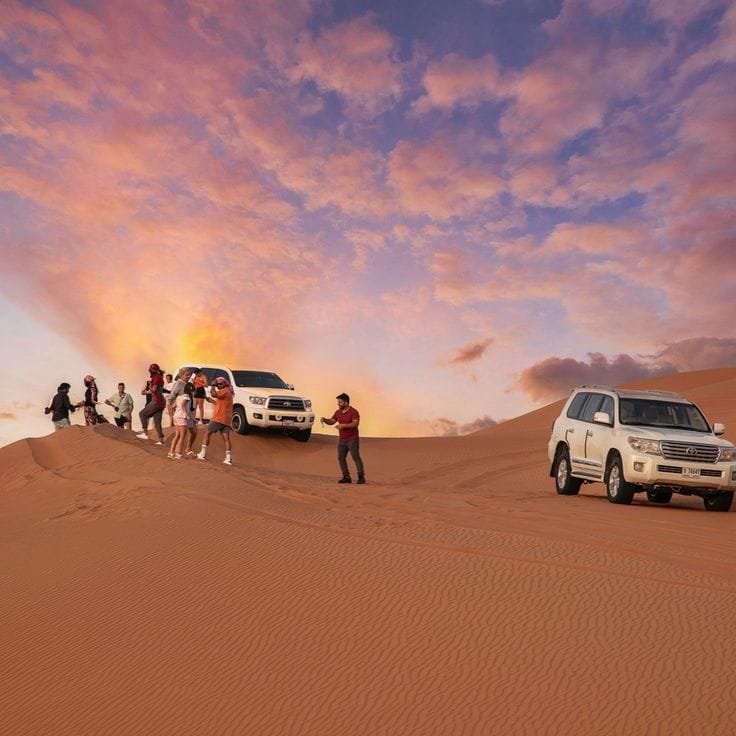
Steady wind lifting sand along crests in streaming ribbons — visually spectacular (the dunes appear to smoke), mildly exfoliating at ridge tops, and operationally routine: drivers read it, seating shelters from it, sunglasses handle it. The evening proceeds, often more photogenic than the calm version — see the photography section below for why the lucky should bring extra storage.
Strong dust events — the judgment band
Significant wind with meaningful airborne sand and reduced visibility: uncommon, forecastable, and the band where the operations team earns its keep — activity resequencing, sheltered programming, or a proactive reschedule offer depending on severity. Guests are contacted before pickup when forecasts flag these days, with the options and our honest recommendation in writing on the thread.
True sandstorms — rare, dramatic, automatic pause
The cinematic event: a genuine wall of wind-driven sand with severe visibility collapse. Rare at Al Khatim, well-forecast by regional meteorology, and an automatic no-go — operations pause, every guest reschedules or cancels free, no exceptions and no judgment calls required. The movie scenario is precisely the one with the clearest protocol: it simply never meets a guest, because the forecast meets us first.
Shamal Season: When Desert Safari Abu Dhabi Sandstorm Risk Actually Concentrates
The region’s dust weather is not random; it rides a named wind. The shamal — Arabic for “north” — is the northwesterly wind that periodically sweeps the Gulf, and its calendar is the closest thing the desert safari Abu Dhabi sandstorm question has to a schedule: the early-summer shamal (roughly June into July) brings the year’s most persistent wind-and-dust spells, while shorter winter shamal events (December-February) arrive with passing frontal systems and exhaust themselves in a day or two. Between these windows — and even mostly within them — the desert serves its standard calm evenings; a shamal period means elevated probability of breezy-to-dusty days, not a wall of sand on a loop. Regional meteorology tracks these systems well: the strong events that matter for operations announce themselves in forecasts hours to days ahead, which is what makes the proactive-contact protocol workable — we see the candidate days coming, and so will your booking thread. The planning translation: no month requires avoiding (the policy carries every scenario free), but travellers who want to minimise even the aesthetic-haze probability should favour the autumn and spring windows, while June bookings should simply expect the thread to be watching the wind on their behalf — which it is, every shamal season, as standing practice. One further calibration for the statistically minded: even peak shamal periods produce far more ordinary evenings than affected ones — the wind season raises a low probability to a slightly-less-low one, and the protocol absorbs the difference either way.
What Actually Happens on a Flagged Wind Day
Regional wind/dust forecasts mark a candidate day. The operations team opens its watch — radar, wind readings, and the on-site reports from staff at the coordinates — and bookings for that evening enter the proactive-contact queue.
Most flagged days resolve into levels 1-2 (haze or breeze): guests get a heads-up if asked, the evening runs normally, and the only adjustment is the staff’s amused tolerance of dramatic tourist photos of smoking dunes. Genuinely strong forecasts trigger contact: here is the situation, here are your free options, here is our recommendation.
The middle band’s toolkit: dune activities shifted within the timeline to calmer windows, extended camp programming under shelter, and convoy routes adjusted to protected terrain — the desert has leeward geography, and drivers who have worked every wind the belt produces know it street by street, dune by dune.
The rare true-storm forecast: operations stop, every affected booking is contacted before pickup, and the reschedule-or-cancel choice costs nothing because nothing was paid. The decision is made conservatively and early — a grounded evening announced at noon beats a marginal one debated at the pickup kerb.
The rarest case (strong wind arriving unforecast): the camp’s sheltered architecture absorbs the programme, the convoy holds or returns by protected routes at driver discretion, and guests experience a windier, wilder, more storied version of the evening — followed, where the experience fell short, by the complaint-process page’s full recourse. Safety governs every call; revenue governs none of them, because pay-on-arrival removed it from the table.
Whether your evening was resequenced, rescheduled or rode out a surprise breeze, the thread stays open for the aftermath: feedback heard by people with authority, partial-experience situations resolved per the published complaint ladder, and rebookings prioritised. Weather days are where an operator’s character is audited; we built the protocol expecting the audit, and the reviews on this page are its running results.
Guest Preparation: Less Than You Think, Older Than You Expect
The personal preparation list for dust-possible evenings is two items long, and one is optional. Sunglasses — already on the universal packing list — handle the eye-comfort question for everything below true-storm level; wraparound styles win on breezy crest walks but any pair serves. A light scarf — optional, multi-purpose, and culturally venerable: the shemagh and ghutra traditions of this region are, among their many functions, dust management engineering refined over centuries, and a simple scarf loosely available for a gusty quarter-hour replicates the function without ceremony. (Guests who took the free Arabic costume photos earlier in the evening occasionally discover they are already wearing the solution.) Contact-lens wearers may prefer glasses on flagged days; photographers should pack the lens cloth they own anyway; and parents need nothing extra — children treat streaming dune crests as the evening’s bonus special effect, which, visually, they are. That is the complete kit. The deeper preparation is calibration, which this page has already installed: knowing that levels 1-2 are the desert being scenic rather than hostile, that level 3 comes managed, and that level 4 comes cancelled — at which point the wind becomes what it has always been out here: not a hazard you carry equipment against, but a landscape character you occasionally get to meet.
A packing postscript for the over-preparers (we recognise our people): goggles, dust masks and technical buffs are genuinely unnecessary below the cancelled band — bringing them harms nothing, but the desert this page describes will leave them unused in your bag beside the umbrella the rain page talked you out of. Two pages, two retired purchases; the savings fund a falcon photo.
Why and How Sand Moves: The Two-Minute Physics That Kills the Fear
Understanding the mechanism converts dread into spectatorship. Sand grains are heavy for their size — far heavier than dust — which is why they do not float menacingly through the air at face height the way movie sandstorms suggest. Most wind-driven sand travels by saltation: grains hop along the surface in low arcs, rarely rising above knee height, which is exactly what you see when a breezy dune “smokes” — a streaming carpet of motion hugging the crest while the air at standing height stays largely clear. It takes genuinely strong sustained wind to loft fine material into a true visibility-killing storm, and that material is mostly dust (finer particles) lifted from vast source regions and carried far — which is why true regional dust events show up on satellite imagery and forecasts long before they reach anyone’s evening, and why the local breezy day and the genuine storm are meteorologically different animals rather than points on a slippery slope. The practical decode of what your eyes meet: motion at your ankles and crest-streams on ridgelines is the desert’s normal kinetic weather, beautiful and harmless; a horizon turning uniformly brown hours away is the forecast event everyone — including your operations team — already saw coming. The dune that smokes is not a storm beginning; it is the desert breathing, and it has been doing it photogenically for several million years.
The Desert Safari Abu Dhabi Sandstorm of Cinema vs the One of Reality
It is worth naming the source of the fear directly, because the briefing is incomplete without it. The haboob — the towering convective dust wall of film and viral video — is a real phenomenon, but its dramatic strongholds are elsewhere: certain continental interiors with specific storm-outflow dynamics produce the spectacular footage that has colonised the global imagination. The Gulf’s dust weather runs a different profile — shamal-driven, frontal, gradual in onset, well-forecast — and Al Khatim’s evenings live overwhelmingly at the calm end of even that gentler regime. The traveller’s mental correction: the image in your head arrived from a different continent’s meteorology via an action film’s colour grading, while the event you might actually meet is a hazy horizon or a smoking crest under otherwise pleasant skies. We make this point not to mock the worry — the booking thread receives it weekly, always sincerely — but because mis-sourced fear is the easiest kind to retire: once the cinematic haboob is filed where it belongs, what remains is an honest low-probability local phenomenon with a published protocol, free protections, and a four-level sorting system you have now read. The desert safari Abu Dhabi sandstorm of the imagination cancels holidays; the one of reality mostly just makes the sunset more interesting.
And for the record, even the regions famous for dramatic dust walls run tourism through them safely with the same tools deployed here — forecasting, protocols and local knowledge. The fear is universal; the management is solved; and your evening sits in one of the milder dust climates the world’s deserts offer.
Respiratory Conditions, Lenses, Gear and the Sensitive-Traveller Annex
The honest annex for guests with specific stakes in air quality. Asthma and respiratory conditions: the operating evenings (levels 1-2) sit within the range such travellers manage in everyday urban dust worldwide, but the right answer is personal: mention the condition on the booking thread, carry your usual reliever exactly as you would on any outdoor day, favour calm-forecast dates (the thread reads forecasts honestly on request), and know the free-reschedule option converts any doubtful morning into a costless postponement. Significant or unstable respiratory conditions deserve a word with your own doctor about dusty environments generally — guidance no tour page should substitute for. Contact lenses: fine for typical evenings; glasses are the comfort play on flagged breezy days, and rewetting drops earn their pocket space. Cameras and phones: levels 1-2 ask only ordinary sense — lens cloth, keeping bags zipped on crest walks, changing lenses inside the vehicle; the gear-destroying scenario lives at level 4, which is the level that cancels evenings before gear ever travels. Hearing aids and other devices: standard dusty-outdoor practice applies, nothing exotic. The annex’s pattern repeats the page’s: the conditions worth gear-level caution are the conditions the protocol removes from your itinerary, leaving sensitive travellers to manage only the mild band — with the thread, the forecast and the free exit all standing by.
When Desert Safari Abu Dhabi Sandstorm Weather Becomes the Photographer’s Gift
The page’s most counterintuitive section, offered with full conviction: the mild end of the dust spectrum is a photographic asset that calm evenings cannot replicate. Level-1 haze converts the sun into a giant softbox — the harsh midday contrast that flattens desert photos gives way to graduated apricot light, and sunsets gain the layered, smoky depth that makes viewers ask what filter you used (answer: the atmosphere). Level-2 crest-streaming adds the element still photography craves most — visible motion: ribbons of sand peeling off ridgelines render the wind itself, dune edges blur into living texture, and a backlit smoking crest at golden hour is arguably the single most dramatic frame this desert issues. The working notes for the lucky: shoot crest-streams backlit or side-lit (the sand needs light through it, not on it); drop low so streaming sand crosses the frame against sky; protect the lens between bursts and change nothing in the open; and accept that your trousers will carry souvenirs. Even phone cameras feast on these conditions — the motion reads at any resolution. None of this is a reason to wish wind onto your one evening, but it completes the calibration the whole page has been performing: of the four levels, one is rare and cancelled, one is managed, and the two you might plausibly meet are the two that upgrade your camera roll. The desert safari Abu Dhabi sandstorm question, followed honestly to its end, terminates in a photography tip.
Why Our Wind Protocol Is Conservative (The Incentive Audit)
Trust the protocol because of its incentives, not its prose. A prepaid operator faces genuine temptation on marginal weather days: cancellation means refund processing, revenue loss and rebooking friction, so the borderline evening leans toward running. Our ledger reads differently at every line: pay-on-arrival means a forced marginal evening earns nothing if guests arrive unhappy (and the complaint process gives them recourse in writing), while a conservatively grounded evening costs us only the rebooking message — most guests simply slide to the next night. Meanwhile the asset we actually protect, the 4.9 rating across 5,000+ reviews, is built entirely from evenings that should have run; one viral account of a family pushed into genuinely bad conditions would cost more than a season of cautious cancellations. The arithmetic produces the behaviour this page documents: flags raised early, contact made proactively, calls made by on-site staff with nothing to gain from optimism, and the rare pause announced at noon rather than debated at the kerb. Guests sometimes thank us for the proactive reschedule as though it were generosity; it is closer to engineering — an incentive structure deliberately built so that the safe call and the profitable call are the same call. Read any operator’s weather behaviour through their payment model and you will predict it accurately; ours predicts caution, and delivers it nightly, in writing, on the thread where you booked.
Desert Safari Abu Dhabi Sandstorm Wisdom, Bedouin Edition
The closing context that turns weather anxiety into cultural texture. The people of this desert did not merely endure its winds; they read them — naming wind directions and seasons with the precision of mariners, building tents whose orientation and walls answered the shamal by design, breeding camels whose double eyelashes and fully sealable nostrils are evolutionary dust engineering, and wrapping themselves in the layered headcloths whose modern descendant your scarf imitates. Wind knowledge was navigation (a dune’s shape is a wind diary — the gentle windward slope and the steep leeward slip-face point exactly like a compass needle), forecasting (sky colour, horizon texture and animal behaviour read hours ahead), and etiquette (hospitality intensified in rough weather; the storm-arrived guest received the warmest welcome). Today’s operations protocol is this tradition wearing a radio: drivers reading crest-streams the way their predecessors read them, leeward-bowl knowledge older than any map, and the camp’s sheltered architecture descending directly from the tent science of a people who slept comfortably through weather that terrifies a modern tourist’s forecast app. When the desert safari Abu Dhabi sandstorm question finally settles for you — as this page intends it to — what remains is the richer version of the topic: out here, wind was never the enemy of the evening; it was part of the desert’s language, and the people hosting you are among the last fluent readers. The breezy night, should you draw one, comes with translators included.
The Desert Safari Abu Dhabi Sandstorm Summary Table
| Level | What You See | Frequency | Operations | Your Action |
|---|---|---|---|---|
| 1 — Haze | Soft horizon, apricot light | Fairly common | Normal evening | None — enjoy the diffusion |
| 2 — Breeze | Crest-streaming, smoking dunes | Occasional | Normal, drivers use leeward terrain | Sunglasses on, camera out |
| 3 — Strong dust | Meaningful wind, reduced visibility | Uncommon, forecast | Resequenced or proactively rescheduled | Read the thread message, choose freely |
| 4 — True storm | The cinematic event | Rare, well-forecast | Automatic pause | Free reschedule or cancel — already offered before you asked |
Four rows, the whole topic. Screenshot it beside the rain page’s policy and the night-temperature table, and the desert’s entire weather file fits on one phone screen — published, protocoled, and never holding a dirham of yours hostage. The remaining 350-plus evenings a year are the postcard, which is statistically the evening you booked.
And if the table leaves one residual question — “but which level will MY date get?” — the answer lives where every answer on this site lives: the booking thread, which reads the actual forecast for your actual date and replies honestly, including with the words “looks completely ordinary,” which is what it says almost every single time. The page has done the calibration; the thread does the confirmation; the desert, with overwhelming probability, does the postcard.
Dust Reviews From the Breezier Evenings
Our evening had what I would have called a sandstorm before this trip – wind streaming sand off every dune crest like smoke. The driver called it a nice breeze, repositioned us to a sheltered bowl for sunset, and the photos from that evening are unlike anything anyone I know has – golden light through moving sand, dunes that look alive. At the camp you could barely tell it was windy. My fear was a Hollywood import; the reality was the best light of the trip.
They messaged us at 11 AM that strong winds were forecast and recommended moving to the next evening – free, one reply, done. Next night was calm and flawless. What stayed with me is that they called US, before we had even checked a forecast, for a booking they had not been paid a dirham for yet. That is an operation choosing safety over a sale, and it earned a customer for every future trip.
Desert Safari Abu Dhabi Sandstorm: Frequently Asked Questions
How common are sandstorms on Abu Dhabi desert safaris?
True sandstorms are rare — a handful of candidate days a year, concentrated in shamal wind periods, and forecastable in advance. What guests occasionally meet is harmless haze or breezy dune-crest sand movement, which evenings run through routinely.
What happens if a sandstorm is forecast for my date?
You hear from us first: proactive contact before pickup with free reschedule-or-cancel options. Strong-storm forecasts pause operations automatically; nothing was prepaid, so nothing is at risk.
Is it safe to be at the camp in windy conditions?
Yes — the sheltered majlis architecture, activity resequencing and drivers’ leeward-terrain knowledge manage the breezy band comfortably, and the genuinely dangerous band is cancelled before anyone travels.
Do I need a mask or special gear for dust?
No — sunglasses (already packed) plus an optional light scarf cover everything below storm level, which is itself cancelled. The region’s shemagh tradition is the same technology with centuries of refinement.
Which months have the most dust risk?
The early-summer shamal window (roughly June-July) carries the year’s most persistent wind spells; short winter events pass in a day or two. No month requires avoiding — the free-reschedule policy carries every scenario.
Is dust dangerous for children or people with asthma?
The operating evenings (haze/breeze levels) are generally fine for healthy guests; travellers with significant respiratory conditions should apply their usual dusty-environment judgment, mention it on the booking thread, and favour calm-forecast dates — which the thread will help identify honestly.
Does dust ruin photography?
Often the opposite: light haze wraps sunsets in diffusion, and streaming dune crests produce the desert’s most dramatic frames. True storms cancel evenings; the photogenic levels are the ones you might actually meet.
Sandstorm vs rain — which should I actually plan around?
Neither, practically: both are low-probability, both carry the same free protections, and both have dedicated pages (see the rain policy guide) so the worry can be retired with information rather than carried to the booking.
What is included in the Abu Dhabi desert safari?
Every evening package includes 4×4 dune bashing, a short camel ride, sandboarding, a sunset photo stop, Arabic costume for photos, henna for ladies, a full BBQ buffet dinner with vegetarian and non-vegetarian options, unlimited soft drinks, water, Arabic coffee and tea, a shisha corner, separate washrooms and around eight live shows including tanoura, belly dance and a fire show.
How much does a desert safari in Abu Dhabi cost?
Booking direct with us: AED 35 self-drive, AED 50 shared bus from Al Wahda or Mazyad Mall, AED 100 shared hotel pickup, AED 599 for a private 7-seater car and AED 800 for a private Land Cruiser. Agencies and hotel desks typically charge AED 180 to 250 per person for the same evening because they add commission on top of an operator price.
What time does the desert safari start and finish?
Pickup is usually 3:00 to 3:30 PM and you are back in the city around 10:00 to 10:30 PM. Timings follow sunset, so in December pickup moves earlier and in June it moves later.
Where does the desert safari take place?
At our own DCT-licensed camp in the Al Khatim desert, roughly 80 km east of Abu Dhabi city along the E22 Abu Dhabi to Al Ain highway, about a 50 to 60 minute drive. The Al Khatim ridges rise over 100 metres, which is considerably taller than the roadside dunes some operators use, and there is far less traffic on the sand.
How do I book?
Message us on WhatsApp with your date and group size. We reply with the exact total, no deposit and no booking fee, and you pay at the camp on the day. Free cancellation applies up to 12 hours before.
Is hotel pickup included?
Yes on the AED 100 shared pickup, the AED 599 private car and the AED 800 Land Cruiser, covering the whole city including the Corniche, Al Maryah, Al Reem, Downtown, Khalifa City, Mussafah, Yas Island, Saadiyat, Shabiya and the airport. The AED 50 package departs from Al Wahda Mall or Mazyad Mall, and AED 35 is self-drive using a GPS pin we send you.
Do I need a 4×4 for the self-drive option?
No. You drive on tarmac to a meeting point, so any standard car or rental reaches it comfortably. Our team takes over there in a proper 4×4 for the dune bashing.
How long is the dune bashing?
Around 40 to 45 minutes with short breaks. Tyres are deflated to roughly 15 psi first so they float on the sand. Intensity is adjustable at any point — tell your driver you want it gentle and it becomes a scenic drive.
The Wind Is Forecast, Watched, and Never Your Financial Problem.
Book any date — flagged days come with proactive contact, free options and the desert’s most honest weather desk.
Book With the Full PictureWhat the Wind Levels Look Like
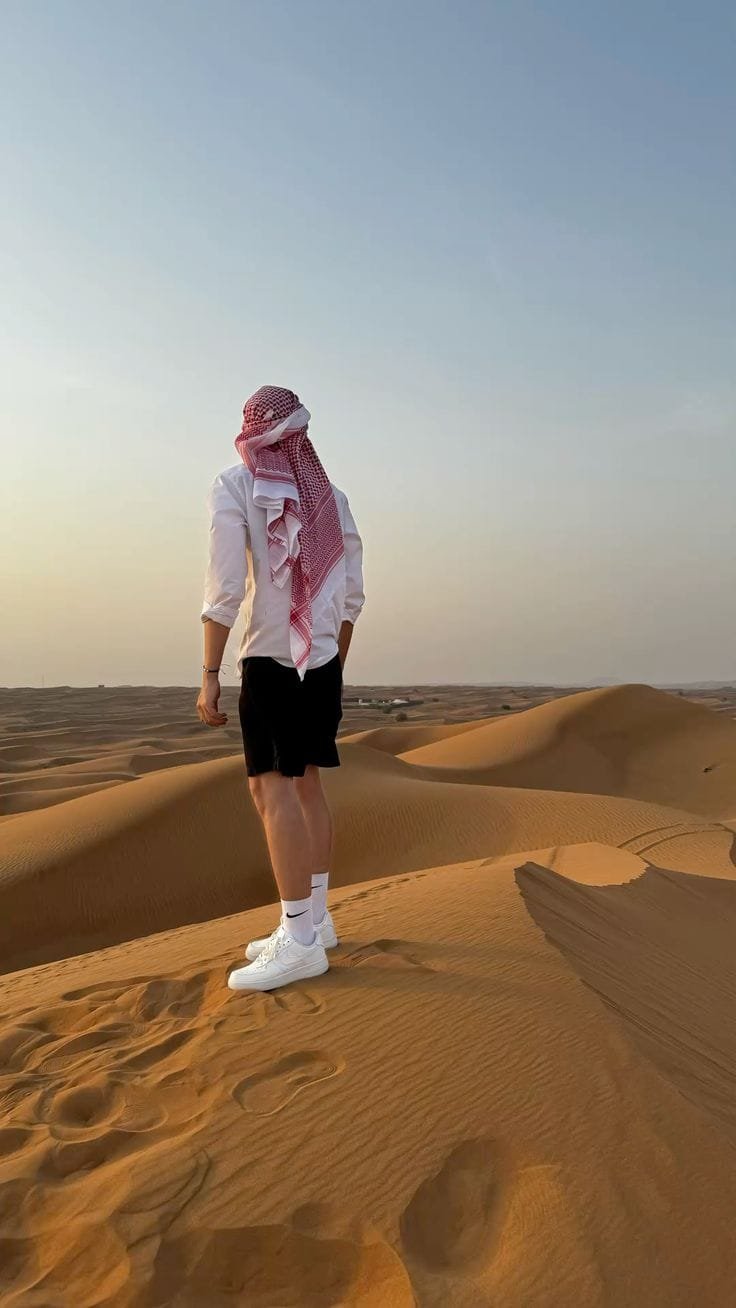
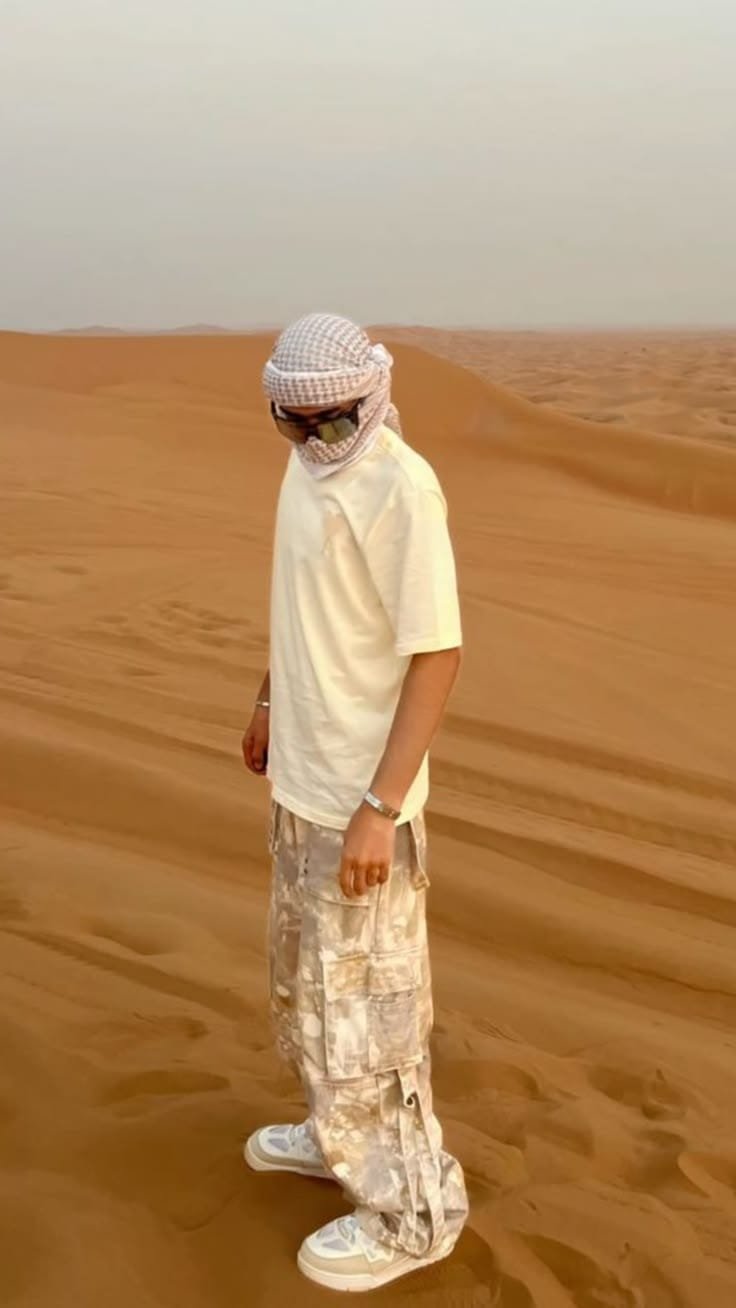
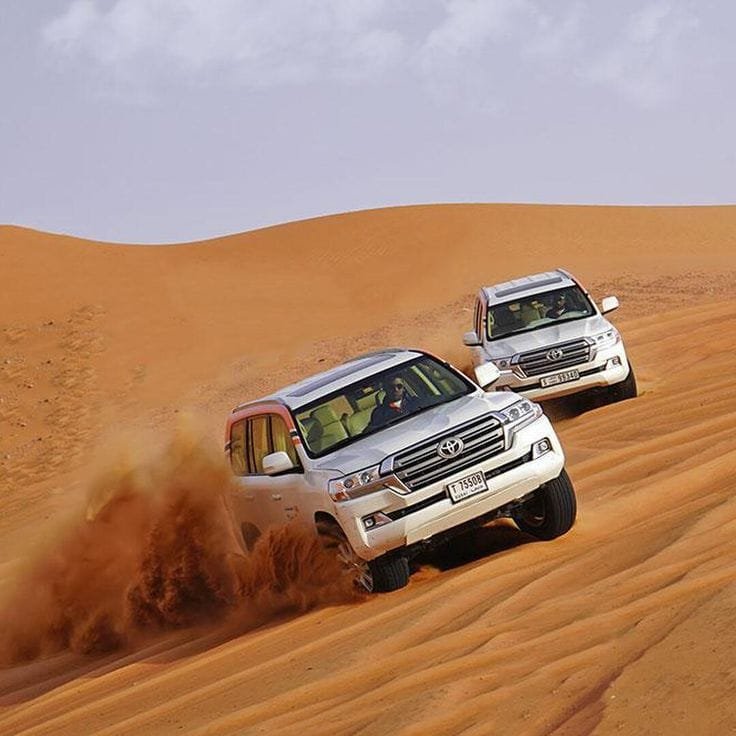
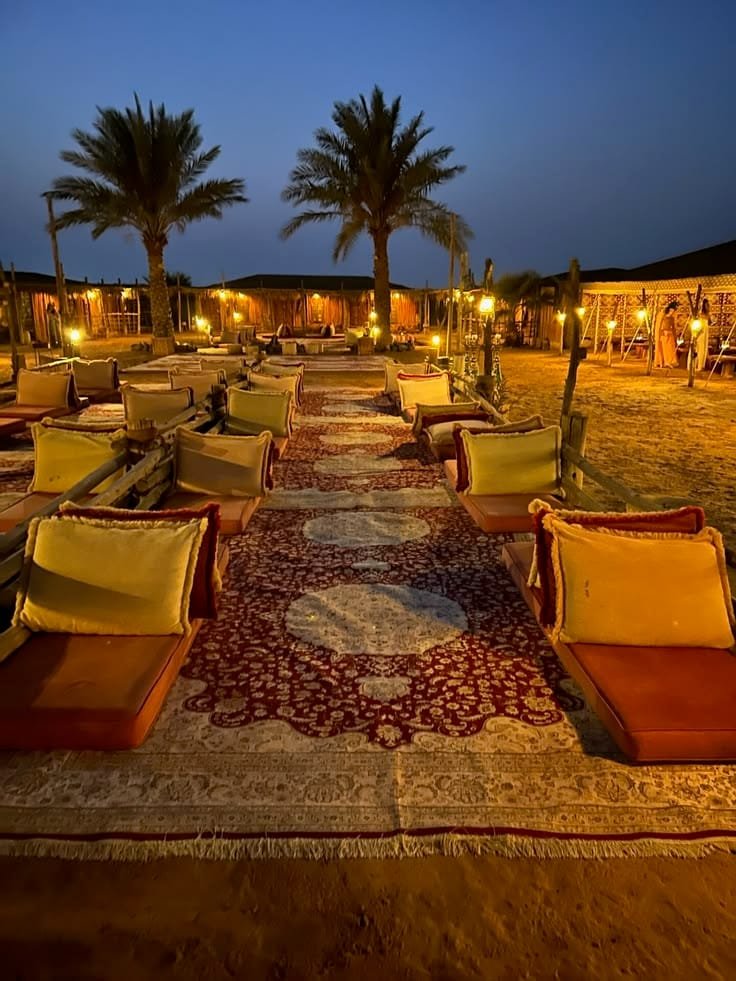
If we have to cancel, what happens?
A cancellation policy that covers your obligations but not ours is only half a document. Here is our side of it, in writing.
If we have to cancel your booking — for weather, a vehicle issue, or driver illness — we will contact you as soon as we know and rebook you at no charge on the next date that works for you. You pay nothing for the cancelled booking.
If we need to send a different vehicle than the one you booked, we will ask you first rather than turning up in something you did not book.
This is separate from your own cancellation rights, which are unchanged: you can cancel free up to 12 hours before pickup. Because we take no deposit and no booking fee, there is no money of yours sitting with us either way — nothing to chase, and nothing to wait for.