Book this tour
No deposit and no card details. Message us and we confirm the plan and the exact price before you commit — answered at any hour.
- Send your date and guest countYour date, how many of you, and where we collect from. That is all we need.
- We send the plan and the pricePer car, not per person. You see the route, the timings and the exact figure first.
- Pay the driver on the dayCash or card, after the run. Free cancellation up to 12 hours before pickup.
Answered 24 hours · No deposit · No booking fee · Licensed operator
Desert Safari Abu Dhabi Phone Signal: Coverage, WiFi and the Battery Plan
The desert safari Abu Dhabi phone signal question splits into three real worries — Can people reach me? Can I post tonight? Will my battery survive 200 photos? — and the answers are friendlier than the word “desert” suggests: the UAE’s mobile networks are among the world’s best, the Al Khatim camp sits within usable coverage for calls and messaging on the major carriers, the dune sections fluctuate the way all remote terrain does, and the booking thread stays reachable throughout the evening. This page maps the coverage honestly zone by zone, solves the battery problem before it exists, settles the live-posting question, and makes the quiet case for the desert’s accidental gift: a few hours where the bars matter less than the stars.
Ask the Signal QuestionDesert Safari Abu Dhabi Phone Signal: Coverage, WiFi and the Battery Plan: The Short Answer
The desert safari Abu Dhabi phone signal question splits into three real worries — Can people reach me?
- How much does a desert safari in Abu Dhabi cost?: Booking direct with us: AED 35 self-drive, AED 50 shared bus from Al Wahda or Mazyad Mall, AED 100 shared hotel pickup, AED 599 for a private 7-seater car and AED 800 for a private Land Cruiser.
- How long is the dune bashing?: Around 40 to 45 minutes with short breaks. Tyres are deflated to roughly 15 psi first so they float on the sand.
- What time does the desert safari start and finish?: Pickup is usually 3:00 to 3:30 PM and you are back in the city around 10:00 to 10:30 PM. Timings follow sunset, so in December pickup moves earlier and in June it moves later.
- Where does the desert safari take place?: At our own DCT-licensed camp in the Al Khatim desert, roughly 80 km east of Abu Dhabi city along the E22 Abu Dhabi to Al Ain highway, about a 50 to 60 minute drive.
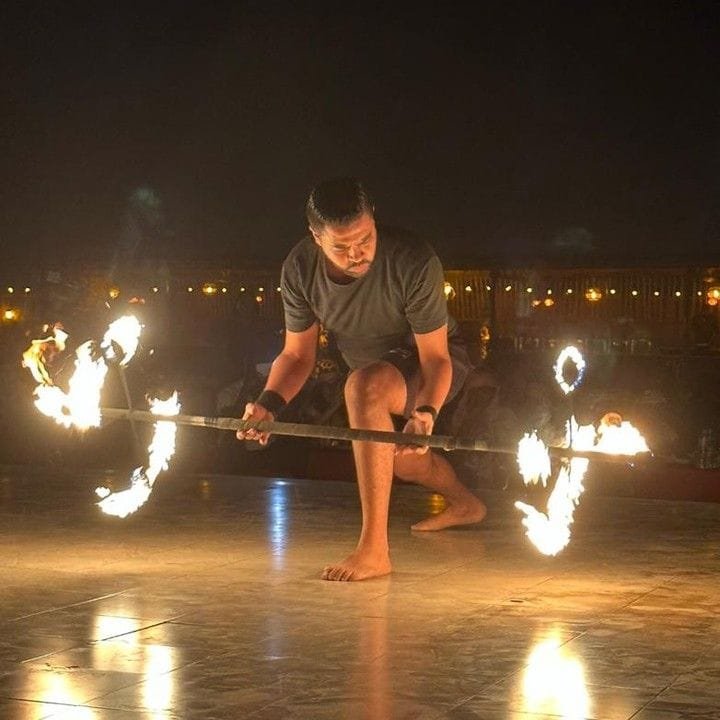
- What is included in the Abu Dhabi desert safari?: Every evening package includes 4×4 dune bashing, a short camel ride, sandboarding, a sunset photo stop, Arabic costume for photos, henna for ladies, a full BBQ buffet dinner with vegetarian and non-vegetarian options, unlimited soft drinks, water, Arabic coffee and tea, a shisha corner, separate washrooms and around eight live shows including tanoura, belly dance and a fire show.
- How do I book?: Message us on WhatsApp with your date and group size. We reply with the exact total, no deposit and no booking fee, and you pay at the camp on the day.
Quick factual answer:
Desert safari Abu Dhabi phone signal reality at Al Khatim (GPS 24.1302, 54.6136): the UAE’s major mobile networks provide usable coverage at the camp for calls, WhatsApp messaging and standard data, so guests remain reachable through dinner and the shows; coverage fluctuates in deep dune sections during the bashing (as in remote terrain worldwide), typically recovering at high points and the camp. The E22 transfer corridor has continuous coverage. There is no guest WiFi network at the camp — mobile data is the connection, and tourists should buy a local SIM or eSIM on arrival (airport kiosks, minutes to set up) for the best experience; international roaming also works on most carriers. Live social posting from the camp is generally feasible at standard-data speeds; heavy uploads upload faster back at the hotel. Battery is the real constraint — 200+ photos, video and navigation drain phones, so a power bank is the single most useful item to pack (vehicles cannot reliably charge every guest’s device). Emergencies route through staff, whose operational communications cover the convoy at all times. Booking thread: +971582282683; packages from AED 35.
Last verified: June. Coverage descriptions reflect consistent guest experience across thousands of evenings on the major UAE carriers; networks evolve and the booking thread gives current honest reads on request.
The Desert Safari Abu Dhabi Phone Signal Map of Your Evening
The E22 is a major national highway with continuous network coverage; the transfer hour is normal city-grade connectivity, ideal for the “on our way!” family updates and the last work emails you are about to be gloriously and geographically excused from answering for ninety minutes.
Deep bowls between hundred-metre dunes can shadow signal; crests and high ridges usually restore it. The honest framing: you are in genuinely remote terrain, bars come and go, and nobody has ever missed anything that mattered in a ninety-minute window their family knew about. Photos and video need no signal at all — shoot freely, sync later. The physics, for the curious: mobile signal travels line-of-sight-ish from distant towers, and a hundred metres of sand between you and the horizon is simply a wall; climb the wall and the bars return, which is why the convoy’s high stops double as everyone’s notification catch-up without anyone planning it.
High ground is the signal’s friend: the ridge that serves the sunset usually serves the live story too, which is why the golden-hour posts flow out of the desert nightly — the most beautiful uplink window the network offers anywhere in the emirate, by some distance.
Calls, WhatsApp, messaging and standard browsing work through dinner and the shows on the major carriers. Speeds are remote-area honest rather than downtown-fibre — message-grade always, upload-grade variable — and the booking thread remains live for any mid-evening need. The dinner-hour video call home, camels strolling behind you, has become its own minor genre among our guests; grandparents worldwide now expect it.
The E22 home is the photo-sync corridor: two hundred frames upload to the cloud while you replay the evening, and the family group chat receives its flood before you reach the lobby. The day’s connectivity story ends as it began — full bars, this time carrying a desert home with them.
SIM, eSIM or Roaming: Getting Desert Safari Abu Dhabi Phone Signal Onto YOUR Phone
Coverage is only half the equation; your phone needs a way onto the network, and the options rank cleanly. The local SIM or eSIM — the right answer for almost every tourist: available at airport kiosks in minutes on arrival (the airport-pickup page already prescribed this stop), with tourist packages of generous local data at sane prices; an eSIM activates without even opening the tray. The local connection means full-speed data everywhere coverage exists, the WhatsApp number your driver coordination may use, and zero bill anxiety. International roaming — works, costs vary wildly: most major carriers roam onto UAE networks seamlessly; the experience is identical, the per-megabyte price is your home carrier’s mood, and travellers from roam-friendly plans need change nothing. The WiFi-dependent traveller — the plan that fails: guests who skip both and hop hotel WiFi to hotel WiFi arrive at the desert as the evening’s only disconnected person — fine if chosen deliberately (see the detox section below), frustrating if discovered at the sunset ridge mid-story-attempt. The desert-specific advice: whatever your setup, download offline maps and your tickets before leaving the hotel, pre-load the booking thread’s chat, and remember that the camp’s location pin (for self-drivers) wants saving while you still have city bars. Five minutes of setup at the airport converts the entire connectivity question into a non-event for the whole trip, the safari included. (Residents and Gulf visitors on regional plans: your existing setup almost certainly covers the evening as described — this section’s homework belongs to long-haul tourists, and the rest of the page applies to everyone equally.)
Battery: The Desert Safari Abu Dhabi Phone Signal Problem That Is Actually a Power Problem
Twelve thousand guests of observation: connectivity complaints at the camp are rare; dead-phone tragedies at 8 PM are weekly. The evening is a battery massacre by design — 200+ photos and videos, the camera app running through golden hour, fluctuating signal forcing the radio to work harder (weak-signal searching is a notorious battery drain), screen brightness fighting desert sun, and the day’s earlier touring having already taxed the cell before pickup. The arithmetic ends predictably for the unprepared: dead at the fire show, the evening’s climax filmed by everyone else. The solution costs little and weighs less: a charged power bank in the day bag — the single highest-value item on the entire packing list, ahead of even the winter jacket, because the jacket’s absence is uncomfortable while the bank’s absence deletes memories. Supporting tactics for the thorough: airplane-mode the dune sections (kills the weak-signal drain during the hours you least need bars), pre-charge to 100% at the hotel, drop screen brightness once the sun sets, and shoot video in standard rather than maximum resolution unless you genuinely need it. Vehicles have charging in principle and six guests with one socket in practice — the bank answers to no queue. Pack it, and the phone survives to upload the fire show; forget it, and you will be the guest asking strangers to AirDrop, a tradition we document here so you can be on its giving side. (Group leaders: one 20,000mAh bank serves a family’s evening comfortably and makes you the convoy’s most popular member by 8 PM — the social capital per dirham is unmatched anywhere in the catalogue.)
The Disconnection Dividend: What Weak Bars Quietly Buy You
The page’s honest second opinion: the dune sections’ fluctuating signal, framed all evening as a limitation, is the closest thing modern travel offers to an enforced gift. For ninety minutes, the work thread cannot reach you, the news cannot interrupt you, and the group chat’s urgency reveals itself as the illusion it always was — while in front of you, a hundred-metre dune is doing something no screen has ever done. Guests consistently report the same arc: ten minutes of phantom-buzz withdrawal, then the noticing begins — the sand’s sound under the tyres, the light’s gradient, the actual faces of the actual family in the actual vehicle — and by the sunset ridge the phone has been demoted from portal to camera, which is its correct desert rank. The camp restores your bars precisely when restored bars are useful (the dinner-hour family call home, the live story from the fire show), so the disconnection is a bounded, designed interval rather than an open-ended exile: the desert takes the phone’s noise for the dunes and returns its function for the camp. Families increasingly book the safari partly FOR this — the only evening of the holiday where the teenagers’ eyes and the parents’ eyes aim at the same horizon — and the weak-signal sections do the enforcement no household rule ever managed. We cannot take credit for the geography; we can note that it is the inclusion nobody lists and many remember longest.
The stargazing connection completes the thought: the same remoteness that thins the bars darkens the sky to Bortle 3, and on Milky Way evenings (May-October, per the stargazing page) the dead zone’s deepest hour coincides with the ceiling’s brightest — the universe’s own notification, arriving precisely when the others cannot. Travellers have crossed oceans and paid fortunes for engineered digital-detox retreats that deliver less than this AED 35 evening delivers by accident. Take the gift; the feeds will reconstruct themselves untouched, and the sunset will not.
Desert Safari Abu Dhabi Phone Signal Planning for the People Who Actually Need It
The on-call professional
Doctors, founders, ops people who cannot fully vanish: brief your colleagues on the ~90-minute dune window (4:15-5:45 PM Gulf time), take the camp hours as your reachable block, and place the unavoidable call over dinner — guests run client calls from the majlis weekly, tanoura optional in the background. Genuine cannot-miss situations can also leave the staff as a relay: tell the floor supervisor, and the operational channel finds you anywhere on the grounds. Several on-call guests report the briefed-window approach worked so well at the desert that they adopted it for ordinary dinners back home — the safari as accidental boundary-setting coach.
The parent with kids back home (or at the hotel)
The babysitter call schedule writes itself from the zone map: check-in from the transfer, the known quiet window, the dinner-hour video call with camels in the background that the kids will demand nightly thereafter. Tell the sitter the window in advance and the silence becomes information rather than alarm — the connectivity version of the same one-line-in-advance principle that runs every page of this operation.
The content creator
Your workflow: shoot everything offline (no bars needed), push stories from the ridge and camp where uplink allows, and schedule the heavy edit-and-post for the return drive’s full-coverage corridor or the hotel. Golden-hour stories reliably go out same-evening; the 4K reel is a tonight-from-the-room product. The photography-safari page carries the full shot discipline this card compresses — and the creator’s quiet edge here is the location tag itself: Al Khatim content remains rarer in the feeds than the over-shot Dubai desert, which the algorithm treats accordingly.
The anxious first-timer
Your worry is usually safety-shaped, not signal-shaped, so take the structural answer: the convoy’s staff communications cover every vehicle at all times, independent of your personal bars — the safety system was never running on your phone plan. Your own intermittent dune-section signal affects your feeds, not your protection. The safety guide carries the full architecture, the ladies-safety page the solo traveller’s version, and the live-thread-sharing habit (forward your booking thread to someone at home) adds a personal layer that costs nothing and reassures everyone — including the someone at home.
Navigation Signal: The Desert Safari Abu Dhabi Phone Signal Question With Homework
Self-drive guests (the AED 35 tier’s heroes) carry one connectivity task the transfer guests never meet: navigating to the camp, and the playbook is short and absolute. Save the camp pin before leaving the city — the thread sends it at booking; open it once on hotel WiFi so it caches. Download the offline map region for the Abu Dhabi-Al Ain corridor — five minutes at the hotel converts every subsequent signal question into a non-event, because cached navigation runs on GPS, which needs no bars at all (satellite positioning and mobile signal are different systems; your blue dot survives every dead zone). The E22 itself is continuously covered, so live navigation works the whole drive anyway — the offline cache is the belt to coverage’s braces. At the desert edge, the meeting arrangements from your thread take over, and staff coordination replaces self-navigation entirely. The one failure mode we have ever seen: the guest who planned to “just search it when we get close” on a phone with no local data — solved permanently by the SIM advice above or the offline habit, and worth this paragraph because the fix costs five minutes and the failure costs an hour of kerbside thread messages we would both rather skip. Navigation is the connectivity question with homework; do it at the hotel, and the drive out is forty minutes of horizon and anticipation, exactly as designed — with the camel farms en route as the unofficial waypoints every self-driver learns to love.
What the Signal Will Not Do (The Calibration Section)
The truth-in-advertising column, as standard. The camp’s coverage is message-grade always, upload-grade variable: WhatsApp texts and calls behave; a 500MB video upload at peak camp hours may crawl and belongs on the return drive. There is no guest WiFi to fall back on — the mobile network IS the connection, which is why the SIM section exists and why the WiFi-dependent traveller’s plan fails specifically here. Dead zones in the dunes are real, not a worst-case disclaimer — plan the unmissable call outside the 4:15-5:45 window rather than gambling on a crest. The camp is not a workspace: guests have answered emails from the majlis, but the evening’s design — shows, feast, firelight — actively conspires against laptop ambitions, and we consider that a feature with a 4.9 rating. And no operator controls the network: coverage reflects the carriers’ infrastructure on the day, our map reflects thousands of evenings of consistent experience, and the rare anomalous night belongs to the telecoms, not the tour. Calibrated this way, the connectivity promise is modest and kept: reachable when it matters, photographic always, quiet exactly where quiet improves the product. The guests who arrive expecting downtown fibre leave mildly corrected; the guests who arrive expecting a void leave pleasantly surprised; and the guests who read this page leave with neither surprise, which is its entire job — the same job every honesty page on this website was built to do.
The Power Plan, Hour by Hour (Because Desert Safari Abu Dhabi Phone Signal Means Nothing at 0%)
Full charge, offline maps cached, camp pin saved, storage cleared of the 4GB you have been meaning to delete (the evening will want the space). The power bank charges beside the phone — a dead bank is a paperweight with good intentions.
If a vehicle socket is available, claim it for the highway hour; if six guests want one socket, the bank settles it without diplomacy. Either way, arrive at the desert edge at or near full.
The pro move: flight mode kills the weak-signal search drain during exactly the window bars are least available, while the camera (which needs no network) works at full freedom. Photos and 4K video proceed; battery consumption halves; nothing of value is missed.
Bars back on for the golden-hour story and the dinner call, brightness down as the light fades, the bank’s first deployment if the day ran heavy. The fire show (~9:30) is the evening’s last must-film moment — the whole power plan exists to deliver a living phone to it.
Full coverage, journey’s end in sight: upload the day, drain the dregs, and let the hotel socket inherit the corpse. A correctly run power plan ends the evening between 20-40% with every frame captured — the spreadsheet keepers may now consider the system specified.
How Desert Safari Abu Dhabi Phone Signal Compares to Remote Tourism Worldwide
Perspective for the calibration: by global remote-tourism standards, this desert is luxuriously connected. The UAE’s mobile infrastructure ranks among the world’s densest and fastest, and its reach into the interior reflects a country that builds networks the way it builds highways — ambitiously and everywhere. Compare the evening’s connectivity profile to the genre’s peers: mountain treks, jungle lodges, open-ocean excursions and most of the world’s celebrated wilderness experiences run hours-to-days of genuine zero-signal, with satellite messengers as the serious traveller’s answer; Al Khatim offers a ninety-minute fluctuation inside an otherwise covered evening, forty minutes from a major highway, with staffed communications blanketing the operation throughout. The traveller who has done remote properly will recognise this as the soft end of the spectrum — adventure scenery with suburb-adjacent coverage — and the worry this page answers as a luxury concern the genre’s harder corners would envy. None of which diminishes the question (reachability matters, and we have answered it precisely); it simply locates the answer: the desert safari Abu Dhabi phone signal situation is not a sacrifice you make for the dunes — it is barely a footnote to them, in one of the few countries on Earth where the wilderness comes with bars.
Desert Safari Abu Dhabi Phone Signal, Read as a Design Document
Step back from the zone maps and the power plans and the evening’s connectivity reveals itself as accidentally perfect architecture — better than anything a designer would have dared specify. The covered transfer handles the logistics and the goodbyes; the fluctuating dunes enforce the presence no willpower reliably buys; the connected ridge releases the sunset to the people who love you; the camp’s working signal carries the dinner call home and the fire-show story; and the covered return delivers the full archive to the cloud before bed. Each zone’s connectivity matches its purpose with a precision that telecom planners never intended and twelve thousand evenings have confirmed: bars where bars serve the experience, silence where silence is the experience. This page armed you to work the system — the SIM, the bank, the airplane-mode trick, the briefed family — but its closing advice is the one veterans give unprompted: do the preparation precisely so you can stop thinking about all of it, and let the desert run its accidental masterpiece of attention design on you uninterrupted. The phone will capture everything, reach everyone who matters, and survive to the fire show. You, meanwhile, have a hundred-metre dune to watch turn gold — and for ninety engineered minutes, absolutely nothing else to answer to. That, not the bars, is the connectivity report worth travelling for.
Connectivity Reviews From the Evening
I run my own business and genuinely cannot vanish for eight hours, so I grilled them about signal before booking. The honest answer matched reality exactly: reachable on the highway, patchy in the deep dunes, working at the camp. I took one client call over dinner with the tanoura spinning behind me – client now wants to book the same safari. The power bank advice saved my evening; my wife filmed the fire show on my phone because hers died exactly as predicted.
The dune section killed our signal for an hour and it was the best hour of the trip. My fifteen year old, separated from his feeds by geography itself, watched an entire sunset with his actual eyes and then said it was better than any photo. I would pay extra for that dead zone. The camp had enough signal to call grandma during dinner, which was the right amount at the right time.
Desert Safari Abu Dhabi Phone Signal: Frequently Asked Questions
Is there phone signal at the desert camp?
Yes — usable coverage on the major UAE carriers for calls, WhatsApp and standard data through dinner and the shows. Deep dune sections fluctuate during the bashing; the camp and high ground typically connect.
Is there WiFi at the camp?
No guest WiFi network — mobile data is the connection, which is why a local SIM or eSIM (minutes to buy at the airport) is the tourist’s right setup. Roaming also works on most carriers.
Can I post to social media live from the safari?
Generally yes from the camp and ridge at standard-data speeds — golden-hour stories flow out nightly. Heavy uploads (long 4K video) sync faster on the return drive or at the hotel.
Will my family be able to reach me?
Through the transfer, the camp hours and the return, yes. During the ~90-minute dune sequence, intermittently — tell them the window and nobody worries. Genuine emergencies route through staff communications, which cover the convoy at all times.
Can I charge my phone during the safari?
Not reliably — vehicle sockets cannot serve every guest, and the camp is not a charging lounge. The power bank is the answer: the single most valuable item in your day bag, ahead of everything.
Does signal work for self-drive navigation to the camp?
The E22 route has continuous coverage, and the camp pin should be saved before departure regardless — the self-drive page carries the full navigation playbook including the offline-map habit.
Which network works best in the desert?
The major UAE carriers all provide usable camp coverage; differences at the margins vary by exact spot and day. Tourist SIM packages from any major carrier serve the evening fine.
What if I need to contact the operator mid-evening?
The booking thread (+971582282683) stays live, and at the camp the faster channel is any staff member — the floor supervisor exists precisely for real-time requests, with the thread as the written backup.
What is included in the Abu Dhabi desert safari?
Every evening package includes 4×4 dune bashing, a short camel ride, sandboarding, a sunset photo stop, Arabic costume for photos, henna for ladies, a full BBQ buffet dinner with vegetarian and non-vegetarian options, unlimited soft drinks, water, Arabic coffee and tea, a shisha corner, separate washrooms and around eight live shows including tanoura, belly dance and a fire show.
How much does a desert safari in Abu Dhabi cost?
Booking direct with us: AED 35 self-drive, AED 50 shared bus from Al Wahda or Mazyad Mall, AED 100 shared hotel pickup, AED 599 for a private 7-seater car and AED 800 for a private Land Cruiser. Agencies and hotel desks typically charge AED 180 to 250 per person for the same evening because they add commission on top of an operator price.
What time does the desert safari start and finish?
Pickup is usually 3:00 to 3:30 PM and you are back in the city around 10:00 to 10:30 PM. Timings follow sunset, so in December pickup moves earlier and in June it moves later.
Where does the desert safari take place?
At our own DCT-licensed camp in the Al Khatim desert, roughly 80 km east of Abu Dhabi city along the E22 Abu Dhabi to Al Ain highway, about a 50 to 60 minute drive. The Al Khatim ridges rise over 100 metres, which is considerably taller than the roadside dunes some operators use, and there is far less traffic on the sand.
How do I book?
Message us on WhatsApp with your date and group size. We reply with the exact total, no deposit and no booking fee, and you pay at the camp on the day. Free cancellation applies up to 12 hours before.
Is hotel pickup included?
Yes on the AED 100 shared pickup, the AED 599 private car and the AED 800 Land Cruiser, covering the whole city including the Corniche, Al Maryah, Al Reem, Downtown, Khalifa City, Mussafah, Yas Island, Saadiyat, Shabiya and the airport. The AED 50 package departs from Al Wahda Mall or Mazyad Mall, and AED 35 is self-drive using a GPS pin we send you.
Do I need a 4×4 for the self-drive option?
No. You drive on tarmac to a meeting point, so any standard car or rental reaches it comfortably. Our team takes over there in a proper 4×4 for the dune bashing.
How long is the dune bashing?
Around 40 to 45 minutes with short breaks. Tyres are deflated to roughly 15 psi first so they float on the sand. Intensity is adjustable at any point — tell your driver you want it gentle and it becomes a scenic drive.
Reachable at Dinner. Untouchable on the Dunes. Photographed Throughout.
Pack the power bank, grab the airport SIM, and let the desert manage your notifications for one perfect evening.
Book the Connected-Enough EveningWhat the Signal Carries Home


If we have to cancel, what happens?
A cancellation policy that covers your obligations but not ours is only half a document. Here is our side of it, in writing.
If we have to cancel your booking — for weather, a vehicle issue, or driver illness — we will contact you as soon as we know and rebook you at no charge on the next date that works for you. You pay nothing for the cancelled booking.
If we need to send a different vehicle than the one you booked, we will ask you first rather than turning up in something you did not book.
This is separate from your own cancellation rights, which are unchanged: you can cancel free up to 12 hours before pickup. Because we take no deposit and no booking fee, there is no money of yours sitting with us either way — nothing to chase, and nothing to wait for.