Book this tour
No deposit and no card details. Message us and we confirm the plan and the exact price before you commit — answered at any hour.
- Send your date and guest countYour date, how many of you, and where we collect from. That is all we need.
- We send the plan and the pricePer car, not per person. You see the route, the timings and the exact figure first.
- Pay the driver on the dayCash or card, after the run. Free cancellation up to 12 hours before pickup.
Answered 24 hours · No deposit · No booking fee · Licensed operator
Desert Safari Abu Dhabi Payment Methods: Cash or Card? The Complete Money Guide
The desert safari Abu Dhabi payment question sounds simple until you are standing in a hotel lobby wondering: Do I need cash? Will my foreign card work in a desert? Is there a card surcharge? What about the extras at the camp — and what happens if the card machine fails 80 kilometres from the nearest bank? Here is the complete answer from the operator’s till: we accept cash (AED) and cards at the camp with no surcharge on either, nothing is paid before arrival, and this page walks through every payment scenario — foreign cards, currency exchange, split group bills, and the exact backup plans for every “what if.”
Book Now, Pay at the CampDesert Safari Abu Dhabi Payment Methods: Cash or Card? The Complete Money Guide: The Short Answer
The desert safari Abu Dhabi payment question sounds simple until you are standing in a hotel lobby wondering: Do I need cash?
- How much does a desert safari in Abu Dhabi cost?: Booking direct with us: AED 35 self-drive, AED 50 shared bus from Al Wahda or Mazyad Mall, AED 100 shared hotel pickup, AED 599 for a private 7-seater car and AED 800 for a private Land Cruiser.
- How long is the dune bashing?: Around 40 to 45 minutes with short breaks. Tyres are deflated to roughly 15 psi first so they float on the sand.
- What time does the desert safari start and finish?: Pickup is usually 3:00 to 3:30 PM and you are back in the city around 10:00 to 10:30 PM. Timings follow sunset, so in December pickup moves earlier and in June it moves later.
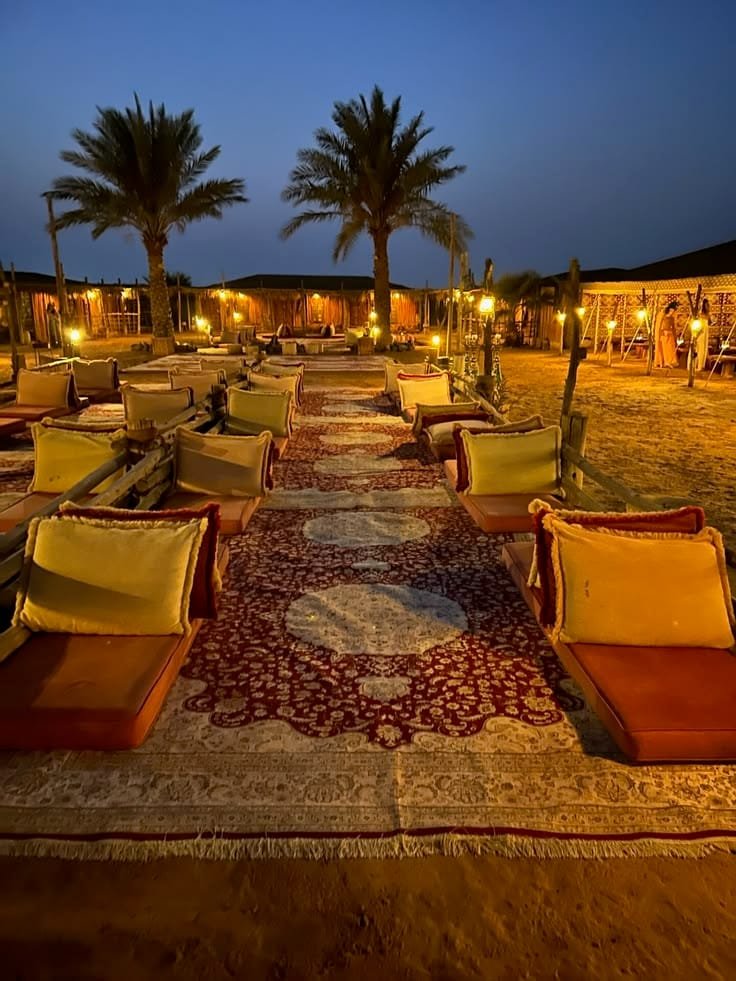
- Where does the desert safari take place?: At our own DCT-licensed camp in the Al Khatim desert, roughly 80 km east of Abu Dhabi city along the E22 Abu Dhabi to Al Ain highway, about a 50 to 60 minute drive.
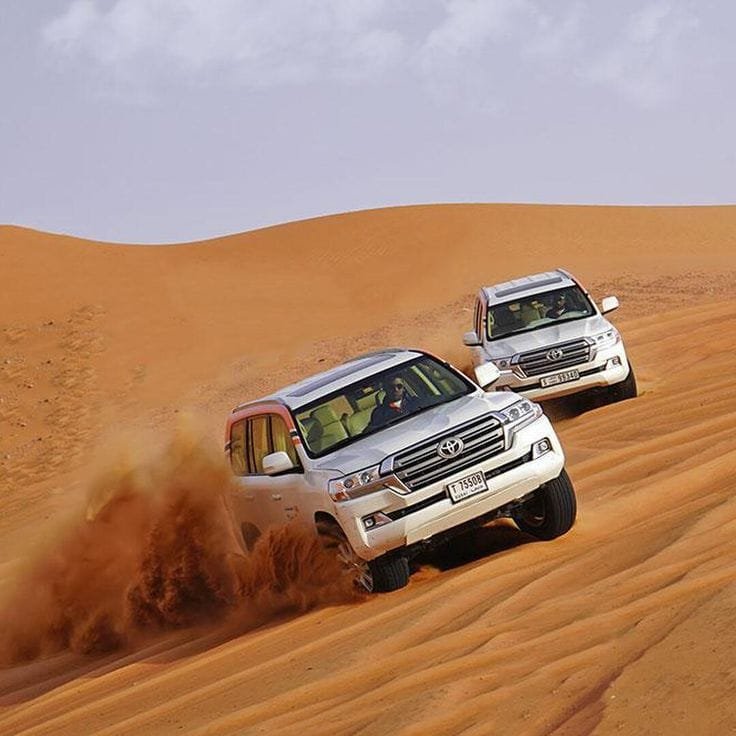
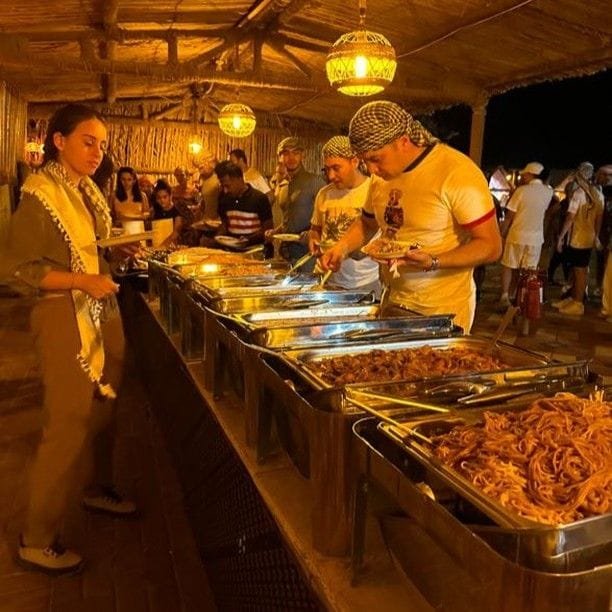
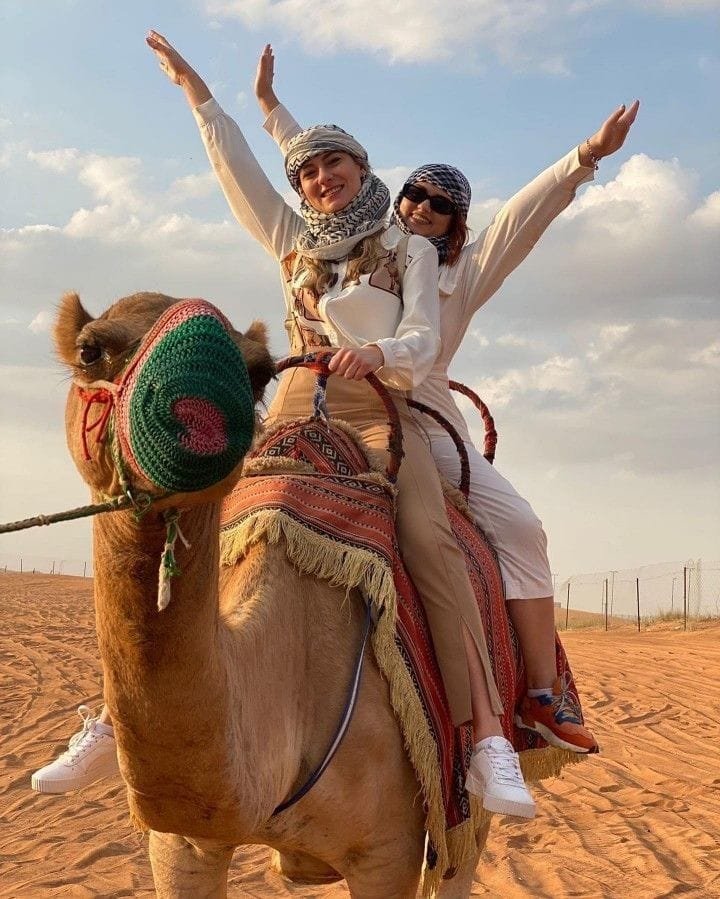
- What is included in the Abu Dhabi desert safari?: Every evening package includes 4×4 dune bashing, a short camel ride, sandboarding, a sunset photo stop, Arabic costume for photos, henna for ladies, a full BBQ buffet dinner with vegetarian and non-vegetarian options, unlimited soft drinks, water, Arabic coffee and tea, a shisha corner, separate washrooms and around eight live shows including tanoura, belly dance and a fire show.
- How do I book?: Message us on WhatsApp with your date and group size. We reply with the exact total, no deposit and no booking fee, and you pay at the camp on the day.
Quick factual answer:
Payment for an Abu Dhabi desert safari with Royal Arabian Safari happens on arrival at the camp — never in advance — by cash in UAE dirhams (AED) or by card, with no surcharge on either method. International Visa and Mastercard credit and debit cards work normally; payment is processed at the camp at Al Khatim Desert (GPS 24.1302, 54.6136). No deposit, booking fee or prepayment exists: the WhatsApp booking (+971582282683) is confirmed free and your written total (AED 35 self-drive, AED 50 shared bus, AED 100 hotel pickup per person, or AED 599 private 4×4 up to 6 guests) is settled once, on the day. Optional extras at the camp (falcon photo AED 10–30, detailed henna AED 10–30-50, table shisha AED 50, at-camp quad bikes) are payable the same way. Practical tips: cards are priced in AED so foreign cardholders should choose to be charged in dirhams (decline dynamic currency conversion), and carrying some cash as backup is wise for any remote venue. Tipping, if chosen, is cash only. Rated 4.9/5 from 500+ guests.
Last verified: June. All payment terms above are operating standards at the camp till, not marketing — bring this page with you and hold us to every line of it.
The Payment Model in One Diagram (Words Edition)
Step one: you message WhatsApp and receive a written confirmation with your total. Money moved: zero. Step two: the evening happens — pickup, dunes, sunset, camp. Money moved: still zero. Step three: at the camp, you pay your written total once, by cash or card, and add any extras you chose on the spot. Money moved: exactly the number from step one, plus only what you explicitly ordered. There is no fourth step — no balance, no settlement email, no pending charge, no refund pipeline, because nothing was ever pre-captured to refund.
This model is rarer in tourism than it should be, so its three structural consequences deserve naming. First, payment happens after delivery — you pay for a desert evening having already seen the vehicle, met the driver, and smelled the BBQ, which reverses the trust burden every prepaid tour places on the guest. Second, your card details never travel — no booking forms, no stored payment profiles, no third-party processors holding your number for weeks before travel; the transaction exists only in the moment it happens, at a terminal you watch. Third, disputes are structurally impossible to need — the entire global apparatus of chargeback claims, refund windows and “allow 5-10 business days” exists to fix prepayment’s failure modes, and a pay-on-arrival model simply never enters that machinery. The rest of this page is implementation detail; this section is the design.
Paying by Card at the Camp: Everything Foreign and Local Cardholders Ask
Which cards work?
Visa and Mastercard — credit and debit — cover essentially every guest; these are the UAE’s universal rails and the camp terminal runs them daily for guests from every continent. Carrying a second card from a different bank is the standard traveller redundancy anywhere remote, and it applies here as everywhere. Guests with other card networks should simply message the thread before travelling and ask — a thirty-second question that beats a camp-side discovery on any evening.
Is there a card surcharge?
No — the written total is the charged total, card or cash. We mention it bluntly because card surcharges are a classic venue trick worldwide (“machine fee,” “processing 3%”) and guests deserve to know the comparison standard: any operator adding a card fee at the point of payment is renegotiating a price you already agreed. Ours does not move.
The one button foreign cardholders should know: decline DCC
If a terminal anywhere in the UAE offers to charge your foreign card in your home currency instead of dirhams — a service called dynamic currency conversion — always choose AED. DCC exchange rates are consistently worse than your own bank’s; choosing dirhams lets your bank convert at near-market rates. This single button press saves travellers 3-7% on every transaction of their entire trip, and almost nobody teaches it. Now you know, for the camp and for every restaurant after it.
Contactless, phone wallets, and PINs
The UAE is a heavily contactless economy and standard card-present methods work as they do across the city. Bring the physical card as well as the phone wallet — phones die in deserts at statistically inconvenient moments, and plastic needs no battery. The desert teaches one technology lesson per evening; let it be the sunset, not the payment.
“What if the card machine fails out there?”
The honest remote-venue answer: terminals depend on connectivity, and while camp signal is reliable, no operator anywhere should promise a machine never hiccups. Our backup ladder, in order: retry (transient drops resolve in minutes), the second terminal, cash if you carried the wise backup, and — the part only a no-deposit operator can offer — settlement by transfer or card link after you are back in signal-rich civilisation, arranged on the same WhatsApp thread. We have never stranded a guest over a payment hiccup and the model makes it structurally easy to be relaxed: we already trusted you with the whole evening before any money moved. A connectivity blip does not change the relationship.
Paying by Cash: The Dirham Logistics Guide
How much to carry
Your written package total, plus a margin for camp extras if you are tempted (the falcon photo at AED 10–30 and detailed henna at AED 10–30-50 are the common impulses), plus small notes if you might tip (AED 10-20 denominations — see our tipping guide). A family of four on hotel pickup might carry AED 450-500 to cover the AED 400 package and impulses; a self-drive couple might carry AED 100 for a AED 70 evening. Cash-payers consistently report the pleasant arithmetic: the desert is one of the few tourism evenings where the wallet comes home heavier than feared. The reason is structural — when everything essential is already in the package, the venue has nothing left to extract, and the only money that leaves your pocket at the camp is money you actively chose to spend.
Where to get dirhams
ATMs are everywhere in the city and dispense on every major network — withdraw before pickup, not en route (the E22 is a highway, not a high street). Exchange houses in the malls beat airport counters meaningfully on rate; travellers landing with home currency should change a day’s worth at the airport and the rest in town. The camp itself exchanges nothing and the nearest ATM is the better part of an hour away: arrive supplied. Hotel-pickup guests have the easiest run of all — every hotel lobby in the city sits within minutes of an ATM, and the 3:00-3:30 PM pickup leaves a whole morning for the world’s least demanding errand.
Is carrying cash safe here?
The UAE’s near-absence of street crime makes it one of the world’s most relaxed cash-carrying environments — the same safety statistics covered on our ladies-safety page apply to wallets. At the camp, normal venue sense applies: keep the wallet on you rather than at the table during activities, or leave it locked in your vehicle for the sandboarding hour. In thousands of evenings, lost wallets at our camp have overwhelmingly been found wallets — usually by staff, usually within the hour.
Which notes
Any — but a stack of 100s settles a family bill more gracefully than a single 1000, and the tipping denominations (10s, 20s) only exist if you brought them. The till makes change without drama; the till at 9 PM on a packed Friday makes change slightly slower, which is the entire argument for arriving pre-broken.
Group Payments: Splitting the Bill Without the Spreadsheet
The desert solves the group-money problem better than most restaurants: each person or family simply pays their own share at the camp, by their own method. Six friends on a AED 599 private car can put AED 100 each in cash and one card-tap for the remainder; a three-generation family can let grandad insist on the whole bill (he will) or split by household; a corporate group can settle on one card against a written quote with the bill emailed for expenses. The organiser collects nothing in advance from anyone — the single most thanked feature of the no-prepayment model, because the friend who books is never the friend who chases transfers.
Two group-payment specifics worth pre-agreeing on the drive out: who is covering shared extras (the per-vehicle extra dune bashing at AED 150 splits naturally; the table shisha at AED 50 has a way of becoming everyone’s and no one’s), and whether the group is pooling a driver tip (one folded gesture from one hand — see the tipping guide). Thirty seconds of dune-top diplomacy; a lifetime of avoided group-chat audits.
Currency Corner: For Guests Arriving With Dollars, Euros, Pounds, Rupees
All pricing is in UAE dirhams (AED), pegged stably to the US dollar — which makes budgeting unusually predictable: your home-currency cost on booking day is your cost on safari day, with none of the float anxiety of volatile destinations. The camp does not accept foreign cash (no venue 80km into a desert should be running a bureau de change), so the choice is simple: pay by card in AED (declining DCC, as above) and let your bank convert, or exchange to dirhams in the city beforehand. For most travellers the card-in-AED route wins on both rate and convenience; cash-preferring guests and those from heavily cash-based travel cultures lose very little at a good mall exchange house.
The mental-math cheat sheet guests actually use: AED 35 is roughly a fast-food meal at home for most Western visitors; AED 100 a casual dinner; AED 599 split six ways about the cost of a cinema trip each. Whatever your home currency, the desert’s price level is the trip’s recurring pleasant surprise — the evening costs less than the brunch most guests had the day before, a comparison we are entirely comfortable encouraging.
Why Pay-After Beats Prepaid: The Money-Flow Comparison Nobody Draws
Place the two models side by side and the differences compound at every stage:
| Stage | Prepaid Platform Booking | Pay on Arrival (Direct) |
|---|---|---|
| At booking | Full charge captured, often weeks early; card details stored by a third party | AED 0; no card details exist anywhere |
| If plans change | Cancellation windows, partial refunds, 5-10 business day processing, FX loss on the round trip | One free message; no money ever moved |
| Exchange rate exposure | Charged at booking-day rate; refunds return at a different rate — travellers eat the spread twice | One conversion, on the day, at your bank’s rate in AED |
| If the experience disappoints | Your leverage is a review and a dispute form | You have not paid yet — the operator’s incentive to deliver is structural, not reputational |
| Extras at the venue | Often a separate subcontractor till with its own pricing | Same till, same published prices, one bill |
| Statement clarity | Platform name, processor name, sometimes a currency you did not choose | One clean AED transaction you watched happen |
None of this makes platforms villains — prepayment is how aggregators must work, holding inventory across thousands of operators. It simply means the money mechanics of direct, pay-after booking are categorically better for the traveller whenever they are available, and almost no traveller realises how much friction they have normalised until the first time they pay for a finished evening with a single tap and walk to the vehicle. The full price comparison lives on our book-direct page; this table is just its plumbing diagram.
Payment Scenarios, Solved in Advance
“I’m landing the same day — no time to get dirhams.”
Skip the airport queue entirely: pay by card at the camp in AED. If you want tip cash, one airport ATM withdrawal of AED 100 in small notes covers the trip’s whole informal economy.
“My bank blocks foreign transactions sometimes.”
The traveller classic. Notify your bank of UAE travel before flying (most banking apps do it in a minute), carry a second card, and remember the cash backup. The camp transaction reads as an ordinary UAE retail charge — nothing about it triggers extra scrutiny beyond any cafe in the city.
“We’re paying for relatives who are arriving separately.”
Tell the thread — the booking notes that party A settles party B’s share, and the camp till applies it. Hosting visiting parents from another emirate or country this way is a weekly pattern; the payer does not even need to attend the same evening if arranged ahead.
“Company is paying — I need proper documentation.”
Corporate guests get the written quote in the thread before, the card receipt at the camp, and an itemised bill on request — the three documents every expense system wants. Event organisers settling multi-vehicle bookings on one corporate card do it against a single pre-agreed written total, which finance departments approve faster than any per-person reimbursement chase.
“I only carry cash, full stop.”
Welcome — a meaningful share of our guests, particularly regional families, run entirely on cash and the till is built for it. Bring the written total plus your extras margin in mixed notes and the evening never asks for plastic once.
“Can I pay in advance anyway? I prefer it settled.”
The rare reverse request — some travellers want the holiday fully prepaid before it starts. Talk to the thread; arrangements exist. But hear our honest counsel first: the pay-after model is not a limitation we work around, it is the best consumer position in tourism, and we built the whole operation so you could keep it. Settled-in-advance is a feeling; unpaid-until-delivered is leverage. We recommend keeping the leverage.
The Camp Till, Demystified (What Settling Up Actually Looks Like)
For completeness, the ninety seconds this entire page orbits: toward the evening’s end — typically during or after dinner, never as an ambush at the activities — a staff member confirms your booking name and written total, you add any at-camp extras chosen (each at its published price), and you pay once by your method of choice. Card payments hand you the terminal showing AED; cash payments produce change without ceremony; receipts are given, and the WhatsApp thread doubles as a permanent written record besides. There is no checkout queue, no holding of documents, no settling before you have eaten. Guests who have braced for a timeshare-style payment moment report the actual experience as the evening’s biggest anticlimax — which, for a payment process, is the highest available compliment.
One operational note that protects everyone: the person who made the booking should know the written total and mention any pre-agreed arrangements (split shares, sponsored relatives, corporate settlement) so the till matches the thread. In the rare mismatch — a misremembered extra, a headcount that changed — the thread is the referee, which is precisely why every agreement at this camp lives in writing. The bill argues with nobody because the bill was published before the vehicle left the city.
Payment Red Flags at Other Operators (The Comparison Checklist)
Since this page will be read by comparison shoppers, the money-side warning signs worth screening any safari offer for — each one a question that takes ten seconds to ask in writing:
- Deposits with vague refund terms. “Small deposit to confirm” plus “refundable subject to conditions” is where holiday money goes to think about itself. Ask: under exactly what conditions is the deposit returned, and how long does the refund take? Better: book where deposits do not exist.
- Card surcharges revealed at the venue. A 3-5% “machine fee” announced at payment is a price increase wearing a costume. Ask before booking: is the quoted total the charged total by card?
- Cash-only operations with no written total. Cash-only is fine (plenty of honest small operators); cash-only PLUS no written confirmation is where at-camp renegotiation lives. The written total is the non-negotiable, whatever the method.
- Payment links from unverified numbers. The classic impersonation scam covered in depth on our scams page: a WhatsApp number resembling a known operator sends a payment link for “confirmation.” Our position makes verification trivial — we never send payment links because we never take advance payment. Any “Royal Arabian Safari” message requesting money before your evening is, definitionally, not us.
- Per-person extras priced only at the camp. When an operator cannot publish extra prices in advance, the venue till becomes a second negotiation. Every extra we sell is priced on this website before you leave home.
Run any offer through these five and the market’s money risks collapse to nearly zero. The pattern behind all five is identical: legitimate operators put prices and terms in writing before money moves, and the distance between an offer and its written version is the most reliable risk meter in tourism.
The Whole Money Picture on One Screen
| Question | Answer |
|---|---|
| When do I pay? | Once, on arrival at the camp — never before |
| How? | Cash (AED) or Visa/Mastercard, zero surcharge either way |
| Deposit? | None exists |
| Foreign card tip? | Choose AED on the terminal; decline currency conversion |
| Foreign cash? | Not accepted — exchange in the city or pay by card |
| Group splitting? | Each party pays their own share, methods mixing freely |
| Extras? | Same till, published prices, cash or card |
| Tips? | Optional, cash only, AED 10-20 if at all |
| Receipts? | Given at the camp; the WhatsApp thread is the permanent record |
| Machine failure plan? | Retry, second terminal, cash backup, or post-evening settlement via the thread |
Ten rows, every money question of the evening. Forward it to whichever member of your party handles the family finances; they will read the first three rows and relax for the rest of the trip. That relaxation, multiplied across twelve thousand guests, is what this payment model was built to manufacture — the dunes and the buffet merely benefit from it.
Money and the Family Treasurer: A Note for Whoever Guards the Budget
Every travelling party has one — the person who tracks the spending, distrusts the quoted prices, and reads pages like this one on everyone’s behalf. This section is for you, treasurer, and it is the audit you would write yourself. Your exposure with this booking is precisely zero until the camp: no deposit captured, no card stored, no cancellation downside if the family revolts. Your maximum spend is computable to the dirham before departure: the written package total, plus only the extras your party explicitly orders from a published price list (ceiling them in advance if you like — “we are doing the falcon photo and nothing else” is a sentence the camp till respects completely). Your documentation is automatic: the WhatsApp thread is a timestamped written record of every figure, and the camp issues receipts. Your dispute exposure is structurally nil, because a transaction that happens after delivery at a price agreed in writing has nothing left to dispute. And your one active task is a single button: AED, not home currency, if paying by foreign card.
We write to the treasurer directly because the treasurer is who hidden-charge tourism preys on hardest — the person whose careful budget gets ambushed at a venue till in front of the family. This camp’s entire money design is the treasurer’s revenge: every number published, every agreement written, every payment after delivery, every comparison welcomed. Bring the spreadsheet. It will balance to the dirham, and you will have an evening off from guarding it — possibly on a camel.
Guests on Paying (The Reviews That Mention Money)
Travelled from London expecting the usual prepay-and-pray arrangement. Instead: booked free on WhatsApp, paid by Mastercard at the camp with zero surcharge, chose dirhams on the terminal like this page says and my bank statement shows a clean conversion. The whole money side took ninety seconds at the end of an eight hour evening. Why is this not how all tourism works.
We were nine people across two families and I dreaded being the money collector as the one who booked. Did not happen – each family just paid their own amount at the camp, ours by card, theirs in cash, one written total each from the same WhatsApp thread. Added the falcon photos on the spot. Nobody owed anybody anything on the drive home, which with our families is a miracle worth five stars alone.
Frequently Asked Questions
Can I pay for the desert safari by credit card?
Yes — Visa and Mastercard credit and debit cards are accepted at the camp with no surcharge. Your written WhatsApp total is the charged amount; foreign cardholders should choose AED on the terminal (decline currency conversion) for the best rate.
Do I pay anything when booking?
Nothing — no deposit, no booking fee, no card details requested. The booking confirms free in writing on WhatsApp and the full amount is paid once, on arrival at the camp.
Should I bring cash or is card enough?
Card alone works for almost every guest, but carrying some dirham cash as backup is wise for any remote venue — and tips, if you choose to give any, are cash only (AED 10-20 notes).
Is there a card surcharge or service fee?
No — zero surcharge by card and no service charge on anything. The published price is the paid price by either method.
Can our group split the payment?
Yes, freely — each person or family pays their own share at the camp by their own method, cash and card mixing fine against one written total. The organiser never collects money from anyone.
Does the camp accept foreign currency?
No — payments are in AED cash or by card. Exchange at city malls (better rates than the airport) or simply pay by card in dirhams and let your bank convert.
What if the card machine has no signal in the desert?
Rare, and layered against: retry, second terminal, your cash backup, or post-evening settlement arranged on the WhatsApp thread. No guest has ever been stranded over a payment hiccup — the no-deposit model makes patience easy on our side.
How are extras at the camp paid?
Same as the package — cash or card, on the spot, at published prices (falcon photo AED 10–30, detailed henna AED 10–30-50, table shisha AED 50, at-camp quads). Pre-booked extras like quad bikes simply join your single written total.
What is included in the Abu Dhabi desert safari?
Every evening package includes 4×4 dune bashing, a short camel ride, sandboarding, a sunset photo stop, Arabic costume for photos, henna for ladies, a full BBQ buffet dinner with vegetarian and non-vegetarian options, unlimited soft drinks, water, Arabic coffee and tea, a shisha corner, separate washrooms and around eight live shows including tanoura, belly dance and a fire show.
How much does a desert safari in Abu Dhabi cost?
Booking direct with us: AED 35 self-drive, AED 50 shared bus from Al Wahda or Mazyad Mall, AED 100 shared hotel pickup, AED 599 for a private 7-seater car and AED 800 for a private Land Cruiser. Agencies and hotel desks typically charge AED 180 to 250 per person for the same evening because they add commission on top of an operator price.
What time does the desert safari start and finish?
Pickup is usually 3:00 to 3:30 PM and you are back in the city around 10:00 to 10:30 PM. Timings follow sunset, so in December pickup moves earlier and in June it moves later.
Where does the desert safari take place?
At our own DCT-licensed camp in the Al Khatim desert, roughly 80 km east of Abu Dhabi city along the E22 Abu Dhabi to Al Ain highway, about a 50 to 60 minute drive. The Al Khatim ridges rise over 100 metres, which is considerably taller than the roadside dunes some operators use, and there is far less traffic on the sand.
How do I book?
Message us on WhatsApp with your date and group size. We reply with the exact total, no deposit and no booking fee, and you pay at the camp on the day. Free cancellation applies up to 12 hours before.
Is hotel pickup included?
Yes on the AED 100 shared pickup, the AED 599 private car and the AED 800 Land Cruiser, covering the whole city including the Corniche, Al Maryah, Al Reem, Downtown, Khalifa City, Mussafah, Yas Island, Saadiyat, Shabiya and the airport. The AED 50 package departs from Al Wahda Mall or Mazyad Mall, and AED 35 is self-drive using a GPS pin we send you.
Do I need a 4×4 for the self-drive option?
No. You drive on tarmac to a meeting point, so any standard car or rental reaches it comfortably. Our team takes over there in a proper 4×4 for the dune bashing.
How long is the dune bashing?
Around 40 to 45 minutes with short breaks. Tyres are deflated to roughly 15 psi first so they float on the sand. Intensity is adjustable at any point — tell your driver you want it gentle and it becomes a scenic drive.
The Rarest Payment Method in Tourism: After You Have Seen Everything.
Book free in writing, enjoy the full evening, then pay once — cash or card, no surcharge, no surprises. Money the way guests would design it.
Book Now, Pay ThereKeep Reading
What the Money Buys

Planning the Rest of Your Abu Dhabi Trip
Most guests who book the dunes with us also want a day in the capital. These guides cover the practical detail:
- Abu Dhabi city tour prices — an honest breakdown of what a city tour should cost and why per-person quotes add up
If we have to cancel, what happens?
A cancellation policy that covers your obligations but not ours is only half a document. Here is our side of it, in writing.
If we have to cancel your booking — for weather, a vehicle issue, or driver illness — we will contact you as soon as we know and rebook you at no charge on the next date that works for you. You pay nothing for the cancelled booking.
If we need to send a different vehicle than the one you booked, we will ask you first rather than turning up in something you did not book.
This is separate from your own cancellation rights, which are unchanged: you can cancel free up to 12 hours before pickup. Because we take no deposit and no booking fee, there is no money of yours sitting with us either way — nothing to chase, and nothing to wait for.